
Modern Christian Art as Ancient Way of Seeing
-
Makoto Fujimura occupies a peculiar role in modern art. He’s a distinctively Christian painter amid a sea of skeptics and opponents of the faith. Many artists talk a great deal about diversity and inclusion but in practice live in monocultural and ideological bubbles. Educated in Japan and the United States but not fully a part of either culture, Fujimura uses historic Japanese techniques in his work and presents a fusion of East and West that attempts to seek beauty and truth once again through art. Crucially, Fujimura also stands apart from most artists in his commitment to practicing a kind of “slow art” in the traditional Japanese (Nihonga) form while writing and speaking prolifically.

-
The Holy Scriptures and America’s Presidents
-
In the summer of 2024, Louisiana passed a law requiring posters of the Ten Commandments be displayed in public school classrooms. Days after Louisiana Governor Jeff Landry signed the bill into law, the American Civil Liberties Union, the American Civil Liberties Union of Louisiana, Americans United for Separation of Church and State, and the Freedom from Religion Foundation filed suit claiming the law violated both the Free Exercise and Establishment Clauses of the U.S. Constitution. A federal district court judge and a panel of Fifth Circuit judges agreed. The case, and similar cases from Arkansas and Texas, are still being litigated.

-
Alasdair MacIntyre’s Philosophy in Practice
-
It is a curious thing when an artist, thinker, or writer gains influence outside the audience he intends or is comfortable with. When a thinker associated with the right becomes popular on the left, or a novelist associated with the progressive left becomes popular among conservative readers, there can be a sort of strain felt between the audience in fact and the “true” audience, or between those who feel themselves to be the authentic recipients of a work’s message and meaning and those who, to the true believers, come across as opportunistic in their enjoyment of works in tension with their own views. The same is true when a writer working within an academic discipline gets picked up by those outside it: Those working within that discipline may find the co-opting of these thinkers misplaced at best or malicious at worst.

-
Liberty and the Development of Doctrine
-
The story is most often told that religion is that force of coercion that attempts to bend the mind to its own perception of truth and resists, by its very nature, any institutional and most especially legal attempts to ensure the right of people to seek truth on their own.
In his recent book Liberty in the Things of God: The Christian Origins of Religious Liberty, Robert Louis Wilken sums up this portrayal of history in this way:
Religious freedom is often thought to be the work of the Enlightenment. In the sixteenth century, so the story goes, when the Reformation took hold in Europe, confessional differences led to the suppression and persecution of Christians by Christians. … A half century of bloody conflict, the so-called wars of religion, was set in motion. But by the middle of the seventeenth century men with great wisdom and less religious fervor came on the scene, and the fanaticism of religious believers gave way to the cool reason of the philosophers. Armed with notions of the superiority of reason over faith, skeptical of received truth, and distrustful of religious claims and institutions, these enlightened thinkers forged a new set of ideas about...

-
The Lost Empiricism of al-Jahiz
-
“Who but an ignoramus would dispute observation?” —al-Jahiz
Modern-day Muslims often nostalgically remember their Golden Age, spanning from the eighth to the 13th centuries, when Islamic civilization led the world in science, technology, philosophy, medicine, and various other branches of human flourishing. One thing they may not always note, however, is that this premodern enlightenment was enabled by the cosmopolitanism of the early Islamic civilization, where Muslims not only ruled over many diverse communities—from Christians to Jews, from Zoroastrians to Hindus—but also engaged intellectually with their rich traditions. Among the latter was the Greek philosophical heritage preserved by Nestorian churches, which helped raise Islam’s own philosophers.

-
The Upside-Down Kingdom of Jesus of Nazareth
-
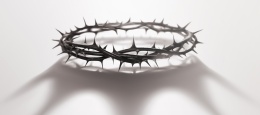
Atop a wood carving of Christ on the cross, affixed to St. Vitus Cathedral, is a sign with the letters I-N-R-I. The origin of these letters is related to us in the 19th chapter of the Gospel of John:
Pilate had a notice prepared and fastened to the cross. It read: JESUS OF NAZARETH, THE KING OF THE JEWS. Many of the Jews read this sign, for the place where Jesus was crucified was near the city, and the sign was written in Aramaic, Latin and Greek. The chief priests of the Jews protested to Pilate, “Do not write ‘The King of the Jews,’ but that this man claimed to be king of the Jews. Pilate answered, “What I have written, I have written.”
Artistic portrayals of the crucifixion would often render this by using an acronym of the letters of the words in Latin: Iesus Nazarenus, Rex Iudæorum: I-N-R-I.
-
Orthodox Social Thought and the Public Square
-
In his new book, The Kingdom of God and the Common Good: Orthodox Christian Social Thought, Dylan Pahman, research fellow at the Acton Institute and executive editor of the Journal of Markets and Morality, presents a groundbreaking study of Orthodox social thought, highlighting commonalities with and differences from other Christian denominations in this area. The book offers a clear, well-researched guide to church history, tracing the practice of Orthodox social teaching over millennia, gleaning insights along the way from the law, the prophets, wisdom literature, and the Gospels, always with an Orthodox emphasis on reading scripture not alone but with the church.

-
Why Orwell Still Matters
-
The culture war between George Orwell and the left is soon to enter its tenth decade, and the newest salvo has just been launched. In a Financial Times (FT) article entitled “How George Orwell Became a Dead Metaphor,” Naoise Dolan bemoans the legions of “Orwell fans” who overpraise Orwell and reduce him to a “dead metaphor” like those he disparaged in “Politics and the English Language.” Of course, Orwell is not innocent here, Dolan adds, but has invited the recurrent waves of “Orwellmania” since his death.

-
Conversation Starters with ... Nadya Williams
-
Nadya Williams holds a Ph.D. in Classics from Princeton University and is the author of Cultural Christians in the Early Church, Mothers, Children, and the Body Politic: Ancient Christianity and the Recovery of Human Dignity, and Christians Reading Classics. She is also books editor at Mere Orthodoxy and writes a weekly newsletter at nadya williams.substack.com.

-
José da Silva Lisboa: Defender of Free Markets in the Tropics
-
Criticizing modern ideologues in his book The Politics of Prudence, Russell Kirk (1918–1994) noted that it was “the practical statesman, rather than the visionary recluse, who has maintained a healthy tension between the claims of authority and the claims of freedom; who has shaped a tolerable political constitution.” We note that, except for Great Britain, no other country had more conservative statesmen than Brazil during the period of parliamentary monarchy: 1822–89. During the reign of Dom Pedro II (1825–1891), the combination of the wise actions of the monarch, the solid institutional foundations offered by the Constitution of 1824, and the prudent actions of the statesmen who governed the country made for a period of greatest political stability. The challenge faced by Brazilian conservatives, however, was the dual responsibility of safeguarding the traditional monarchical institution of Portuguese origin without adopting patrimonialism, absolutism, and mercantilism, and fostering freedom without descending into the egalitarian and almost anarchic excesses of democratism, as proposed by Jean-Jacques Rousseau (1712–1778) and adopted in both the French Revolution and the independence movements of Hispanic America.

-
The Conscience of the Christian Merchant
-
Earlier this year, in a subcommittee hearing, Republican Senator Josh Hawley called out insurance companies for their alleged fraudulent practices after natural disasters: “At the end of the day, they just won’t pay what is due. What is required. What is just.” Hawley was not coy about the motivations for such behavior, claiming, “It is a deliberate strategy to maximize profits.” Hawley represents a growing contingent of conservatives interested in what Senator Marco Rubio has called “common-good capitalism.” In 2019, Rubio gave a lecture at The Catholic University of America, drawing heavily on Pope Leo XIII’s encyclical on capital and labor, Rerum Novarum. Rubio argued, in line with the encyclical, that laissez-faire capitalism needs to be bridled by the moral obligations employers owe to employees and, more broadly, to the common good of society.

-
We Are Capax Universi
-
On a number of occasions, I taught American Government in the state prison. I would enter via the front gate, go through security, then make my way across the prison yard, between the cell blocks, to the flat-roofed brick building wherein resided the classrooms. Since prisons pay little attention to beauty, the utilitarian spaces were ungilded.

-
Page 4 of 112