


“Who but an ignoramus would dispute observation?” —al-Jahiz
Modern-day Muslims often nostalgically remember their Golden Age, spanning from the eighth to the 13th centuries, when Islamic civilization led the world in science, technology, philosophy, medicine, and various other branches of human flourishing. One thing they may not always note, however, is that this premodern enlightenment was enabled by the cosmopolitanism of the early Islamic civilization, where Muslims not only ruled over many diverse communities—from Christians to Jews, from Zoroastrians to Hindus—but also engaged intellectually with their rich traditions. Among the latter was the Greek philosophical heritage preserved by Nestorian churches, which helped raise Islam’s own philosophers.
Our “post-truth” Western world of tribalism, conspiracy, and irrationalism needs to retrieve its tradition of fact-based reasoning. One rich resource just may be the Golden Age of Islamic civilization.
By Hussein Ali Abdulsater
(Edinburgh University Press, 2025)
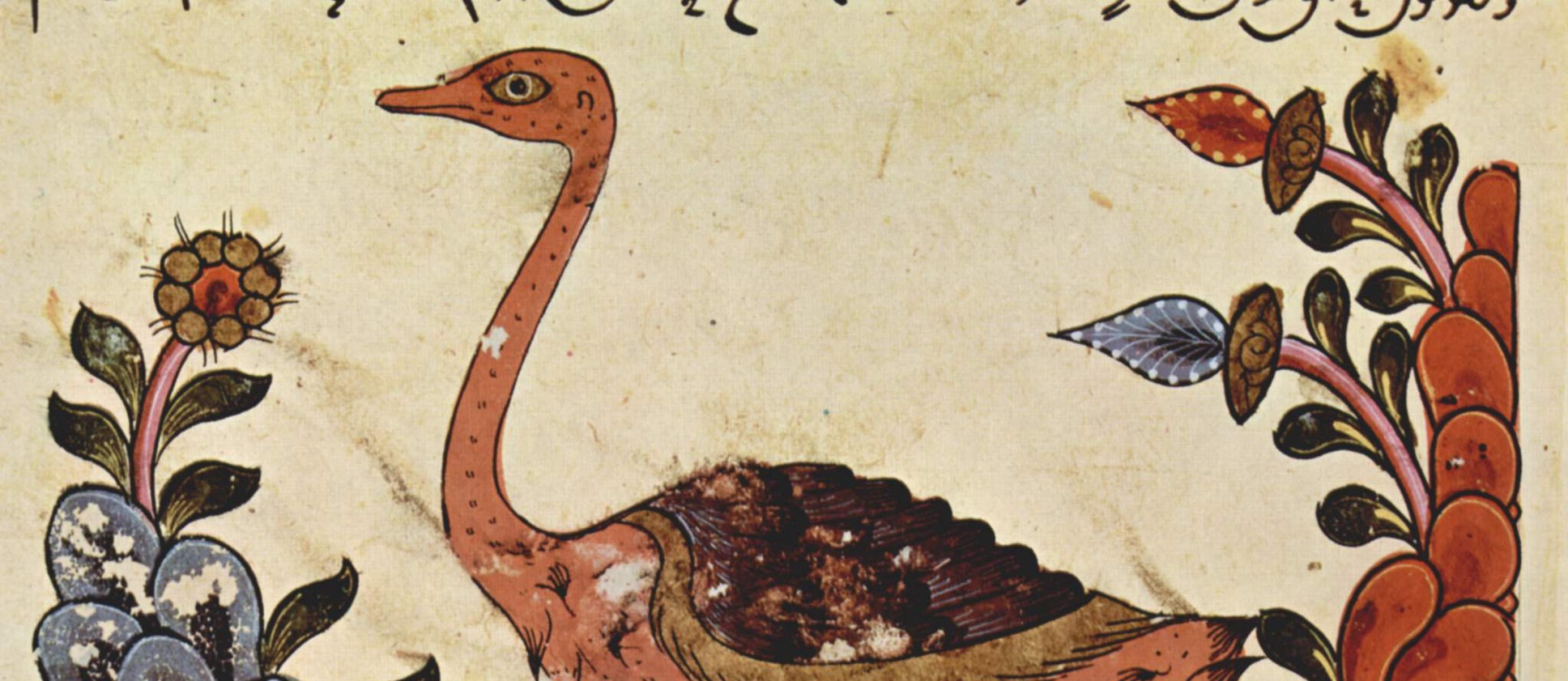
One of the most interesting minds from this Golden Age was the prolific polymath AbuʿUthman ʿAmr ibn Bahr al-Jahiz (d. 868/869), known simply as al-Jahiz, or “the goggle-eyed,” a nickname given to him due to his protruding eyes. Of Ethiopian descent, he lived and flourished in Basra and Baghdad, the two intellectual capitals of the Abbasid Caliphate. Partly thanks to the patronage of caliphs—including Caliph al-Maʿmun (r. 813–833), a lover of philosophy who reportedly saw Aristotle in a dream—al-Jahiz produced almost 200 manuscripts on a wide range of topics, from theology to zoology, linguistics to politics. His masterpiece is Kitab al-Hayawan, or “Book of Animals,” an extensive encyclopedia in seven volumes that drew on Aristotle’s works on zoology while featuring beautiful illustrations. Some modern scholars argue that in this book al-Jahiz also hinted at such “evolutionary” ideas as a struggle for existence and natural selection that anticipated the theories of Charles Darwin—though in an unmistakably theistic framework.
Those interested in free markets and limited governments may also be intrigued by al-Jahiz’s short essay titled, “In Praise of Tradesmen and Disparagement of Officialdom,” as it was translated by Charles Pellat in his 1969 book, The Life and Works of Jahiz. Here al-Jahiz reflects on the commercial culture of the early centuries of Islam by praising tradesmen as “always the most scrupulous, the happiest and the most secure of men” because “their means of livelihood subjects them to no humiliation.” Conversely, he adds,
It is quite otherwise with men close to the government and in its service. They wear the mantle of servility and the badge of flattery. Their hearts are filled [with awe] of their superiors. Fear dwells in them, servility never leaves them.
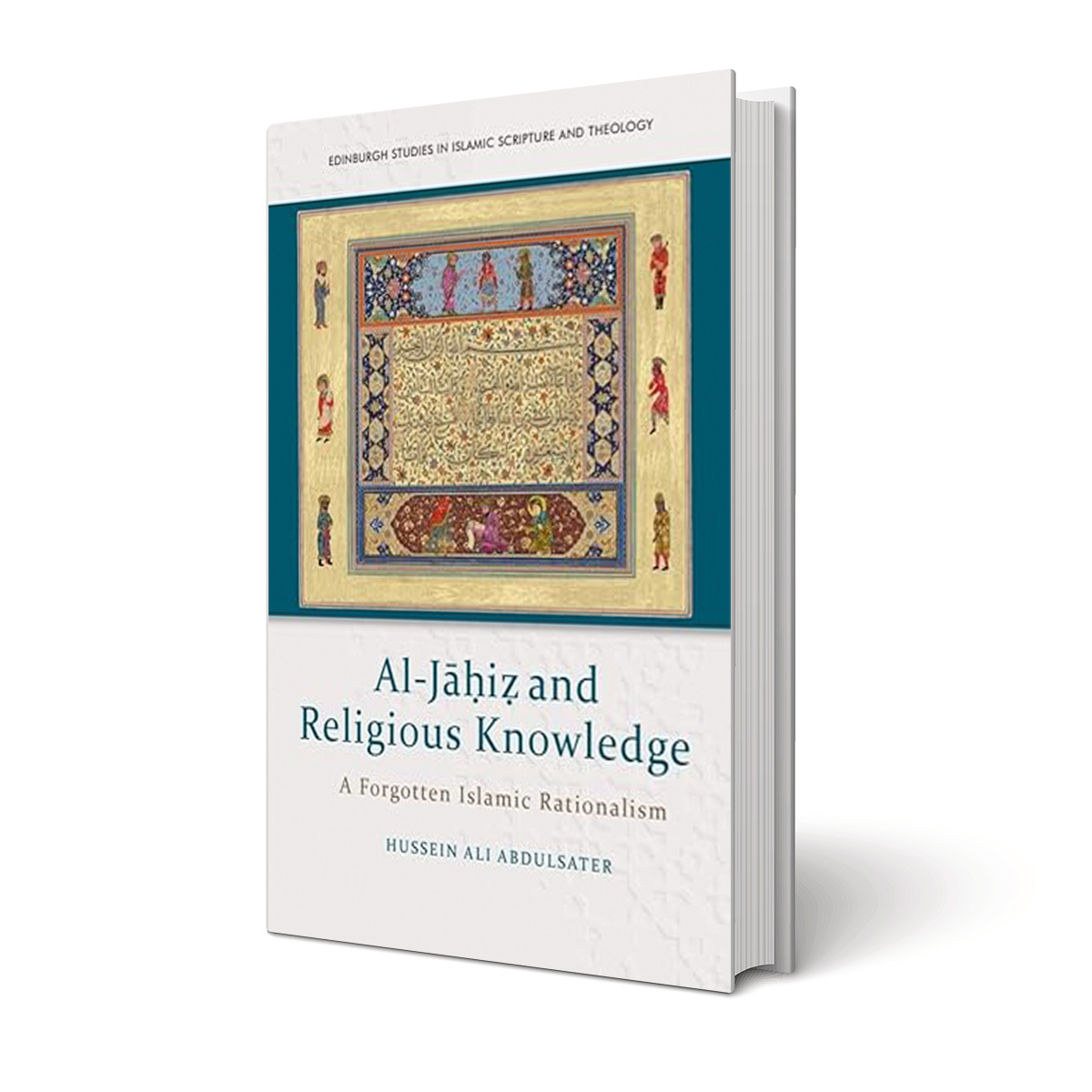
Now, if any of this sounds interesting, there is more good news: A new book by Hussein Ali Abdulsater, an associate professor of Arabic Culture and Islamic Studies at the University of Notre Dame, explores al-Jahiz’s worldview more deeply than any other available work: Al-Jāḥiẓ and Religious Knowledge: A Forgotten Islamic Rationalism. The book is quite academic in tone, which may not be easily grasped by every lay reader, but for those interested in the nuances of religious theology and philosophy, it offers remarkable insights.
Abdulsater begins by explaining why al-Jahiz was a unique thinker. As is well known, he was associated with the Mu‘tazilites, the theological school in early Islam often described as “the rationalists” that was at odds with strict “textualists.” The Mu‘tazilites, for example, argued that the ethical values of right and wrong precede revelation and are rationally discernable by every human being. They, in other words, strongly believed in what Christians would call “natural law.” They also believed in laws of nature, affirming that God had given certain inherent properties to His creation, rather than re-creating them at every instant without any causal link—as the Ash‘arites, the rival theological school that ultimately won over the Mu‘tazilites, argued with their doctrine of “occasionalism.”
Al-Jahiz realized that ‘however intelligent people might be, they could not transcend the intellectual horizons of their historical eras.’
As a side note, Abdulsater shares a political insight about this Ash‘arite victory over Mu‘tazilism, which I also probed in my 2021 book, Reopening Muslim Minds. He writes: “This was partly owing to the origins of Muʿtazilism as a religiously motivated opposition, which made it ideologically less malleable to government will, given the Muʿtazilīs’ pride in the logical impeccability of their moralistic thinking.”
Going back to al-Jahiz, there may be nothing new in reiterating his adherence to Muʿtazilite theology, but what is innovative in Abdulsater’s book is how the author demonstrates that there were two distinct epistemological trends within Mu‘tazilism, which can be defined as pure rationalism, which reduced rationality to the process of reasoning itself, and empiricism, which gave more weight to sensory experience and observation. (It is a distinction that reminds one of the rationalists versus empiricists in Western thought: the former dominant in the French tradition, the latter in the Anglo-Saxon one.)
Al-Jahiz is a remarkable figure because he was the lodestar of the empiricists (whom Abdulsater also calls “epistemists”). “Though Jāḥiẓ’s Muʿtazilī loyalties were unwavering,” the author explains,
his position represents a clear departure from those of other theologians and betrays a radically different sensibility. … [It] combines theological discussions with a keen interest in natural science, intimate experience of society, piercing insight into psychology, superb command of Arabic lore and broad awareness of foreign traditions towards the goal of reconciling a profound understanding of the natural world with a proper belief in the message of Islam. This reconciliation would encapsulate his understanding of the role of reason in religious matters; it would be his Islamic rationalism.
For example, Mu‘tazilites firmly believed that the Islamic faith is rationally justifiable, as they tried to demonstrate with an elaborate theology; this was in opposition to the textualists, some of whom found all theology as a useless, if not heretical, innovation. So Mu‘tazilites took great pains to prove the existence of God, the truth of the Qur’an, and the prophethood of Muhammad, along with other doctrines of Islam. But this intellectual sophistication came with a rigidity: Since Islam is rationally justifiable, most Mu‘tazilites believed, every thinking person should arrive at its truths through speculative reasoning. Those who knowingly rejected it were not to be coerced into belief on this earth, but their fate in the afterlife looked grim, as they would face eternal punishment for willful disbelief.
Al-Jahiz believed that no hadith, no matter how well attested it seemed to be, ‘should outweigh direct observation.’
Al-Jahiz, however, departed from such strict reasoning and did something quite empirical: He investigated society. He observed that most people simply followed the sects and religions into which were they born. “Look at how most people in Basra prefer ʿUthmān, how most Kufans prefer ʿAlī, and how most Syrians follow the cult of the Umayyads,” he wrote, pointing out the sectarian divisions among the Muslims of his time. He then extended this observation to religious divisions:
If it were a matter of rational thinking and analysis … how come the children of Jews choose Judaism, the children of Christians Christianity, and the children of Zoroastrians Zoroastrianism? Therefore, it is clear that the religions of humankind are embraced through simple imitation, not through rational investigation, and that imitation itself can lead to truth or error in equal measure.
So Al-Jahiz realized that “however intelligent people might be, they could not transcend the intellectual horizons of their historical eras.” For the same reason, “he did not judge them for their failure to do so.” Abdulsater draws a parallel between al-Jahiz and Mark Twain, who, some 10 centuries later, would also observe that people’s religious or political affiliations often came from “association and sympathy, not reasoning and examination.”
The empiricism of al-Jahiz was also evident in his fact-based views on nature, which were not shared by all his contemporaries. We see this in a dialogue Abdulsater reports between al-Jahiz and his contemporary al-Makki, who apparently was a textualist keen on hadiths—sayings attributed to the prophet, despite uncertainties about their authenticity. It took place in Wasit, a city notorious for its many flies. Here, by simply relying on a hadith, al-Makki confidently told al-Jahiz, “Lifespan of a fly is a mere forty days.” But al-Jahiz objected, saying that they had been living in the city for months and yet had not seen a single dead fly. When al-Makki responded by speculating that the flies must be going to wastelands to die, al-Jahiz said he had never observed that either.
In other words, al-Jahiz believed that no hadith, no matter how well attested it seemed to be, “should outweigh direct observation.” He emphatically declared that “observation compels the observer” (qahar al-ʿiyān ahlah) and rejected every viewpoint that is disproved by observation as “the most egregious blunder and the most ridiculous conviction.”
In short, al-Jahiz was “innocent of Maimonides’ charge that religious intellectuals ‘ignore the existing nature of things,’” as Abdulsater skillfully demonstrates in his book.
This is why al-Jahiz deserves to be remembered and studied today: The systematic study of “the existing nature of things” went into a long decline in Islam after its Golden Age; consequently, Muslims have lost much of their early cosmopolitanism, curiosity, and creativity.
It should be noted that empiricism has been declining in the West of late, too, with the rise of “post-truth” ideologies on the left and the right, and the replacement of the age of reason with an age of emotion, conspiracism, and tribalism. Against these troubling dynamics, which all seem to threaten human liberty and flourishing, we need to revive all sources of wisdom available to us. And one of them is al-Jahiz, this eccentric Muslim polymath from the ninth century, whose combination of piety and curiosity shows how one can be both a good believer and a good student of society and nature.