

Page 3 of 112
When Hitler Was a Moral Compass
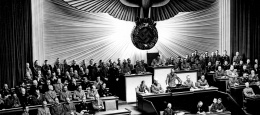
- Alec Ryrie, professor of the history of Christianity at Durham University, admits that, as a Reformation scholar, he “has no business straying into modern times.” Like a good academic
-
Rescuing Souls from the Totalitarian Temptation
- Totalitarian ideologies are supposed to be on the ash heap of history. With the apparent triumph of liberalism first in World War II and then in the Cold War, history has allegedly come to

-
Conversation Starters with … Michael Matheson Miller
- Michael Matheson Miller is the chief of strategic initiatives, senior research fellow, and director of the Center for Social Flourishing at the Acton Institute.

-
Wawrzyniec Grzymała Goślicki: Forerunner of Classical Liberalism
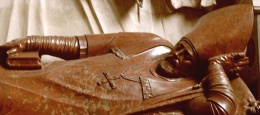
- In his classic essay “Sir Erskine May’s Democracy in Europe,” Lord Acton expounded on what he called the precursors to liberalism, saying they could be found in the “ponderous Latin” of
-
British Conservatism: Past, Present, Future
- Rather than the simple unity of a typical monograph, Intellectual Conservatism: From Burke to Scruton is unified through the authors’ explorations of the roots, applications, and nuances of

-
The Atoning Death of the Last Scapegoat
- The billionaire co-founder of PayPal, Peter Thiel, considers René Girard “heroic and subversive.” Vice President J.D. Vance, who learned of Girard through Thiel, attributes in part his

-
Modern Christian Art as Ancient Way of Seeing
- Makoto Fujimura occupies a peculiar role in modern art. He’s a distinctively Christian painter amid a sea of skeptics and opponents of the faith. Many artists talk a great deal about

-
The Holy Scriptures and America’s Presidents
- In the summer of 2024, Louisiana passed a law requiring posters of the Ten Commandments be displayed in public school classrooms. Days after Louisiana Governor Jeff Landry signed the bill

-
Alasdair MacIntyre’s Philosophy in Practice
- It is a curious thing when an artist, thinker, or writer gains influence outside the audience he intends or is comfortable with. When a thinker associated with the right becomes popular on

-
Liberty and the Development of Doctrine
- The story is most often told that religion is that force of coercion that attempts to bend the mind to its own perception of truth and resists, by its very nature, any institutional and most

-
The Lost Empiricism of al-Jahiz
- “Who but an ignoramus would dispute observation?” —al-Jahiz Modern-day Muslims often nostalgically remember their Golden Age, spanning from the eighth to the 13th centuries, when Islamic

-
The Upside-Down Kingdom of Jesus of Nazareth
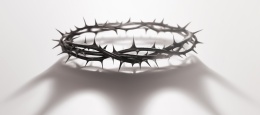
- Atop a wood carving of Christ on the cross, affixed to St. Vitus Cathedral, is a sign with the letters I-N-R-I. The origin of these letters is related to us in the 19th chapter of the Gospel
-