
Capitalism’s Western Marxist History
-
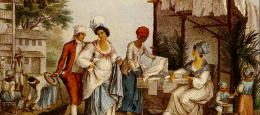
The essential fact about Sven Beckert’s Capitalism: A Global History is its size and scope. The book is 1,100 pages in length, it has another 150 pages of endnotes in print so small it is unreadable without a magnifying glass, and its acknowledgements run half a chapter long at 3,000-plus words. Capitalism weighs about five pounds. As for scope, it is global and covers a thousand years. As Beckert puts it in the introduction, “This book understands capitalism as, above all, a global development whose local articulations can only be understood globally” (emphasis in the original). Or, among the many restatements of this point throughout the 1,100 pages: “Capitalism cannot be understood in local, regional, or national terms; it can be understood only by focusing on the permanent combination and recombination of its fragments across the world.” If Capitalism had come out not now but perhaps several decades hence, when there are Elon Musk–style colonies in space, presumably it would insist on a universal history of capitalism, and surely the book would be even more extended for it.
Size and scope are in a cooperative relationship with each other in Capitalism, as the formal justification for the length...
-
The Revolutionary Virtue of Rev. David Rice
-
In 1783, Rev. David Rice crossed the Appalachian Mountains and stepped into Kentucky’s wild frontier. As he traveled deeper into the wilderness and met with the settlers of the region, he found a deep melancholy blanketing the land and its people. Having battled his own depressive state since boyhood, he knew their feeling of hopelessness all too well. Rice had relied heavily on the comfort of God and the teachings of His word to guide him through his mental and spiritual darkness, but religion of any kind was scarce in the so-called dark and bloody land of Kentucky.
-
The Truth of the American Republican Creed
-
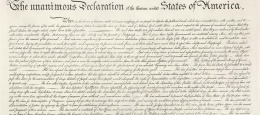
There are two tropes about the Declaration of Independence that conservatives have repeated for too many years. The first is that the Declaration is the American Creed. The second is that this creed owes its thinking to John Locke. The problem with the first idea is that too often the term “creed” is used only metaphorically, as in one does not really need to have any faith in it beyond what Americans already broadly share. The problem with the second notion is that it is simply false. As a result, the Declaration of Independence has, even for American conservatives, become an empty and fundamentally misunderstood symbol. If one adds to this how familiar the language of the Declaration has become, then it simply operates in the background of political life as a patriotic noise.
-
Adam Smith and the Birth of Classical Liberalism
-
“The mercantilists were the fetish-worshipers, the Catholics of political economy who treated money as the real incarnation of value. Adam Smith is like Luther in that he translates symbol into reality, money into labor.” So wrote Alasdair MacIntyre in his 1968 volume Marxism and Christianity. As Luther strove to pierce the fluttering veil of late medieval theology and find direct communion with God, so Smith strove to pierce the fluttering veil of mercantile thought and discover the true nature and causes of wealth.

-
Digging for America’s Jewish Roots
-
Leo Strauss once observed that “there exists a kind of Jewish glorification of every clever or brilliant Jewish mediocrity—which is as pitiable as it is laughable.” Every Jew who has received, for some long-ago birthday present, a book on great Jewish football players or a similar topic knows what he means. Strauss recalled that his distrust of this tendency was so great that he initially refused to believe reports of Einstein’s stature in science. It was only after a physicist friend reassured him that he acknowledged the achievements of the great genius.

-
Winston Churchill, American Patriot
-
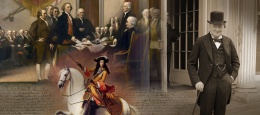
In the 250 years since the founding, only eight people have been granted honorary citizenship in the American Republic. Some, such as the Marquis de Lafayette and Casimir Pulaski, played pivotal roles in winning independence itself. Others, such as Raoul Wallenberg and Mother Teresa, have been granted this high title because they were such powerful advocates of the ideals of human dignity. When Congress makes a foreigner an honorary citizen, it is a way of memorializing not just exceptional individuals but also the principles of the American Revolution they embody.
Before any of these heroes of liberty, though, the first person made an honorary U.S. citizen was an icon of Britishness: Sir Winston Churchill. In the August 1962 speech introducing a bill to award the rank to the former prime minister, Ohio Senator Stephen M. Young described him as “the hero of two nations.” But Churchill’s achievement goes beyond that. His fight against totalitarianism inspired people across the free world to resist tyranny. Churchill saved Great Britain and rescued the whole of Western civilization. It is altogether fitting and proper that the nation he often called the “Great Republic” would make him an honorary son.
-
The Personal God of George Washington
-
The year 2026 is one of important anniversaries in the history of ordered liberty. Americans, and the world, are observing the 250th anniversary of the Declaration of Independence. This year is also the 250th anniversary of the publication of Adam Smith’s An Inquiry into the Nature and Causes of the Wealth of Nations, the book that launched the modern study of classical economics.
There is another important, albeit lesser known, anniversary: the 20th anniversary of Washington’s God: Religion, Liberty, and the Father of Our Country by Michael Novak and Jana Novak. This book holds a special place in my heart because of its role in how I first came to know the Acton Institute.
-
Our Religiously Secular Founding
-
As America observes the 250th anniversary of its independence, the nation is simultaneously entering a post-Christian era. Although American church attendance rates remain high compared to much of Europe, signs point to a broad de-Christianization of American society. The indicators include the growing numbers of Americans who say they adhere to no religion (“the nones”), a plummeting American birth rate, stubbornly high numbers of abortions, and the normalization of gay marriage and transgender ideology.
Observed against the backdrop of our morally chaotic culture, the 2026 anniversary urgently raises the question of our nation’s Christian roots. Is America still America if religion loses most of its public relevance? Many elites in academia, business, and politics are actively hostile toward Christian morality and people of faith. Could the nation somehow return to earlier times of Christian establishment?
Claims that America is a “Christian nation” have become vastly more common in the past half-century than they were in the revolutionary period. Perhaps the formative role of Christianity and the Bible was so obvious in revolutionary America that people felt little need to mention it. Today the growing national absence of Christian mores makes some Christians look back nostalgically at the American founding as...
-
Conversation Starters with ... Michael Pakaluk
-
Michael Pakaluk is Ordinary Professor of Political Economy, Busch School of Business, The Catholic University of America; Ordinarius, Pontifical Academy of St. Thomas Aquinas; and Distinguished Senior Fellow, Institute for Human Ecology. He has published many papers in philosophy and three books on Aristotle. In 2025 alone he published Be Good Bankers, The Shock of Holiness, and The Company We Keep, in addition to being a lead author for Natural Law: Five Views. He is married to the American economist and social philosopher, Catherine Ruth Pakaluk. They have eight children and live in Hyattsville, Maryland.

-
Enrique Shaw’s Path to Holiness as a Business Leader
-
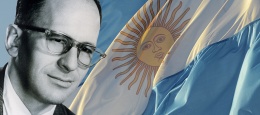
On December 18, 2025, Pope Leo XIV signed the authorization for the beatification cause of the notable Argentine businessman Enrique Shaw (1921–1962). In the event Shaw continues his path to the altars, he would be the first businessman saint in the history of the Catholic Church. To support this beatification process, testimonies were heard from people who knew him as he lived out his various vocations during difficult times: from business colleagues and employees, to family, friends, and the faithful who trust in his intercession. We believe that in addition to this important recognition of his path of holiness, Shaw’s life and work provide much instruction for Catholics and non-Catholics alike today.
Shaw received a careful Catholic education at the special request of his mother, Sara Tornquist Altgelt, when she was near death (she passed away when he was only four years old). After finishing school, Shaw decided on a naval career, ignoring the expectation that he would dedicate himself to the management of some of the numerous family businesses. At the Naval Academy and in his first responsibilities as an officer, he soon stood out for his high qualifications and leadership skills. Through his visible concerns for his subordinates...
-
Can We Moderate a Politicized Church Without Politics?
-
“I have been on paid staff at three Baptist churches,” writes Ryan P. Burge in his latest book, The Vanishing Church: How the Hollowing Out of Moderate Congregations Is Hurting Democracy, Faith, and Us. “At this moment,” he continues, “two of the three [churches] have closed their doors and the third is about 80 percent smaller than when I was attending services there two decades ago.” As a seasoned social scientist and former pastor, Burge has spent his career analyzing the critical state of the church in America. But this has been no mere academic exercise; Burge’s work has been part of his personal journey. Many pastors can identify with his struggles. Across America, a great ecclesial restructuring is happening as older mainline congregations are dying and evangelicals are sorting themselves into churches that share their personal convictions. “American religion,” Burge argues, “has become an ‘all or none’ proposition—conservative evangelical religion or none at all.” This zero-sum conservative religious turn has, in his view, pressed evangelical churches to the fringes, leaving “tens of millions of theological and political moderates with no place to find community and spiritual edification, or to work collectively to solve societal problems.”

-
Monasticism as Enterprise
-
By taking the name Leo, the first American pope, Robert Prevost, put the social doctrine of the Church front and center. With his encyclical Rerum Novarum (May 15, 1891), Pope Leo XIII drew upon recent pastoral experience and scholarly research to articulate a Catholic social vision for rapidly urbanizing and industrializing societies. It would be incorrect to imagine, however, that the Church did not always have a social teaching.
-
Page 2 of 112