


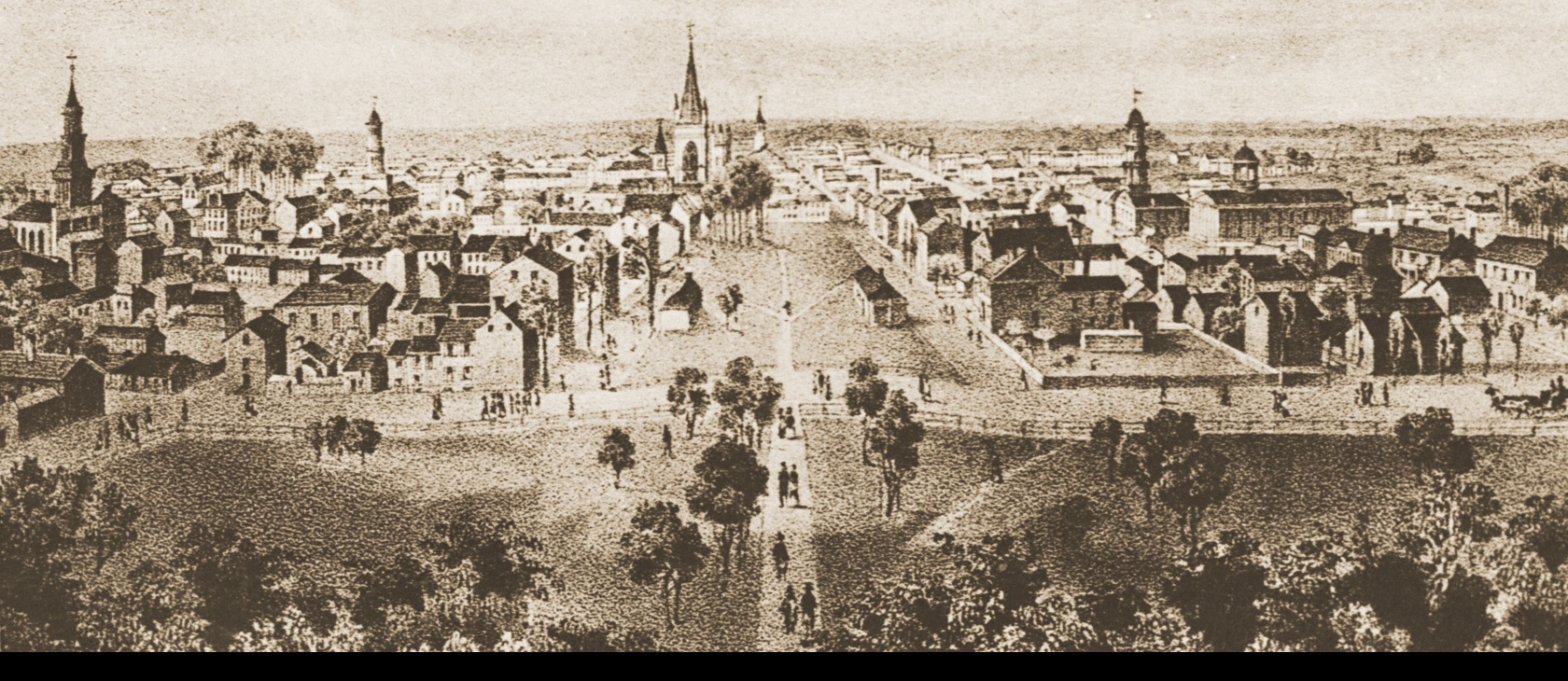
In 1783, Rev. David Rice crossed the Appalachian Mountains and stepped into Kentucky’s wild frontier. As he traveled deeper into the wilderness and met with the settlers of the region, he found a deep melancholy blanketing the land and its people. Having battled his own depressive state since boyhood, he knew their feeling of hopelessness all too well. Rice had relied heavily on the comfort of God and the teachings of His word to guide him through his mental and spiritual darkness, but religion of any kind was scarce in the so-called dark and bloody land of Kentucky.
What may at first seem like a long series of personal and professional defeats may in fact sow the seeds for great victories to come. The life of one frontier minister is proof.
Just a year before his arrival, the American Revolution had been raging following the surrender of Cornwallis at Yorktown in October of 1781. The war had proved especially difficult for the pioneers of the western theater. They weren’t fighting for the lofty ideals outlined in the Declaration of Independence alone but for survival itself. The British had aligned themselves with the Indian tribes in the region. The conflict between the American frontiersmen and the British-allied Indians involved a far more brutal form of warfare than occurred in the eastern theater. This came to a head in August 1782, with the devastating defeat of American frontiersmen at the Battle of Blue Licks—Daniel Boone’s own son, Israel, was among the casualties.
When the settlers weren’t struggling to survive, they distracted themselves from the harshness of the wilderness by entertaining themselves with songs, dance, and strong drink. Many displayed tremendous faith in their journey to Kentucky and their resolve to endure the frontier, yet Rev. Rice found that the land’s hardness had also hardened their hearts to spiritual matters. These sheep were lost and in desperate need of a shepherd. But even then, Rice hardly expected to be the one to answer such a call.
David Rice was born into a humble and pious family on December 29, 1733. His grandfather, a Welsh adventurer, came to Virginia while the colony was still young and acquired property in what is now Hanover County. On a return voyage to England to claim additional property, he died at sea, leaving his wife, nine sons, and three daughters to make their way in Virginia without him.

Among those nine boys was David Rice’s father, also named David. The senior Rice worked as a simple farmer, content with his quiet life and with no desire to grow his farm into an enterprising plantation, as so many of his neighboring Virginians did. In fact, he and his wife abhorred slavery, believing it to be a sinful “plague” and an “unjust infringement on the rights of our fellow creatures.”
Religion played an important role in the Rice household. The Rice children were taught the Lord’s Prayer, the Apostles’ Creed, and the Ten Commandments from an early age, and regularly attended church services. Yet as he developed his understanding of spiritual matters, such as the righteousness of God and the fall of man, the younger Rice began to suffer from depressive episodes. “When I was only six or seven years old,” Rice later reflected in his memoirs, “I often prayed in secret, and ardently desired to escape punishment and obtain happiness after death. My prayers were frequently accompanied with many tears.”
Rice had a “great zeal for God, but it was not according to knowledge.” He wanted to know God but often struggled to understand the message of the gospel in these early years, his head filled with doubts and uncertainty. Throughout his youth, as his understanding of God’s grace and the sinful nature of man grew, he would swing between unspeakable joy and agonizing darkness. “I viewed myself the most miserable sinner under heaven,” Rice wrote.
In his memoirs, Rice recalls feeling totally unworthy of the grace God offers in the gospels through Christ. He felt himself a slave to sin, incapable of ever experiencing the presence of God due to this wickedness. Years of prayer and studying Scripture passed before he found relief, which came after some of the darkest, most distressing weeks of his life. In meditation, he encountered Matthew 23:37, where Jesus rebukes Jerusalem and reaffirms his persistent faithfulness toward his followers “as a hen gathereth her chickens under her wings.” Though he had read the verse many times, it now struck Rice as if it were the first. Perhaps recalling scenes from his father’s farm, he reflected that the hen’s feathers, though not belonging to the chicks, were fully sufficient to protect them. All Rice needed to do, he realized, was to remain under Christ’s wing as a small chick. For now, this “full assurance” of God’s grace quieted his troubled mind.
"We contend for our estates, for our liberties, for our lives, for our posterity, for the rights of our king and our country," Rice declared.
In his newfound confidence of faith, Rice joined the College of New Jersey (Princeton). He obtained his bachelor’s degree, then returned to Virginia as he continued his study of divinity. He at last acquired his license to preach, entering the ministry in December of 1763. Around this time, Rice found an intimate and lifelong companion in Mary Blair, daughter of the well-respected Pennsylvania minister Rev. Samuel Blair. Mary was a woman of “uncommon strength of mind,” and in his marriage to her Rice finally felt he had “obtained favour of the Lord.” His wife’s prudence, reliability, and faithfulness soon proved indispensable.
Beginning his ministry, Rice filled the pulpit left vacant by Rev. Samuel Davies in Hanover County and preached there for four or five years. But along with Davies’ congregation, Rice also inherited its internal disputes. Financial tensions ran high among certain members, and Rice’s youthful brashness did little to ease them. The church was unable—or unwilling—to provide the support he needed. At last, Rice wrote to his presbytery, requesting release from the congregation. They obliged his request.
Rice was then a shepherd without a flock, unable to find a congregation willing to bring him on as their pastor. He offered ministerial services where he could but felt the tug of melancholy’s return. This was alleviated only when Rice decided to head deeper into the frontier of Virginia—to Bedford County, where “no messenger of salvation had yet settled among” the sparse population.
Rice took his family to the Peaks of Otter in the heart of the Blue Ridge Mountains. Amid this community, he found Baptists, Episcopalians, and Presbyterians alike welcoming him with open arms. These people had various racial and religious backgrounds, and were equally diverse in their country of origin. Finally, Rice found comfort in his community and great success in his ministerial efforts. He spent the next 13 years preaching in Bedford County.
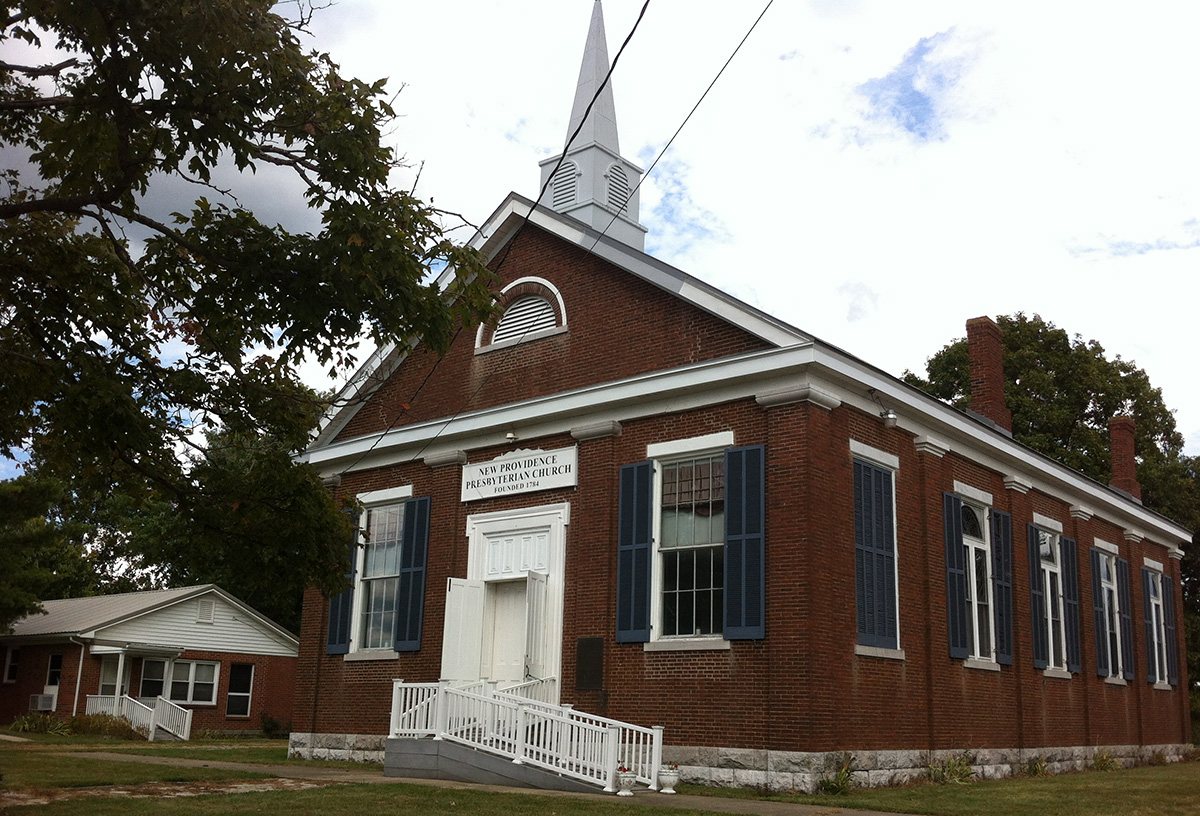
During this time, the world around him was set ablaze. Further north, in Massachusetts, the first shots of the American Revolution rang out at Lexington and Concord in April of 1775. Within 15 months, the Second Continental Congress voted to officially dissolve all ties with Great Britain, declaring independence as the United States of America.
Rice was removed from the action of the revolution, but he was far from silent. Through his preaching, he helped foster a community deeply committed to the principles of American independence. In the early days of revolution, many colonists believed reconciliation with the British Empire was still possible. A Bedford County public meeting was held to address how they should react. In a stirring speech, Rice affirmed the just cause of the colonists to stand up in defense of their rights.
“We contend for our estates, for our liberties, for our lives, for our posterity, for the rights of our king and our country,” Rice declared to the people of Bedford County. Parliament, he believed, was ripping the empire apart. “This some in Great Britain already see; and I hope a vigorous and manly opposition on our part will soon open the eyes of others, rouse up the ancient generous spirit of Britain, bring just vengeance on the authors of these wicked counsels, and restore the chartered rights of America.” If this doesn’t happen, Rice closed, “I fear the glory and prosperity of Britain is at an end, which may God of his great goodness forbid.”
Thus, when independence was finally declared in July of 1776, Rice cast his lot with the American cause. The survival and ultimate success of the American experiment was something Rice consistently invested in throughout his life. He believed the greatest threat to America’s longevity and prosperity was not a foreign adversary but the integrity of its people.
“Ever since the establishment of American independence,” Rice later wrote, “and even for some time before, I have very much doubted whether we had political virtue sufficient to support our happy, free, republican government.” He considered it “impossible that we should long continue free and happy without a reformation in our principles and manners; and know of nothing that can produce this reformation but religion, religion to influence the mind and give it a happy direction.”
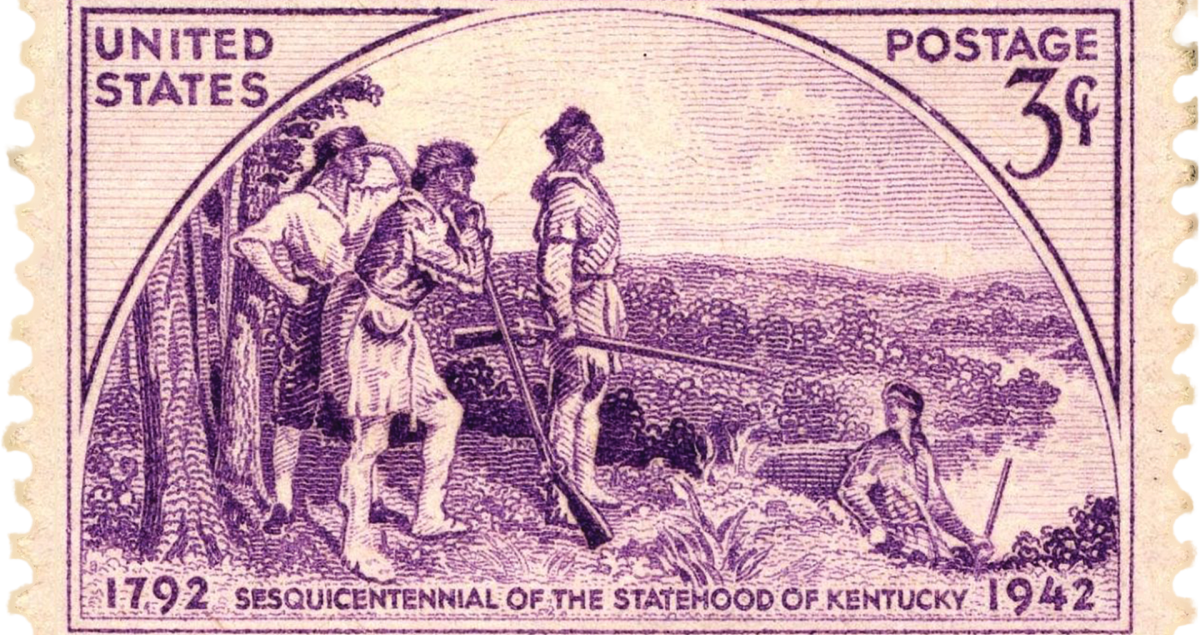
The issue of public virtue weighed heavily on Rice as he and his family prepared to enter Kentucky. During his years at the Peaks of Otter, Rice had built a comfortable and happy life, and he had little inclination to uproot himself again. But like so many preachers, then and now, he felt a persistent call to minister to those on the frontier.
His visit in 1783 was a success: Many of the settlers immediately requested he return and stay in Kentucky, with over 300 signing an invitation to return and serve as their minister. Convinced of his calling, Rice gathered his family and possessions and made the difficult journey across the mountains.
Yet within weeks of his arrival, Rice was once again overwhelmed with despair, fearing he had made a mistake. “I found scarcely one man and but few women who supported a credible profession of religion,” he wrote about his arrival. “With this I was considerably distressed, and made to cry, ‘where am I! What situation am I in?’” The warm welcome he had expected quickly gave way to the reality that true support was thin. He would labor for more than a year before establishing the first Presbyterian churches in the region—at Danville, Cane Run, and the Forks of Dick’s River.
As he toiled to bring religion to Kentucky, he also sought to bring education. After receiving a charter in 1780, Transylvania Seminary opened in 1785 in David Rice’s house near Danville. He sat as the chairman of the Board of Trustees for many years and also served as its first grammar school teacher. Thanks in large part to David Rice’s guidance and service, Transylvania became the first institution of higher learning west of the Appalachian Mountains.
With these religious and educational institutions, Rice hoped public virtue would begin to take hold in Kentucky. These endeavors made him increasingly lonely. Even as new ministers arrived, Rice sank “into my former melancholy.” He found these ministers lacking in proper theological understanding, thus threatening to “destroy both the spirit and practice of religion” in Kentucky. The isolation he felt only intensified in the coming years as he confronted what he considered among the greatest strains on public virtue—the spread of slavery.
"Liberty is an inherent right of man, of every man; the existence of which ought not to depend upon the mutability of legislation."
The road to Kentucky statehood began in 1784. In November, Colonel Benjamin Logan called for the frontier leaders of the region to meet in Danville to address a reported of impending Indian invasion. As they met, a disturbing realization swept over them: Little could be done without support from Virginia’s government across the mountains. A consensus was quickly reached: Kentucky statehood was both necessary and inevitable. The threat of attack from the tribes never manifested, but the issues of defense, overlapping land claims, taxation, and general distance resulted in a statehood convention called for December 27, 1784.
Between 1784 and 1792, 10 conventions were held to confront the pressing challenges facing Kentuckians and to draft a state constitution. Unlike Virginia, home to an extraordinary concentration of brilliant minds, Kentucky’s talent pool was far thinner. One notable exception was George Nicholas, a Virginian transplant whose legal mind rivaled many of his tidewater contemporaries. Nicholas became the driving force behind the creation of Kentucky’s state government, frequently corresponding with James Madison for advice through the statehood conventions. So respected were Madison’s constitutional insights that Caleb Wallace suggested that he remove himself from Virginia to be “politically buried in this Wilderness.” To this, Madison responded, “I do not smile at the Idea of transplanting myself into your wilderness,” although he was happy to continue to offer his “Ideas towards a constitution of Government for the State in embryo.”
While debates occurred over various issues throughout the conventions, nothing invoked the passions of the delegates like the subject of slavery. This was a direct result of David Rice’s presence, and Nicholas was his chief opponent. A slaveholder himself, Nicholas was convinced that without slavery, the gentry class from Virginia would not be incentivized to settle in Kentucky. He held firm that without their presence and participation, Kentucky would be held back.
Rice, in contrast, recognized the opportunity at hand. Kentucky was set to be the first state established beyond the Appalachian Mountains. As these conventions took place, the Continental Congress had passed the Northwest Ordinance in 1787, preventing slavery’s spread into the Old Northwest. If Kentucky followed this precedent, slavery’s influence on the infant republic would be critically diminished and could possibly be eliminated without bloodshed.
Rice was the leader of a small but vocal delegation composed of ministers and general anti-slavery advocates. Rice recognized the difficulty of eliminating an institution that had been carried over from Virginia and practiced for decades in Kentucky already. But if it were not to occur at this convention, the opportunity may be forever lost. During the final statehood convention in 1792, he addressed the delegates in a speech entitled “Slavery, Inconsistent with Justice and Good Policy.” As he opened, Rice proclaimed that “as creatures of God, we are, with respect to liberty, all equal.”
“If there is not in government some fixed principles superior to all law, and above the power of legislators, there can be no stability, or consistency in it,” he told the delegates. “Liberty is an inherent right of man, of every man, the existence of which ought not to depend upon the mutability of legislation, but should be wrought into the very constitution of our government, and be made essential to it.”
The solution, Rice determined, was simple. “I give it as my opinion, that the first thing to be done is to resolve UNCONDITIONALLY to put an end to slavery in this state.” But he knew such a measure was extremely unlikely in Kentucky, where “this evil is a tree that has been long planted, it has been growing many years, it has taken deep root, its trunk is large, and its branches extend wide.” He argued that slaves had a “just claim to be freed instantly,” but that due to the “bad conduct” of a generation of settlers planting the seed of slavery into Kentucky, “gradual emancipation only can be advisable.”
Despite Rice’s best efforts, the convention rejected his plea to sever ties with slavery. A motion was made to expunge the ninth article of the Kentucky constitution, which protected the institution of slavery, but it failed 16 to 26. Of the 16 to vote in the affirmative, 10 were ministers. Kentucky joined the Union on June 1, 1792—the first slave state west of the Appalachian Mountains.
The energy Rice spent fighting slavery in 1792 failed in the short term but set the groundwork for future anti-slavery proponents to pick up the torch.
The Kentucky statehood convention was Rice’s most prominent role in any political process. In part thanks to Rice’s efforts, the Kentucky constitution upheld certain expectations of human dignity regarding enslaved individuals. It gave the legislature the “full power to pass such laws as may be necessary, to oblige the owners of slaves to treat them with humanity.” This was admittedly a better outcome than many of the states in the Deep South would later permit. Nonetheless, Kentucky’s struggle over slavery continued in the decades to come, with anti-slavery forces repeatedly losing ground.
The 1792 constitution was never meant to be permanent. George Nicholas and others had hoped it would attract enough of the gentry class from Virginia to form a more stable constitution in 1799. Indeed, during the 1799 convention, several aspects of state governance were solidified, particularly support for slavery. This new constitution further disenfranchised blacks, Indians, and people of mixed race, while the provision dealing with slavery itself was upheld in its entirety.
Due to the influence of Rice and his ministerial anti-slavery caucus, the convention then voted to prohibit “any clergyman, priest, or teacher of any religious persuasion, society, or sect” from being eligible for the General Assembly. Ministers were also barred from the executive branch.
Following Rice’s removal from political life, he mostly focused on his ministry, but his reputation continued to suffer. He became known as a rather bitter and prickly man in his later years, and melancholy returned with a tight grip more often than not. Rice struggled financially, becoming the object of a crass poem that mocked him as a man who “cannot settle his affairs, Nor pay attention unto pray’rs.” In 1798 he removed himself from Danville to Greensburg, Kentucky, where he would spend the remainder of his life, passing away on June 18, 1816, at 83 years of age. The last words uttered by Rev. David Rice were “O when shall I be free from sin and sorrow!”
What is to be made of a life such as David Rice’s? On one hand, Rice was repeatedly met with failure after failure. He faced near constant financial ruin, he could not overcome slavery’s eventual (perhaps inevitable) spread across the Appalachian Mountains, and his ministerial work proved to be the butt of many jokes. He never truly escaped his sadness, which often resurfaced at the worst possible time. Considering these facts, his life appears a tragedy.
Yet that’s not the full picture. Thanks to his efforts planting churches at such a pivotal time in Kentucky’s development, religion spread throughout the frontier, eventually culminating in the Great Revival of 1800/1801. Because of this, many affectionately referred to him as “Father” Rice, and even the “Apostle of Kentucky.”
The energy he spent fighting slavery in 1792 failed in the short term but set the groundwork for future anti-slavery proponents to pick up the torch. Among these advocates was Rev. John Rankin, who would later be referred to as the “father of abolitionism” and got to know many of Rice’s colleagues during the few years he lived in Kentucky. Rev. John G. Fee—Kentucky’s most prominent abolitionist and the founder of Berea, Kentucky—was also influenced by Rice and distributed copies of “Slavery, Inconsistent with Justice and Good Policy” throughout the commonwealth. Like John the Baptist crying out in the wilderness, making straight the way for a greater glory yet to come, Rice laid the groundwork in Kentucky that allowed for the spread of religion and liberty in the 19th century.
Throughout the life of a Christian, remaining cheerful in the midst of strife and despair can feel impossible. Rev. Rice certainly fell victim to melancholy time and again. Faith is perhaps most difficult to maintain when our labor bears no fruit—or at least none we can enjoy. Rice’s life is a reminder to us that God does not promise a reward for our faithfulness in this life—but this is not cause for despair. Even when we do not get to see results, we can have assurance that all things work together for good. While Rice repeatedly suffered in his service to God’s will, he remained faithful until the end.