


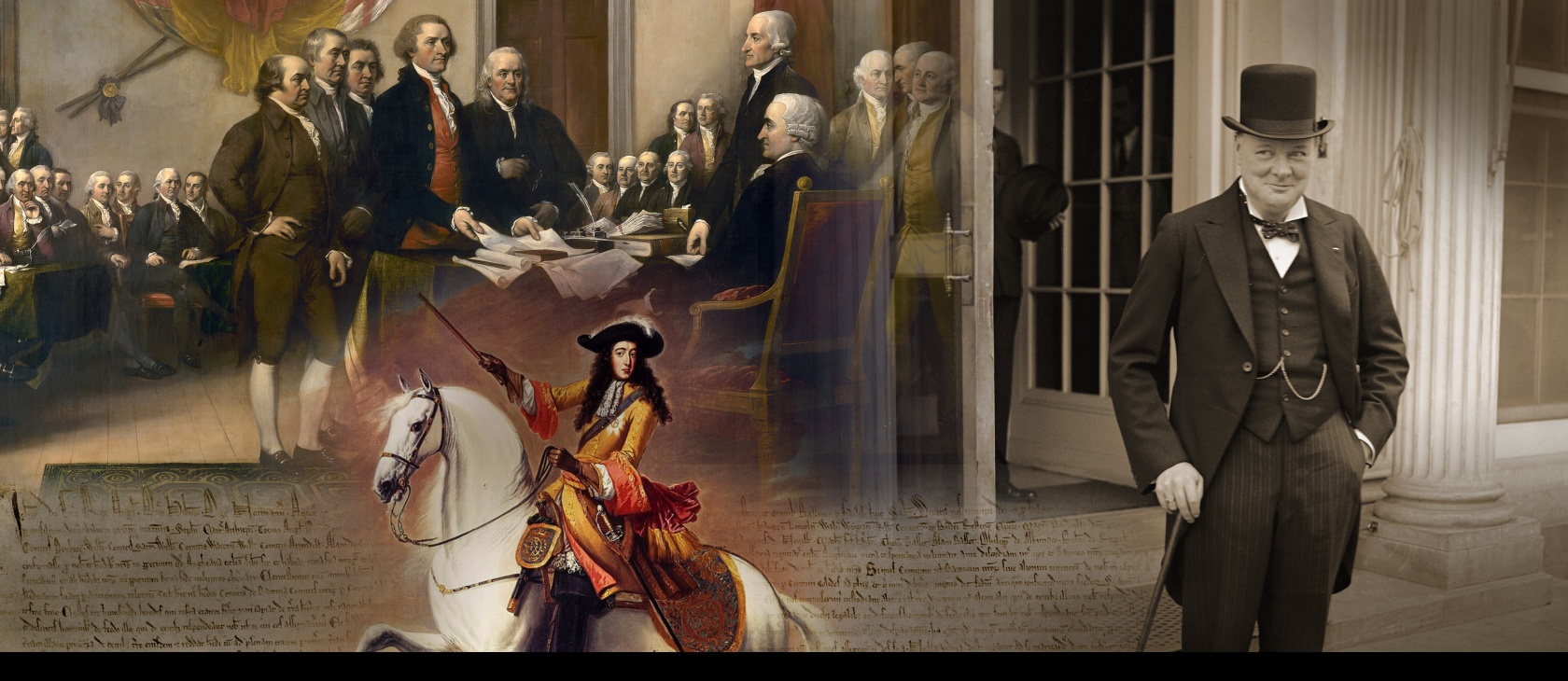
In the 250 years since the founding, only eight people have been granted honorary citizenship in the American Republic. Some, such as the Marquis de Lafayette and Casimir Pulaski, played pivotal roles in winning independence itself. Others, such as Raoul Wallenberg and Mother Teresa, have been granted this high title because they were such powerful advocates of the ideals of human dignity. When Congress makes a foreigner an honorary citizen, it is a way of memorializing not just exceptional individuals but also the principles of the American Revolution they embody.
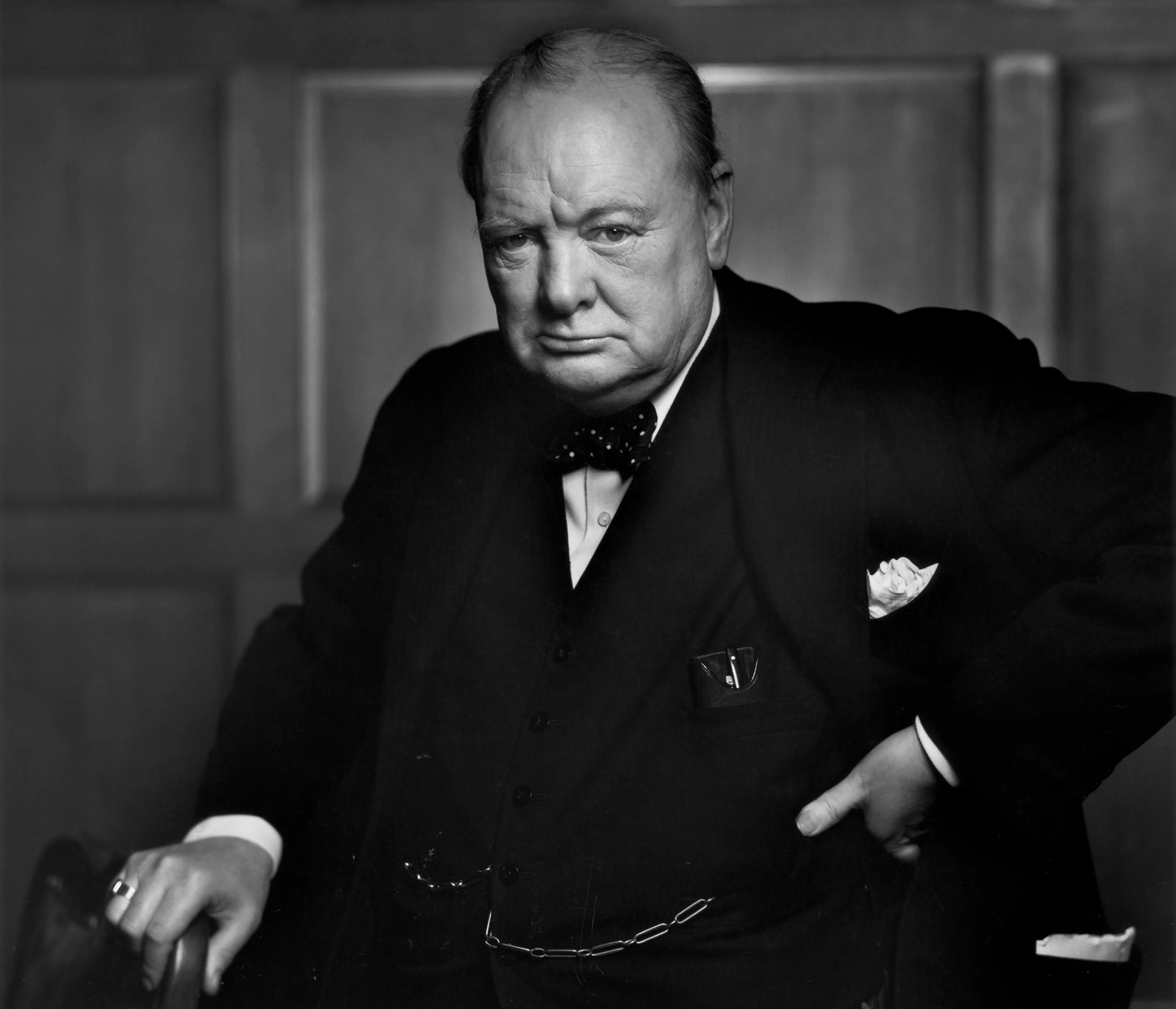
Before any of these heroes of liberty, though, the first person made an honorary U.S. citizen was an icon of Britishness: Sir Winston Churchill. In the August 1962 speech introducing a bill to award the rank to the former prime minister, Ohio Senator Stephen M. Young described him as “the hero of two nations.” But Churchill’s achievement goes beyond that. His fight against totalitarianism inspired people across the free world to resist tyranny. Churchill saved Great Britain and rescued the whole of Western civilization. It is altogether fitting and proper that the nation he often called the “Great Republic” would make him an honorary son.
Churchill insisted that the defense of Western civilization depended upon the 'special relationship' between the United States and the United Kingdom.
Throughout his entire career, Churchill insisted that the defense of Western civilization depended upon the “special relationship” between the United States and the United Kingdom. The son of an American heiress and a British aristocrat (he had ancestors who fought on both sides of the War for Independence), he uniquely understood that the historical ties between the two nations go beyond a shared language. The English-speaking peoples were bound together by a common culture and an ardent love for liberty that Churchill believed was more precious than almost anything.
As American citizens today reflect on 250 years of independence, it is worth looking back to what our honorary brother had to say about our republic. Not only did Churchill understand the roots of American order, but he also sought ways to nourish them through both history and oratory. Furthermore, he attempted to found the post–World War II global order on those very same roots—not according to an arid universalism, but rather on the grounds of a truly rational conservatism that can balance principles and particulars.
Churchill may have been born to a long line of British aristocrats, but he was a great admirer of the American Revolution. He devoted long chapters of his multivolume, Nobel Prize–winning History of the English-Speaking Peoples to narrating its events and uncovering its principles, for example. And in public speeches in both the United States and Great Britain, he consistently drew connections between the struggle of the American founders to establish a free republic and the modern fight against tyrants and totalitarians.
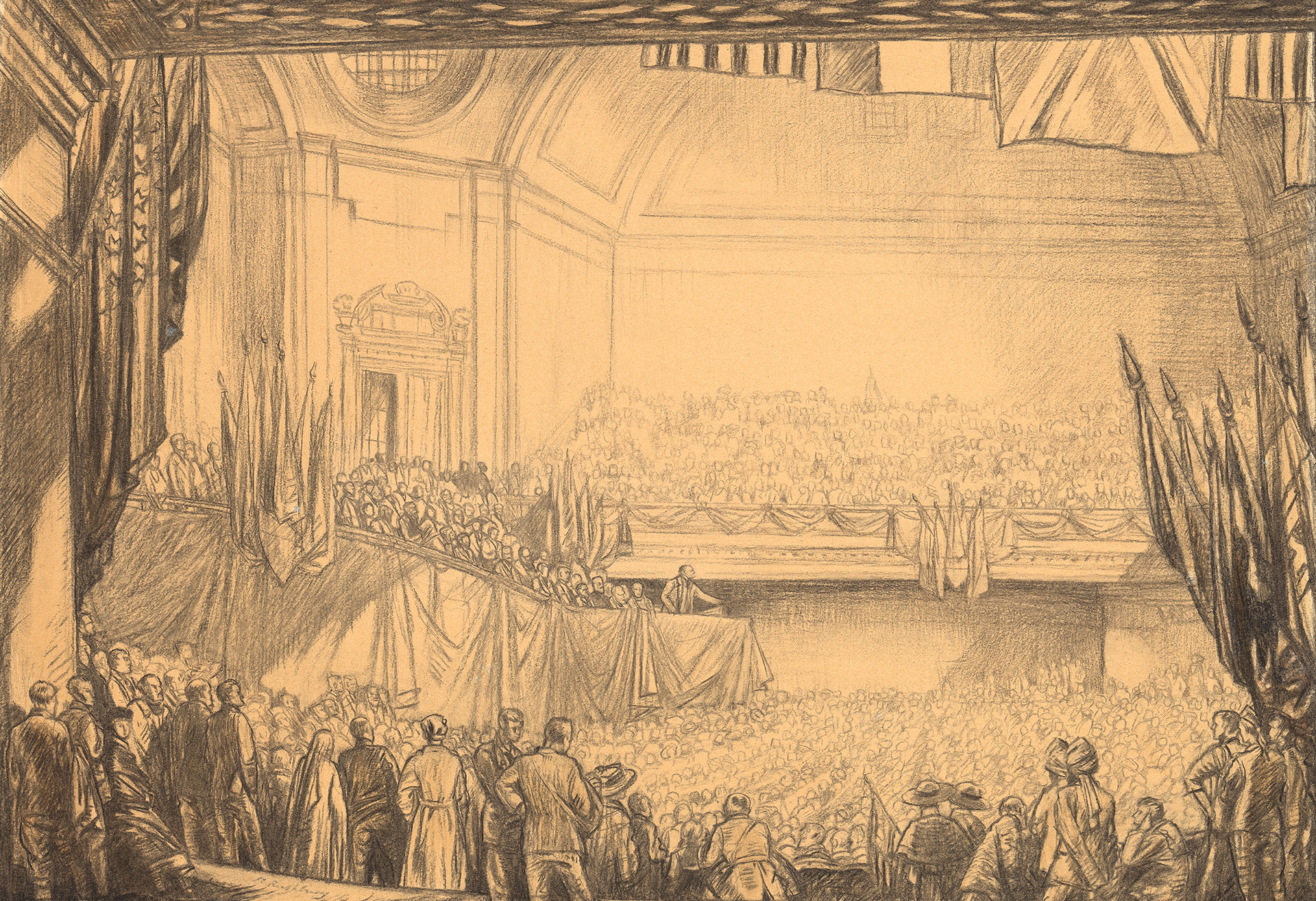
Perhaps his most beautiful discourse on the theme came on July 4, 1918, in a speech given at Westminster honoring Independence Day. At the time, World War I was still raging. Imperial German forces’ final spring offensive was only just beginning to falter after Allied troops, bolstered by American reinforcements, put up a fight at places like Aisne and Belleau Wood. Europeans, generally speaking, were ecstatic the United States had finally entered the conflict just in time to turn the tide. Churchill shared his countrymen’s gratitude, but he also offered a somewhat more sophisticated interpretation of American involvement.
Churchill began that July 4 speech—perhaps unusually for an Englishman—with praise for the Declaration of Independence. “A great harmony exists between the spirit and language of the Declaration of Independence and all we are fighting for now,” he said. Churchill believed that World War I was about more than the petty squabbles of empires; the Allies were fighting, he argued, to vindicate self-government itself. Without falling into the excess of Wilsonian idealism, he was clear-eyed about the real threat German imperialism posed to Europe and the rest of the globe. The Americans, he understood, were joining the fight on the side of freedom against autocracy precisely because of the founding’s principles.
Churchill went on to hail the American founding for defending the universal truths of human liberty. “The Declaration of Independence is not only an American document,” he said. “It follows on Magna Carta and the Bill of Rights as the third great title-deed on which the liberties of the English-speaking people are founded.” While the precise causes of the American Revolution may have been avoided had cooler heads prevailed on either side of the Atlantic, Churchill recognized that the Patriot cause was essentially just. In fact, the then-British Minister for Munitions recognized that the American Revolution was a kind of jolt that Great Britain needed to pursue justice more closely. “By [the Declaration] we lost an Empire, but by it we also preserved an Empire,” Churchill said. “By applying its principles and learning its lesson we have maintained our communion with the powerful Commonwealths our children have established beyond the seas.” From Churchill’s point of view, the American Revolution led to a kind of refounding of the British Empire.
Whatever the misunderstandings of the past might have been, Churchill believed that by 1918 the English-speaking peoples had long let the unpleasantries slip away. During that world crisis, they were united as never before in a battle against autocracy. Against the Kaiser’s vision of absolute rule, the Allies were fighting for limited government and constitutionalism—the only effective safeguards of human liberty. As Churchill put it in the speech’s peroration:
Wherever men seek to frame politics or constitutions which safeguard the citizen, be he rich or poor, on the one hand from the shame of despotism, on the other from the miseries of anarchy, which combine personal freedom with respect for law and love of country, it is to the inspiration which originally sprang from the English soil and from the Anglo-Saxon mind that they will inevitably recur. We therefore join in perfect sincerity and simplicity with our American kith and kin in celebrating the auspicious and glorious anniversary of their nationhood.
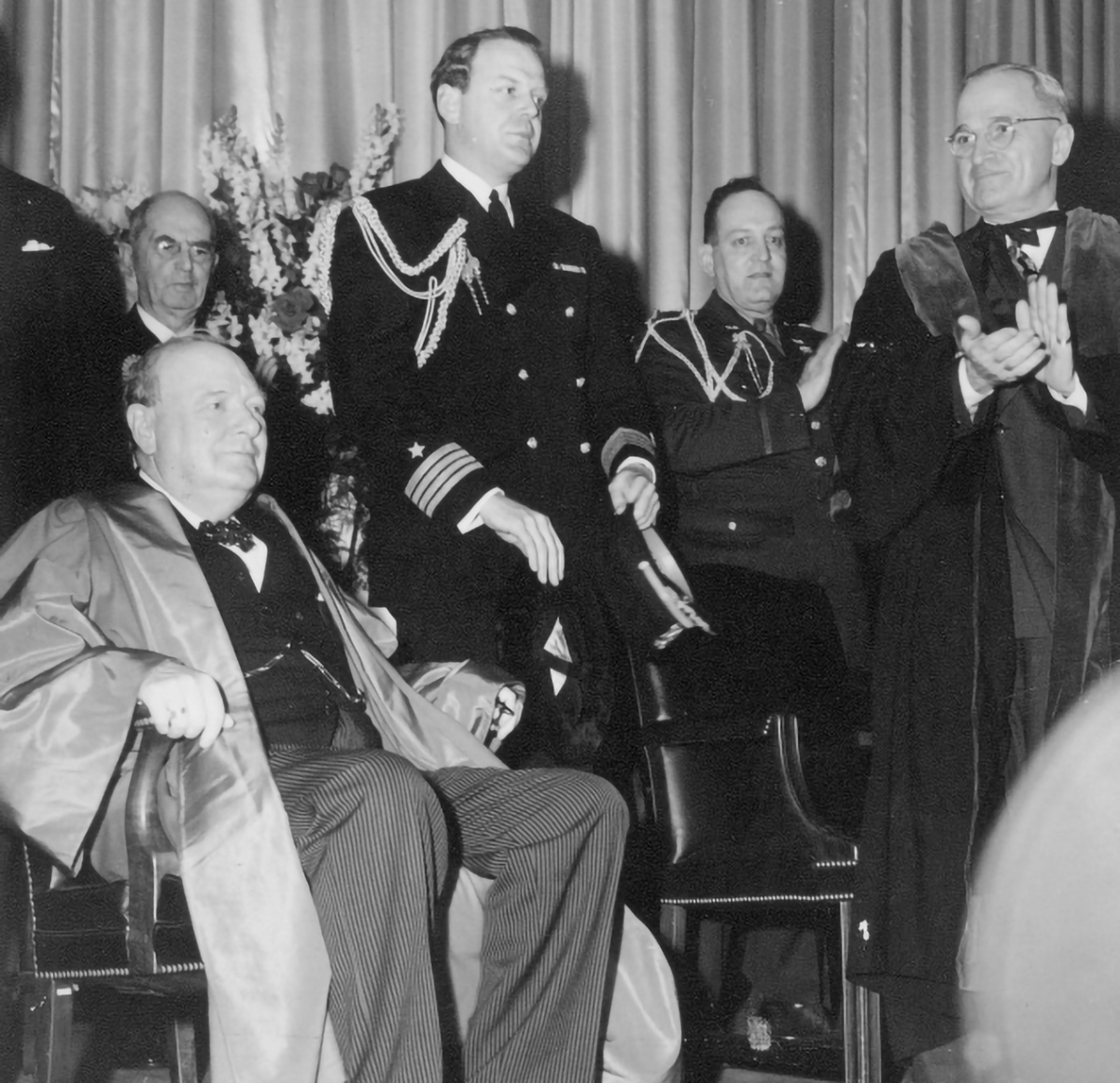
These were principles that would continue to shape the way Churchill viewed and spoke about the “special relationship.” Later in his career, for example, in his famous “Iron Curtain” speech in Fulton, Missouri, the statesman would recur to the principles of traditional English liberties and the Declaration of Independence to sketch a vision for a free world strong enough to resist totalitarianism. “We must never cease to proclaim in fearless tones the great principles of freedom and the rights of man,” he said, “which are the joint inheritance of the English-speaking world and which through Magna Carta, the Bill of Rights, the Habeas Corpus, trial by jury, and the English common law find their most famous expression in the American Declaration of Independence.” Throughout his entire public life, Churchill insisted that these ideals were something more than the ideology of liberalism; he taught us that the principles of English liberty and the American founding are high principles, worth fighting and dying for.
All the same, it would be a mistake to suggest Churchill sought to impose an abstract ideal of Anglo-American liberty on the whole world. He did not even seek to redefine British politics according to American principles. Churchill was, after all, a loyal monarchist and a defender of his native land’s parliamentary system—far different from the congressional system established by the framers of the U.S. Constitution. As a conservative in a Burkean mold, Churchill did not believe any nation should abandon its historic institutions in favor of a supposedly more “rational” scheme of social organization. Political establishments are strongest, he felt, when they emerged organically and reflected the wisdom of many generations rather than the innovative or destructive spirit of the present.
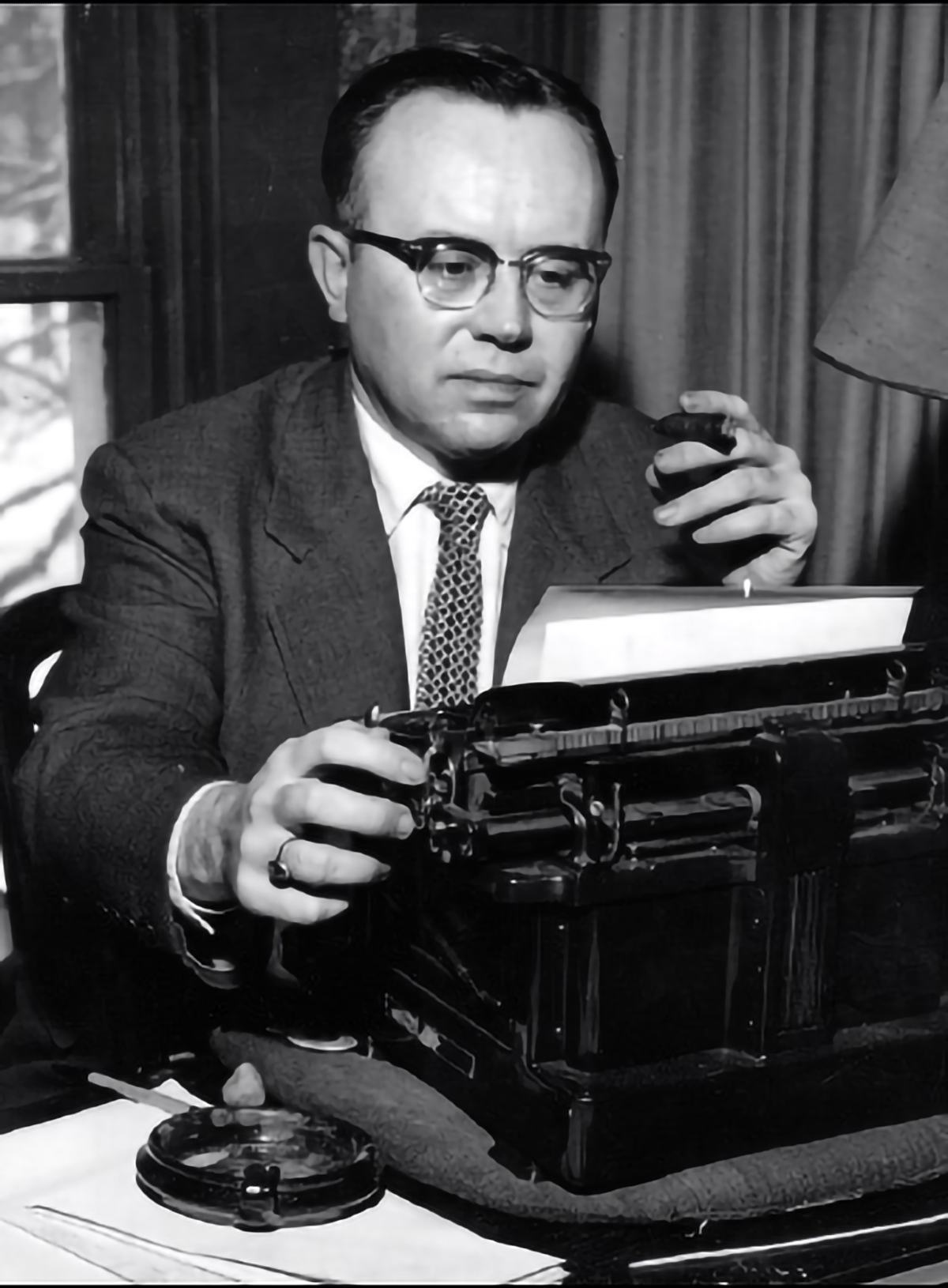
In this, Churchill’s view of the American founding greatly resembled that of the great conservative thinker Russell Kirk. The Michigan writer—who once witnessed Churchill speak at a campaign rally and described him as “common sense incarnate”—hardly recognized the American Revolution as a revolutionary at all. Kirk insisted “that the Patriots of 1776 intended no radical break with the past” and “thought of themselves as conservators rather than as innovators.” The men of Massachusetts and Virginia who led the rebellion felt that Parliament was appropriating powers it did not rightly command; they fought back, at first, to defend traditional English liberties. The founders did not set out, Kirk argued, to build a republic as some kind of utopian experiment. If anything, they considered themselves to be following the example of their ancestors who, in 1688, overthrew a tyrant Stuart king to reestablish the liberties they had in turn inherited from their forefathers.
Churchill’s own treatment of the American Revolution in A History of the English-Speaking Peoples also draws out its similarities to the Glorious Revolution. “The Declaration was in the main a restatement of the principles which had animated the Whig struggle against the later Stuarts and the English Revolution of 1688,” he wrote. The founders may have been attempting to establish liberty in conditions that the human race had never before faced, but they were guided by the lamp of experience. Their knowledge of history and reverence for the past made their labors a fundamentally conservative work. Any attempt to revive the order they constructed must be performed along similarly conservative lines.
The U.S. Constitution is perhaps the best illustration of this lesson. As Churchill acknowledged, a written constitution was in a certain sense “something unheard of in the existing world.” Indeed, he acknowledged, the very idea of an “authoritative document” outlining all the responsibilities and limits on government “presents a sharp contrast with the store of traditions and precedents” comprising Britain’s unwritten constitution. “Yet behind it lay no revolutionary theory,” he continued. The delegates to the Philadelphia Convention of 1787 were not reengineering society according to the egalitarian ideas of European philosophes; instead, Churchill explained, they were attempting to base their frame of government on “Old English doctrine freshly formulated to meet an urgent American need” in a sort of “reaffirmation of faith in the principles painfully evolved over the centuries by the English-speaking peoples.”
Ingenious as the framers were, though, Churchill saw no need for every society on the planet to adopt precisely their preference for a written constitution. In a 1936 essay for Collier’s magazine, he even offered a stark critique of the concept itself. Churchill held that the spirit of the unwritten constitution lent a sense of continuity and cooperation to British politics and society that simply could not be found in the vastness of the American Republic. Across several centuries, “a jealous care for constitutional rights came to mark both the great parties of the State,” he wrote. “And as to all men the Constitution represented security and freedom, none would consent willingly to any breach of it, even to gain a temporary advantage.” A certain kind of traditionalism is native to the British Isles, and it is—or perhaps was—the best safeguard of freedom.
Despite this reverence for his homeland’s customs and mores, Churchill recognized that what he called the “rigidity” of the written U.S. Constitution achieved something of the same effect on this side of the Atlantic. “A prime object of the Constitution was to be conservative; it was to guard the principles and machinery of State from capricious and ill-considered alteration,” he wrote in the third volume of A History of the English-Speaking Peoples. “In its fundamental doctrine the American people acquired an institution which was to command the same respect and loyalty as in England are given to Parliament and the Crown.” The point of politics—to Churchill, at least—is not to craft a one-size-fits-all regime to impose perfect justice on all places, but rather to find the solutions best suited to a particular people. Certain principles such as government by consent, private property, and rule of law may be universal, but the particular ways they are instituted can never be.
In fact, Churchill considered the desire for a heavenly regime on earth to be one of the greatest dangers of the 20th century. Inspired at least in part by one of his great heroes, Edmund Burke, Churchill consistently framed his constitutionalism as a defense of the “wisdom of our ancestors.” As he put it in the Collier’s essay:
It is for these reasons among many others that the founders of the American Republic in their Declaration of Independence inculcate as a duty binding upon all worthy sons of America “a frequent recurrence to first principles.” Do not let us too readily brush aside the grand, simple affirmations of the past. All wisdom is not new wisdom. Let us never forget that the glory of the nineteenth century was founded upon what seemed to be the successful putting down of those twin curses, anarchy and tyranny.
Among Churchill’s other heroes was a great American, Abraham Lincoln. In his struggle against chattel slavery, the Railsplitter often made reference to the Declaration and its principles. Lincoln sometimes referred to the document as an “apple of gold” protected by a “picture of silver”—the written Constitution. Both were very doubtless of utmost value, but one could not exist without the other. Together, Lincoln held, the Declaration and Constitution articulated a “philosophical cause”: “the principle of ‘liberty to all.’” Just four score years later, Churchill would make similar arguments with regard to his own national crisis. For statesmen in this mold, the preservation of the institutions of self-government we have inherited is not a merely antiquarian endeavor.
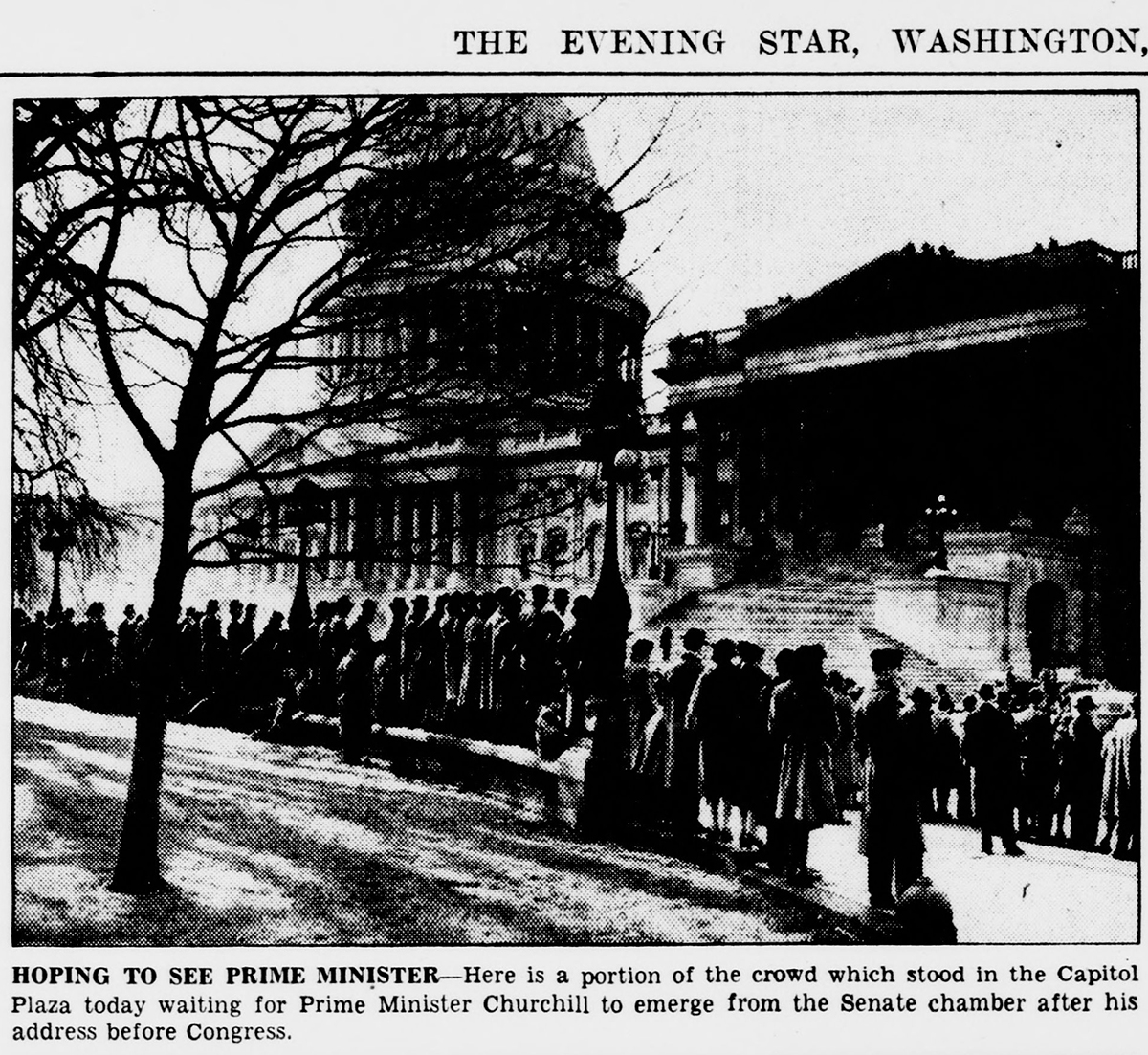
Churchill drew on this principle especially when he came to rally the American people to action during World War II. In the aftermath of Pearl Harbor during his December 26, 1941, address to a joint session of Congress, the prime minister declared he could never “feel quite like a fish out of water in a legislative assembly where English is spoken. I am a child of the House of Commons,” he went on to say. “I was brought up in my father’s house to believe in democracy. ‘Trust the people.’ That was his message.” Churchill then drew a direct connection between his father’s notion of “Tory Democracy” and what he called “the Gettysburg ideal” of “government of the people, by the people, for the people.”
English-speaking peoples on either side of the Atlantic, Churchill argued, may have differing political institutions, but they were united in a fight for freedom against fascism. In this respect, his message was little different in 1941 than it was in 1918. True, the United States and Britain faced dark hours ahead—while one speech was given toward the end of a war, the other was delivered only at its beginning. A long road lay ahead. And yet, Churchill told Congress, “the cause of freedom in every land, the question of whether deliverance comes in 1942 or 1943 or 1944, falls into its proper place in the grand proportions of human history.” Because Americans and Britons alike never swerved too far from the fight for constitutional liberty, he said, “As long as we have faith in our cause, and an unconquerable willpower, salvation will not be denied us.”
‘A great harmony exists between the spirit and language of the Declaration of Independence and all we are fighting for now.’
Indeed, Churchill said in an echo of his 1918 Independence Day address, the fact that the United States had finally entered the war had “led the subjugated peoples of Europe to lift up their heads again in hope.” The “famous ancient states” of Europe may have lain “prostrate under the Nazi yoke,” but America’s might promised a day of liberation. That day eventually came, and Adolf Hitler’s war machine collapsed—in no small measure because of the partnership between the English-speaking peoples Churchill forged.
After the war, the statesman hoped that this partnership could be the basis for a just and lasting peace. While he supported institutions of international governance such as the United Nations, Churchill harbored no illusions about their effectual ability to check the imperialism of totalitarian powers such as the Soviet Union. He argued in his “Iron Curtain” speech instead that only “a special relationship between the United States and the British Commonwealth” could strengthen and enforce the will of a world organization. The slogans of liberals could not stop the Nazi or Soviet conquest of Europe. Only by sharing the physical and moral resources of our common civilization might we overcome tyranny in the modern age.
Two hundred and fifty years after achieving independence, it is tempting to see the “American experiment” as wholly unique. In some respects, to be sure, it is. But Churchill and other great conservatives would remind us that our Constitution did not emerge wholesale from a vacuum or descend from heaven. Its animating principles were discovered by our ancestors over the long centuries—and their example is perhaps the greatest source of strength we still have, if only we have the will to draw on it.
