

As America observes the 250th anniversary of its independence, the nation is simultaneously entering a post-Christian era. Although American church attendance rates remain high compared to much of Europe, signs point to a broad de-Christianization of American society. The indicators include the growing numbers of Americans who say they adhere to no religion (“the nones”), a plummeting American birth rate, stubbornly high numbers of abortions, and the normalization of gay marriage and transgender ideology.
Observed against the backdrop of our morally chaotic culture, the 2026 anniversary urgently raises the question of our nation’s Christian roots. Is America still America if religion loses most of its public relevance? Many elites in academia, business, and politics are actively hostile toward Christian morality and people of faith. Could the nation somehow return to earlier times of Christian establishment?
Claims that America is a “Christian nation” have become vastly more common in the past half-century than they were in the revolutionary period. Perhaps the formative role of Christianity and the Bible was so obvious in revolutionary America that people felt little need to mention it. Today the growing national absence of Christian mores makes some Christians look back nostalgically at the American founding as a time of relatively unquestioned Judeo-Christian assumptions, if not uniformly orthodox Christian beliefs.
Many a country music singer has promised an estranged lover that “you’re gonna miss me when I’m gone.” That is how many conservatives and traditional religious people evidently feel about our nation’s loss of Christian norms. It’s easier to perceive the powerful role that Judeo-Christian scaffolding once played in America now that it has largely collapsed. Even certain atheists such as the Somali-born writer Ayaan Hirsi Ali have declared themselves Christians in recent years, animated by a conviction that the secular West has squandered its Christian cultural inheritance. Anecdotal evidence further suggests that young people, especially men, are turning to confessional versions of Christianity, hoping to find moral assurance against the toxic antipathies of post-Christian society.
But even for devout Christians, defining Christianity’s role in the American founding can be surprisingly difficult. Partly this is because of the taken-for-granted quality of Christianity during the founding era. At the founding, even the most skeptical leaders, such as Thomas Jefferson, could assume that the “self-evident truths” of Christian (or at least theistic) belief would give the nation ethical stability and vitality.
Another reason that religion in the founding seems elusive is that the major precipitating factors in the Revolution—British tax programs and parliamentary sovereignty—were not immediately related to religion. Religion informed key principles behind the founding and, later, the Constitution, such as the importance of virtue and dangers of vice, but religion did not cause Americans to seek independence. In some ways, shared Anglo-American Protestantism actually made the break with Britain more difficult. Some of the staunchest Loyalists were northern Anglican ministers who found revolution against British rule unpalatable ethically and ecclesiologically.
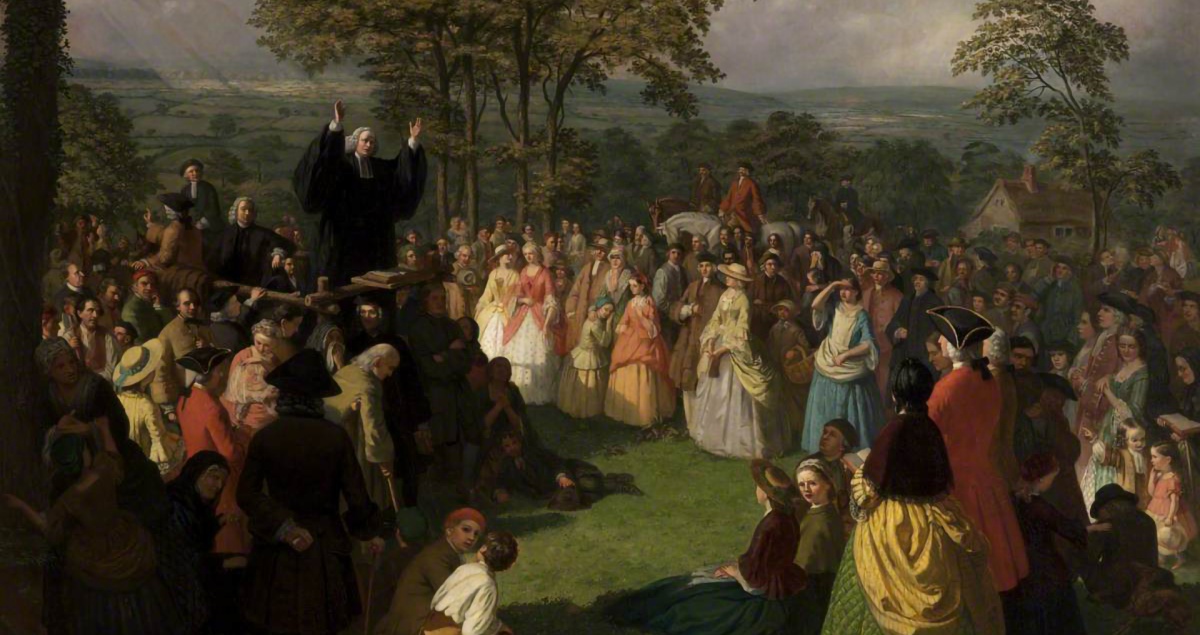
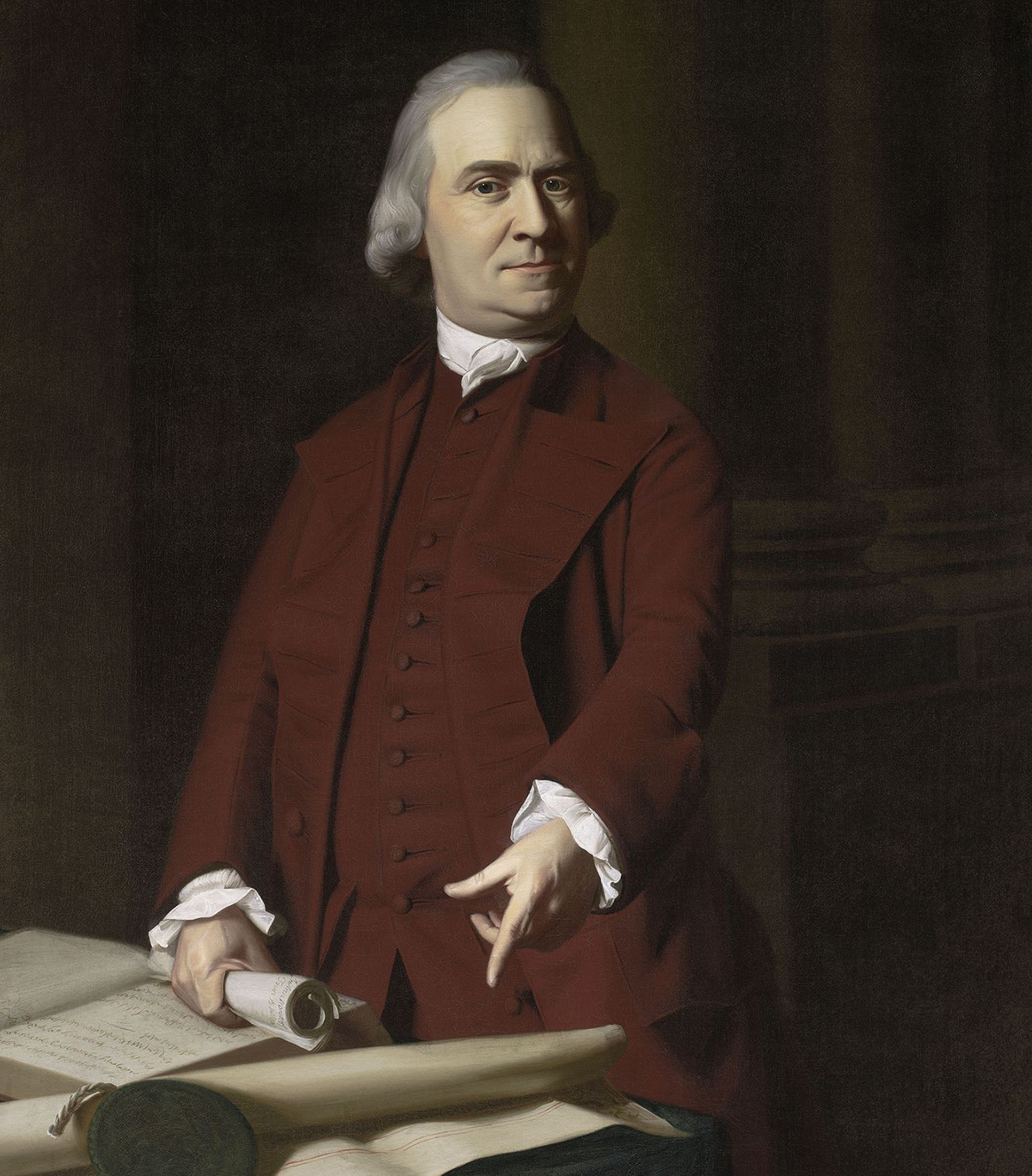
Some historians have posited, however, that if religion did not cause the Revolution, it played a strong conditioning role and made the nation ripe for rebellion. Such writers point to the preparatory effects of the Great Awakening, the greatest religious and social upheaval in the British colonies prior to the Revolution. Many leading Patriots, such as Boston’s Samuel Adams and Virginia’s Patrick Henry, were deeply influenced by the revivals of the 1740s and ’50s. The Great Awakening gave them a religious vocabulary for rights and liberties that they put to powerful use during the revolutionary crisis. America’s zeal for the “sacred cause of liberty,” to use a phrase from the time, was born in the crucible of revival.
A religious grounding for the Revolution was also suggested by the great parliamentarian Edmund Burke in a speech in 1775. The “fierce spirit of liberty is stronger in the English colonies probably than in any other people of the earth,” Burke argued, partly because of the colonists’ intense Protestant religion. Their Protestantism was “of that kind which is the most adverse to all implicit submission of mind and opinion. This is a persuasion not only favourable to liberty, but built upon it.”
To Burke, the Americans’ religious commitment to liberty did not simply begin with the Great Awakening. Their staunch disposition went deeper, back to the founding of the colonies by Puritans and other Christian dissenters. Especially in the northern colonies, the colonists’ stark religion was “a refinement on the principle of resistance; it is the dissidence of dissent, and the Protestantism of the Protestant religion.” British authorities were frustrated with the colonists’ constant bucking against taxes, but Burke warned that continuing to escalate the crisis was only to kindle a “flame that is ready to consume us.” A religious people with the Americans’ ferocious convictions would never back down.
Among the major founders, there were relatively few examples of overtly traditional Christians.
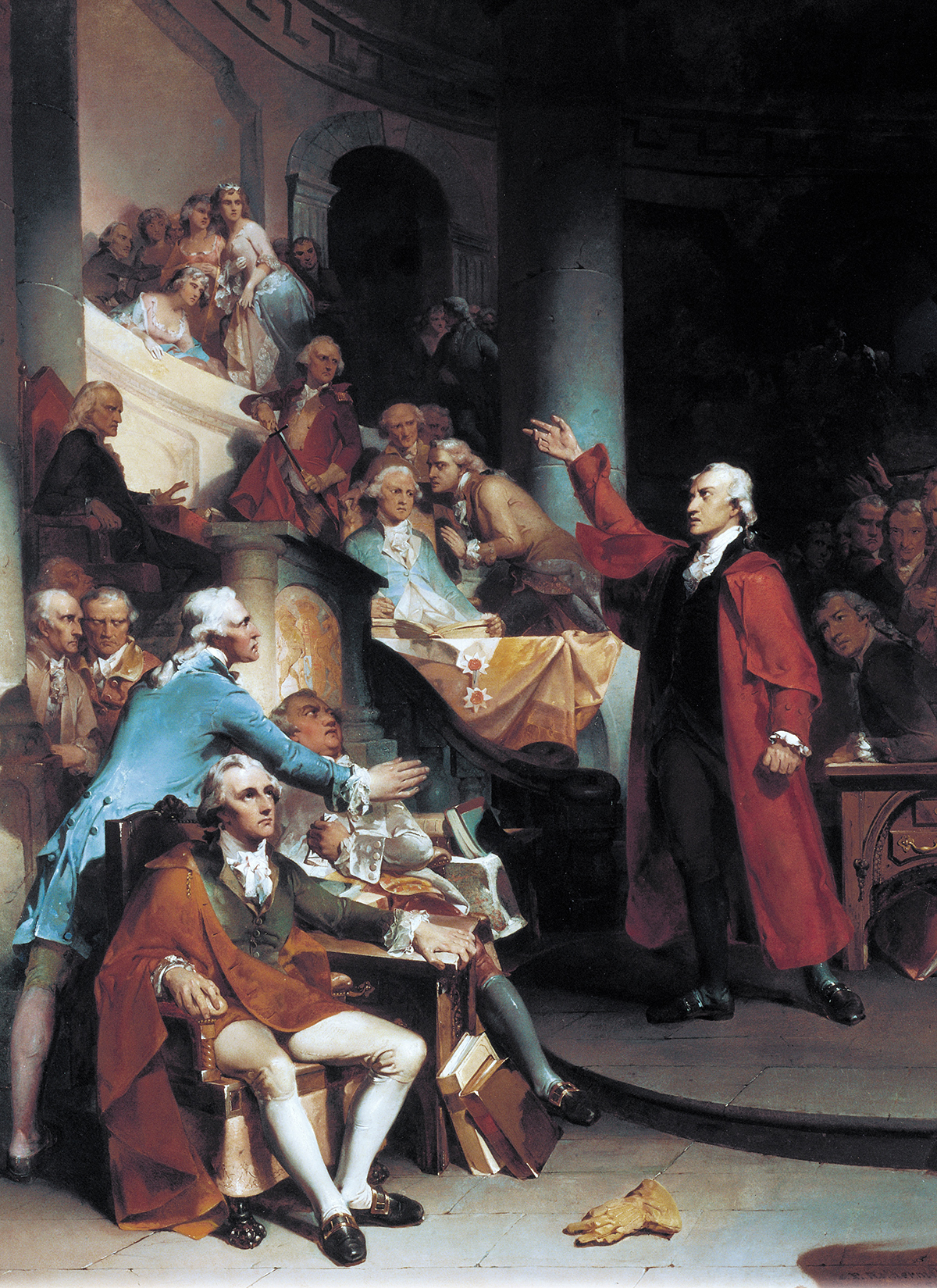
In one of the Revolution’s most uncanny coincidences, Patrick Henry rose across the sea the very next day, March 23, 1775, to respond (as it were) to Burke. The setting was the Virginia Patriot Convention, meeting at St. John’s Church in Richmond, Virginia. When he was a boy, Henry’s mother had taken him to revival meetings in Hanover, Virginia, where the Presbyterian pastor Samuel Davies presided. Davies, who exemplified both the deep piety and formidable learning of the Great Awakening preachers, later became the president of Princeton College. Henry, a traditional Anglican, thought that Davies was the “greatest orator” he ever heard speak. This was quite a compliment coming from the man widely regarded as the most powerful Patriot speechmaker.
Indeed, Henry’s scintillating “Liberty or Death” oration sounded a lot like a revival sermon. Its short text was filled with biblical allusions. Few scholars had noticed this feature until an astute historian in the 1980s, Charles L. Cohen, realized that “Liberty or Death” was teeming with references to Scripture, especially from the prophet Jeremiah. Some politicians still cite the Bible today, but when they do, they must accommodate our biblical illiteracy by naming the chapter and verse, or prefacing the citations with “as the Good Book says.” Henry didn’t do that. He could assume that everyone in the Virginia audience sufficiently knew the Bible to recognize the quotes, even relatively obscure ones.
To Henry, the time had come to prepare for defensive measures against the fearsome British army. If Americans didn’t prepare, they could become like “those who, having eyes, see not, and, having ears, hear not” (Jer. 5:21). British assurances of good will could prove a “snare to your feet” (Jer. 18:22). Alluding to Hebrews 8:1, Henry declared that if he did not call on colonists to accept the inevitable clash, it would be an “act of disloyalty toward the Majesty of Heaven.” In a more familiar reference to Jesus’s arrest in the Gospels, he warned delegates to “suffer not yourselves to be betrayed with a kiss.”
In his rousing conclusion, Henry asked, “Is life so dear, or peace so sweet, as to be purchased at the price of chains and slavery? Forbid it, Almighty God!” The very last line contained a fascinating conflation of classical and biblical rhetoric. Raising his arms, he declared, “I know not what course others may take; but as for me, give me liberty or give me death!” The phrase “as for me” recalled Israel’s leader Joshua placing the choice before the people to serve God or not. “As for me and my house,” Joshua declared, “we will serve the Lord” (Josh. 24:15). And the iconic phrase “give me liberty or give me death” echoed a line from the well-known tragedy Cato, written by Joseph Addison in 1713 about the Roman hero Cato the Younger. The Patriots lived in a mental world populated with classical and Judeo-Christian champions.
Despite the manifest Christian influences on Founders such as Henry, there are reasons to question the idea of a uniformly Christian Founding. Among the major founders, there were relatively few examples of overtly traditional Christians. To find them, you generally have to look beyond the five or six who will get the most attention this year. Thomas Jefferson and Benjamin Franklin were clearly not orthodox believers, denying basic Christian doctrines such as the Trinity, the divinity of Christ, and the authority of Scripture. John Adams was respectful toward Christianity but was a Unitarian and liberal Congregationalist. George Washington and James Madison were likewise appreciative of religion but were guarded about their own beliefs. Alexander Hamilton lived no one’s idea of a model Christian life, though he did insist upon receiving Communion after he was fatally shot by Aaron Burr.
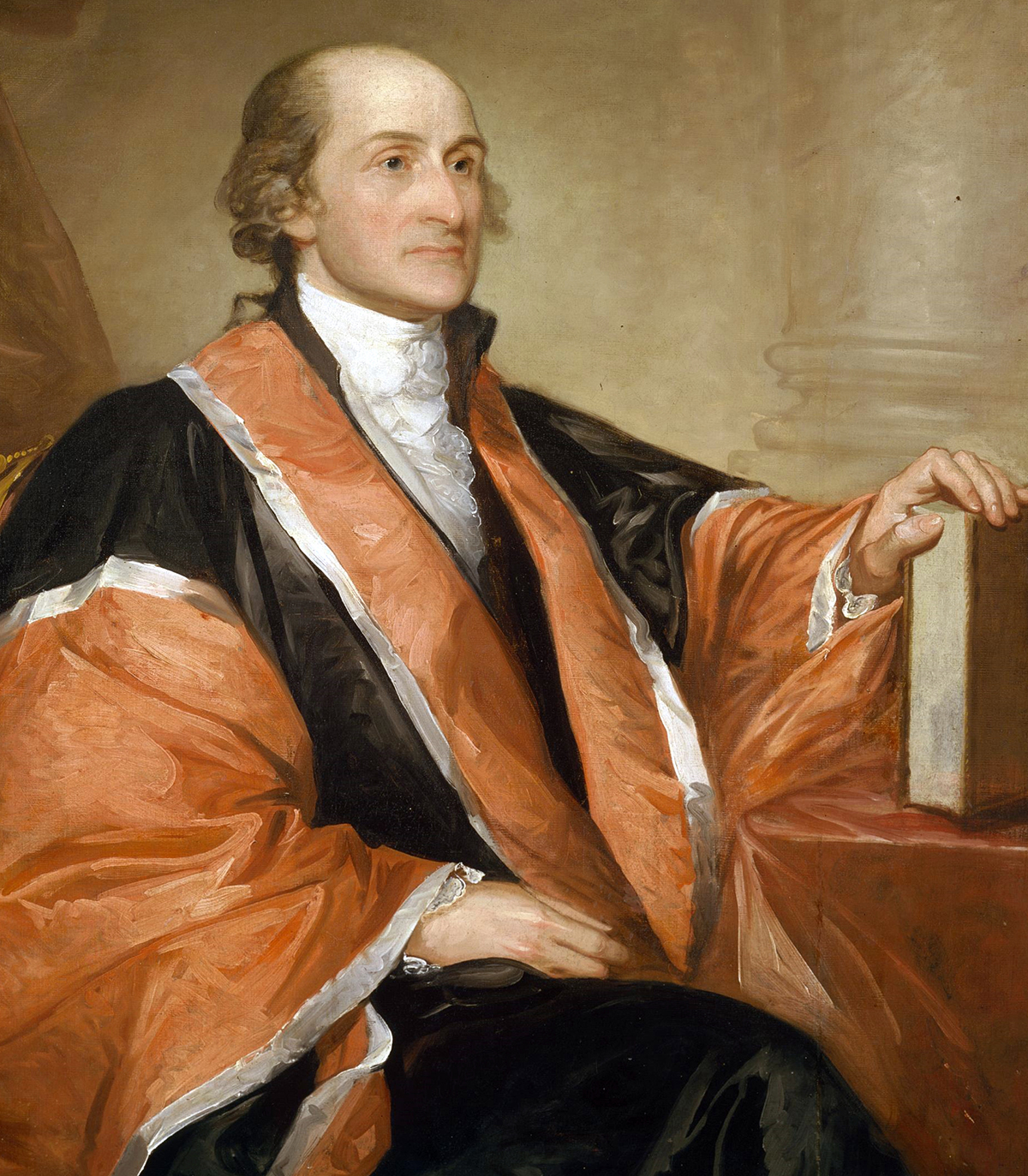
When you move past this all-star roster, however, there were plenty of founders who cultivated a deep Christian faith. These included Patrick Henry, Samuel Adams, New York’s John Jay, Connecticut’s Roger Sherman, and New Jersey’s Elias Boudinot. These were major leaders in the founding era, even if their fame has faded a bit today (except for Adams, due to the popular beer named for him). The devout Congregationalist Sherman was the only person who signed the four great state papers of the revolutionary era: the Continental Association (in which the Continental Congress agreed in 1774 to take unified colonial action against Britain), the Declaration of Independence, the Articles of Confederation, and the U.S. Constitution.
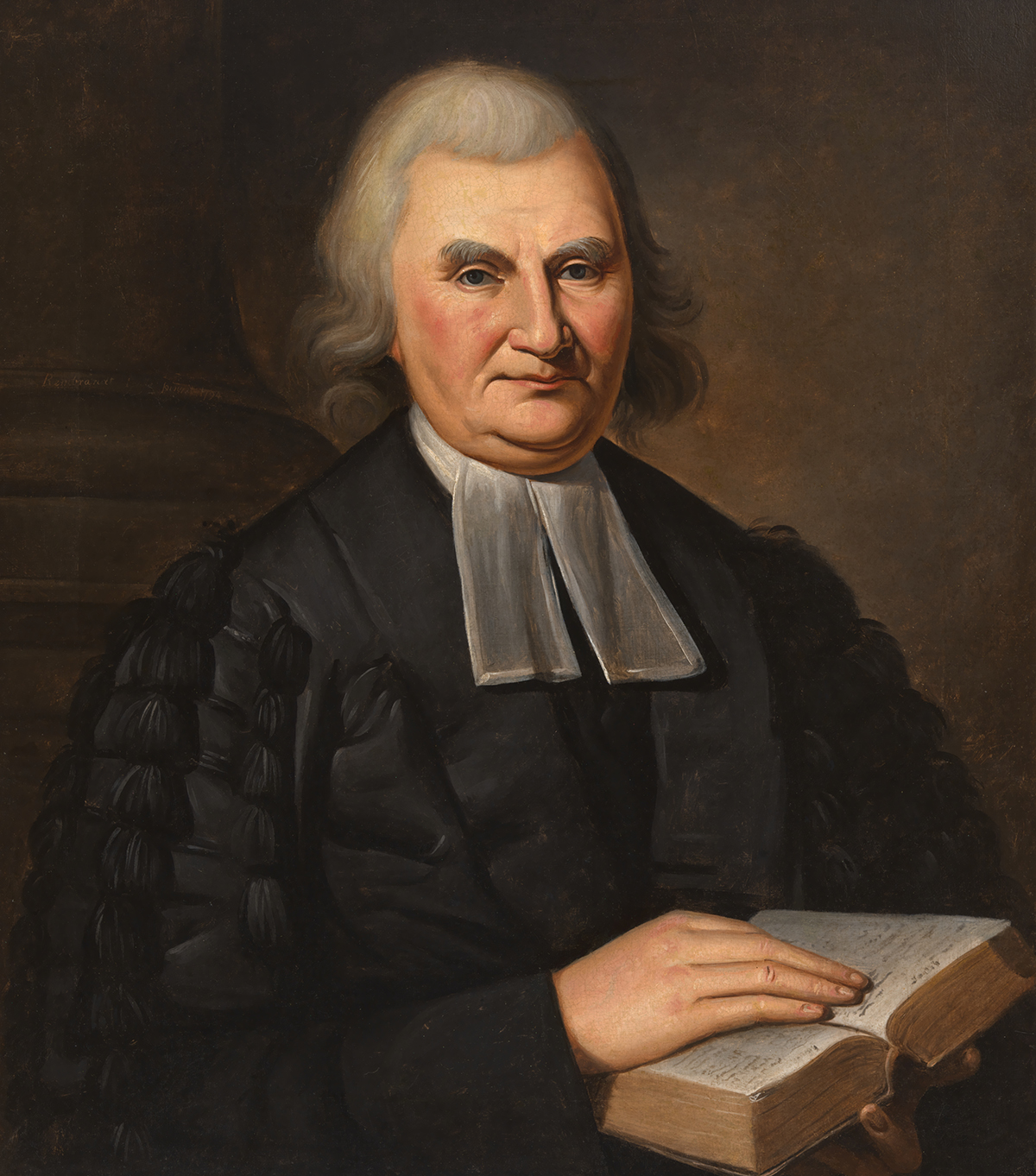
Another representative Christian was the New Jersey Presbyterian John Witherspoon, the only active clergyman to sign the Declaration of Independence. Witherspoon had moved from Scotland to serve as the president of the College of New Jersey (Princeton) in 1768, and he became a member of and chaplain to the Continental Congress, where he signed the Declaration in 1776.
Witherspoon’s popular 1776 sermon “The Dominion of Providence over the Passions of Men” posited that God’s providence would determine the war’s outcome. If Americans honored God and they fought in a righteous cause, they could have confidence in the results. Witherspoon exhorted Americans to “put your trust in God, and hope for his assistance in the present important conflict. He is the Lord of hosts, great in might, and strong in battle. Whoever hath his countenance and approbation, shall have the best at last.”
Witherspoon’s oration was not a “God and country” stem-winder, as we might hear today in a patriotic evangelical service. He certainly did not assume that God must be on America’s side. Witherspoon’s sermon contained as much warning as encouragement. “Every good man ought to take in the national character and manners, and the means which he ought to use for promoting public virtue, and bearing down impiety and vice.” Virtue was essential in time of war. Not only did people court God’s wrath if they were profane and irreligious, but impiety bred the kind of self-centeredness that would decimate the war effort. “Nothing is more certain than that a general profligacy and corruption of manners make a people ripe for destruction,” Witherspoon cautioned.
God did indeed deliver America through the Revolutionary War, even though George Washington and the Continental Army’s leaders struggled terribly to maintain enlistments, to keep soldiers from going AWOL, and to obtain sufficient funding to supply the army’s basic needs. (Thus their starving winter encampment at Valley Forge.) Once the war ended, Americans needed a final basis for national political union. This came in the form of the Constitution. Experience taught the founders that they couldn’t assume that politicians or the people would be virtuous. As James Madison wrote in The Federalist, “Men are not angels.” Madison, the Constitution’s primary author, believed that the new government possessed enough power to do what a competent government needed to do, but not so much power that it would become tyrannical. Assumptions about virtue and vice undergirded the Constitution.
And yet the Philadelphia convention of 1787 produced a document that said virtually nothing about God. We may roll our eyes at provocative secularist books like The Godless Constitution (1996), but they do have a point. The Constitution’s only mention of God is the paltry reference to the “year of our Lord” 1787. When asked why the framers did not say more about the deity, Alexander Hamilton allegedly said, “We forgot.”
We might more plausibly explain the curious omission by the fact that the Constitution is a technical frame of government. Unlike the Declaration, the Constitution contains little inspiring rhetoric that might have generated references to the divine. Still, God’s absence is conspicuous and leaves one with the impression that the founders saw the national government as a “secular” one. But secular didn’t seem to mean the same thing to them as it does for today’s rigid, censorious left.
Christian-based principles of morality and sin still animated the framers’ concerns about trustworthy and effective government. And unlike the U.S. Constitution, most of the state constitutions had religious oaths that required officeholders to affirm belief in the Bible or at least in God. New England states even maintained established, tax-supported Congregationalist churches for decades after the First Amendment (1791). The First Amendment’s prohibition on an “establishment of religion” only limited the actions of Congress, not the states.
Also, there was little evidence that the founders envisioned “strict separation” of church and state, especially at the state level. You can also observe a comfortable national partnership between religion and government in the Christian chaplains enlisted by Congress and the Continental Army, and in the explicitly Christian prayers and fast days proclaimed by the Congress during the Revolution. One of Congress’s prayer day proclamations in 1777, for example, recommended that citizens offer “their humble and earnest supplications that it may please God through the merits of Jesus Christ, mercifully to forgive and blot [their sins] out of remembrance.”
Still, observers in 1787 and many decades afterward regretted that the Constitution included no affirmation of faith in God. Critics repeatedly sought to introduce an amendment that would insert specifically Christian language into the document, but to no avail. We may also recall that Benjamin Franklin, who called himself a Deist, proposed in 1787 that the Constitutional Convention open its sessions with prayer. His motion was supported only by a few other delegates (including Roger Sherman), and it was ultimately tabled.
When asked why the framers did not say more about the deity, Alexander Hamilton allegedly said, "We forgot."
In sum, the founders seem erratic regarding religion. How can we make sense of this puzzle? It appears that two essential principles about church and state were widely assumed by the founders, whether they were traditional Christians or Deists. One precept was that religion, and Christianity specifically, was the primary shaper of morality. As John Witherspoon had argued, the republic’s survival depended on the virtue of its people. Some, such as Thomas Jefferson, contended that education also could serve as a primary source of moral fortitude, but most Patriots assumed that religion was its most vital wellspring.
As George Washington classically argued in his 1796 Farewell Address, “Of all the dispositions and habits which lead to political prosperity, religion and morality are indispensable supports. In vain would that man claim the tribute of patriotism who should labor to subvert these great pillars of human happiness. … And let us with caution indulge the supposition that morality can be maintained without religion. Whatever may be conceded to the influence of refined education on minds of peculiar structure, reason and experience both forbid us to expect that national morality can prevail in exclusion of religious principle.” Even Jefferson conceded in his First Inaugural Address that “our benign religion” [Christianity], practiced in many denominational forms, was a unique source of the people’s “honesty, truth, temperance, gratitude, and the love of man.” America desperately needed such values to endure as a nation.
The founders’ second widely assumed principle about church and state was religious liberty. This principle helps explain the Constitution’s secular appearance. The Constitution, including the Bill of Rights, adopted three main clauses regarding religion. One of them banned religious test oaths for national officeholders. The second and third clauses, both in the First Amendment, prohibited a national established church (an “establishment of religion”) and guaranteed “free exercise of religion.”
By 1791, the year the Bill of Rights was ratified, there was little controversy over a statement concerning free exercise of religion. But the ban on an established church and the prohibition on religious tests raised a crucial question for the framers. Should the national government partner with churches to enforce Christian belief and practice? Or should they emphasize free exercise of religion? In 1776, the founders were basically split on these questions. Some, such as John Adams and Patrick Henry, desired direct government support for religion, at least at the state level. But many other Patriots, including rank-and-file evangelicals such as the Baptists, simply wanted the ability to preach the gospel in freedom, with no government regulation of religion. As James Madison contended in his “Memorial and Remonstrance” (1785), Christianity did not need government aid, and the religion flourished in greater purity when disconnected from the state. Christianity, Madison wrote, “disavows a dependence on the powers of this world: it is a contradiction to fact; for it is known that this Religion both existed and flourished, not only without the support of human laws, but in spite of every opposition from them” during the centuries from the apostolic period until the establishment of the papacy and its attendant state support. Baptists and other dissenters heartily agreed with Madison’s historical reasoning for religious freedom.
Although Massachusetts maintained its established church until 1833, Madison and groups such as the Baptists represented a wave of religious liberty that would dramatically change American law and religion. Not only did the Baptists and Methodists become the two largest Protestant denominations by the Civil War, but religious liberty also accommodated a great influx of Catholic immigrants starting in the 1830s. Though Catholics still faced various kinds of discrimination, there was broad understanding (one heralded by George Washington’s assurances to Catholics and Jews) that religious liberty was not just for Protestants. Under the umbrella of free exercise, America manifested a surprising combination of a secular political order, liberty of conscience, and a vibrant and diverse Christian (and Jewish) milieu that was unparalleled in world history.
“Secularism” in the American founding tradition, then, was definitely not anti-religious. America’s ideal of religious liberty held that religion was so important that government should take “no cognizance” of it, in Madison’s terms. The crucial desideratum was to keep the government from corrupting religion or denying citizens’ rights to free exercise.
Today, however, we see innumerable challenges to religious liberty and free exercise. These include attempts to coerce believers into acting against their consciences, in the name of the LGBTQ+ agenda and other progressive priorities. We have also witnessed aggressive acts of protest and blatant violence against houses of worship and religious schools. In our nation’s anniversary year, we seem to be in a moment of cultural and religious decision. Will our post-Christian culture ever substantially return to founding ideals of Christian virtue and religious freedom? Or will the mandates of our post-Christian culture make America an increasingly unfriendly place for people of faith?