
American Religion by the Numbers
-
USA Today announced in April of 2025 that for “three decades, the percentage of Americans who identify as Christian has steadily declined, a trend confirmed by countless studies. For many believers, it has felt like an inevitable slide into cultural irrelevance.” But Zoomers, say the headlines, are headed back to church, and “in a season of overwhelmed news cycles, these religious shifts haven’t received the coverage they should, but they are significant, and they keep coming.” Younger Americans, particularly Gen Z, or Americans born between 1997 and 2012, “are more spiritually curious. Barna research group reports that most Gen Z teens are interested in learning more about Jesus, with younger cohorts leading the way in the growth of new commitments.”

-
A Pope for the 21st Century
-
The election of Cardinal Robert Francis Prevost, who took the name Leo XIV, on May 8, 2025, was greeted the world over with nearly universal acclaim. Pope Leo XIV, born on Chicago’s South Side, is the Church’s first American pope and has since greeted delighted crowds by wearing a Chicago White Sox cap to an audience and signed baseballs for the faithful. It is not unusual for a pope to be popular, as he is, according to the Church’s own understanding, “the perpetual and visible principle and foundation of unity of both the bishops and of the faithful” (Lumen Gentium §23).

-
American Liberty and French Liberté: A Fundamental Disagreement
-
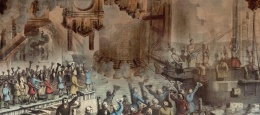
It is well established that the story of the French Revolution and the American founding is largely one of interaction and mutual influence. From Publius’ deference to Montesquieu to Jefferson’s involvement in the redaction of the Declaration of the Rights of Man and of the Citizen, both republics have since their inception proclaimed the same ideals and stretched their roots to the same philosophical sources. However, French-American relations have also been, from the start, underscored by a malentendu, a fundamental misunderstanding whose origin goes way deeper than the occasional disagreement on this or that political matter.
-
Interrogating the Faith & Work Movement
-
Christianity has come to Silicon Valley, according to The New York Times (February 11, 2025) and this publication (Summer 2025), thanks in part to local churches teaching how a high-tech profession is a vocation from God. The last two decades have seen a surge of books, conferences, institutes, parachurch ministries, and Bible studies on the connections between Christianity and the workplace. The so-called Faith and Work Movement has become a major strain in contemporary evangelicalism.

-
Thomas Jefferson and the Virtue of Limited Government
-
We often hear that Thomas Jefferson got his anthropology wrong, a fact best seen in his dismissal of original sin’s effects and his apparent trust in “the people.” But is this really a full and accurate portrayal of Jefferson’s understanding of the human person? What I suggest we do is consider what he got right. In particular, a close examination of Jefferson’s thought reveals that what is now known as the principle of subsidiarity was deeply embedded in his anthropology of man. For Jefferson, man was a free but social and moral creature, and this had important implications for how he viewed the role of the State in human affairs.

-
To Educate the Whole Child
-
“Like religion, education is nothing or it is everything—a consuming fire in the bones.”
—Charlotte MasonDuring World War Two, as the Allies endeavored to win the war against the Axis Powers, Christian humanists were looking to the future: If U.S. guns helped turn the tide in the war, how then would the peace be won? How could the Allied nations avoid becoming like their enemies? As French writer and mystic Simone Weil put it during the Nazi occupation of France, “If we are only saved by American money and machines, we shall fall back, one way or another, into a new servitude like the one which we now suffer.”

-
A Very Christian England
-
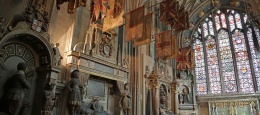
For many years, Christianity was a soft target for critics of Western culture who interpreted its sexual codes as oppressive, its missionaries as agents of imperialism who destroyed indigenous cultures, and its institutions as corrupt. There was certainly evidence to support such claims and, in a West subject to an insatiable cultural Oedipus complex, the ritual slaying of the Christian God became a staple of the secular culture industry. That secularism had nothing of equivalent potency with which to replace him has in recent years come to the attention of a small but (currently) growing group of intellectuals and culture makers.
-
Universal Basic Community Now!
-
When they are lamenting the excesses of billionaires, anonymous commenters and pundits alike often do the math out loud. Surely, America’s 700,000 homeless could be housed for, say, $50,000 each this year, which adds up to a mere $35 billion. Elon Musk alone is worth $413 billion! Musk could solve homelessness, they say, all by himself. We’ll set aside for the moment distinctions between income and wealth—Musk’s billions are tied up in his businesses, not stored up as a pool of gold coins in his basement, ready to be distributed. We’ll even set aside the question of where next year’s $35 billion will be found. After, all, the annual federal budget is nearing $7 trillion ($7,000,000,000,000), a number with so many zeroes it’s hard to imagine its scale. I asked the internet for help, and it said that if one were to spend $1,000 every second, it would take over 31,000 years to spend a trillion dollars, and it would take slightly longer to count to a trillion out loud. Is it really too much to ask that a mere $35 billion be set aside to solve one of our saddest and most harmful problems—homelessness?

-
Conversation Starters with … Michael Guillén, Ph.D.
-
Dr. Michael Guillén is a world-class scientist and communicator. He holds a three-fold Ph.D. from Cornell University in physics, astronomy, and mathematics. For years, he was an award-winning physics instructor at Harvard University and ABC News’s Emmy-winning science editor. He appeared regularly on Good Morning America, World News Tonight, Nightline, and 20/20. He has written many bestselling books, including Believing Is Seeing and Five Equations That Changed the World. He is also the author of “More Than Meets the IQ” on Substack and the host of the popular podcast Science + God with Dr. G.

-
Reasoning About What We Already Know
-
Tracey Rowland once quipped that, while natural law is proposed “as a kind of lingua franca for dialogue with non-believers,” given that most liberal theorists ignore it and many Protestants reject it, we have “a situation in which Catholics talk to other Catholics in an idiom which was devised for dialogue with unbelievers.” If that is the case, natural law has failed to deliver on its promises.

-
Studying in the School of Salamanca
-
Europe was changing rapidly in the 16th century. The advance of humanism and the Protestant Reformation offered challenges to the Church’s authority and the very idea of what it meant to be both a Christian and a human being made in the image of God. Meanwhile, the Spanish Empire was expanding, and the complexity of its administration grew along with the military and bureaucratic power of the kingdom. For years, the arrival of gold and silver from the Americas created a vast economic resource that enabled an increased growth in government without adding new taxes or indebtedness. As expenses grew and imports declined, however, the kingdom began to face significant economic challenges and mounting financial commitments.

-
We Are More Than We Think
-
What does it mean to be a human person? Are we, for example, just collections of molecules in motion, or are we souls that inhabit collections of molecules—or are we souls that organize and empower collections of molecules to be livingbodies? Are we, in other words, merely bodies, merely souls, or soul-body composites? Furthermore, is it even intelligible today to speak of the “soul,” or is such language simply a vestige of a bygone era long shattered by the imperious hammer of modern science?

-
Page 5 of 112