



These are ecclesiastically unusual times. Various factors are serving to attenuate old party lines between Protestants and Catholics and even Eastern Orthodox. The ongoing sexual revolution has pushed to the fore moral and ethical issues where all Christians share common ground. There is a growing realization among many Catholics that the Bible has been neglected in the day-to-day life of many, as evidenced by the popularity of, for example, Fr. Mike Schmitz’s Bible in a Year Podcast. Many younger evangelicals find worship that is little more than a TED talk embedded in a rock concert to be unsatisfying and have begun to search for more historically grounded, liturgically sophisticated, and beautiful forms of worship. Hence we have the rise of the ACNA as well as conversions to Rome and Constantinople. And then there are the internal struggles. Conservative Catholics face constant pressure from a progressive but authoritarian papacy while many Protestants have come to realize that the doctrines of God and Christ that dominated the popular theologies of the past 50 years of evangelical publishing are closer to early church heresies than the orthodoxy of the early church creeds.
The Catholic and Orthodox churches are winning over evangelical Protestants looking for more profound, reverent, and beautiful forms of worship. Is evangelical Protestantism worth fighting for? One apologist says yes.
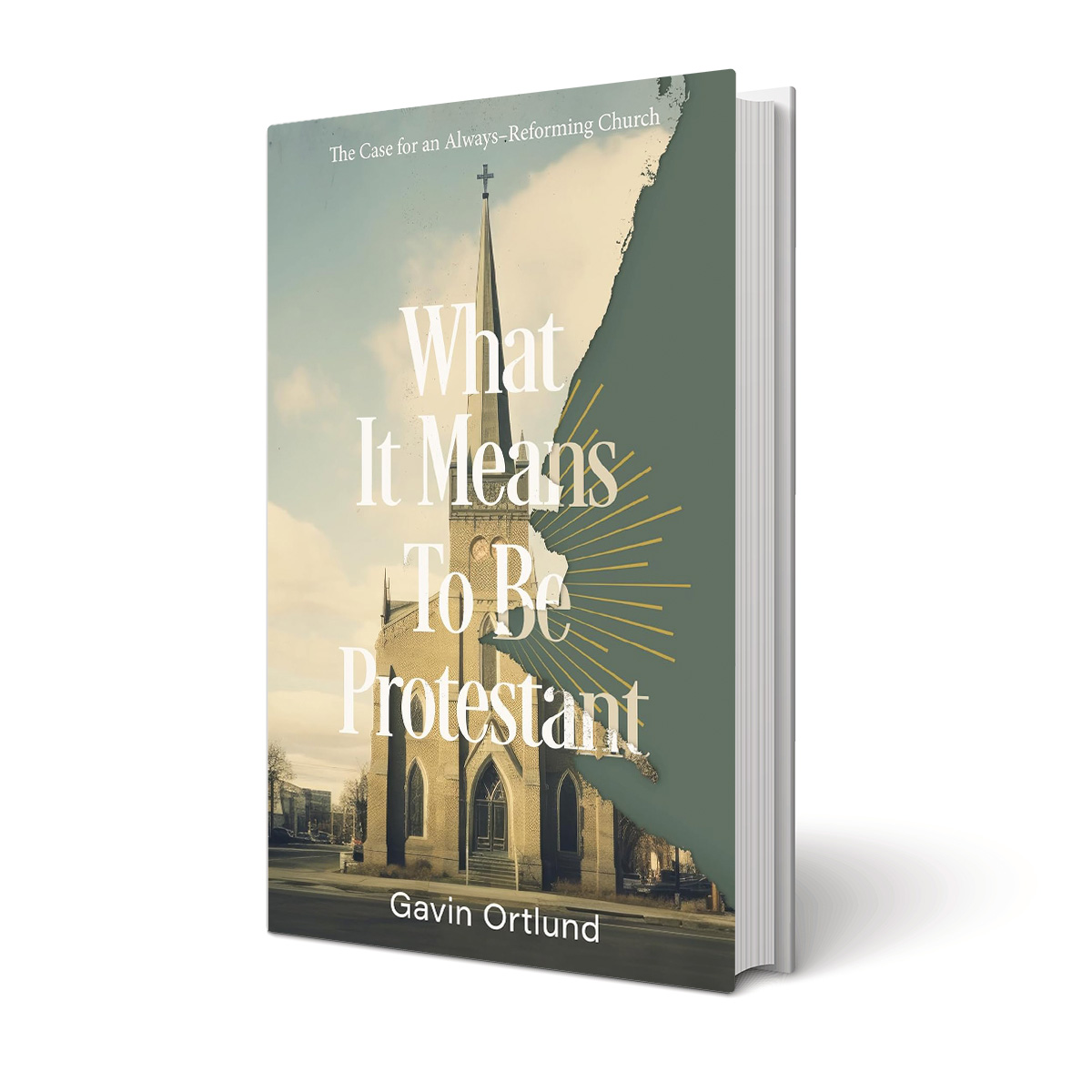
By Gavin Ortlund
(Zondervan, 2024)
It is against this broad background that Gavin Ortlund sets forth his case for Protestantism in What It Means to Be Protestant: The Case for an Always-Reforming Church. He writes with his typical clarity and precision but also with significant grace and charity toward those with whom he differs—Roman Catholics and Orthodox. He eschews caricatures while acknowledging the serious nature of the differences between the traditions. And he is well-qualified to do this: He is deeply read in patristic and medieval sources, with which he interacts with both sympathy and a careful historical sensitivity. He is also a pastor who clearly desires his work to shape the hearts and minds of Christians as they think through the serious issues with which he engages. In short, the book is a delight to read—a model fusion of charity and scholarship tailored for a practical, pastoral end.
Ortlund divides the work into three parts, each dealing with “Protestantism and…”: Catholicity, Authority, and History. In the first section, he addresses Protestantism’s core identity, the questions that arise from the notion of there being “one true church,” the background to the Reformation, and the importance of faith alone. In the second, he expounds on Scripture alone, handling a number of classic objections, and then deals with the matters of the papacy and apostolic succession. Then, in the final section, he expounds the notion of Protestant retrieval and offers critiques of two specific areas of doctrinal difference with the Catholics and the Orthodox: the bodily assumption of Mary and the veneration (and thus theology) of icons. Throughout he is careful to let his notional opponents speak for themselves and thereby to present their cases fairly. He also avoids many of the standard but ineffective polemical jabs. Many popes may have been immoral, for example, but thoughtful Catholics concede that while (correctly) seeing arguments for the Petrine office as not dependent on the moral quality of the individual holding said office.
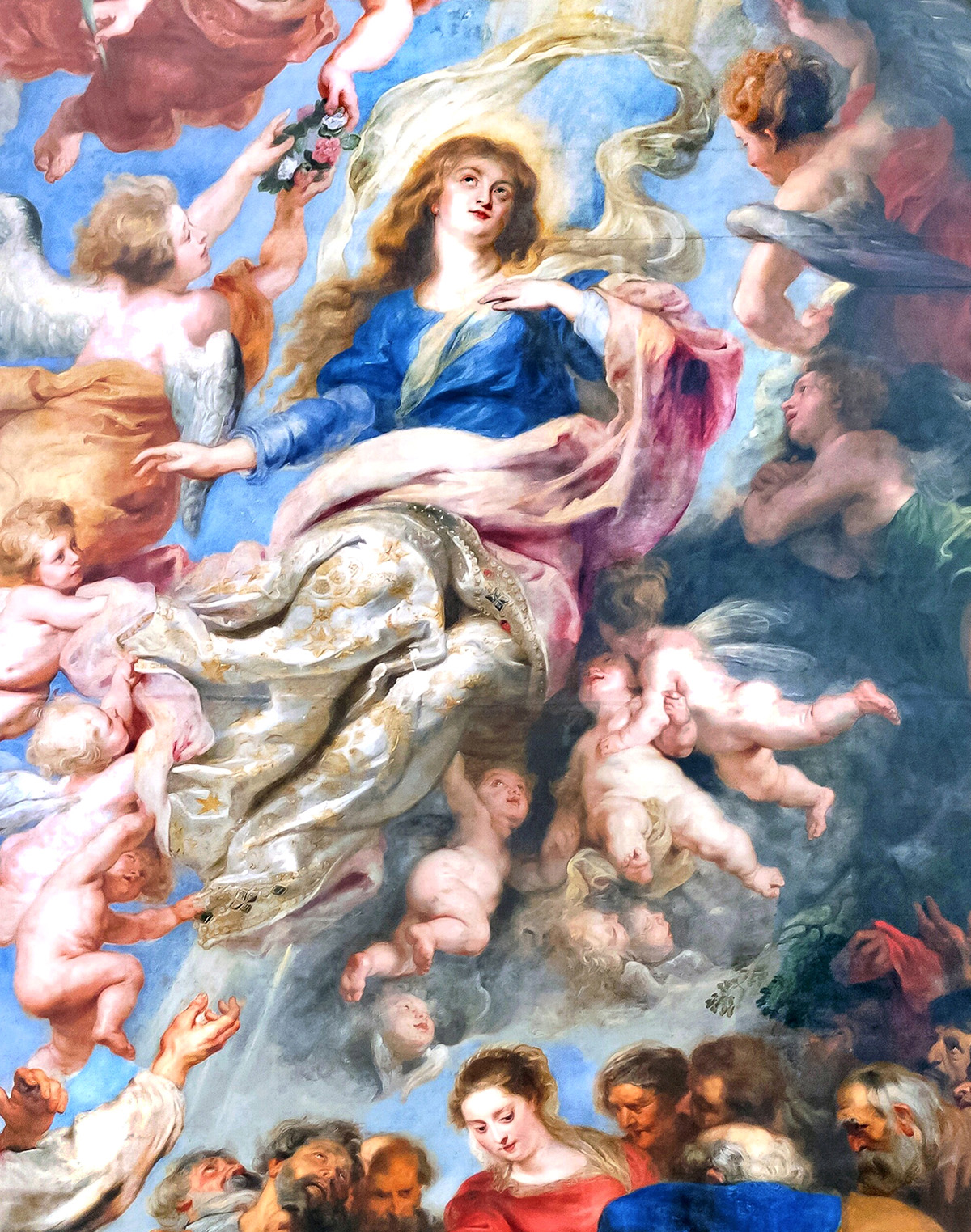
Though careful and charitable in tone, Ortlund does offer forthright and compelling criticism of his opponents. His treatment of Mary is perhaps the most pungent of these. For many of us, it is the dogmatic enhancements surrounding Mary that are among the biggest problems with Catholicism. While Ortlund addresses in detail only the bodily assumption, other aspects of Marian teaching—from the Immaculate Conception to the idea of her as Co-Redemptrix (not an official dogma as yet but popular among many Catholics)—involve very significant moves away from the biblical text and clearly require a notion of authority that stands at odds with even the most concessive understanding of the Protestant scripture principle. Ortlund’s treatment of the bodily assumption demonstrates it has no biblical foundation and no basis in the teaching of the early centuries of the church. Of course, the concept of doctrinal development could be deployed in response, but if such is not to be simply a deus ex machina that can offer a retrospective justification for just about anything, there has to be some positive connection to Scripture. And this is where his compelling exegesis of Revelation 12, one of the classic texts by which Rome justifies much Marian teaching, is so helpful: The woman represents the church, not the Virgin, the latter identification only really being plausible if the reader ignores the Old Testament use of the imagery and assumes certain Marian priorities.
The book is a delight to read—a model fusion of charity and scholarship tailored for a practical, pastoral end.
While Ortlund makes a good case for the catholicity of historic Protestantism, there are some omissions that stand out. Again, this is not to be overly critical, but it is to reiterate that this book will likely be more useful at giving Protestants confidence in their tradition than shaking the confidence of Catholics and Orthodox in theirs.
First, in the treatment of Scripture, he does not address in any detail the issue of clarity or perspicuity. To a Catholic, this is critical because (as Luther made clear in his clash with Erasmus) it connects both to the existential issue of assurance and (in the context of Ortlund’s intentions in this book) to the Catholic notion of the institutional church’s role in biblical interpretation. The arguments of Casey Chalk in his provocatively entitled book The Obscurity of Scriptureoffer a fine modern statement of this and need to be addressed if Catholics are to be convinced that the Protestant way is better.
Second, the place of institutional unity is not really addressed. It is hard to believe that when Christ prayed that we should be one, he was praying merely for a minimal doctrinal agreement between institutions—denominations and congregations—otherwise divided from each other. And these divisions are not always, perhaps even often, shaped by serious doctrinal disagreement. I am a minister in the Orthodox Presbyterian Church. I could easily serve in half a dozen other denominations in the USA alone. Any compelling case for Protestantism has at some point to address the criticism that we simply do not care for actual church unity in any substantial way. I appreciate Ortlund’s argument that Protestantism has a more charitable and biblical view of who belongs to the church than does Rome or especially the Orthodox, but I suspect the practical reality of our divisions makes us vulnerable—deeply vulnerable—to criticism on the issue of what this looks like in reality.
Third, the absence of a significant discussion of the sacraments is intriguing. More ink was spilled at the Reformation on the issue of the Lord’s Supper than on the doctrine of justification. Indeed, one could make the case that the Reformation is first and foremost a movement of sacramental revision, in terms of both Protestantism’s rejection of the Catholic Mass and its own internal divisions, between Lutherans and Reformed, magisterial Protestants and Radicals. Ortlund alludes to sacramental matters on occasion, but it is not a significant part of his argument, yet a Catholic might well make the case that the big issue of soteriology (and, by implication, of church authority) is the question of how Christ is present in the Eucharist and why. In other words, there is a sense in which Ortlund’s case for Protestantism is driven by contemporary Protestant concerns.
In fact, one might narrow this further and say that it is driven by contemporary Protestant evangelical concerns, for the sacraments, especially the Lord’s Supper, remain important points of doctrinal difference between historic confessional Protestant traditions and between those traditions and Rome. There is a reason why conservative Lutherans are likely to find ecumenical engagement with Rome easier than with Presbyterians or Reformed: Their communion is defined in significant ways in opposition to the latter, given the Reformed rejection of the Lutheran notion of the real presence of Christ according to both natures, in, with, and under the elements of bread and wine.
That also calls into question the idea of “mere Protestantism” upon which Ortlund bases his argument. This seems to equate to “American evangelicalism.” In other words, the case he is making is for an “always reforming evangelical church.” And that is fine: The target audience is American evangelicals rather than Missouri Synod Lutherans or Orthodox Presbyterians. It might simply have been helpful to make that clear. There are numerous “Protestantisms” out there, some of which would set different priorities when defining themselves in relation to other traditions: whether Catholic or Orthodox, or even other Protestant communions.
None of this should be seen to detract from Ortlund’s achievement. He offers the reader a delightful model of learning put in the service of recovery of the historic Christian faith with practical implications about how to talk to (and indeed relate to) Christians from other traditions. For that we should be rightly grateful. I hope this book has a wide readership among Protestants and others. And I for one hope he will one day offer us his approach to the sacramental issues that divide not just Protestants from Catholics, but Protestants from Protestants.