

Page 6 of 112
Recovering Covenantal Healthcare
- “Love of men cannot be bought by cash-payment; and without love men cannot endure to be together.” —Thomas Carlyle The harsh fluorescent lights bore down on the tops of our heads as we

-
C.S. Lewis and the (Extra)ordinary Life
- If the well-examined life is worth living, then C.S. Lewis’s must have been extraordinarily worth living, because few lives have been quite so well and thoroughly examined. Even in the midst

-
The Gospel According to Silicon Valley
- Religious revivals have been a part of the American historical landscape even before the republic existed. Most were linked and intertwined with other social movements happening at the time

-
Natural Law Reasoning for the Evangelical Mind
- In Hopeful Realism: Evangelical Natural Law and Democratic Politics, Jesse Covington, Bryan T. McGraw, and Micah Watson, all professors of political science, argue that evangelicals have

-
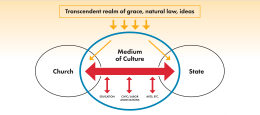
Christopher Dawson: The Medium of Culture in Political Theory
- Actors in history are not pure spirits for whom the whole of human life is “intelligible and spiritually transparent,” English historian Christopher Dawson (1889–1970) wrote in his 1939 book
-
Law and the Common Good
- Anglophone analytic legal philosophy has for decades been oriented around the work of H.L.A. Hart and Joseph Raz. According to Hart, law is based on social sources, particularly rules of

-
The Prince of Preachers in One Volume
- Alongside Luther, Calvin, and Edwards, Charles Spurgeon—the greatest preacher of Victorian London—is the Protestant icon most likely to appear on seminary syllabi and in conference sessions

-
You Have a Calling
- Human beings will always have work. It is part of the human condition. Work itself is a good that is part of God’s original design and therefore contributes to human flourishing. And while

-
Luther and Hobbes
- Thomas Hobbes and Martin Luther are two of the most influential thinkers in the development of the early modern world. While neither figure is a liberal in the proper sense (it is Locke who

-
Conversation Starters with ... J.C. Scharl
- J.C. Scharl is a poet and playwright. Her work has appeared on the BBC and in many poetry journals on both sides of the Atlantic. Her verse play, Sonnez Les Matines, opened in New York City

-
John Dickinson: An American Liberal Deep in History
- John Dickinson is the least known among the American founders. This is almost completely the fault of historians and students of political theory and constitutionalism, who have neglected

-
Missionary, Explorer, Martyr
- The grandest monument to the Spanish Franciscan friar, missionary, and explorer Francisco Garcés is the Garces Memorial Traffic Circle in Bakersfield, California. There, at the intersection

-