


“The greatest thing a man can do, the thing that brings him closest to God, is to preserve the marvels that exist, given that he cannot create them.”
—Simone Weil, Venice Saved (1943)
Conservatives are deeply divided about what exactly it is we are meant to be conserving. Some would point to the free market. Others to the U.S. Constitution. Still more would likely argue that we must preserve a certain cultural heritage. All these are, without doubt, vital aspects of Western civilization, and all are under threat today. Conservatives are right to defend them.
But I want to propose a much more specific answer to the question of what we should be conserving—namely, three long narrative poems, 154 sonnets, and 39 plays—the complete works of William Shakespeare.
The Bard calls us to turn from the Weird Sisters and other nominalists and back to universals and transcendental truth. He may be the last hope for saving the West from the tyranny of technocracy and raw power disguised as progress.
I do not mean to say that Shakespeare was a conservative as such, nor, God forbid, a Republican. What I intend to argue is that the Bard of Stratford-upon-Avon is the founder of our civilization and that his works remain its beating heart. He did not give us an ideology to spread, but rather held “up a mirror to nature.” Shakespeare, perhaps more than any other author, can help the West recover the reality we have been shunning in these long, revolutionary times.
Sir Roger Scruton once wrote an essay about another world-shaking literary figure, titled “T.S. Eliot as Conservative Mentor.” “Eliot’s life began with a question: the question of modern life and its meaning. His literary work was a long, studious, and sincere attempt to provide an answer,” Scruton wrote. “In the course of this enterprise, Eliot reshaped the English language, changed the forms of English verse, and produced some of the most memorable utterances in our literature.” Conservatives should look to Eliot, he argued, because Eliot provided a model for returning to the transcendent moral order challenged by liberal modernity. His poetry and criticism are signposts out of the Cave in which our culture has languished.
Shakespeare, though, takes us beyond modernity. His plays create a sort of cosmos-on-the-stage, a world in which his audience can experience the total vastness of human life. He dramatized the heights of excellence in characters such as Prospero in The Tempest and Cordelia in King Lear, but he also showed us the depths of depravity through tyrants like Richard III and schemers like Othello’s Iago. As Allan Bloom wrote in his final book, Love & Friendship, “There is nothing I think or feel, whether high or low, that he has not thought of or felt, as well as expressed, better than I have.”
The American moral imagination once was firmly rooted in this Shakespearean cosmos. In his eulogy for Leo Strauss, Harry Jaffa claimed that the foundations of the American regime went far deeper than John Locke’s speculations. “Many a frontier log cabin, which had in it no philosophical works whatever, had the King James Bible—and Shakespeare,” he said. “And Shakespeare was the great vehicle within the Anglo-American world for the transmission of an essentially Socratic understanding of the civilization of the West.”
Sadly, however, that heritage is slipping away from us. Nine years ago, the American Council of Trustees and Alumni found that most top-tier universities had dropped required courses on Shakespeare for English majors. Fewer and fewer students are encountering his work in primary or secondary education. Out of a contempt for Western civilization, misguided notions of what kinds of classes are “useful,” or a refusal to challenge students to do difficult readings, it seems that much of our education system has simply given up on the Bard.
The American moral imagination was once rooted firmly in this Shakespearean cosmos.
If conservatives seek cultural renewal, though, we should start by restoring Shakespeare to his rightful place. His work is our heritage, and conservatives cannot allow it to fade away. As one of our great intellectual forebears, Richard Weaver, would tell us: No one can help us understand the spiritual and moral crisis we face better than William Shakespeare.
Weaver was preoccupied with the decline of the West. At the most basic level, his critique of contemporary life in Ideas Have Consequences is that “modern man has become a moral idiot.” In his view, the irony of historical progress is that, though mankind’s material conditions have been improving, fewer and fewer men choose to live virtuously.
Many writers in any given age say such things about their times. But what made Weaver’s argument unique is that he asserted that this decline was the direct result of a philosophical process. “The powers of darkness were working subtly,” he wrote, “and they couched this proposition in the seemingly innocent form of an attack upon universals. The defeat of logical realism in the great medieval debate was the crucial event in the history of Western culture; from this flowed those acts which issue now in modern decadence.”
If any one man is responsible for this “attack upon universals,” according to Weaver, it is William of Ockham, a 14th-century scholar who pioneered the concept of nominalism. He believed—to Weaver’s horror five centuries later—that reality is better perceived by the senses than by the intellect. That is to say, there is nothing universally real for the human mind to grasp. The words we use to describe the world around us, according to a nominalist, are “mere names serving our convenience,” and there is no truth higher than man.
The nominalist believes that man is the measure of all things, and that through science, technology, and artful political arrangements we can make the world anew. Nominalism is an intense—and sometimes violent—optimism about our ability to shape reality. But Weaver knew that this was doomed to end in catastrophe. Revolutions eat their own, and the total revolution that modernity represented would utterly destroy the civilization that culminated in Christendom.
Weaver returns again and again to one principal solution for the problem of revolutionary nominalism: an education in tragedy. He believed that mankind must learn our limits and return to the real. Unless we learn to govern ourselves, our ambitions and desires will ruin us. This is the universal tragedy of human life.
In part, this truth is why Weaver was such a partisan of the American South. As he writes in his Southern Essays, the South was “the best educated section in the country” because it was acquainted with the pain of complete loss. It received “an education in tragedy with which other educations are not to be compared, if you are talking about realities,” because “tragedy is a kind of ultimate. When you have known it, you’ve known the worst, and probably you have had a glimpse of the mystery of things.” According to Weaver, “If this is so, we may infer that there is nothing which educates or matures a man or a people in the way that tragedy does. Its lessons, though usually indescribable, are poignant and long remembered.”
At the same time, the Southern experience is highly particular; not everyone can receive an education in tragedy simply by being from the South. Weaver believed, however, that art and literature could universalize the experience of particular tragedies. “In all great art there is a certain pessimistic overcast. Art is a kind of protest, a transfiguration,” he wrote in another essay. “It has been remarked that if one looks below the surface of two of the most dazzling periods of creativeness in history, the Greek and the Elizabethan, he finds a well of melancholy. Shakespeare’s plays deepened in gravity as the man matured.”
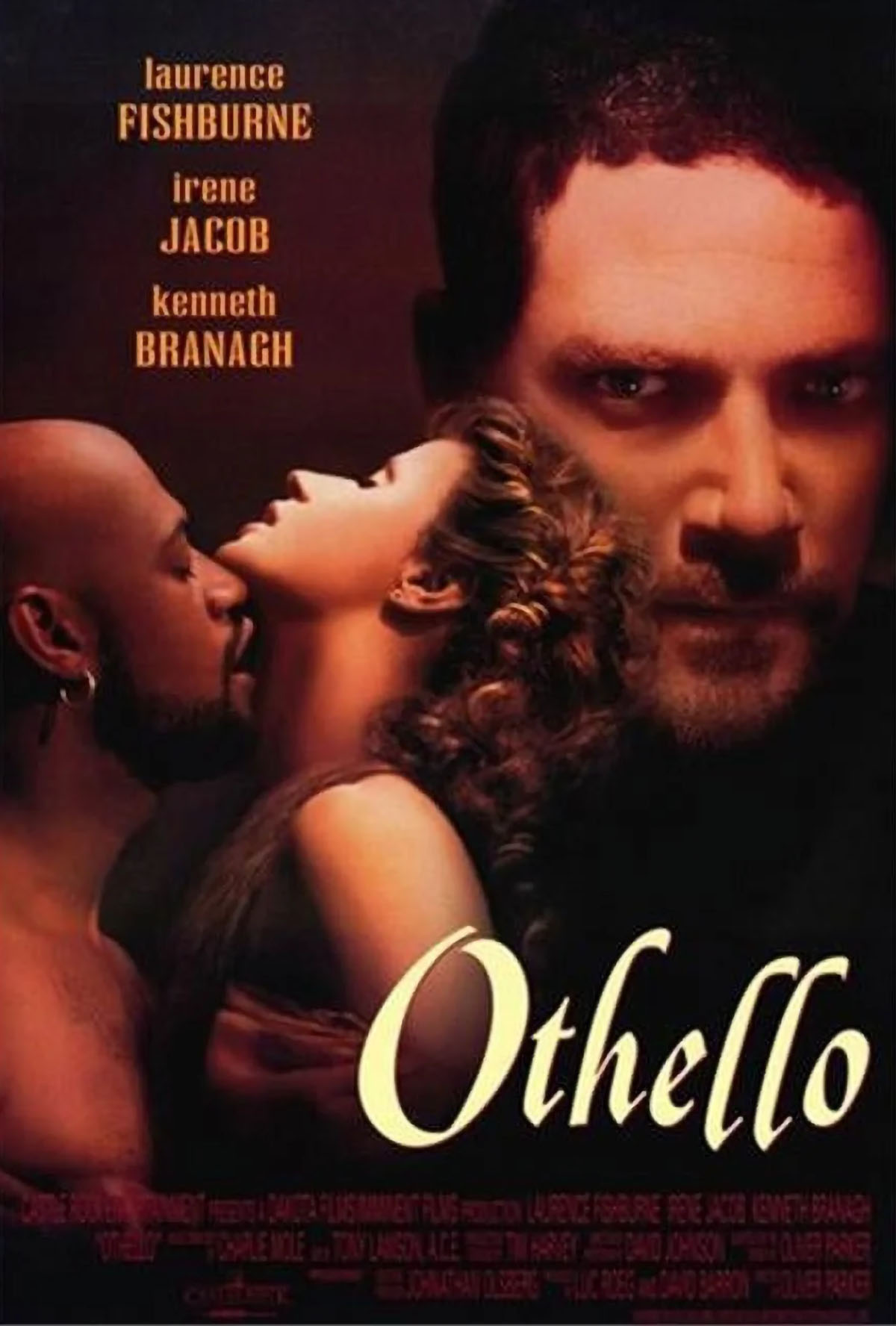
The deep gravity of Shakespeare’s plays had an unmistakable pull on Weaver’s mind and soul. Especially in Ideas Have Consequences, it becomes clear that his philosophy is the product of a Shakespearean moral imagination. In one stark passage, for example, Weaver compares the emergence of nominalism to the plot of Macbeth:
Like Macbeth, Western man has made an evil decision, which has become the efficient and final cause of other evil decisions. Have we forgotten our encounter with the witches on the heath? It occurred in the late fourteenth century, and what the witches said to the protagonist of this drama was that man could realize himself more fully if he would only abandon his belief in the existence of transcendentals.
When we abandon our faith in universals, as the nominalists urge, the result is decline, decadence, and ultimately destruction. Not only does the sad history of modern times prove this; so too does The Tragedy of Macbeth.
In the play, Shakespeare shows us a man who has very much failed to govern his desires with reason. When the audience is first introduced to Macbeth, he is described as “valour’s minion” (I.ii.19). He seems to be a brave and successful soldier. But his supernatural encounter with the Weird Sisters on the heath reveals what is truly motivating him: ambition.
After the Witches prophesy a kingly future for Macbeth and vanish, the then–Thane of Glamis laments their sudden disappearance and wishes they had stayed to tell him more (I.iii.79–80). Macbeth’s companion Banquo—who is told that his children shall be kings—reacts to this apparition with a sort of horrified skepticism: “Were such things here as we do speak about / Or have we eaten on the insane root / That takes the reason prisoner?” (I.iii.81–83). Macbeth, on the other hand, reacts very differently. The late, great Shakespearean scholar Paul Cantor argued that the Weird Sisters’ “prophecies embody for Macbeth a form of religious teaching, that earthly events are governed by higher powers.” Indeed, he “develops a kind of fanaticism; he becomes so convinced that he is favored by providence that he comes to view his personal cause as universally valid.” It is precisely that fanaticism that inspires the murders he commits throughout the play. The Witches give Macbeth a quasi-religious justification for what he will later call his “Vaulting ambition which o’erleaps itself” (I.vii.27).
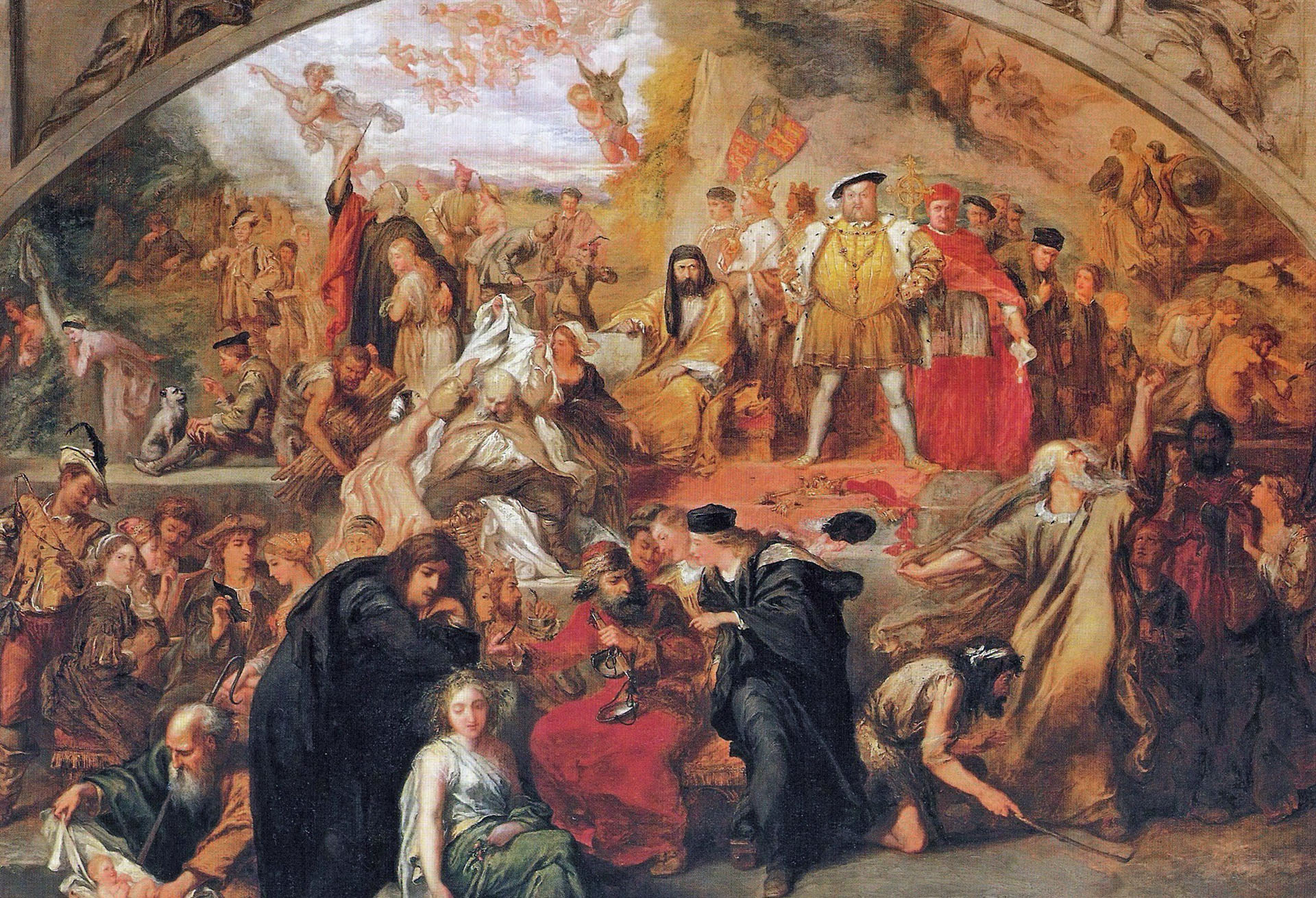
“Not without cause has the devil been called the prince of lawyers,” Weaver says in Ideas Have Consequences, “and not by accident are Shakespeare’s villains good reasoners.” On a certain level, Macbeth’s newfound religiosity makes sense. These witches certainly seem to possess real power, and already their prophecies are coming true. In this way, Macbeth’s devotion is somewhat like that of the “apostles of modernism” advancing the nominalist position Weaver describes. He says that such faithful will point to modern technological “achievement” as proof of their philosophical position’s rectitude, but that they ought to reconsider the nature of such an achievement in relation to “the professed aims of our civilization.” Macbeth is so blinded by ambition and desire that he cannot see the demonic nature of the witches’ power. Likewise, the nominalist cannot see the danger of rejecting the transcendentals. A metaphysician like Ockham may not have been utterly possessed by acquisitiveness or a lust for power, but the advent of modern science enabled by their revolution in thought gave power to those who are. The doubts about the Western tradition sown by the nominalists, Weaver argued, flowed into revolutionary violence generations later—not altogether unlike Macbeth’s Scotland.
In the first chapter of Ideas Have Consequences, Weaver writes of a “metaphysical dream” that “carries with it an evaluation.” The ancients and medievals had a definite conception of what the Good was. Weaver writes that, in a well-ordered society with a firmly rooted sense of the transcendental, “man is impelled from behind by the life-affirming sentiment and drawn forward by what he should be.” In this view, society becomes disordered—like Macbeth’s life became disordered—when it encounters “witches on the heath,” such as Ockham, who call into question the validity of the universals that draw men forward. These philosophical witches prey on and distort human desire no less than the Weird Sisters prey on and distort Macbeth’s desire for power. And the new religion of nominalism inspires just as much fanaticism as Macbeth’s supernatural fatalism.
Macbeth’s second act begins with the now–Thane of Cawdor holding a dagger and contemplating the regicide he is about to commit. Macbeth reflects:
Art thou not, fatal vision, sensible
To feeling as to sight? Or art thou but
A dagger of the mind, a false creation
Proceeding from the heat-oppressèd brain?
I see thee yet, in form as palpable
As this which now I draw.
Thou marshall’st me the way that I was going,
And such an instrument I was to use. (II.i.36–42)
In this soliloquy, Macbeth is displaying precisely the attitude toward means and ends that Weaver ascribes to the nominalists. Because they disbelieve in eternal values and metaphysical principles, nominalists eventually come to believe that the means justify the ends. “Technique, however brilliant, is an employment of means,” Weaver writes. “Perhaps our error is the ignoring of first and final causes, which cannot be studied without some conception of the whole man.” The resolve Macbeth receives from contemplating his dagger is a particularly good example of this attitude, but he is certainly not the only example of a revolutionary who went down this path. Weaver condemns all radical movements on these grounds.
When we abandon our faith in universal value, the result is decline, decadence, and ultimately destruction.
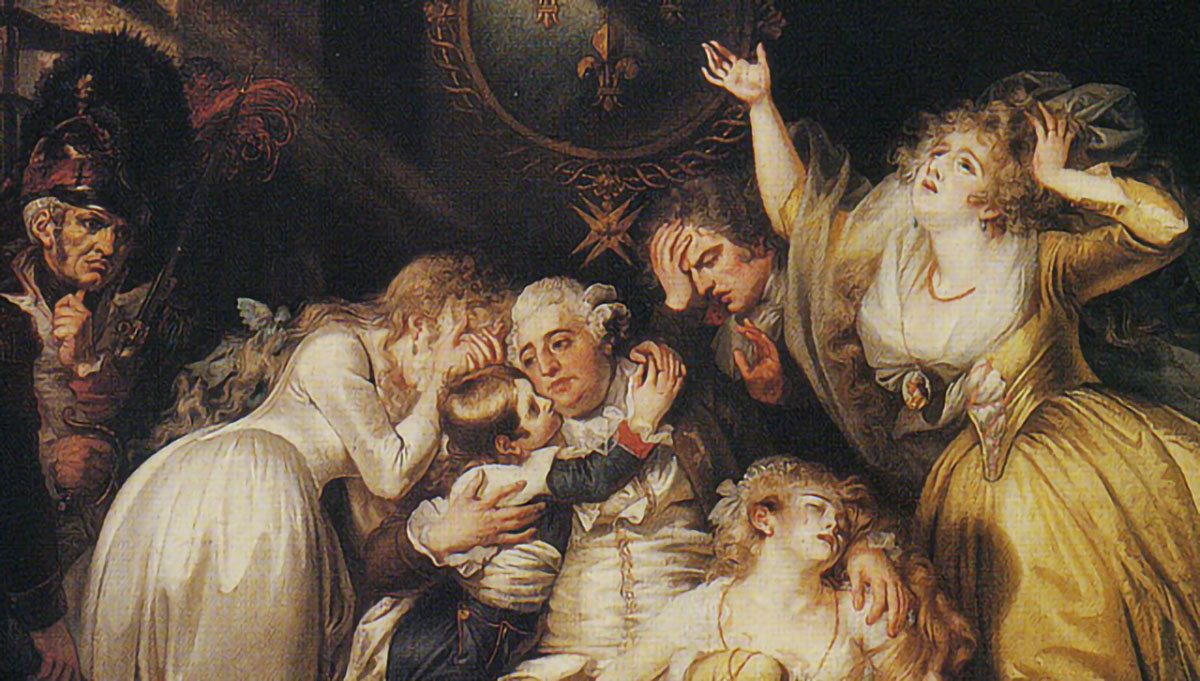
But the regicidal movements Weaver reserves the most ire for are those that claim to be acting on the basis of “popular sovereignty.” Indeed, Weaver believes that “the inability of pure democracy to stand for something intelligible leaves it merely a verbal deception.” Macbeth preparing his dagger to murder King Duncan is surely no different in Weaver’s estimation from Jacobin revolutionaries preparing “Madame Guillotine” for her meeting with King Louis XVI and Marie Antoinette—their violence simply took place on a much larger scale and for a much longer time.
In the fourth act, the audience sees Macbeth consolidate his power. Paul Cantor writes, “Shakespeare establishes a connection between Macbeth’s desire for the infinite and his tyrannical nature. … The tyrant finds himself at war with nature itself, since the very idea of a natural order is that things have natures which define their behavior, thus setting limits to their actions.” In his confrontation with the witches, Macbeth haughtily declares that their prophecies, which seem to deny the natural order, will never come to be (IV.i.110–116).
Cantor argues that, “in the figure of Macbeth, Shakespeare creates the demonic counterpart of [a] happy synthesis of pagan and Christian, a heroic warrior who turns tyrant in pursuit of a secularized version of the Christian Absolute.” In turning his back on his natural limitations, Macbeth has very much left the bonds of reason and his society’s Christian tradition. “Indeed, if Macbeth could have found a way to translate his personal hopes for heaven on earth into a political program, into what we would call an ideology,” Cantor concludes, “he might well have served as the prototype of the distinctively modern tyrant.”
Weaver contends in Ideas Have Consequences and elsewhere that nominalism produces a philosophical justification for a scientistic tyranny, much like the tyranny Shakespeare exposes in Macbeth. In Weaver’s mind, modern science was a technique for pulling apart the world and revealing how individual parts function. This ideology stands in direct contrast to the nobler pursuit of philosophy, which is about attempting to understand the wider world by putting the parts together. Seen from this perspective, it seemed to Weaver that scientific “inquiry reflects a habit of mind which must disquiet us. The habit appears to rest on a supposition that if you can do a thing, you must do it.” The irony is, once the scientist deconstructs reality, he goes about attempting to reconstruct it in the scientist’s own image.
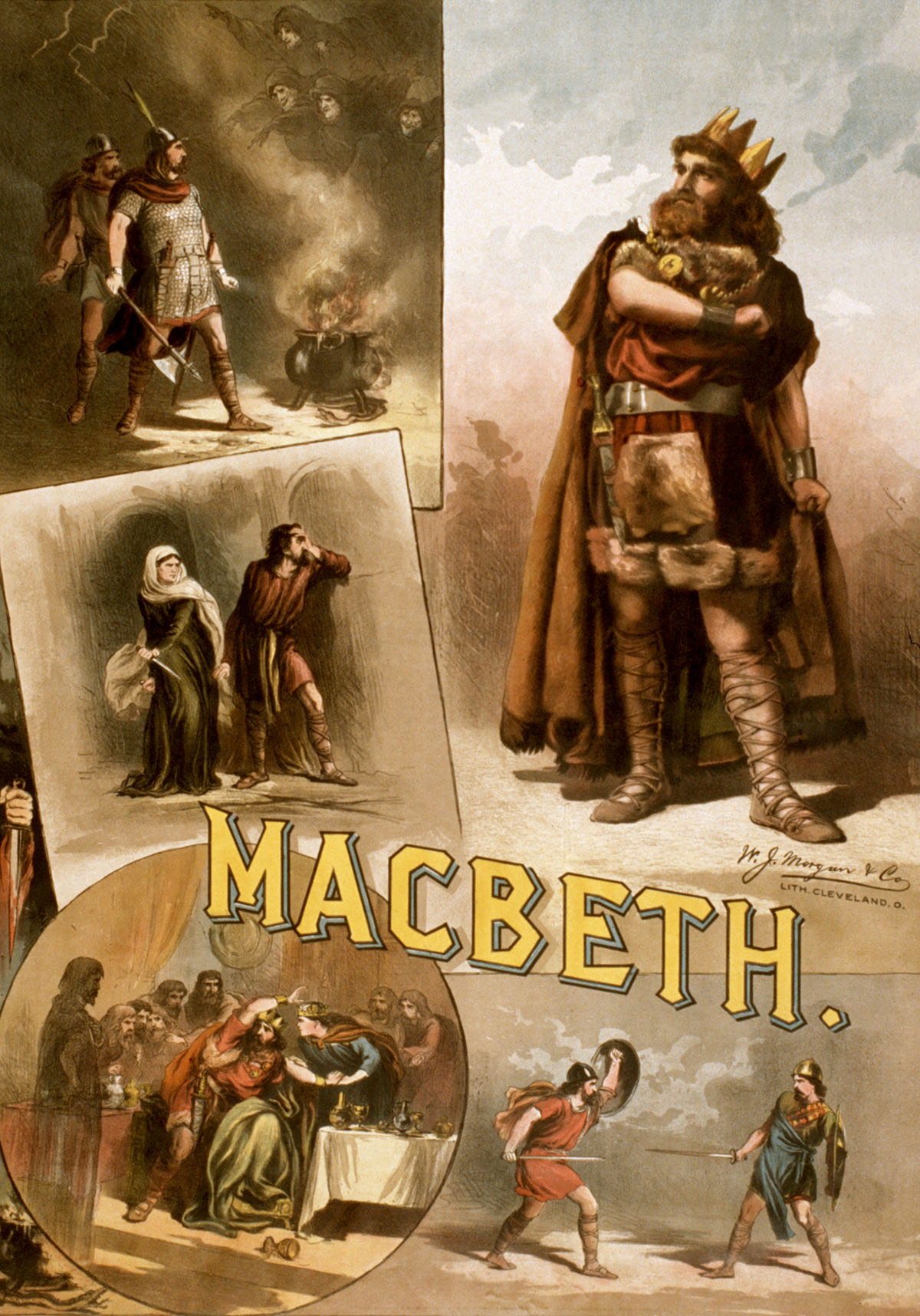
Philosophy, for Weaver, is about glorying in the variety of God’s creation. The transcendentals do not destroy diversity; rather, a full view of the world allows one to see unity and diversity in proper proportion. “True unity,” Weaver wrote, “is through a kind of grace.” The Western tradition of art and philosophy enables the human person to love the world as it really is; deconstruction can only teach men to be hateful, contemptuous creatures pulling apart reality for their own advantage.
The final act of the play sees Macbeth descend to the greatest depths of this sort of nihilism, only to be overthrown by legitimate Christian forces. After his impending defeat becomes apparent, Macbeth launches into one of the most famous speeches Shakespeare ever wrote:
Tomorrow, and tomorrow, and tomorrow,
Creeps in this petty pace from day to day,
To the last syllable of recorded time;
And all our yesterdays have lighted fools
The way to dusty death. Out, out, brief candle!
Life’s but a walking shadow, a poor player,
That struts and frets his hour upon the stage,
And then is heard no more. It is a tale
Told by an idiot, full of sound and fury,
Signifying nothing. (V.v.18–27)
Macbeth finally surrenders to meaninglessness. Or does he? Part of the way through his climactic fight with Macduff, Macbeth appears ready to surrender—that is, until Macduff insults him (V.x.17–34). Here we see Macbeth’s last, desperate attempt to overcome nature. As with all such attempts, though, it ends in abject failure. Weaver would sneer at Macbeth’s attitude in these final moments. “This continual warring upon nature is not a sign of superiority to her,” he writes of the scientist. Rather, “it is a proof of preoccupation with nature, a sort of imprisonment by her.”
Macbeth’s foolishness does not mean, however, that Weaver would dismiss his story altogether. The culmination of Macbeth’s desires in nihilism is a great cautionary tale to the nominalist and his optimistic, scientistic descendants. Placing our faith in untested prophecies will surely lead to doom and tragedy; there is no point in optimistically attempting to embrace the destruction wrought by a denial of the Western philosophical heritage. “Hysterical optimism will prevail until the world again admits the existence of tragedy,” Weaver laments, “and it cannot admit the existence of tragedy until it again distinguishes between good and evil.”
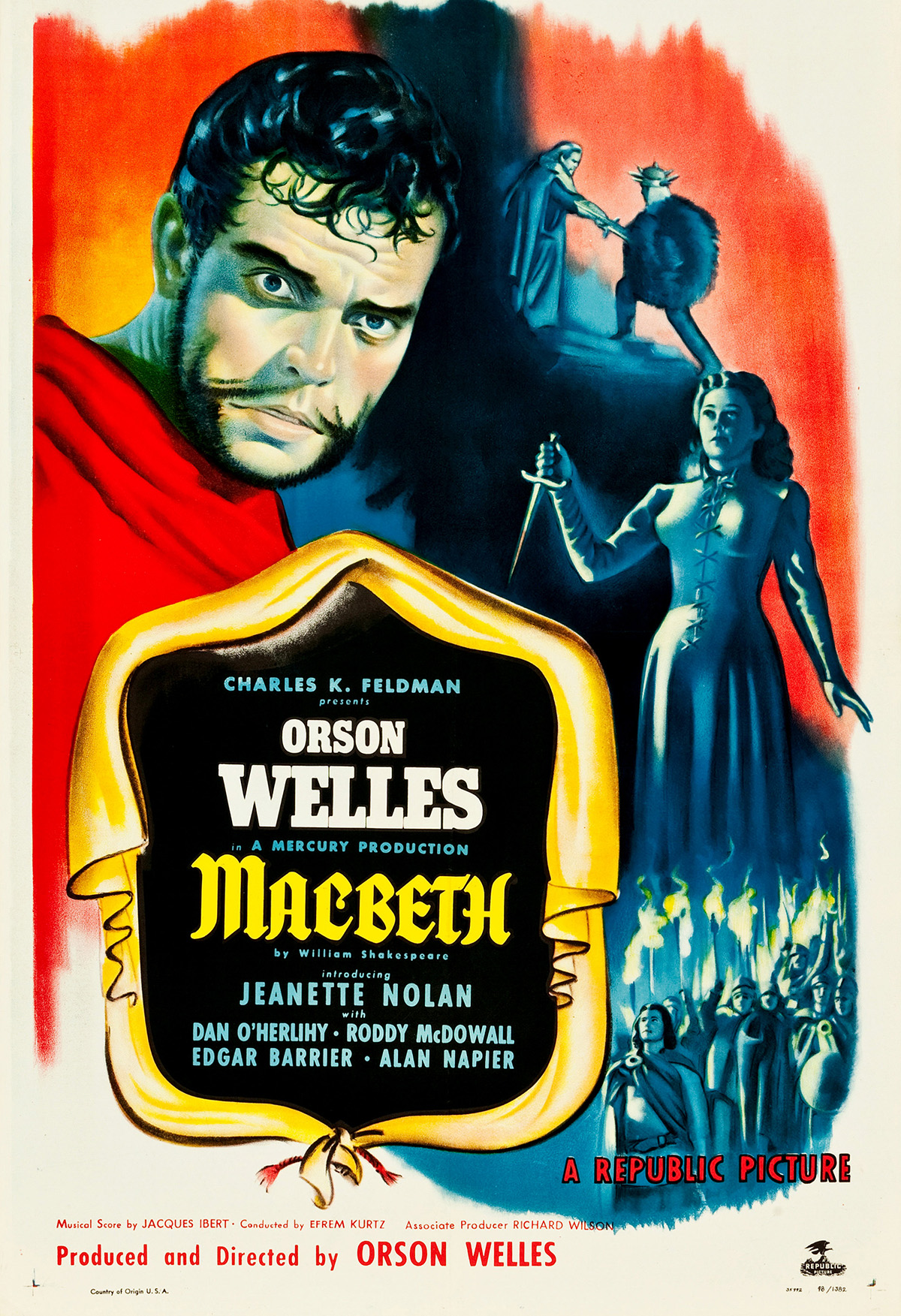
Shakespeare’s plays are so excellent because they can teach us the difference between good and evil without reducing the complexity of human life. He does not give us a formula for becoming good people but rather shows us the array of human possibilities. This Shakesperean humanism stands in complete opposition to the “terrible simplifiers” advocating modern ideology—and it is conservatives’ task to recover it as a public philosophy.
In his memoir Witness, Whittaker Chambers tells the story of how he became an ideological communist and a spy for the Soviet Union. He was seduced by many of the dangers Weaver would later warn about, but eventually Chambers came to see the light. The original epigraph to the memoir came from act 1, scene 1 of Hamlet; Chambers compares himself to the ghost of the king who returned from Hell to warn Denmark of tyranny’s creeping danger: “If thou art privy to thy country’s fate,” Horatio cries out, “Which happily foreknowing may avoid, / O, speak!”
But before he became a communist, Chambers fell in love with the Bard. He had run away from his unhappy childhood home to experience the wide world and wound up in New Orleans as a dock worker. One day, out of sheer boredom:
I borrowed a volume of Shakespeare.… I opened by chance to Antony and Cleopatra, expecting not to like it. I read it most of the day, lying on my filthy bed, stunned by the opulence of violence and of language. Then, I first read the line: “I have immortal longings in me.” In that slum, I found Shakespeare.
That love of Shakespeare—and the “immortal longings” his poetry awakes in the soul—saved Chambers. In the introduction to Witness, his beautiful “Letter to My Children,” Chambers recounts a moment he saw his son John shudder at the beauty and terror of a line from Macbeth. Chambers understood that this involuntary reaction to Shakespeare’s writing meant that his children “could thus feel in [their] souls the reverence and awe for life and the world, which is the ultimate meaning of … Shakespeare.” Man exists in a transcendent moral universe, and Shakespeare found a way to put it into words that can give us chills.
Shaping the moral imagination is the single most effective way to preserve Western civilization, and no one is better at that task than the Bard. As conservatives, our goal should be to give the greatest number of Americans possible the kind of education only reading Shakespeare can provide. But how can we do that?
First, we must insist that America’s students actually read—and learn to enjoy—his plays. University administrators should reintroduce Shakespeare to their core curriculum. High school and middle school teachers should require more readings from Shakespeare in their classes. And parents must do what they can to inspire a lifelong love of his works.
The culmination of Macbeth's desires in nihilism is a great cautionary tale.
Second, we should act as patrons of the Shakespearean arts. Since the 1960s, scholars of a conservative bent (e.g., Straussians such as Allan Bloom and Paul Cantor, and traditionalists such as R.V. Young) have been at the forefront of a revival in Shakespeare studies. Philanthropists interested in academia should continue to support this scholarship and conservative literary criticism. But they should also take a distinct interest in supporting the theatre. Shakespeare meant his plays to be acted, not simply read. They achieve their greatest power on the stage.
Third, the artists among us should take Shakespeare on as a mentor. The greatest American writers, from Abraham Lincoln to William Faulkner, have always found inspiration in his plays. The American mind has been in dialogue with Shakespeare its entire existence. His images, turns of phrase, and even the feel of his language have made American literature what it is. If American art and writing is to advance out of the mediocrity in which it languishes, it must do so in dialogue with the Bard.
In his essay on Eliot, Scruton acknowledges that the conservative task of finding order in the soul is a high and difficult one. “We can do nothing unless we first amend ourselves,” he insists. “The task is to rediscover the world which made us, to see ourselves as part of something greater, which depends upon us for its survival.” That is why, above all, the most important thing we can do to achieve cultural renewal is simply to read Shakespeare ourselves, and wonder at his greatness.
