


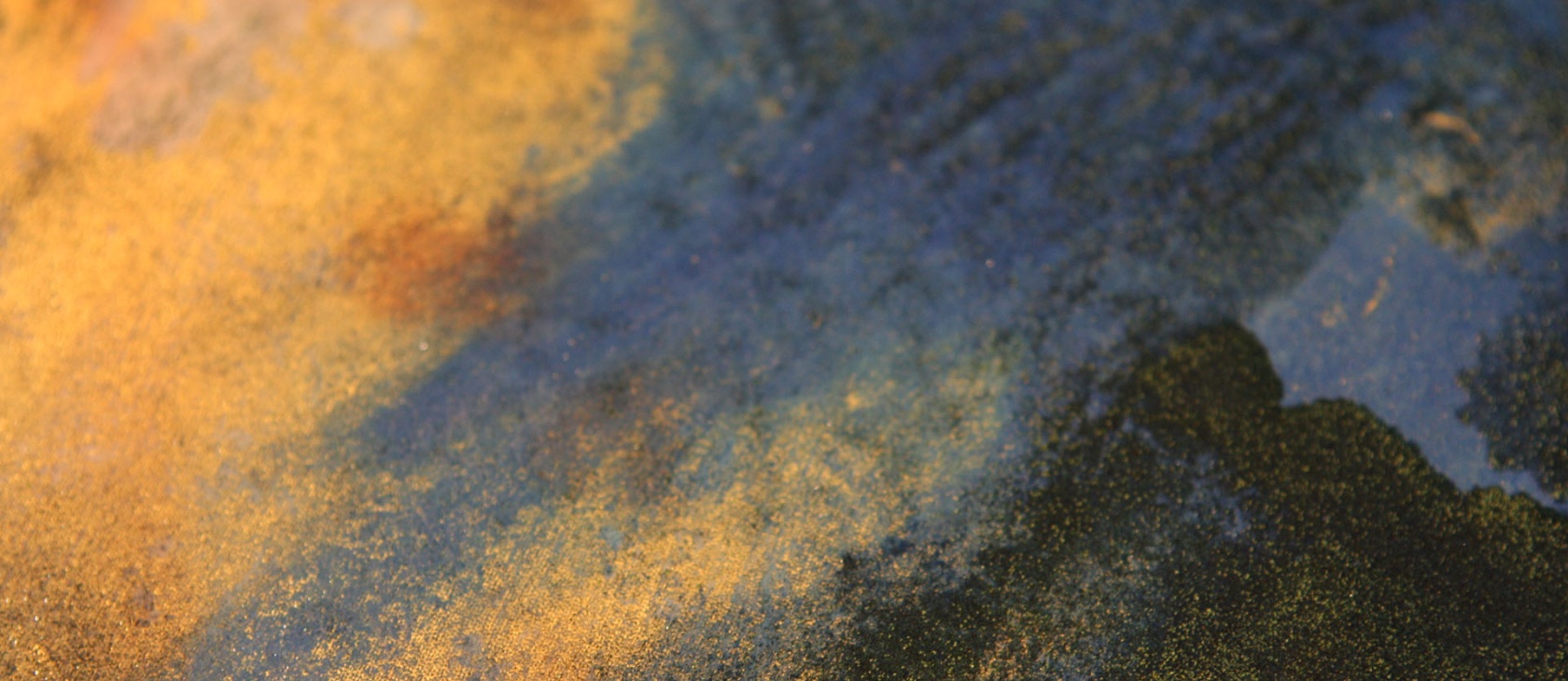
Makoto Fujimura occupies a peculiar role in modern art. He’s a distinctively Christian painter amid a sea of skeptics and opponents of the faith. Many artists talk a great deal about diversity and inclusion but in practice live in monocultural and ideological bubbles. Educated in Japan and the United States but not fully a part of either culture, Fujimura uses historic Japanese techniques in his work and presents a fusion of East and West that attempts to seek beauty and truth once again through art. Crucially, Fujimura also stands apart from most artists in his commitment to practicing a kind of “slow art” in the traditional Japanese (Nihonga) form while writing and speaking prolifically.
Truth, beauty, and reality itself are eluding us. We need to slow down and look again. A uniquely Japanese—and Christian—form of art can help.
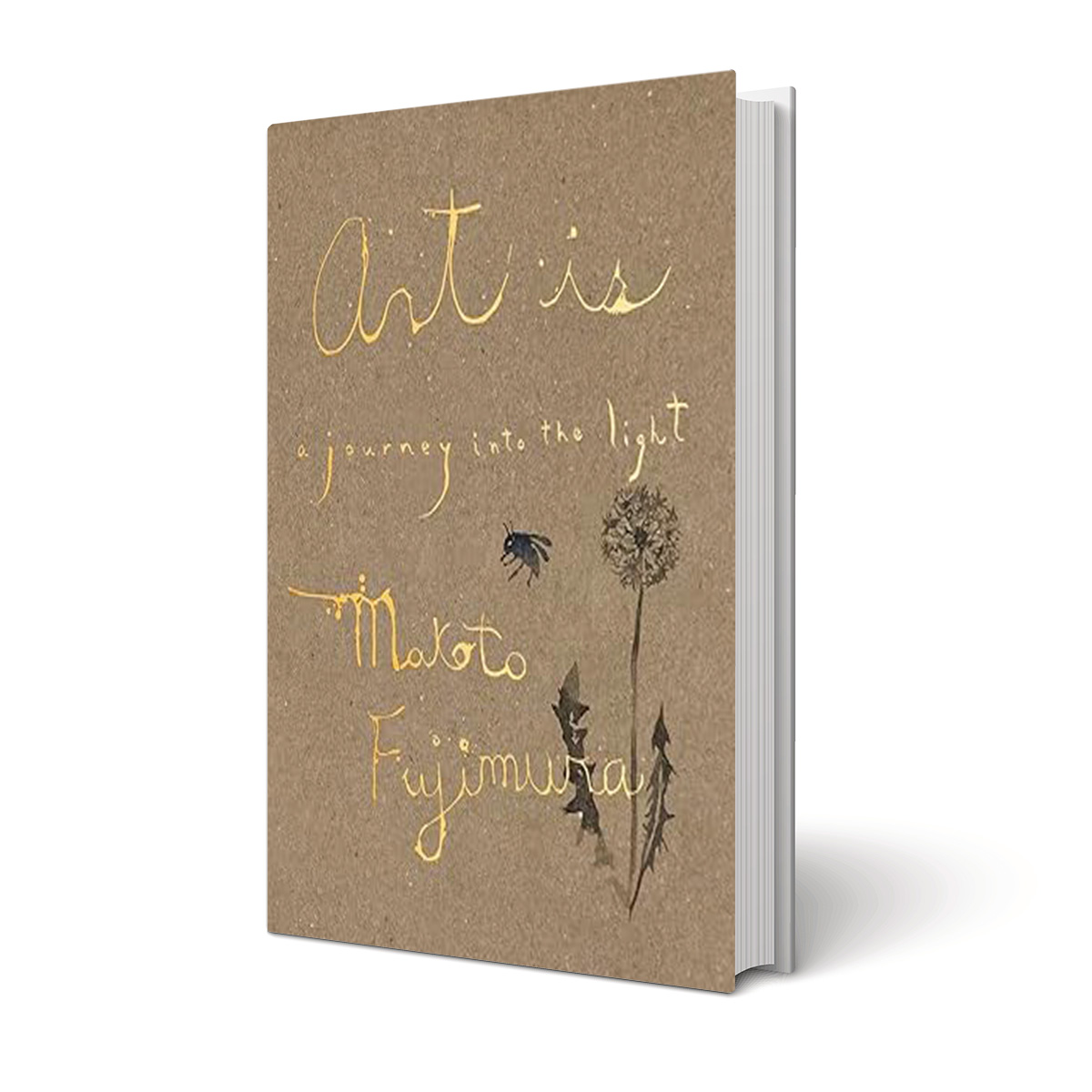
By Makoto Fujimura
(Yale University Press, 2025)
Art Is: A Journey into Light extends the ideas Fujimura developed in two previous books, Culture Care and Art + Faith. Where the former offers a manifesto of sorts for how Christians should approach work in the culture and the latter develops a theology of making, this latest book offers reflections on the meaning and purpose of art qua art, which Fujimura develops for the reader while leading them on a tour of his own artistic tools and techniques.
The result is a phenomenological exploration of art, offering a dizzying array of definitions for the subject. Art is variously described as “the quest of what ‘Life is’” and as “awareness … being made aware of our world, full of wonderment and sorrows.” Art “meanders to inaugurate the new,” it “is a path to receive and cultivate the gift (charisma) of life,” and “a liturgy of peace.” Fujimura offers each of these observations as partial statements of art’s purpose. He might call them refractions of the whole. His definitions share a steadfast opposition to the nihilistic and disintegrating views of art that have become standard in the world of high culture.
By contrast, Fujimura invites us into the possibility that art—driven by perspective as it is—can point us toward an objective reality. He rejects romantic notions of art that reduce it to a vehicle for “mere self-expression” or “a device for finding oneself.” As beings created in God’s image, when we in turn create art we reflect something of the truly real in our own creations. In this way, our attempts to craft or make allow us to see or understand aspects of our world that might otherwise be inaccessible to us in our ordinary, busy lives.
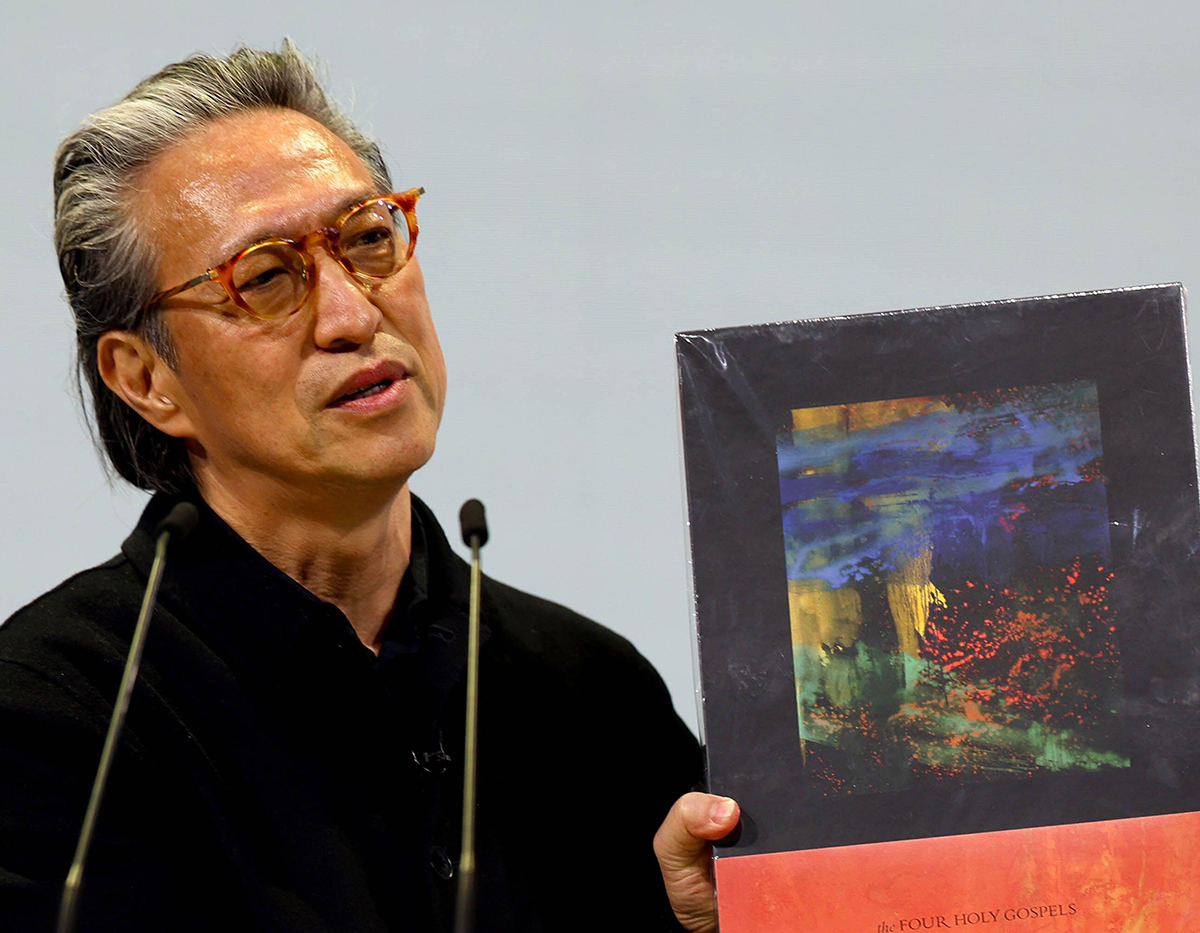
Fujimura tells those viewing his paintings that it takes about 10 minutes of quiet reflection to really see. No surprise, then, that he writes that “art creates a pause to rethink, helping us to slow down, reflect on what we see and hear.” That does not mean that art is all about cultivating seriousness. Although art points us to serious matters, it “is closely related to a child’s experience of play. Play is gratuitous and free, yet much of play involves learning to find freedom within boundaries.” He offers an astonishing hope here, but it is one that Christians should immediately comprehend as perfectly logical: “What if art can free us to be like a child once again; what if our imagination can be sanctified to see the future hopes as a child of God?”
These longings are alien to much of the contemporary art scene. Fujimura got his start in the 1990s, and real artists “were not supposed to speak of beauty in those days, as beauty at the time was seen as suspect in the ‘serious’ ideation of contemporary art. Beauty was the remains of the imperialistic past.” But this prejudice served up a distorted and diminished version of what art can be.
Fujimura suggests that art’s disconnection from truth and beauty makes it harder for artists to reflect reality—much less the relationship with God and culture that allows art to have lasting purpose. As he puts it, “Art that is trapped in hedonism or narcissism will not endure, and worse yet, can become an unwitting (or witting) agent for destruction.” Artists can fall prey to demons and ideological currents and react to things they perceive as unjust in dangerous ways: “The darkness we cannot see can misguide and confuse our journey toward the light.” Of course, many artists deny that there is a light to be found.
Fujimura rejects romantic notions of art that reduce it to a vehicle for ‘mere self-expression’ or ‘a device for finding oneself.’
Fame can be found pursuing worldly paths, especially those connected to politics:
Artists are sometimes conscripted in the front lines of culture wars and intentionally create transgressive art (but sometimes they volunteer to fight on those front lines as well). Such works, driven by “fifteen minutes of fame,” do not last. But enduring art that creates into the divide can often give us new paradigms, principles of how we see that we can learn from, helping us to sanctify our imaginations to create a more robust, and abundant, future.
By art that “creates into the divide,” Fujimura means art that uses inspiration from varied cultural forms or that reflects the gaps between peoples. These might be fusions of backgrounds and imaginations that open our hearts to experiences that unite humanity, or merely works of sympathy that bridge the spaces between us. He suggests that the best artists are what he calls “border-stalkers” who can more easily scout out these hidden places where art can unite us or show our neighbors new possibilities.
Several chapters in Art Is offer examples of this, where these Aragorns of the spirit protect what is essential in culture. Fujimura particularly focuses on what we can learn from the merging of Japanese conceptions of nature, hospitality, and beauty; the American culture of individuality; and the grace offered to us all through Christ’s atoning sacrifice. He presents the reader with elements of his life story, and in so doing provides a sense of what it means to be raised between two cultures, never fully a part of either but seeking the best that can be learned from both. He is particularly keen to help an Anglophone audience see that in the “Japanese tradition, nature becomes culture, and Japanese art is deeply connected to nature: the complexities and beauty of natural realms are honed and honored in art.”
Fujimura emphasizes the ways that the American soul tends to embrace the utilitarian and technological rather than the natural. He presents Japanese cultural forms and his own “slow art” as a kind of antidote to what he sees as the scarcity mindset that flows from these typical views and wants his readers to embrace “generative” ways of life. This does not deny the importance of markets and growth; it would be hard to imagine Fujimura pursuing his own art and acquiring its rare and precious materials without access to a global economy and flourishing enterprises within it. But it does suggest that markets need moral and spiritual sustenance that they themselves cannot provide.
The practice of kintsugi regularly appears in Fujimura’s writings and speeches as an example of what art itself can achieve in this respect. This involves the mending of broken cups or bowls with a lacquer that bonds the pieces together with greater resilience and beauty than was found in the original piece:
Kin means “gold” in Japanese, and tsugi means “to mend”; tsugi also means to connect generations. The resulting mended kintsugi bowl is more valuable than the original because it has been through two masters’ hands—the one who made the ceramic and the one who mended it.
This particular form suggests to him a greater path for art as a whole: “Can we enter the sacred through the imperfect and broken, rather than pretending to be perfect and unbroken and seeking to ‘win’ at all costs? What if art is a path that honors brokenness and allows the light to shine through the cracks?”
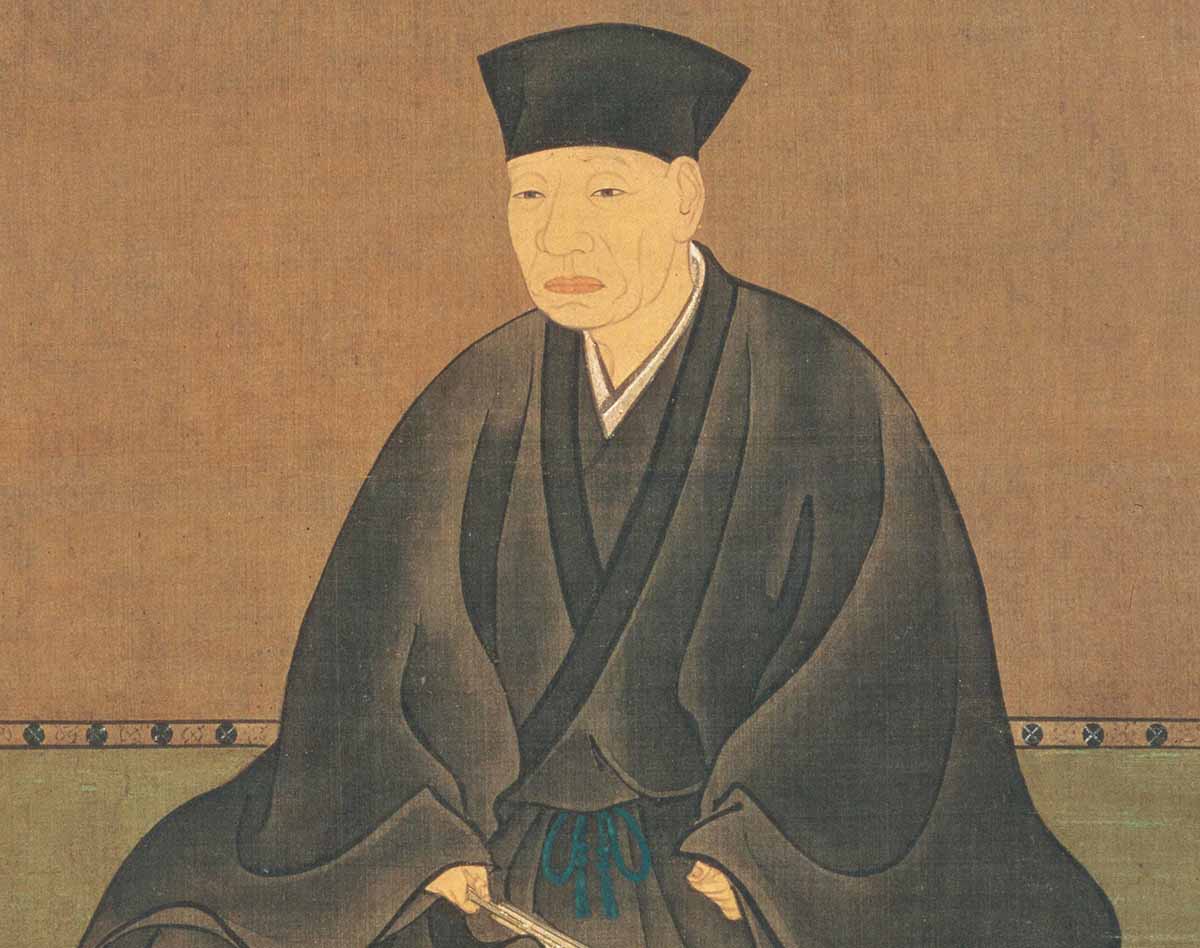
Fujimura also illuminates the Japanese tea ceremony as another example of slow art. Invented by Sen no Rikyū (1522–1591), this practice developed to become “a disciplined ritual requiring the apprentice to spend more than a decade just to begin to master all the minute movements.” The tea ceremony came into vogue during a period of great violence and upheaval. Fujimura argues that the ritual became a mode of artistic communication to “serve and communicate with warlords” and that “almost everything Rikyū did to refine the art of tea was an intentional act of peacemaking in a time of brutal dictatorial reigns filled with violence and death.” Perhaps more controversially, Fujimura shares his conviction that Rikyū was a secret Christian and notes that his ceremony was used as a covert stand-in for Holy Communion for decades after his death: “Rikyū created the liturgy of tea (a liturgy not unlike communion in a Catholic Mass) to preserve the sacred act of Christian worship via hidden means.” Fujimura argues that Rikyū’s confidant and patron, the anti-Christian warlord Toyotomi Hideyoshi (1537–1598), recognized the Christian symbolism in the ceremony and that this contributed to his decision to order Rikyū to commit ritual suicide in 1591. (It is reported that Rikyu first performed a beautiful tea ceremony for guests, then read out a “death poem” to the dagger he used to kill himself.)
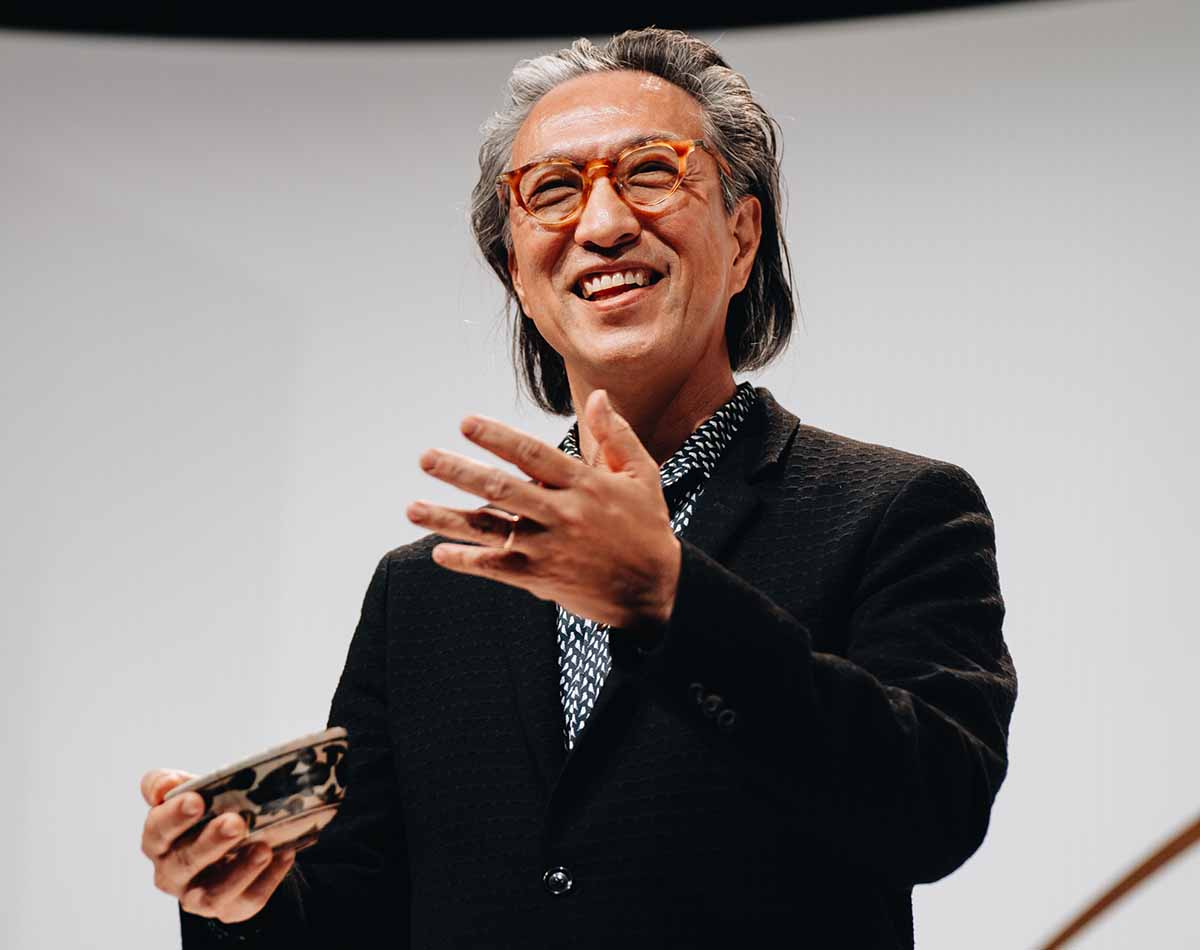
These examples suggest the hope Fujimura has for a revival of art connected to truth and beauty. He plainly sees the ways our culture is distracted and divorced from reality such that any broader reconversion and restoration of a Christian culture will need unusual evangelists. The very categories within which our culture tends to understand what matters may stand in the way. Consider one such opposition:
Reason and faith have been seen as separate categories and domains, but what if art can bring them together to bear witness to the marvelous intricacies of the deeper knowledge of grace. … Perhaps in educating the whole person, we need to address the totality of our being, including to “see with the eyes of our heart.”
Just as art might show us ways of uniting opposites in culture and allow adults to recover the innocence of children’s eyes, so too might it open hearts to Christianity.
Fujimura fully appreciates the challenges any such revival faces. Just as many fear for the intellectual life in an age that seems to be leaving books behind, he worries we are no longer able to recognize beauty because our minds are not still: “Art cannot be fully seen until our minds, usually filled with fears and anxiety, are given rest.” Yet because we are made in God’s image, hope always endures: “Our lives are love’s remains, prismatic surfaces, shards of mystery, a portal into a greater Reality.”
Focusing as Fujimura is on inviting readers into a world of seeing anew, Art Is offers little in the way of prescriptions. Nor would they be particularly appropriate for this work. But he does recognize resonances between art and other fields that bear mentioning. He believes that we must not lose sight of how education helps shape hearts and minds and that liberal education alongside the arts can serve as “an antidote for our tech-filled culture war journey that only creates anxiety and fear.” He implies that a politics rooted in this tradition and education is perhaps our best hope.
Speaking of Abraham Lincoln and Martin Luther King Jr., Fujimura notes that their “voices convey urgency and beauty; they are not afraid to take on complexity, stewarding prismatic shards of ideals given to them, a refractive splendor of enduring vistas that they could not reach.”
In our fractured era of video clips and social media posts, with politics tending ever more toward tribal and ideological tendencies, we certainly need a politics that can embrace truth and beauty. But it is impossible to imagine a turn in that direction without more of us first seeing and embracing love’s remnants in our own lives, and Art Is offers an exhortation to start.
