



Nadya Williams holds a Ph.D. in Classics from Princeton University and is the author of Cultural Christians in the Early Church, Mothers, Children, and the Body Politic: Ancient Christianity and the Recovery of Human Dignity, and Christians Reading Classics. She is also books editor at Mere Orthodoxy and writes a weekly newsletter at nadya williams.substack.com.
Your family emigrated from Russia in 1991, just as the USSR collapsed. You’ve written about how you were given the choice of coming to the U.S. or moving to Israel—or even to stay in Russia. Do you ever imagine alternative Nadya lives—one that was lived out in Israel and one that remained in Russia? If so, what do they look like? Or is an American Nadya all there is and was?
Nadya Williams: I wonder if imagining alternative lives is the quintessential stuff of middle age. I hadn’t really thought of it until a few years ago, and now it’s become this strange hobby, an obsession even, which is why I read (and review) so many new books on contemporary Russia. I loved my childhood in Russia and Israel, where my family lived for five and a half years before moving to the U.S. right as I was about to begin 10th grade. Yet in hindsight, I can note a lot of trauma and dysfunction in my family, but even more so baked into the social fabric. In Russia, there were generations who still remembered the Stalinist purges, whereas in Israel practically every single citizen had relatives who had perished in the Holocaust. The grandfather of one of my classmates had been on Schindler’s List.
Still, few forces in the world are as powerful as nostalgia—the sounds, smells, and sights one can still experience so vividly decades later. Our souls are invariably stamped by the love of places we oved first. Like the sight of birch trees, which reminds me of the trees I saw everywhere as a child. (I cried the first time I saw one in America.) Or the beet salad that I occasionally make, which thoroughly freaks out my American children.
But thinking of choice as a child is tricky. On the one hand, sure, I could have put my foot down, in theory, and stayed behind in Russia with my grandparents, for instance. But in reality, what nine-year-old would have done that? And knowing what I know now, life would have been much worse, for sure. The level of corruption, insane under communism, is simply unimaginable now. And while God works miracles everywhere, it seems that my coming to Christ was the result of an intricate set of American circumstances, of living in a place where people went to church and talked about God, which made me want to find out what this all was about. Russia, after all, was an officially atheistic state, and in Israel, all my friends and classmates were secular Jews.
When we moved into our home in Ohio two years ago (a house we bought sight unseen while still living in Georgia), I discovered that there is this gorgeous brown birch tree on my front lawn. It doesn’t look like those Russian snow-white birches, but it is very recognizably their cousin. It felt like a gift from God.
On your website, you write that you are a “former academic…and a historian who writes for the church.” Was there one moment when you went from one calling to another, or were you always both? How does your grounding in the Classics serve the church in 2025?
I was an academic for 15 years—the last three of those as a tenured full professor of history. And for 12 of those years, I was a Christian. I came to Christ at age 30, and it took me a lot of time after my conversion to feel confident writing for the church; I really only started five years ago. For one thing, as a new Christian, I didn’t think I had anything to offer the church at that point—I needed time to grow as a believer. Besides, my academic job was very teaching- and service-intensive, so I did only minimal writing and publishing, all of it very academic.
Then during the pandemic, for the first time in my life, I asked my husband for his help in carving out one hour a day to write. So he would take the kids outside to play while I wrote. It was then that I realized I really did have ideas that would be helpful for the church, and my first book came out of that period. I wanted to show that the early Christians (including those to whom Paul was writing) are so much like us, deeply relatable in their sins and struggles. But this is good news—we’re not worse (and we’re not better!) than them. We all desperately need Christ.
What I realized is that Christians today want to love the Bible and want to love their history, but too often simply don’t know where to start. I use my training in the Classics to show the relevance of the ancient world for our understanding of the Bible and the world that the earliest Christians lived in. It is a fascinating world! Besides, we keep talking (rightly) about our need for the true, the good, and the beautiful—but too often people have no idea that this is a direct reference to Plato and to the love of the ancient Classics that Christians, too, saw as essential for intellectual formation. My latest book in particular focuses on how we can (and should) read the Classics as Christians.
In essence, I see all my work as trying to solve the scandal of the evangelical mind. After all, God calls us to love him with all our mind.
After all, God calls us to love him with all our mind.
In your book Mothers, Children, and the Body Politic, you tackle the subject of the commodification of women and children. Is there any one thing especially responsible for this dehumanization process? Was it an ideological attack on the traditional family? Many on the secular left would say it is owing to capitalism itself. What do you say to the nonreligious who are also concerned about this commercialization of what it means to be human?
I don’t know if we should blame any one thing most of all. Rather, there is a perfect storm afoot that has been gathering for 70-odd years. Yes, we are living amid an ideological attack on the traditional family. But Christians in particular must recognize that all crises we face right now are, first and foremost, theological crises. And so I see this commodification of women and children as a denial that people are made in the image of God and that this fact of our personhood matters. If people are not image bearers, then such Brave New World–style reproductive tech developments as egg freezing, IVF, surrogacy, and whole-body gestational donation are totally fine.
But so much of this is indeed capitalism-driven as well, or at least driven by a capitalism not grounded in virtue, because we live in a world where we’d like to put a price tag on absolutely everything. This means that we price human life and human beings in all kinds of ways that we don’t even think about on a regular basis—consider what is happening with PEPFAR funding, for instance, or other humanitarian funding that is very tangibly saving lives. Or the example I mention in the book about a faulty car model (Ford Pinto)—the manufacturer decided not to recall it, because price calculations showed that it would be cheaper to just pay out to the families of the projected victims who would die rather than to recall the car and replace the faulty part. Calculations like these are good business but obviously unethical because they place money over people’s lives.
The original title I had proposed for this book was “Priceless,” because in God’s eyes, every single person is priceless. This is a key point I keep coming back to in this book—what if we look at people the way God looks at them? God’s redemption, His buying back of humanity on the cross, is a powerful statement on how we should be thinking about all people.
Now this is an argument that doesn’t work for the nonreligious, but I think an argument they could agree with is the need to prioritize human flourishing and to protect the vulnerable. So many measures I describe in my book as attacking the dignity of mothers and children are, really, hostile to the dignity of all people. We should all be appalled at surrogacy—it is an outrageous abuse of people. And we should all be horrified at the obvious abuses that occur whenever medically assisted suicide is legalized. But at the same time, I would add, the reason we all—nonreligious and religious alike—are likely to be united in our horror at these abuses is precisely because we live in a world shaped by 2,000+ years of Judeo-Christian teaching on human personhood.
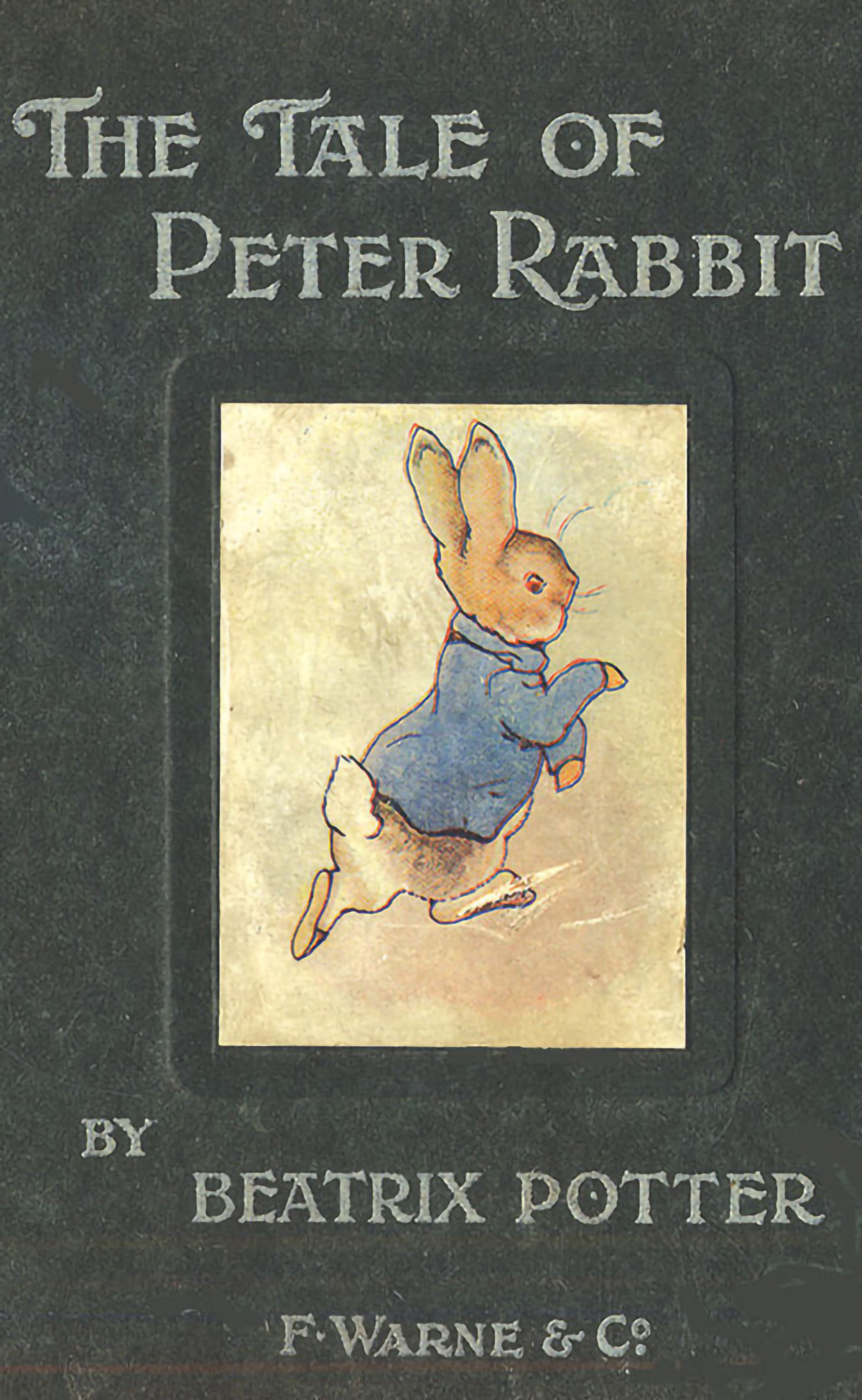
On your Substack, you have an essay that lists “beautiful books” to read to children, including such mainstays as The Tale of Peter Rabbit and the works of Dr. Seuss. What are some “beautiful books” you’d recommend for college students right now?
I always recommend going back to the basics—the original beautiful books, in my view, are the Greco-Roman classics. Read Homer, the tragedians, Plato and Aristotle, Vergil, Ovid, Tacitus, Apuleius, and many more. My forthcoming book this fall is a guide for Christians on how to do this sort of reading as Christians.
But we also live in the modern age and have to understand contemporary crises. I just mentioned Aldous Huxley’s Brave New World in answering the previous question. It’s not a beautiful book in the same sense as the beautiful books I read to my children or, say, the ancient epics. But reading dystopian fiction like Huxley’s is a call to beauty, because it reveals the raw undisguised ugliness of the alternative.
Perhaps this is why I would also recommend Russian literature—Tolstoy, Dostoevsky, Bulgakov, and the contemporary Russian master Eugene Vodolazkin. Vodolazkin especially is a stunning writer, even as his stories are filled with tragedy. I think for college students preparing for life as full-fledged adults, reading about tragedy and suffering is formational in recognizing the Christ-haunted nature of all life. But also, we can see our own darkest desires reflected in such literature. Who of us wouldn’t want to live life entirely on our own terms? But these novels remind that we are not in control, and suffering is a part of life—yet God is on his throne. Always.
I appreciate a feminism that sees men and women as God sees us, rather than trying to remake women into men or men into women.
The blog you contribute to, Fairer Disputations, describes itself as “Sex-Realist Feminism for the 21stCentury.” For many conservative or traditional women, especially of a religious bent, “feminism” is almost a toxic term, a form of ideology. What does it mean, or what can it mean, in 2025 for those put off by the word?
I think the key to understanding Fairer Disputations is the “sex-realist” part. Yes, there are way too many kinds of feminism today, and many are indeed problematic. In fact, I would argue that the Judith Butler brand of feminism, for instance, is pure misogyny—and the rest of the FD contributors would agree with me on this. Indeed, this is one way to summarize Mary Harrington’s powerful book Feminism Against Progress.
What I appreciate about sex-realist feminism is the emphasis on who we were created to be—women and men, with real embodied differences that are part of God’s design for humanity and are worth celebrating rather than denying or denigrating. Writers since antiquity have argued that women’s ability to become pregnant was a design flaw—a sign (as Aristotle said) of being a “mutilated man.” But this is not true. God made our bodies as they are, and God delights in his creation. I appreciate a feminism that sees men and women as God sees us, rather than trying to remake women into men or men into women.
Fun Question: What’s your favorite B&W film, and why?
I’m really not big on movies most of the year. I have no trouble sitting with a book, but I get very fidgety during films, so we watch very few as a family. But every year during Christmas season, my husband is in charge of selecting some good Christmas films for us to enjoy as a family. And the only way to find something that doesn’t have anything inappropriate for little kids is to go B&W.
So, we’ve watched a couple of B&W Christmas movies every year for the past few years, and I have to say, there is something so encouraging about these films—think It’s a Wonderful Life, White Christmas, and Come to the Stable. It’s become an integral part of our December countdown to Christmas, right along with the very tacky artificial tree (because the kids decorate—and we have too many homemade ornaments they love) and the increased hot chocolate and cookies intake (because this is what good memories are made of).
I guess I read Russian literature for the angst, but I watch B&W Christmas movies for the encouragement, the joy, the promise that even though life truly is tragic at times, there is redemption afoot, too. We all need this reassurance in the stories we read and see. And we need beautiful family rituals that are wholesome and simple.