
The constitutional way to defeat cancel culture
When writing about the deep divisions that beset America today, it is imperative to put things in context first. As hard as it may be to believe at times, we have been more divided at other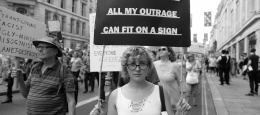
Faithful citizenship: the founders on religion and the republic
Shortly before he left office, President George Washington published an essay commonly referred to as his “Farewell Address.” In it, he observed that: Of all the dispositions and habits
What is a Christian’s duty as a U.S. citizen?
-
Saint Augustine famously wrote about the existence of two cities traveling together through time and space on earth. One is the city of man. The other is the city of God. The Christian must live in both and find a way to live faithfully amid the inevitable tension. Early Christians experienced this tension in dramatic fashion. We feel it today, too.
Part of the church’s history has to do with periods of intense persecution and martyrdom. Steven D. Smith’s recent book, Pagans and Christians in the City, relates the incredulity pagan Romans had when faced with the intransigence of Christians. The fundamental difficulty was that the pagans could not understand a conflict between the power of the state and the power of God. Pagan religion was not concerned with searching inquiries into the nature of truth. There are no doctrinal battles in paganism. Rather, pagan religion is simply performative in nature. It involves giving a sacred glow to both nature and institutions through public ritual. In this regard, the Romans considered themselves tolerant and enlightened. The Christians, like everyone else in the empire, could incorporate their Jesus into the broader pantheon of gods. And while they were at it...
-
Henri Landwirth
Henri Landwirth (1927-2018) overcame a traumatic childhood during the Holocaust to become a great businessman and philanthropist for terminally ill children. Landwirth and his twin sister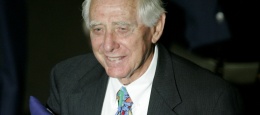
Repairing the breach: bringing peace to politically fractured families and communities
The 2020 presidential election will be over shortly after this is written. Unfortunately, it will not end the political fevers that boiled over into violence this summer. On a smaller scale
Be civilization! Citizenship is more than voting
Do you want to be a good citizen? You really ought to vote. Of course, you don’t need to read this article to know that. Everybody is saying this in a major election year for the United
Time to chill about the fiery climate apocalypse
Standing in a smoke-filled, charred stand of trees in northern California late this summer, Gov. Gavin Newsom delivered an impassioned, blame-shifting analysis of the causes of wildfires
Critical theory, critiqued
-
Cynical Theories critiques the modern social justice movement from a politically liberal viewpoint and argues that liberalism can exist without critical theory or identity politics. As the authors state, the book is written “for the liberal to whom a just society is very important, but who can’t help noticing that the Social Justice movement does not seem to facilitate this and wants to be able make a liberal response to it with consistency and integrity.” The authors, who are academics, joined Peter Boghossian in the “Grievance Studies Hoax,” in which they fabricated absurd or unethical academic papers and had them published in peer-reviewed journals to show the corrupting influence these fields have had on scholarship.

-
Earthly and heavenly citizenship
Every election year, it seems our world becomes ever more dominated by politics. Without fail, each election is trumpeted as the most important of our lifetime. Alarms are sounded by
COVID-19: the tyranny of experts
You already know the basic story of the 2020 coronavirus global pandemic, but the proper interpretation is still in flux. If we fail to discern the role of the tyranny of experts, we will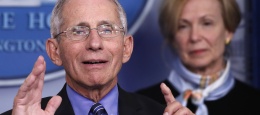
The ‘public option’ will destroy choice
-
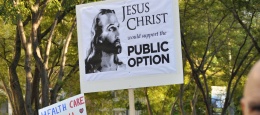
Democratic presidential nominee Joe Biden has made it abundantly clear that he opposes the “Medicare for All” model of health reform favored by Sen. Bernie Sanders, I-Vt., and the progressive wing of the Democratic Party. Instead, Biden proposes creating a public insurance option that would compete against private insurers on the Obamacare exchanges.
On its face, this plan might seem sensible. Unlike Medicare for All, a public option would not abolish private insurance. It would just give people one more choice of health insurance coverage.
But Biden’s public option would upend our health sector in ways that impose real costs on patients and providers alike. In the end, it would yield the same kind of single-payer system that the former vice president has explicitly rejected.
The Biden campaign has outlined in some detail what its government-run health plan would entail.
The public option would be administered by Medicare. It would include at least one plan with no deductible. It would charge no co-pays for primary care. Low-income Americans who are not eligible for Medicaid would be enrolled automatically. And all Americans – even those eligible for coverage through their employers – would be free to sign up.This model is...
-
The ‘public option’ will destroy choice
Democratic presidential nominee Joe Biden has made it abundantly clear that he opposes the "Medicare for All" model of health reform favored by Sen. Bernie Sanders, I-Vt., and the
Page 25 of 112