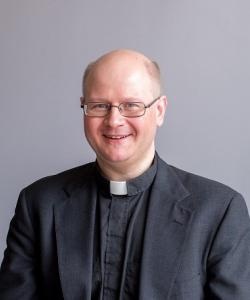
Rev. Ben Johnson (@therightswriter) is an Eastern Orthodox priest and served as executive editor of the Acton Institute from 2016 to 2021. Previously, he worked for LifeSiteNews and FrontPageMag.com, where he wrote three books, including Party of Defeat (with David Horowitz, 2008). His work has appeared in National Review, the American Spectator, and The Guardian, among other outlets. His personal websites are therightswriter.com and RevBenJohnson.com.
Hanukkah, the Jewish Festival of Lights, runs from the evening of Thursday, December 10 until Friday, December 18, 2020. Here is what you need to know.
What is the history of Hanukkah?
Hanukkah is the Hebrew word for “dedication,” and the holiday celebrates the rededication of the Jerusalem Temple after pagan desecration.
The Syrian ruler Antiochus IV Epiphanes captured the Second Temple in Jerusalem in 168 B.C. and dedicated it to the worship of Zeus. To add insult to injury, he sacrificed a pig on the altar. The illegitimate “high priest” appointed by the government, Menelaus, erected a statue of Zeus in the Holy of Holies, and he forced Jews to worship Greek idols or accept martyrdom.
The faithful priest Mattathias and his family, known as the Maccabees or Hasmoneans, led a seven-year rebellion (167-160 B.C.) to reclaim their freedom of religion. After Mattathias’ son, Judas Maccabeus, won a series of David-and-Goliath victories against the Syrians, his forces liberated the Temple in 165 B.C. They immediately repaired the damage the pagans did to its sacred furnishings, destroyed and rebuilt its desecrated altar, and reconsecrated the Temple to the worship of God (Yahweh).
This week, a federal committee accomplished the rarest of all achievements: It produced a government document worth reading. On Thursday, July 16, the U.S. Commission on Unalienable Rights released a clear, enlightened, and comprehensive report on the origins, authentic content, and illegitimate expansion of human rights. The report is perhaps the best civic education on the matter in decades.
“[H]uman rights are now misunderstood by many, manipulated by some, rejected by the world’s worst violators, and subject to ominous new threats,” it says. The report traces the origins of the American understanding of “unalienable rights,” how the Declaration of Independence compares with the Universal Declaration of Human Rights, and a proper approach to promoting human rights in foreign policy. This remarkable report supports Tocquevillian subsidiarity, a Lockean view of purpose of government, and an accurate summary of the Three-Fifths Compromise.
Here are six quotations from this worthwhile government document.
The three forces that shaped American liberty: Christianity, republicanism, and classical liberalism
Among the traditions that formed the American spirit, three stand out. Protestant Christianity, widely practiced by the citizenry at the time, was infused with the beautiful Biblical teachings that every human being is imbued with dignity...
California Gov. Gavin Newsom’s decision to ban singing inside churches -- and in some cases, to close churches outright -- is ringing some unpleasant bells.
The government’s “infringement of our religious rights” reminds his flock of “the era of godless persecutions in the USSR,” says a leader of the Russian religious community.
As Americans returned to their workplaces after celebrating the Fourth of July holiday on July 6, the state of California rolled out a new “guidance” requiring all churches and other places of worship to cease indoor singing.
One week later, on July 13, the governor intensified those regulations. In addition to closing all indoor dining in California, he ordered that counties which have been on the state's monitoring list for three consecutive days are "required to shut down" all malls, fitness centers, and "worship services" -- which are listed just before "protests."
As of this writing, the order applies to 30 of the state's 58 counties.
Archbishop Kyrill of the Russian Orthodox Church Outside of Russia is joined by pastors from a variety of Christian traditions in saying that the government order infringes on their religious liberty.
Religious liberty won two significant victories at the U.S. Supreme Court on July 8. Justices ruled in two separate, 7-2 decisions that the federal government may not interfere in religious institutions’ hiring and firing of ministers, and that the government has the right to grant the Little Sisters of the Poor a religious exemption from a federal Obamacare mandate requiring employers to furnish female employees with no-cost birth control, sterilization, and potentially abortifacient drugs. The cases are a triumph for freedom of conscience and a rebuke to the theory and practice of federal regulatory overreach.
President Donald Trump praised the ruling, while Joe Biden called the Little Sisters’ victory “disappointing.”
In both cases, Justices Stephen Breyer and Elena Kagan joined the court’s five more conservative justices.
Keeping the government out of religious schools
In Our Lady of Guadalupe School v. Morrissey-Berru, justices strengthened the “ministerial exception,” the legal doctrine that churches, synagogues, and other religious bodies have the right to choose their own ministers, including schoolteachers they consider part of their broader, non-sacerdotal ministry. While this provision is not spelled out in the First Amendment, it flows naturally from the idea that the government cannot...
The U.S. Supreme Court’s decision in Espinoza v. Montana Department of Revenue admirably defended religious liberty, school choice, and parental rights. However, the court may have also paved the way for teachers unions and hostile politicians to undermine that victory.
On June 30, the Supreme Court ruled 5-4 that excluding religious schools from a privately-funded, state-established scholarship program is an “infringement on free exercise” of religion and is “fatally underinclusive” by denying benefits to people of faith.
“Discrimination against religious schools and the families whose children attend them,” wrote Chief Justice John Roberts, is “‘odious to our Constitution’ and ‘cannot stand.’” The Supreme Court ruled that politicians cannot stand in the schoolhouse door to discriminate against a class of citizens, whether they be people of color or people of faith.