
The Tower of Babel: The Problem of Devarim Achadim
-
In the 16th century, Belgian artist Pieter Bruegel the Elder painted one of the most famous renderings of the Bible’s Tower of Babel. He portrayed the tower as a gargantuan edifice of bricks and mortar, under construction, with its top above the clouds, reaching toward the heavens. The project’s royal leader is in the foreground with workmen at his feet feigning subservience. Within the painting itself, construction seems to be proceeding methodically, but successful completion is noticeably in doubt—perhaps reflecting Bruegel’s own concerns about technological overreach and the political abuse of power. The large painting is a monumental achievement. Yet the meaning of the tower in the Bible is far more monumental. It not only brings into question the perennial yearning for the ideal society; it also demonstrates the need for what we now call ethical monotheism.
The story of the Tower of Babel in the Old Testament is surprisingly short—just nine verses in total. However, despite its brevity, its meaning is incredibly important, occurring at a critical moment in the Biblical narrative, right between two seminal events. First, the flood that re-creates the world with Noah, the righteous man of his generation; and second, God’s establishment of His covenant...

-
The Church’s Overdue Reconciliation with Liberalism
-
In his social encyclical Rerum Novarum (1891), Leo XIII condemned socialism for rejecting private property and instigating class warfare. But the historical evolution of the concept made it necessary to nuance this view. Already by 1931, Pius XI distinguished between revolutionary socialism, which he continued to condemn outright, and reformist socialism that accepted participation in democratic life—though even the latter remained, in his judgment, incompatible with the Christian faith. A new distinction was introduced by John XXIII and John Paul II, who distinguished between “ideologies” (closed views of reality) and “historical movements,” which, though inspired by ideologies, show greater flexibility and pragmatism through their familiarity with social reality. Thus, though it would not be licit for a Christian to adhere to Marxism as an ideology (in the first sense), it would be possible for him to participate in a “socialist” party to the extent that it was compatible with his faith.

-
In the Liberal Tradition: Steven Horwitz
-
The classical liberal movement lost one of its strongest voices when economist Steven Horwitz passed away after a long fight with cancer on June 27, 2021.
“I still believe the world is getting better and better and more awesome. I’m just not going to see as much of it as I thought I would.”
When Horwitz spoke those words on the Free Thoughts podcast in 2019, he was about two years into his battle with multiple myeloma—a disease that ultimately took his life. He was on that podcast to talk about gratitude and the importance of remaining grateful. As an economist, Horwitz knew we have reason to be grateful. For millennia, the average person survived on the equivalent of roughly $3 per day—until around 1800, when that amount skyrocketed. But Steve’s gratitude was not so much for material things but for his own life. This gratitude was exemplified in the happy-warrior spirit that he brought not only to debates about public affairs and economics but also to his battle with cancer.
Horwitz passed away at the age of 57. Yet he lived a full and meaningful life, sharing his exuberance and intelligence with his family, friends, students, and readers across...

-
Profit and Responsibility
-
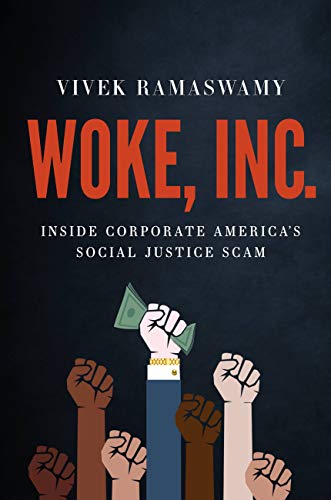 The standard critique of woke capitalism is that woke ideas are ruining business. Instead of engaging in political activism, companies should focus on turning a profit by creating superior goods and services. In his book, Woke Inc., Vivek Ramaswamy takes a different approach to the argument. He argues that “woke capitalism” isn’t wrong because it’s ruining business, but because woke business is ruining the foundations of our democracy. When businesses engage in political and social activism, they undermine the way the democratic process was intended, through debate in the public square. Woke Inc. offers some important insights, but it unfortunately gets bogged down by an imagined debate with Milton Friedman about the purpose of business and anecdotes from Ramaswamy’s career, which combine to muddy the waters on the purpose of business.

-
Playing to Angels
-
The Honorable Henry Hyde, in a speech to the National Right to Life Committee, reminded the Committee of something I hope you will never forget. He said that we are not “playing to the gallery, but to the angels, and to Him who made the angels.”
Ponder that for a moment.
If there is one insidious idea that we have worked to inoculate you against during your time with us, it is this tendency, all too prevalent, to play to the gallery. Its lure and seduction are understandable enough: one likes to hear the cheers and affirmation; the benefits from networking opportunities are exciting, and the potential promotions and awards are palpable.
Besides, angels are all too often quiet, and when they do speak, they frequently remind us of uncomfortable truths about how we might have to relocate here, or undertake some inconvenient calling there. They rarely guarantee applause or success.
You will find in the gallery many of those counted among the NONES, that is the growing number of young people in your age demographic, who do not identify themselves with any religious affiliation. You will share dorms with them, play on sports teams with them, and you will...
-
Opening the Mind
-
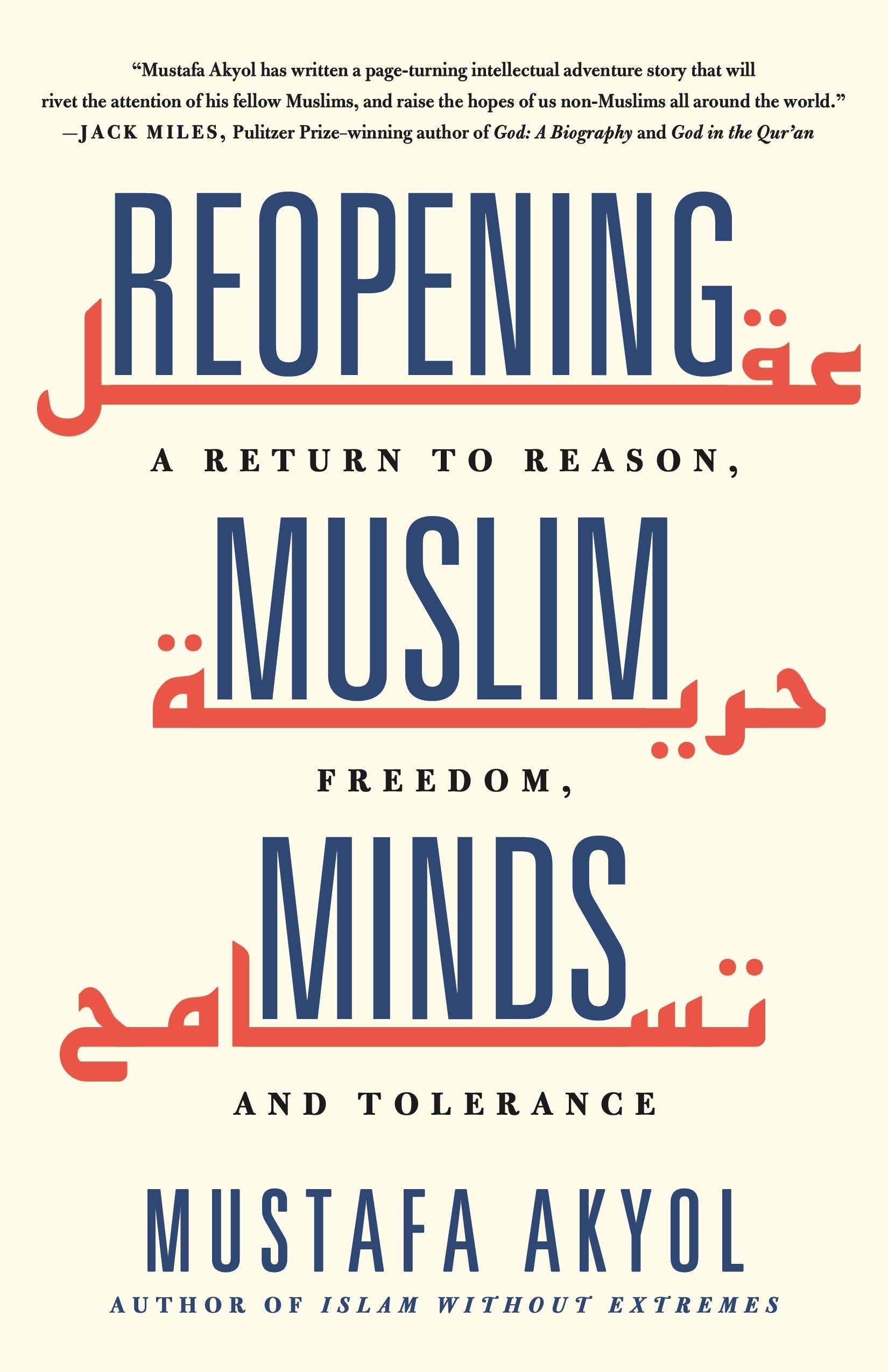 It is rare to find in a single work a carefully documented intellectual history of Islam as well as a cri de coeur for contemporary reforms—or at least it is rare to find both tasks done well. Mustafa Akyol’s Reopening Muslim Minds, however, impressively achieves both feats with substance and elegance in a work that deserves to be acclaimed and widely read. Akyol, a Turkish journalist and senior fellow at the Cato Institute, has devoted his career to this trio of freedom, reason, and tolerance within Islam, making the case that “we Muslims don’t have a shortage of good ideas and good values”—and that those ideals are ripe for reclaiming. In Reopening Muslim Minds, he takes the reader on a journey from the Constitution of Medina (622 CE) to COVID, traveling through 12th-century Ibn Tufayl’s novel of reason and enlightenment, Hayy Ibn Yaqzan, through the rise and demise of medieval kalām, or dialectical theology, and on to science, rationalism, and tolerance.

-
On the Resilience of Ideology
-
Those of us who have a reached a certain age remember the time when a popular cliché declared the “end of ideology.” The idea was first formulated in 1960 in a book of the same title by Harvard sociologist Daniel Bell.1 For the next few decades, the idea that ideologies were a phenomenon of the past, and that they were fading away, remained popular among intellectuals. It seemed to find its final confirmation in the collapse of the Soviet Union and the decline of communism as a worldwide political movement. Today, however, the idea that ideologies are fading seems naïve. A cursory look at today’s major cultural-political movements in Europe and North America shows that they are often highly ideological, in the sense that they tend to embrace rigid theoretical narratives, which claim general explanatory power and are more or less impervious to experience. An obvious example is racial politics in the U.S. The pragmatic and “moral” approach of the old civil rights movement of the 1960s, rooted in the experience of the black church, has been largely replaced by a formalized theoretical discourse (most famously “critical race theory”) with Marxist and post-structuralist roots. Similar trends can be easily...

-
Justice, and Only Justice: The Beauty of Impartiality and the Ugliness of Her Rivals
-
Today’s cries for justice come highly stylized. People don’t want “justice, and only justice,” the justice of Deuteronomy 16:20. No, they want justice plus. They want social justice, racial justice, or intergenerational justice. Justice by itself, unadorned with adjectives, seems boring by comparison to these glamorous cousins. But justice is good and should be pursued for its own sake and not for a predetermined ideological outcome or preferred social goal, the way adjectival forms of justice tend to do. In what follows I’ll argue that basic justice offers us practical tools we need to resolve seemingly intractable legal and political disagreements.
But first: What is justice? The standard definition is giving to each his due. To offer this definition is to invite criticism. To whom is what given, and on what grounds? And who does the giving? We should resist the temptation to determine the answers to these questions in advance, and we can understand the addition of a word to just or justice as an attempt to decide the outcome of our deliberations before they have commenced. Someone wanting to modify justice must make a case for why we can use the new phrase in a way that...

-
Ideology as Unreason
-
As anyone who has spent time in the world of ideas knows, the word ideology is ubiquitous. For some people, it’s simply shorthand or a synonym for their political philosophical beliefs. When they refer to “their ideology,” they mean their conservative, liberal, socialist, traditionalist, integralist, or corporatist philosophy (or some combination of two or more of these positions) of what the political, social, and economic order should be.
Strictly speaking, however, ideology means something rather different. This becomes clearer when we recognize that the very idea of ideology is associated with some specific intellectual developments that emerged during the various Enlightenments.
Like many Enlightenment concepts, ideology is about changing the world along lines considered to be systematic and scientific. All ideas embody some proposition for how the world should be. But ideology purports to remake human society over in much the same way as a scientist transforms an existing substance into something different by applying new elements to, and extracting others, from the subject manner.
Unlike the scientist, however, the proponent of ideology is not so interested in shifting or altering his planned approach in light of new information. For any ideology is essentially a closed system of belief, and...

-
Does the First Amendment Fulfill Its Promise of Religious Liberty?
-
Religion forms culture, and culture dictates laws. A core element of culture is its understanding of the human person and of marriage, sexuality, and the family. In the post-Christian era, as Jewish and Christian morality loses its hold on the culture, we are witnessing new attitudes about these foundational issues. The laws of this country—whether enacted by legislation or executive orders or imposed by judicial fiat—have followed suit, recognizing novel individual rights. The most prominent include the right to same-sex marriage, to abortion on demand, and to change one’s biological sex.
Some religious believers, now seemingly in the minority, find themselves subject to government coercion requiring them not only to recognize these rights but also to participate in conduct that their religion declares objectively immoral. The protagonists include bakers fined for refusing to bake a wedding cake for a same-sex union; nuns forced to provide their employees with health insurance covering abortifacient drugs; and doctors and pharmacists disciplined for refusing to provide medical procedures or drugs they consider immoral.
So the question is, Does the First Amendment’s guarantee of the right to the “free exercise” of religion provide any protection to those who resist laws requiring them to act contrary...

-
Distinguishing Sound Economics from Ideology
-
It’s difficult to know who to trust these days. We are bombarded with competing claims, perspectives, and information, and at such a rapid pace, it almost induces vertigo. MIT professor Sinan Aral characterizes social media and its societal impact as The Hype Machine—the title of his 2020 book on the topic. Aral points out that “This Hype Machine connects us in a worldwide communication network, exchanging trillions of messages a day, guided by algorithms, designed to inform, persuade, entertain, and manipulate us.”1 How do we sift through what is true and what is simply ideological manipulation? Is it even possible to just “follow the science”?
First, it would be a mistake to dismiss expertise. Not long ago, Tom Nichols lamented the death of expertise, which he described as a “Google-fueled, Wikipedia-based, blog-sodden collapse of any division between professionals and laymen, students and teachers, knowers and wonderers—in other words, between those of any achievement in an area and those with none at all.”2 The world thrives on the division of labor and the division of knowledge. We all depend on experts to help us know what is true on certain matters. Nevertheless, there are rules of thumb to...

-
Above Us Only Sky: How Ideology Manipulates Reality & Reverence as the Remedy
-
Saint John Paul II famously said that the problem with pornography “is not that it shows too much of the person, but that it shows far too little.”
The pornographer, in presenting a woman fully exposed, obscures, rather than reveals, who she is. He measures her by her usefulness and totalizes that metric as the only lens through which she can be seen.
This is how ideology works, too. What the pornographer does to women, the ideologue does to all of reality. He has no desire to contend with the world as it is, but instead seeks only to use it to support his predetermined specifications. In so doing, he crudely diminishes it.
While ideologies can come in various forms, perhaps the most pervasive and threatening one on offer today is a repackaged version of the Marxist belief that all human dynamics should be analyzed through the lens of power. Persons are sorted into binaries of oppressor and oppressed. While Marx focused on economic relationships, in the “woke movement” the filter of oppression is expanded to include gender, race, and sexuality. This further reduces and categorizes people and exponentially spreads the societal fault lines.
The woke idealogue does point to...

-
Page 22 of 112