
The myth of the young entrepreneur
-
When I tell people the average of age of entrepreneurs is not in their twenties but around 40, they are surprised. Yet it is true; the young success stories that capture media attention, like Mark Zuckerberg, are outliers. The idea that most entrepreneurs are young is a myth.
Once we think about it, it makes sense that people with experience, business skills, and insight would be more likely to start a business than a twenty-something with fewer skills and minimal experience. There are examples of young people with a great idea, but this is much less common than an experienced businessman starting a new venture. As Jeffrey Tucker writes in an article for The American Institute for Economic Research:
The legend of the twenty-something business wunderkind is everywhere in pop culture. Here’s the problem. The data are in. It turns out that the whole thing is a gigantic myth. Young founders of businesses fail, almost certainly, and at a much greater rate that people who are much older, wiser, more skilled, and more knowledgeable about the industry. It turns out that succeeding in business is extremely difficult. It takes maturity above all else to achieve it.
Tucker refers to a new...

-
Pope Francis ties foreign aid to corruption
-
Much has been written about the unintended consequences of foreign aid flowing from the West to developing countries. Economists such as Dambisa Moyo, William Easterly, and Angus Deaton have all commented on the downright pernicious effects of government-to-government aid. Not too long ago, a new voice joined this distinguished chorus of foreign aid critics: Pope Francis. During his recent visit to the East African nation of Mozambique, Pope Francis made striking comments which suggested a link between foreign aid and corruption. The pope stated:
At times it seems that those who approach with the alleged desire to help have other interests. Sadly, this happens with brothers and sisters of the same land, who let themselves be corrupted. It is very dangerous to think that this is the price to be paid for foreign aid.
In other words, the pope lamented that the hundreds of millions (and sometimes, billions) of dollars that flood an impoverished nation in the form of aid have had the caustic effect of breeding corruption. Why would aid have this effect? Simply put, foreign aid enables governments to act free of accountability. How does this happen?
Governments of developed countries rely primarily on businesses, a bustling middle class...

-
Earth’s greatest resources: human creativity and economic freedom
-
In 1980, despite slow and steady progress in the race against poverty and human immiseration, 44 percent of the world’s population still lived in extreme poverty. In 1820, that number was 94 percent. Despite these massive economic gains, many were worried about the future of planet Earth. In 1980, two of the most significant thinkers of their day, biologist Paul Ehrlich and economist Julian Simon, brought their insights to bear on the problem. These academics came from vastly different disciplines and perspectives. In 1968, Ehrlich published The Population Bomb, which predicted that worldwide famines and apocalyptic resource depletion would lead to social unrest. He wrote:
The battle to feed all of humanity is over. In the 1970s hundreds of millions of people will starve to death in spite of any crash programs embarked upon now. At this late date nothing can prevent a substantial increase in the world death rate ….
Ehrlich is a biologist, not an economist, and perhaps some of his worries about growing populations and the harm they could do under certain conditions are warranted. After all, an infinitely growing population without proper institutions will deplete resources and lead to environmental and social unrest.
Paul Ehrlich...
-
The antidote to fear
-
What differentiates a Christian view of the environment from a secular one? Too often, even confused Christians don’t know. Reading putatively faith-based attempts to address the environmental debate often leaves one none the wiser. Many writers simply recycle the same premises, and conclusions, as secularists, sometimes tacking on Bible verses which otherwise seem not to affect the substance of their thought.
Others make a tentative start by basing their discussion of Christian environmental stewardship on a citation of the Book of Genesis. People of faith should strive to place the human person at the center of this – and every – topic. However, the current state of climate alarmism and panic finds its antidote in a different citation.
In this age of agitation, the verse that should guide distinctively Christian environmental discussions is I John 4:18: “There is no fear in love; but perfect love casts out fear, because fear involves torment. But he who fears has not been made perfect in love.”

-
President James A. Garfield
-
The life of President James Garfield, one of the nation’s forgotten presidents, exemplifies the transformational power of hard work, classical scholarship, and sound economics. James Abram Garfield was born on November 19, 1831, in Cuyahoga County, Ohio. His father, Abram, died fighting a fire that threatened their farm when James was a toddler. Although Abram’s widow, Eliza, raised their children in poverty, James’ genius shone so early that she insisted he focus on his studies.
Garfield paid for tuition at the Western Reserve Eclectic Institute by working as a janitor, performing manual labor in front of his classmates. Yet he soon won a post teaching Greek, Latin, and classical literature, and at age 25, became the school’s president. He also served as an ordained minister of the Disciples of Christ.
Although he lacked any military training, Garfield commanded his troops to victory in the Civil War, becoming a major general. His district elected him to the U.S. House of Representatives in 1862, but he refused to take his seat until December 1863, when President Lincoln convinced Garfield he would be of greater service in Congress. Garfield’s eloquent orations soon made him his party’s unofficial spokesman.
Because of his humble origins...

-
Beyond the apocalypse
-
Getting serious about climate and conservation.
The apocalyptic, “end of the world” story is a staple of popular culture. There seems to be an unlimited appetite for the quasi-religious unveiling (ἡ ἀποκάλυψις in the Greek) of humanity’s inexorable doom and hellish end. Maybe part of that appeal is the mainstreaming of science fiction, once a pulp subgenre and available now wherever movies, videos, and books are digitally streamed. Or maybe the culture is just mired in childish fantasies.
“The popular appetite for spectacle in the form of natural disaster and human calamity is a major impetus for the production of shallow apocalyptic fiction in every medium,” writes scholar Lorenzo DiTommaso. “This shallowness speaks to the issue of popular appeal, for at its core, apocalypticism is an adolescent worldview. It describes the world in uncomplicated terms of good and evil, offers simplistic responses to complex problems, and places responsibility for solving these problems elsewhere.”
Doomsayers of a climate apocalypse
That’s also a good description of some corners of environmental activism, and projects such as the Green New Deal, with its plans to abolish fossil fuels and deindustrialize the U.S. economy (itself a melding of sci-fi and fantasy) to achieve arbitrary de-carbonization benchmarks. (In...

-
Luther’s apple tree
-
As the story goes, when Martin Luther was asked what he would do if the world were to end tomorrow, he answered, “I would plant an apple tree today.” It’s a lovely anecdote, and it bears within it a kernel of truth about environmental stewardship. The lesson here, from my perspective, is that care of creation begins and ends with you and me. Most of what we hear in the media, and from too many environmental activists, is alarmism and warnings of near-term catastrophe on date certain. (This somehow always gets pushed out again and again. Why don’t doomsayers have any respect for deadlines?) We are told that sweeping plans for reconstructing economic and political institutions are mandatory if we are to survive.
If you buy into all of this, there’s little that awaits you but the vice of despondency. Its opposing virtue is positive action taken by free men and women. We must, as the saying goes, do the next right thing. I count myself as one of those conservationists who believes that we can grow the economy while protecting the environment and that long-term growth requires us to be good stewards.

-
The moral quandary of national healthcare
-
Almost all discussions about health policy focus on whether different systems of providing healthcare are more efficient, more equitable, or lead to better health outcomes. These are, of course, important issues. Just like food, shelter, or education, healthcare does possess value in and of itself. But as St. John Henry Newman reminds us in the last chapter of The Idea of a University, which focuses on medical education, we should have deeper considerations in mind when judging healthcare systems.
To begin with, Christians should take a special interest in issues related to the provision of healthcare, because so many decisions taken in the medical arena involve ethical judgements. These things are too important to be left only to the state or to those commercial interests that take a purely utilitarian view. For this reason, Christians in the West should consider how they can develop institutions to help recover their traditional role as the major providers of healthcare.

-
Acton Briefs: Fall 2019
-
A collection of short essays by Acton writers, click a link to jump to that article:
- Amazon chief: Liberation theology keeps my people poor by Joseph Sunde
- A bait and switch at Peter’s Pence? by Andrew Vanderput
- The uneasy conscience of a fair trade fundamentalist by Jordan J. Ballor
Amazon chief: Liberation theology keeps my people poor
Joseph Sunde, Acton Institute
As the recent Synod of Bishops from the Pan-Amazonian region gathered, a local chief voiced his objections to liberation theology. Jonas Marcolino Macuxí, chief of the Macuxi tribe, told the National Catholic Register that a “dictatorship” of liberation theologians has kept indigenous people in poverty.
“Beginning in 1980, the tendency has been to see any kind of development in the Amazon – roads, big projects, etc. – as part of this idea that progress is bad”, he explained. “Until the 1980s, the military regime had a positive view of development, but as military rule ended, there was specifically an element that said progress is bad.”
Though the indigenous peoples’ struggle is undeniable, there is a tendency to blame markets and romanticize the very features that compound their suffering. According to Marcolino, many would prefer the comforts and stability...
-
Editor's Note: Fall 2019
-
When 16-year-old Greta Thunberg stood before the UN Climate Action Summit, she “announced a sort of secular apocalypse,” writes Rev. Robert A. Sirico. This issue of Religion & Liberty focuses on the siren song of alarmism, and how people of faith should approach the very real environmental debate.
The Acton Institute’s executive editor, Religion & Liberty, John Couretas, contributes the cover story on moving beyond the environmental apocalypse. “Regrettably, too many religious leaders have bought into the apocalyptic hysteria and urgent demands for sweeping, top-down solutions,” he writes.
We are privileged to feature an essay from John A. Baden, the founder of Foundation for Research on Economics and the Environment (FREE), which develops his “trinity” of environmental virtues: responsible liberty, sustainable ecology, and modest prosperity.
Anne Rathbone Bradley examines how economic freedom transforms a growing population into a resource for ecological healing. “More people, rather than fewer, add to human prosperity,” she writes. “What good is a planet with no one in it?”
“The antidote to alarmism” proposes the most important Bible verse for the current environmental dialogue.
The inherently corrupting nature of government-to-government aid has drawn the attention of Pope Francis, as Andrew Vanderput documents in his invaluable essay...
-
The twin pillars of totalitarianism
-
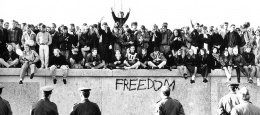
Pope Leo XIII’s prescient 1891 encyclical Rerum Novarum delineated the perils of Marxist collectivism, especially the horrors that would follow in its wake. Drawing both from historical observations and his own projections, Pope Leo wrote:
Hence, it is clear that the main tenet of socialism, community of goods, must be utterly rejected, since it only injures those whom it would seem meant to benefit, is directly contrary to the natural rights of mankind, and would introduce confusion and disorder into the commonweal. The first and most fundamental principle, therefore, if one would undertake to alleviate the condition of the masses, must be the inviolability of private property.
Mind you, that was not Friedrich Hayek writing during World War II but Pope Leo writing at the end of the nineteenth century.
It wasn’t as though there hadn’t already been enough history for Pope Leo to recite prior to its writing. The collectivist anarchy of the Jacobin Reign of Terror and Paris Commune preceding the writing of Rerum Novarum were a windup for the large-scale events inaugurated in Russia less than 50 years after he penned his encyclical.
During roughly the same period bookended by the bloody French and Russian revolutions, another...
-
The hard fall of the Light-Horse
-
Light-Horse Harry Lee: The Rise and Fall of a Revolutionary Hero - The Tragic Life of Robert E. Lee’s Father | Ryan Cole | Regnery History | 2019 | 426 pgs
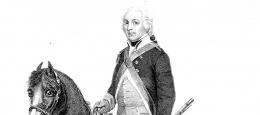
Henry Lee III, besides being the father of Confederate General Robert E. Lee, may be best known for his masterful eulogy of George Washington: “To the memory of the Man, first in war, first in peace, and first in the hearts of his countrymen.” In Light-Horse Harry Lee, historian Ryan Cole offers a comprehensive portrait of the oft-forgotten Lee whose rapid rise as a brilliant military leader was overshadowed by his descent into scandal and poverty.
Lee grew up in one of Virginia’s most prominent families. He was ambitious, studious, and attracted to the warrior spirit and ethos. Lee was a student at the College of New Jersey (now Princeton) in the early 1770s, at a time when colonial furor at the Crown was already in full force. John Witherspoon, the school’s president, would sign the Declaration of Independence a few years later. John Adams bragged about Lee’s graduating class, calling them “all Sons of Liberty.”
The moniker “Light-Horse” came out of recognition of his horsemanship and heroic...
-
Page 29 of 112