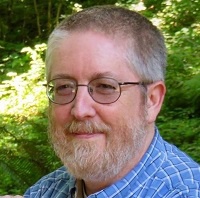
Fr Gregory Jensen is the pastor of Sts. Cyril & Methodius Ukrainian Orthodox Mission and the Eastern Orthodox chaplain at the University of Wisconsin-Madison. He has published articles in psychology, theology, and economics and is the author of The Cure for Consumerism. He is also an instructor in youth ministry at St Sophia Ukrainian Orthodox Seminary, Bound Brook, NJ. In 2013, he was a Lone Mountain Fellow with the Bozeman, Montana-based Property and Environmental Research Center (PERC).
The only thing more disconcerting than hearing Congresswoman Alexandria Ocasio-Cortez transform government force into liberty is the fact that, once again, her remarks have gone viral. During a hearing of the House Oversight Committee last Thursday, Ocasio-Cortez likened healthcare providers who refuse to perform medical procedures that violate their religious views to “white supremacists,” people who “justified slavery,” and those “who fought against integration.”
“It’s very difficult to sit here and listen to arguments in the long history of this country of using Scripture and weaponizing and abusing Scripture to justify bigotry,” she said. “There is nothing holy about rejecting medical care of people, no matter who they are, on the grounds of what their identity is. … There is nothing holy about writing discrimination into the law.”
Let me first commend Ocasio-Cortez for her frank appeal to the Gospel in her criticism of what she describes as the Trump administration's “religious liberty assault on LGBTQ rights.” While I disagree with most of what she says, it is good when politicians who describe themselves as Christians take a public stand for their convictions and what they see as the policy implications of their faith. Even when, as in...
Recently, my Madison, Wisconsin, parish offered to take up a collection to pay my bail and legal fees. The offer while sincere was premature and tongue in cheek. But a proposed change in state law brings with it a real possibility of putting me in legal jeopardy.
My congregation’s concern for me stems from the Clergy Mandatory Reporter Act (CMRA) being put forward by Democrat state legislators Sen. Lena Taylor, Rep. Chris Taylor, and Rep. Melissa Sargent.
As in other states, clergy in Wisconsin are mandated reporters of suspected cases of child abuse or mistreatment. If passed CMRA would, according to one of the bill’s co-sponsors, require “that members of the clergy report any instances of child abuse, including sexual abuse, ending the loophole of unjust cover-ups and misreporting currently occurring in our state.” The “loophole” referred to is the priest-penitent privilege that exempts clergy from reporting abuse revealed solely in confession (“the seal of confession”).
Catholic League president Bill Donohue said the bill seeks “to bust the seal of the confessional” and that the “government has no business policing the sacraments of the Catholic Church.” Still, Rep. Sargent takes exception to what she calls “an ‘us vs. them’...

Sitting down to write about the economic lessons Orthodox Christian theologian David Bentley Hart draws from the New Testament, friends encouraged me to look at what they described as the gnostic tendencies in his arguments. Apart from them, Acton’s Rev. Benjamin Johnson raised the question of whether there is “a strong contradiction between his rejection of Saint Augustine's view of the ‘unelect’ and his almost Manichean view of rich and poor.”
Fr. Ben’s characterization of Hart’s work is, I think fair. In Hart’s view, the poor are not just the special object of Christ's concern. As he writes, “Christ’s concern for the ptōchoi– the abjectly destitute – is more or less exclusive of any other social class." And “the rich”? These Jesus “condemns as oppressors and revilers of the divine name, who should howl in terror at the judgment that is coming upon them, because the rust of their treasure shall eat their flesh like fire on the last day.”
In his reading of the New Testament – and Hart reads the New without reference to the Old, where references to the moral goodness of material wealth abound – wealth itself is “an intrinsic evil.” If only, Hart...
On September 1, Pope Francis and Ecumenical Patriarch Bartholomew issued a joint message for the “World Day of Prayer for Creation." Their statement rightfully reminds us that we all have an “obligation to use the earth’s goods responsibly.” But exhortations by the pope and patriarch should not be read as a policy prescription.
Unlike theology, science speaks in probability. How the climate will change going forward and the role of human activity has in any such change can’t be answered with absolute certainty. In this case, we need to be careful of broad epistemological claims which necessarily raise questions about the limits of human knowledge.
Epistemological humility also keeps us from assuming that climate change is uniformly negative. Matt Ridley, the British journalist, argues not only that “the risk from global warming is being exaggerated” but that we are also overlooking the positive effects of elevated atmospheric levels of carbon dioxide. For example, we are seeing a “gradual, but large, increase in green vegetation on the planet.” According to Ridley, this increased greening is “a direct result of rising carbon dioxide levels in the atmosphere, rather than the application of agricultural fertiliser, irrigation, warmer temperatures, or increased rainfall.”
On September 1, Pope Francis and Ecumenical Patriarch Bartholomew issued a joint message for the “World Day of Prayer for Creation." Their statement rightfully reminds us that we all have an “obligation to use the earth’s goods responsibly.” But exhortations by the pope and patriarch should not be read as a policy prescription.
Unlike theology, science speaks in probability. How the climate will change going forward and the role of human activity has in any such change can’t be answered with absolute certainty. In this case, we need to be careful of broad epistemological claims which necessarily raise questions about the limits of human knowledge.
Epistemological humility also keeps us from assuming that climate change is uniformly negative. Matt Ridley, the British journalist, argues not only that “the risk from global warming is being exaggerated,” but that we are also overlooking the positive effects of elevated atmospheric levels of carbon dioxide. For example, we are seeing a “gradual, but large, increase in green vegetation on the planet.” According to Ridley, this increased greening is “a direct result of rising carbon dioxide levels in the atmosphere, rather than the application of agricultural fertiliser, irrigation, warmer temperatures or increased rainfall.”