

Page 74 of 112
Everything Unto God
When Lord Acton set out in the late nineteenth century to write a comprehensive history of liberty, he planned to chronicle its growth from antiquity. It is a sad commentary on this century that an updating of his work would require the last chapter to chronicle liberty’s decline.Thoughts on the Education of Lord Acton
Of the various influences that shaped Lord Acton’s distinctive understanding of history, none was as decisive as his education. His intellectual formation was in fact unique, the product of social position, conditions within English and Continental Catholicism, revolutionary ideas in the Germanic world pertaining to the study and methods of history, and the epic debate in North America over the nature and future of the Union of the States.The Necessity of Moral Absolutes in a Free Society
Editor's Note: The following remarks were delivered by Supreme Court Justice Clarence Thomas at the Acton Institute’s Fourth Anniversary Dinner at the Amway Grand Plaza Hotel in Grand Rapids, Michigan, May 5, 1994.The Market and the Manger
This November/December issue of Religion & Liberty coincides with the celebration of the feast of the Incarnation – Christmas. This holiday season, like every other, we will hear calls to take the commercialism out of Christmas. What are the connections between the market and the manger?The Crayfish Syndrome
What are the chances for upward mobility for a group of poor, black church people–96% on welfare–in rural Mississippi, the poorest state in the nation?Free the Farms
Most people are taught to believe free markets are a form of social Darwinism; the theory that everyone fights for what they get and only the strongest survive. In our American system of free markets, cooperation is the key. This means voluntary exchanges are made between consenting parties. You can only do something in a market system that other people want. This maximizes the efficiency of resource use.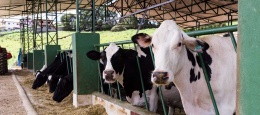
Marriage and Economic Liberty
During the Middle Ages, children born out of wedlock were often abandoned to the church or left to the streets and the kindness of strangers. In Latin they were termed expositi –the exposed ones. The skyrocketing rate of illegitimate births in America today, unprecedented in human history, has vastly deepened many of our social problems. The kindness of strangers must still be insisted upon, but is no solution. Government subsidy has proven to be an illusory measure as well.Reforming our Attitudes
This welfare edition of Religion & Liberty has begun to state clearly the argument that the solutions to the current welfare crisis rest not with government but with communities. Government is compassion’s least able practitioner.Welfare Gone Awry
In the movie “Schindler’s List”, Oskar Schindler, a Catholic, quotes an expression his father had often used; and I could imagine my own father saying something rather similar. He would say: “There are really only three people in life that you need depend on: a good doctor, a forgiving priest and a clever accountant.”The Folly of Participating in Government Welfare
Willie Sutton, the famous bank robber, was once asked why he robbed banks. He responded by saying, “Because that’s where they keep the money.” Perhaps we can learn something from Mr. Sutton’s response. In one short statement he pinpointed the cause of the national debt and continuing deficits. The popular wisdom today assumes that the federal government can provide an overflowing abundance of goods and services in place of the scarcity that people face in reality.Views of Wealth in the Bible and the Ancient World
Think back to the last time you heard someone from the pulpit in your church talk about money, the Bible, and your spiritual life. On those occasions when pastors venture into this area, the focus is often and rightly on matters of the heart and one’s attitude toward money and possessions.The Effectiveness of the Private Sector
The American public is still being cheated out of a welfare debate that will address in fundamental ways the disintegration of our neighborhoods and of our country.