

Page 77 of 112
Making the Case for Population Growth
In April, a distinguished assembly of some forty Catholic officials and lay people met in Mexico City with several experts on demographic issues. There they were to discuss substance and strategy related to the United Nations’ 1994 decennial conference on population in Cairo. It is widely expected that the Cairo conference will once again call for large scale population control programs and planned development.Morality, Duty, Responsibility, and Authentic Liberty
Among its many features, religion is primarily the worship of God. If the desire to worship God is genuine, then there naturally will arise a suitable code of morality as man’s expression in action of what is true and good. This is due to man’s innate need to satisfy God, that is, to do what is pleasing in his sight. By nature, man fears God; a fear born out of ignorance of God.Effective Aid to the Poor
How would you like half a million dollars? There are only two conditions for you to receive it. The first is that you give it all away to the poor. That is disappointing, but on reflection still attractive: Quite nice to be able to give away $500,000 to those in need. The second condition is that you give it away efficiently.The Spirituality of Conflict
Sixteen years ago, Bill married Jennifer, his high school sweetheart, in a joyful ceremony at which I officiated. A few months ago, they stunned me with the news of their divorce plans. They had attempted to reconcile, but were now committed to ending the marriage. They informed me that since they were both rational people who respected one another, they were determined to divorce amicably.Natural Law and Economics
If we accept the fact that economics is a human discipline designed, in its original sense, to provide for the acquisition and management of household goods, we can perhaps admit that economics is not a wholly “autonomous” discipline that has no relation to other considerations about human life. The fact that economies are nation- and world-wide, themselves highly mathematicized, does not change the principle behind this observation.
Justice and Charity in Wages
Pope John Paul II’s encyclical, Centesimus Annus, is a marvelous defense of capitalism and attack on socialism in its feudal, totalitarian, and welfare state forms. One is particularly impressed by Pope John Paul’s argument that the burdens that the welfare state places on the poor are immoral. Accordingly, this teaching does more than simply return the Catholic church to the position originally expressed by Pope Leo XIII in Rerum Novarum, whose one-hundredth anniversary it celebrates.The Manners of the Market
Sometime after watching that remarkable video clip of the Los Angeles police beating Rodney King, I found myself thinking of another run-in between the police and a wrong-doer. This other case involved a drunken, abusive trespasser onto the grounds of a private club having a party. The lout repeatedly pushed through the surrounding hedge and tried to approach the building to crash the party; two security guards repeatedly intercepted him and escorted him out the gate.Angels or Apes: The Spirituality of Commerce
All human activities can be located somewhere along a spectrum that is anchored at one end by spirituality, and at the other by physicality. Praying is near the spiritual end; reading and writing, composing music and making tools are its neighbors. As the source of both great sensual pleasure and also of all new life, sex might be somewhere near mid-spectrum, while eating and all other bodily functions belong over toward the physical end. Where do commercial transactions fit?Concerning the Education of Clergymen
In the course of my travels the length and breadth of this land, often I am struck with the innocence of both Protestant and Catholic clergy in matters political and economic. For innocence, read–if you will–ignorance. The seminaries teach next to nothing in these disciplines, and candidates for Holy Orders–with some honorable exceptions–seem to have acquired but scanty information about the civil social order before they begin to proceed to a school of theology.Christianity and Liberty
An atheist is rarely asked to write an essay on “religion’s positive role in society,” but it is fitting that this request came from the Acton Institute. Lord Acton (1834-1902) was a Catholic, a classical liberal, and a great historian who devoted his life to the history of liberty.Power Corrupts
- When a person gains power over other persons–political power to force other persons to do his bidding when they do not believe it right to do so–it seems inevitable that a moral weakness
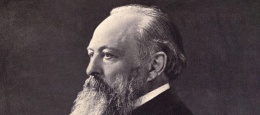
-
The Wedding of Three Philosophical Traditions Toward a Refined Philosophy of Economics
The recent encyclical, Centesimus Annus, serves as a blueprint for a possible renaissance in economic thought. The encyclical blends philosophical traditions providing a new methodological approach for philosophy of economics. Using Centesimus Annus as a model, I set out to investigate new philosophical approaches to political economy. I investigated the inherent connections between ethics and economics through a presentation and augmentation of the value theory and ethics of the Austrian Economist, Ludwig von Mises.