America in Debt: A Short History
-
On the website of the U.S. Department of the Treasury, there is a section entitled “Debt to the Penny.” It reports the total debt of the U.S. government on a daily basis. Every so often it attracts some attention, invariably when the debt level passes some significant milestone.

-
Is Democracy More Precious than Liberty?
-
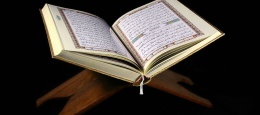
Shadi Hamid, a longtime senior fellow at the Brookings Institution’s Center for Middle East Policy, is one of the most prominent Muslim public intellectuals in America. His writings on Islam and politics, especially in relation to American foreign policy, include important insights, with which I have often agreed. His latest book, The Problem of Democracy: America, the Middle East, and the Rise and Fall of an Idea, is a bit different, however. As well argued and thought-provoking as it is, I nevertheless found it profoundly disagreeable.
-
What Does It Profit? Gambling and the Christian Tradition
-
Anyone who has tuned in to a sporting event in the past year or so has been subject to the nearly ubiquitous advertisements for sports gambling in one form or another. That’s certainly the case in the six states that allow online casino gambling, the seven states with online state-sanctioned lotteries, and the 26 states that allow mobile sports betting.

-
Lutherans Under Communism
-
Lutherans have been in Russia since the time of the Reformation. Ivan the Terrible, wanting to bring Russia into the 16th century, invited German craftsmen and tradesmen to settle in the country. He allowed the first Lutheran church to be built just outside Moscow in 1576. Four years later, he ordered it to be burned down.

-
Forgive Us Our Debts
-
Debt can be a cruel master, but it can also be a powerful servant. Debt is a tool. And like any tool, debt can be dangerous to those who misuse it and a snare to those who rely on it too much. It can also harm others if used badly. As Christians, we should not fear or shun using debt anymore than we should fear or shun weapons or fire or technology or power.

-
National Conservatism One Year Later
-
On the afternoon of November 3, 2021, I sat alone at a table in the Orlando Airport TGI Fridays, exhausted. Equally travel-weary families (or at least parents), whose children still bustled with energy, surrounded me. I was grateful for getting through TSA security with plenty of time for a meal before my flight, and grateful to be—for the first time in three days—alone with my thoughts. When my salad arrived, I pushed aside my notes from NatCon 2, the National Conservative movement’s flagship conference—a whirlwind of keynotes, panels, and breakout sessions—and my thoughts turned to The Count of Monte Cristo: “How did I escape? With difficulty. How did I plan this moment? With pleasure.”

-
Reading Scripture with the Church Fathers
-
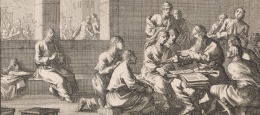
Gerald Bray enjoys a rich résumé: research professor of divinity at Beeson Divinity School, Birmingham, Alabama, where he taught from 1993 to 2006; ordained minister of the Church of England; director of research for the Latimer Trust. He has published on the patristic period and wider matters of church history, systematic theology, and Anglicanism. In How the Church Fathers Read the Bible, Bray does the church further service by providing an imaginative and insightful overview of the approach of the church fathers to scripture. He does so in an engaging and incisive way by telling the story of the fathers from an angle rarely discussed, opening up these foundational figures in new ways, neither eulogizing the patristic period nor underplaying their continued importance for today. He reminds us of some important insights with a few unexpected truths along the way.
-
Gertrude Himmelfarb: Historian of the Liberal Paradox
-
Intellectual historians can serve their societies as guides in wayward times. If they are willing to look at the past not as a primitive patchwork of error and sin, but as an arena of human action free of the present’s particular prejudices, they can learn to see in their own time and place what is invisible to their contemporaries.

-
The Neo-Latinate Imagination of Joseph Bottum
-
Joseph Bottum has long been known for his elegant prose style, omnivorous literary allusiveness, and cultural critic’s eye for what we know, what we think we know, and the sometimes embarrassing gap between those things. His decades of editorial work for The Weekly Standard and First Things guided both those organs through their great ages of growth from political and religious magazines to eclectic and spirited journals of cultural review. Less known is that Bottum’s first book was a collection of poems and that he has published poetry and songs here and there ever since. The Fall and Other Poems appeared in 2001; a book of songs, The Second Spring, in 2011; and now, two decades on, Bottum has published his second full-length collection, Spending the Winter.

-
Once One People of One Book
-
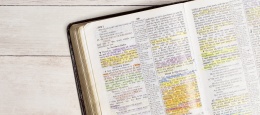
Mark A. Noll, professor emeritus of history at the University of Notre Dame, is among the most prolific and accomplished historians of American religion ever. I once imagined that the 2002 book America’s God: From Jonathan Edwards to Abraham Lincoln was Noll’s magnum opus. With the recent appearance of America’s Book: The Rise and Decline of a Bible Civilization, 1794–1911, I am no longer sure whether to view America’s God as a standalone volume or as a sort of companion to America’s Book. In any case, Noll has shown himself capable of extending and even accelerating his scholarly output well into his 70s. Noll has the proverbial fire in his bones; he can’t suppress his desire to understand the complex relationship between Christianity and American history.
-
Christian Pluralism as a Way of Loving
-
The evangelical Anglican theologian Michael F. Bird provides a clear-eyed and charitable vision of the current state of religious liberty in the Western world. Working from Australia, but with a keen eye on developments elsewhere and particularly in America, Bird’s offering provides both a framework for evaluating the contemporary situation as well as a call for Christians to promote the need for religious liberty more responsibly. Bird’s book is a helpful point of departure for engaging the challenges and opportunities for Christians to protect religious liberty today, and in so doing promote a free and flourishing society.
-
Heroes and Monsters: British Abolition and the Art of Compromise
-
It may be the most decisive and complete victory in any moral argument in human history. European and North American elites had, for centuries, deliberately ignored the ethics of the Atlantic slave trade, or justified it as a regrettable necessity, or simply accepted it as a vast fact of life that could not be wished away. Suddenly, in the 1780s, a previously eccentric and extreme view—that the trade ought to be abolished—won a mass following in both Britain and the newly independent United States. In 1807 both countries legislated to abolish the trade, and over the following decades the other European imperial powers were cajoled or coerced into following suit.

-
Page 17 of 112