Latest Transatlantic Articles

  • 4 arguments for the free market

    If the free market really is the best model for human thriving, why do we have to make the case for free markets generation after generation?

    Simple: People forget. Just look at recent policy developments in the U.K. for evidence. During the pandemic, Britain’s leaders have: 

    • Driven up sovereign debt
    • Adopted an unfunded temporary increase in the main welfare payment, Universal Credit
    • Dropped plans to liberalize planning regulation
    • Taken public control of South Eastern Railways due to breaches of the franchise agreement

    And the people have largely gone along with these policy decisions. Perhaps these examples seem somewhat esoteric, especially to Americans. However, they are symptomatic of an approach to policy that assumes government can rectify market inefficiencies and failures. The difficulty lies with this mindset. The implications for the future are significant.

    Borrow, borrow, borrow: Does this resonate in the United States, with its $3.5 trillion in spending, growing debt, and tax increases? While interest rates are low, so the argument goes, governments can borrow at low cost. In other words, money is cheap, so borrow to spend. Yes, but interest rates are abnormally low and will have to return to some form of normal levels in due course...

  • New seminary head aims to revive church life and an entrepreneurial spirit in Venezuela

    For over 20 years, the Acton Institute’s Rome office has had a number of extremely impressive academic fellows come through their prestigious scholarship programs promoted to graduate students of pontifical universities. Assisting students studying theology, moral philosophy, and social sciences, Acton’s grants and awards program is now paying huge dividends. Its alumni are now serving in highly leveraged positions across all continents as diocesan pastors, international missionaries, development economists, university professors, and episcopal advisers. This interview is the first of several to follow that will highlight the whereabouts and continued journeys of Acton scholars after leaving Rome.

    I caught up with our latest Rome-scholar success story, a Venezuelan priest and Calihan fellow in dogmatic theology at the Pontifical Lateran University (aka the “pope’s college”), Fr. Alberto Marquez.

    At the oppressive height of COVID-19 lockdowns in Rome, a determined Marquez carried on and “virtually” defended his unique doctoral thesis on the “economic Trinity” while receiving the highest academic honors. He was subsequently called back to his native Valencia to serve as the new rector of the Archdiocese Seminary Nuestra Señora del Socorro. He is considered a protégé of the recently deceased cardinal Jorge Urosa, the former Catholic primate of Venezuela...

  • 4 challenges to religious liberty in the United Kingdom

    To maintain our religious liberties requires vigilance. The tentacles of both the state and indeed of central church establishments all too frequently bear down heavily on individuals exercising basic human freedoms in the exercise of their faith.

    This includes, for example, the freedom to work without discrimination on the grounds of our Christian beliefs. The freedom to sing. The freedom to preach from the Bible. Indeed, the freedom to preach at all.

    Violations in all these areas have emerged in the United Kingdom in recent weeks. Lack of attentiveness to the foundations of our liberties, both religious and political, threaten the long-term existence of our basic freedoms. Too many people don’t care at all. Christians must remain ever alert.
     

  • Venerable Servant of God José María Arizmendiarrieta: Patron of Spanish entrepreneurship

    José María Arizmendiarrieta was a Spanish Basque priest whose visionary work in founding Mondragon University, and later a corporation of highly competitive cooperatives, helped impoverished Spaniards reclaim their dignity after the Spanish Civil War. Pope Francis declared him a “venerable servant of God” in 2015, that is  a “person of demonstrable heroic virtue,” which is the first step in the process of becoming officially a saint in the Roman Catholic Church.

  • The mounts of piety: A case study in Christian innovation

    Hard times require brave solutions. In times of economic hardship, it is important to look for ethical and moral solutions to address social problems and alleviate material poverty.

    One such example is the phenomenon of the montes pietatis, or the mounts of piety, a series of medieval Christian banking institutions that provided an innovative response to difficult times.

    Mounts of piety were small credit institutions conceived in late medieval Italy to support the poor in their personal and family difficulties. One of the characteristics of medieval Europe was the scarcity of money, which disproportionately affected the poor. Many were not able to meet even their most primary needs, another defining trait of the turn of medieval and modern eras.

    This weakness of purchasing power gave rise to the development of the credit system on the Italian Peninsula. It was later exported by the Italians themselves throughout Europe, creating the basis of the modern banking system. Consumer credit therefore arose from the need for consumer support. This credit system was composed of both Christian and Jewish institutions, the clients of which were the "less poor poor," unlike the poorer ones to whom the practice of almsgiving was reserved.

    As...

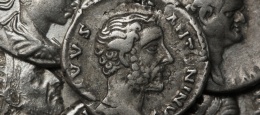
  • Romenomics: Monetary reform among the ‘Five Good Emperors’

    This is the sixth installment of the "Romenomics” series, which aims to study commerce in ancient Rome in order to better appreciate the economic present. See part one, part two, part three, part four, and part five of the series.

    In this Romenomics series, I have already commented on pecunia (money). The Latin word derives its original meaning from pecus – that is, sheep, cattle, and other livestock once used as major trading commodities in the early Kingdom and Republic of Rome.

    As Rome expanded across the Mediterranean basin and transitioned to a veritable political and economic powerhouse, primitive bartering instruments would have stifled its overall wealth creation. A universal, state-recognized, precious metal-backed currency was an absolute necessity for long-term stability and industrial growth.

    In this essay, my intention is to take a deeper dive into some monetary and spending policies, with particular attention given to the period of the Five Good Emperors when wealth, power, and peace all reached their peak.

    First, let’s briefly summarize the common monetary units in ancient Rome. The Romans had a gold standard with the aureus, while the most common currencies were minted in silver and bronze but measured their...

  • Scotland: freedom under threat

    What comes to your mind at the mention of Scotland? Perhaps, you conjure up images of majestic mountains, the glens (Scottish valleys), the Lochs (Scottish lakes), or wild and dramatic scenery? Or maybe it is the kilts, the tartans, and the “scotch” whiskey? There is something of a romantism about Scotland that causes our imagination to run away.

    The cold, hard reality, is that all is not well in the land of the Scots. There are more threats to basic liberties in Scotland than any other part of the United Kingdom. Scotland is effectively a one-party state under the Scottish National Party (SNP), which is best described as socialism wrapped in the flag. (Of course, there is another name for that.)

    The Spectator recently reported that the recent Hate Crimes Act gives “even more powers to menace the press. Scotland is being ushered towards an era of censorship, threats and state repression.”

    Since 2005 Scotland has returned 59 members to the House of Commons. In the election of that year, the leftist Labour Party held 41 seats, the centre-Left Liberal Democrats held 11, the SNP held six and the Conservative Party held one seat. The SNP was composed of romantic...

  • Romenomics 5: prices, controls, inflation

    This is the fifth installment of the "Romenomics” series, which aims to study commerce in ancient Rome in order to better appreciate the economic present. See part one, part two, part three, and part four of the series. - Ed.

    Anyone who thinks it is easy to understand price trends over a millennium and billions of transactions in ancient Rome has a lot of reading to do, starting with this 300-page study. In a way, it is impossible, as in any market study over such an extended period and with very little written testimony. Nonetheless, not everything boils down to conjecture.

    No doubt, Roman prices fluctuated in the short-term and rose over the long-term; there were severe crashes followed by recoveries; above all, prices acted as “signals” for several factors: overall demand, overall supply, personal preferences, as well as economic interventionism with state-mandated controls, price ceilings, subsidies, and even currency devaluation.  

    In general, pricing in the laissez-faire Roman Empire was determined by the natural laws of markets in which consumers would offer what they believed was a fair exchange for the product or service they received from vendors.

    A good sector to focus on and with greater certainty for establishing price points was grain, the very staple of...