
The war on Ukraine – and freedom – continues
-
A review of Anne Applebaum's Red Famine: Stalin's War on Ukraine.
“It is tempting, if the only tool you have is a hammer, to treat everything as if it were a nail.” – Abraham H. Maslow in Toward a Psychology of Being
And if that hammer is the power of the state, and if the wielder is unconstrained by morality or a worthy goal, then the result is bound to be a hell on earth for everyone but the wielder. This was certainly the case of Stalin and what he did to Ukraine. Anne Applebaum’s Red Famine describes how the Soviet regime turned the breadbasket of Europe into an Armageddon where neighbor turned on neighbor, millions were starved to death and the Communists showed themselves to be priests, crusaders, jailers and torturers for the Evil One.
The early 20th century was not easy on the Russian Empire cum Soviet Union. One of the greatest challenges Stalin faced in the late 1920s was the need to control agriculture and the peasantry. He wanted to continue increasing industrial production and needed a way to cheaply feed his burgeoning urban workforce. Price controls and forced requisitions, the usual statist approaches...

-
A multitude of anniversaries
-
As we reach the end of 2017, we look back on several important anniversaries.
The waning of 2017 invites a recap of all the year represented to me and the entire Acton universe. This is one reason why we recognize significant anniversaries.
Among the events marked by anniversaries in 2017 is the centenary of Fatima, which resonates strongly in my personal history. I was ordained to the priesthood on May 13 – the Feast of Our Lady of Fatima, or more precisely, the Feast of Our Lady of the Most Blessed Sacrament – the title under which the Blessed Virgin appeared to the three shepherd children.
May 13 also happens to be, in the Tridentine calendar, the Feast of St. Robert Bellarmine, making it to use the Italian title for one’s “name-day,” my onomastico. The date of my ordination in the United States that year also happened to fall on the eve of Pentecost, the birthday of the Church and, to my mother’s delight, Mother’s Day, on which I celebrated my first Masses.
Also remembered this year, a few centuries earlier, a certain monk nailed grievances onto a door and forever changed the Christian church. October 31 marked the...

-
Broetje’s big garden
-
Sometime in the early 1960s, a teenager attended a church retreat on the problem of hunger in Yakima, Washington, with his youth group. There he heard a missionary speak about working with children in India and the difficulties they faced. Suddenly, this kid had a dream. He wanted to start an orchard and he wanted to use his profits to help Indian children.
Today that teenager is the founder and owner, with his wife, of the largest employer in Walla Walla County, Washington (with nearly 3,000 employees at harvest time and more than 6,000 acres of apples and cherries), and the producer of 5 percent of all apples consumed in the United States. If you’re in a market and pick up one of the 17 varieties of apples, a pear or a bag of cherries with a “First Fruits” sticker on it, that comes from Broetje.
The company also produces many fruits that don’t grow on trees.
The story of Broetje Orchards, with more than $100 million in gross annual sales, is certainly not about overnight success. Ralph Broetje grew up on a chicken farm but didn’t know anything about growing fruit. He married Cheryl, the daughter of a dairy...

-
Elinor Ostrom
-
Elinor Ostrom was a professor at Indiana University and the senior research director of the Vincent and Elinor Ostrom Workshop in Political Theory and Policy Analysis, which she and her husband founded in 1973. Ostrom was awarded the Sveriges Riksbank Prize in Economic Sciences in Memory of Alfred Nobel in 2009. She is the only female Nobel Laureate in economics.
Elinor Ostrom was born Elinor Clair Awan in Los Angeles on August 7, 1933. A child of the Great Depression, Ostrom quickly learned the value of hard work and put herself through UCLA, receiving a B.A. in political science. She avoided student loans by teaching swimming and working at the school library, a dime store and a bookstore.
Throughout her career, Ostrom faced many setbacks. In her official Nobel Prize autobiography, she describes shock that potential employers ignored her academic success and only cared if she had typing or shorthand skills. “I learned not to take initial rejections as being permanent obstacles to moving ahead,” she says of the various early difficulties she faced. Later the economics department at UCLA was hesitant to admit a woman to its Ph.D. program, but eventually she joined a class of 40, including three...
-
The dull palpitation of the new art: On the Road at 60
-
I have seen the best minds of my generation take the Beat gospel as dogma – much to their respective detriment. This year marks the 60th anniversary of the publication of Jack Kerouac’s On the Road – considered with Allen Ginsberg’s poetic rant “Howl” the pinnacle of the small (in actual numbers), loosely aggregated Beat Generation literary movement.
But what hath the Kerouac novel specifically wrought upon our culture these past three-score years? Frankly, it’s a mixed bag. For one, the book inspired (and survived) some of the most caustic critical putdowns in history. Truman Capote claimed the book wasn’t writing inasmuch as it was typing. In his 1958 poem “Circular from America,” British poet George Barker writes:
Against the eagled ● Hemisphere
I lean my eager ● Editorial ear
And what the devil ● You think I hear?
I hear the Beat ● No not of the heart
But the dull palpitation ● Of the New Art….
O Kerouac Kerouac ● What on earth shall we do
If a single Idea ● Ever gets through?
…1/2 an idea ● To a hundred pages
Now Jack, dear Jack, ● That ain’t fair wages
For laboring through ● Prose that takes...
-
Acton Briefs: Fall 2017
-
A collection of short essays by Acton writers, click a link to jump to that article:
- "Economic elites" by Kishore Jayabalan
- "Changing for the climate" by Gregory Jensen
- "How close are we to ending extreme poverty?" by Joe Carter
- "The immorality of the inheritance tax" by Ángel Manuel García Carmona
- "Property rights and water conservation" by Sarah Stanley
- "How Catholic social teaching strengthens the case for trade" by Kaetana Leontjeva-Numaviciene
- "How much does crime pay?" by Joe Carter
- "Three reasons income tax cuts (almost) always benefit the wealthy" by Joe Carter
- "Marketers “nudge” us, but should government?" by Victor V. Claar
Economic elites
Kishore Jayabalan, Acton Rome
Intellectuals are often vocal critics of capitalism. Most of them lean left politically, so it is easy to identify anti-capitalism with progressivism. It is therefore no coincidence that the modern welfare state has been administered by elites eager to correct supposed market failures on the way to a more egalitarian society. Leftist elites tend to be university professors rather than captains of industry, but elites they remain.
How, then, are we to explain the growing dissatisfaction with capitalism among those hardy band of intellectuals who call themselves conservatives? Has capitalism changed in some fundamental...
-
Editor's Note: Fall 2017
-
For this fall edition of Religion & Liberty, the cover story focuses heavily on an autumn staple: the apple. Over the summer I observed an Acton-sponsored event for pastors in Walla Walla, Washington. During this event, several Acton staff and event attendees had a chance to tour Broetje Orchards in Prescott, Washington, and meet several members of the Broetje family. This family not only runs one of the biggest fruit providers in the nation but also constantly finds new ways to serve their employees and their neighbors. You can learn about this amazing family and the good they do for their Washington community in “Broetje’s big garden.”
So far there has been only one woman to be named a Nobel Laureate in the field of economics. That woman, Elinor Ostrom, was awarded the Nobel for her work on the use of natural resources. She conducted years’ worth of field research on how communities preserve and protect their natural resources. Her work was honored with a Nobel Memorial Prize, and this issue’s In the Liberal Tradition honors her life and contribution to the field of economics.
This issue’s transatlantic pieces also cover a plethora of subjects, including the Euro, Lord...
-
Entrepreneurs all
-
Anyone can fulfill an entrepreneurial vocation.
Everyone today is a critic of “soulless”
 market economies and the machine-like view of economies taken by professional economists who, on the neo-classical side, think of that abstraction of humanity called homo economicus and, on the Keynesian side, see only aggregate views of supply and demand. Do we have to leave markets behind to find real flesh-and-blood human persons and allow them to flourish?
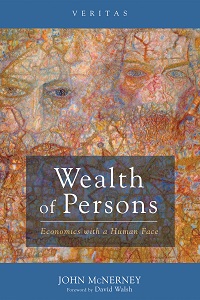
Fr. John McNerney, an Irish priest who served as head chaplain at University College Dublin and is currently doing research at the Catholic University of America, agrees that too much of orthodox economics deals in abstractions. He does not, however, think the problem is that the modern world is too caught up in markets. In his new book, The Wealth of Persons, McNerney attempts to get a view of the actual human persons who are the central actors in economics by developing a “higher viewpoint” by which to see persons in all their richness. While persons are not simply economic agents, McNerney thinks that it is in a free market under the rule of law that we can see the many sides of human capacity in dynamic and startling fashion. If...

-
Michael Novak
-
Our Founders always wondered about how long it would last. The price of liberty is everlasting vigilance. You've got to be on your guard every minute or you will lose it.
Michael Novak was born in Pennsylvania on September 9, 1933. His parents instilled in him an appreciation for reading and critical thinking. His lifelong love of Catholicism came from his mother and led him, at 14, to seriously consider the priesthood. He earned a bachelor’s degree in philosophy from Stonehill College and then a bachelor of sacred theology degree from the Pontifical Gregorian University in Rome. Novak ultimately chose not to enter the priesthood and attended Harvard on a graduate fellowship in late 1960.
During the Second Vatican Council, Novak spent much time in Rome covering the event for several publications. He recorded his accounts of the second session of the Council in his book The Open Church. Later, he became the first Roman Catholic to teach in the humanities program at Stanford University, where he continued to write. After Stanford he held a number of different academic roles until 1978, when he joined the American Enterprise Institute as a resident scholar. He also regularly wrote for various conservative...
-
Working humans, working women
-
Women are called to the workplace, so how do we make it work? An interview with Katelyn Beaty.
Where are the resources for Christian women called to the workplace? Why isn’t there a larger discussion in churches about the life experiences of women? Asking these questions led Katelyn Beaty to write A Woman’s Place: A Christian Vision for Your Calling in the Office, the Home and the World (Simon & Schuster 2016). Beaty was the first female and youngest managing editor of Christianity Today and the cofounder of the blog Her.meneutics. She discussed several of the overall themes in her book with Religion & Liberty’s Sarah Stanley. The following interview has been edited for length and clarity.
Religion & Liberty: How do you define “feminism”?
Beaty: Historically the first wave of feminism in the early 20th Century was really about women’s full participation in the political sphere. It was centered on giving women the right to vote. A lot of the women who were early champions of women’s voting rights were actually Christian, who wanted to see women have more influence on social issues of the day. So recognizing that women often had a reforming influence, they were concerned about...

-
Justice, applied equally
-
Oftentimes during prayer I reflect on my good fortune. I grew up in a loving Italian-American family during an amazing era of progress both economically and technologically. My Italian roots were planted so strong.
However, as they say, the Lord works in mysterious ways. Instead of leading a life in quiet near-obscurity, I pursued the public life of a free-market proponent. This entailed employing the Word and other theological and divinely inspired tools to support the small-“w” words of renowned economic thinkers.
Amazingly, the task wasn’t all that difficult. At first blush, it would seem we founders of the Acton Institute for the Study of Religion and Liberty were attempting to pound square pegs into round circles.
My public life has granted me innumerable opportunities to travel throughout the United States and abroad. My point isn’t to boast, but only to make a point that my travels have provided me with tremendous lessons in what constitutes humanity as our culture traditionally understands it.
Far from being homogenous, our world consists of many perspectives, attitudes and values. However, these myriad views aren’t inherently irreconcilable. In my adopted hometown, for example, religious diversity abounds and there exists dozens of different political views...

-
Medium and message in Luther’s reformation
-
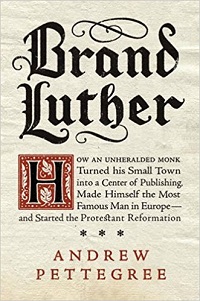
Review of Brand Luther: 1517, Printing, and the Making of the Reformation (Penguin Press 2015).
In the lead up to 1617, the 100th anniversary
 of the beginning of the Reformation, a flood of celebratory and educational publications poured over Protestant Germany. These publications included sermons, plays, prayers, hymns and, of course, reprints of the works of Martin Luther. That the lead up to the Reformation’s five hundredth anniversary would be accompanied by an analogous flood of new books on the Wittenberg Reformer is entirely consistent with Luther’s own life and legacy—a life and legacy intimately tied to the power of the printed page and the explosive growth of the publishing industry.
The present deluge of anniversary books on Luther and the Reformation has yet to crest, but in Brand Luther, Andrew Pettegree—a distinguished scholar of both the Reformation and the history of communication—has already given us a refreshingly original account of Luther and his movement that deserves particular attention. Brand Luther includes the usual elements of a traditional biography. All the major events and controversies of Luther’s life are recounted. At every step, however, Pettegree shows how Luther’s rise was in a symbiotic relationship with the printing industry. Thus...

-
Page 35 of 112