


Rather than the simple unity of a typical monograph, Intellectual Conservatism: From Burke to Scruton is unified through the authors’ explorations of the roots, applications, and nuances of specifically British conservative thought. The styles of writing are varied, as happens with a volume composed of conference papers. Some essays read with compelling prose; others reflect academic research norms. Editors (and contributors) Forenc Hörcher and Daniel Pitt have nevertheless assembled an impressive lineup of writers who find in British conservatism a vital political and philosophical tradition that could ground a future British Conservative Party. Intellectual Conservatism succeeds in showcasing the rigor of conservative thought and the vitality of conservatism in English political life.
Conservatism has a long history in Britain, one rooted in its Christian faith and constitutional order. Can it be revived short of a religious revival? And can immigrants from very different cultures contribute to its rebirth?
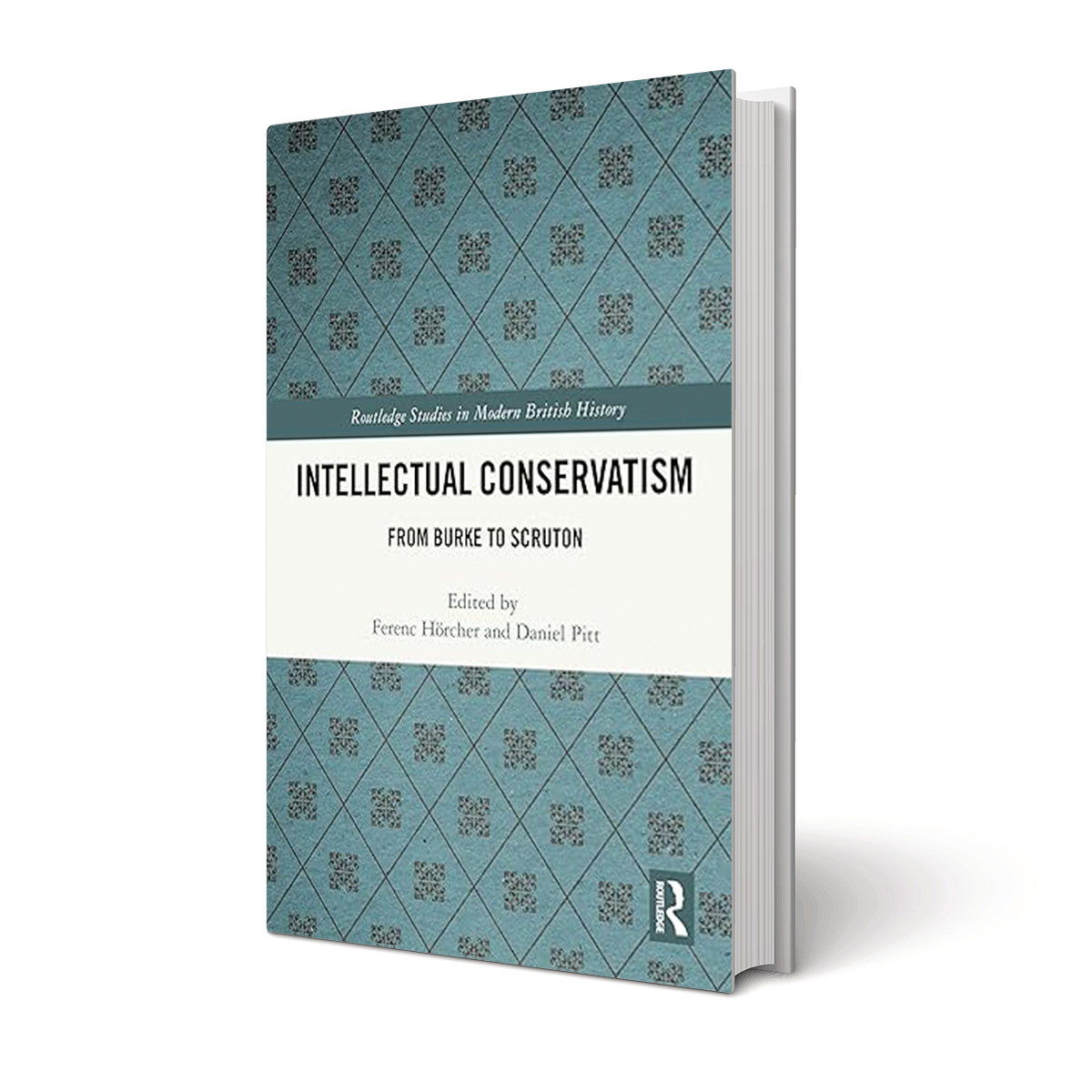
Edited by Ferenc Hörcher and Daniel Pitt
(Routledge, 2025)
Daniel Pitt opens the book attempting to define conservatism. The term itself has become “too elastic,” and “it is the role of academics to ‘de-elastify’ the concept and provide academic rigour to the subject rather than reducing thought to actions of self-described groups.” Pitt illustrates British conservatism through seven principles:
(1) the organic nature of society; (2) skepticism of human’s reasoning powers; (3) the suspicion of grand political blueprints; (4) an historical-empirical approach to decision-making; (5) a commitment to past and future generations; (6) the wisdom of generations, tradition, and custom; and (7) a trustee model of representation.
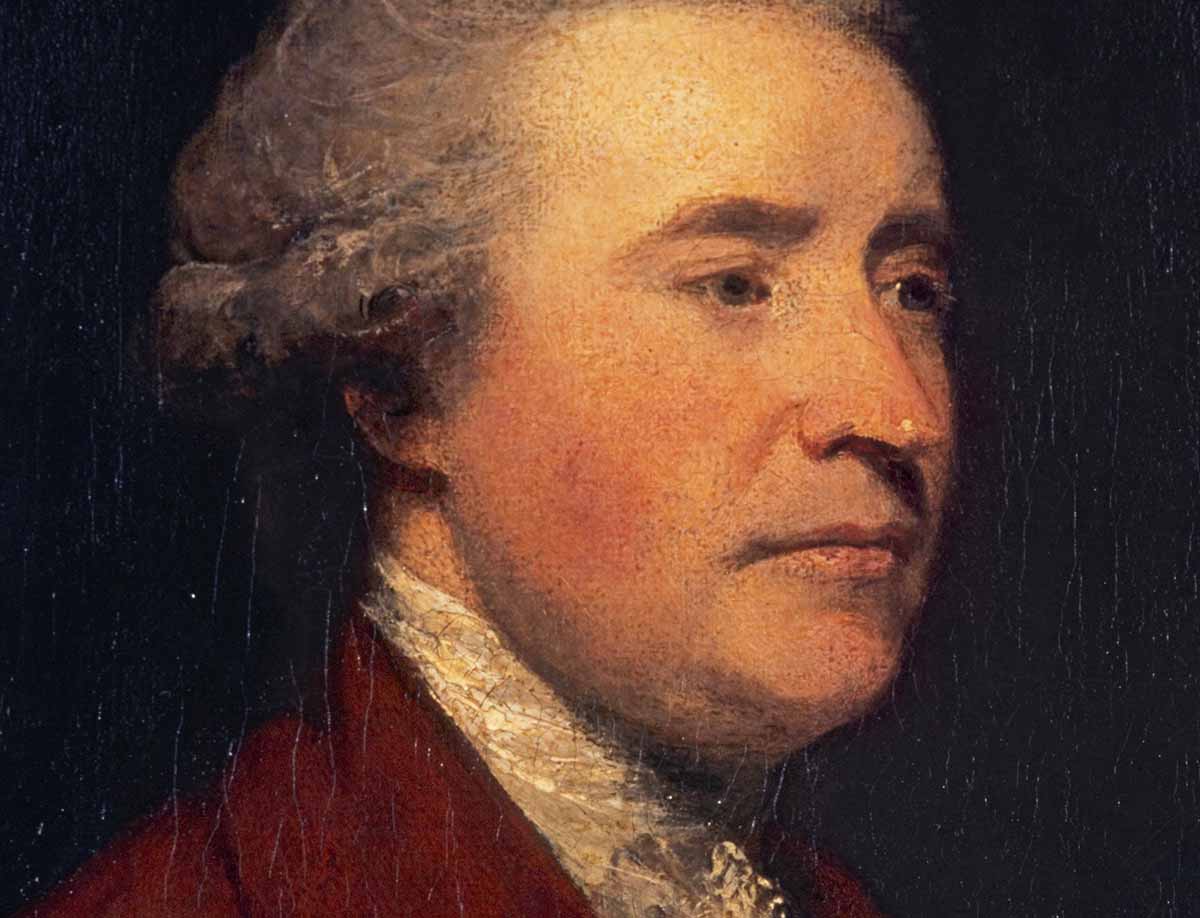
These principles preexisted Edmund Burke but were best articulated by Burke, Bagehot, and other exemplary thinkers of British constitutional law. Pitt argues that these principles gave rise to the British constitutional order.
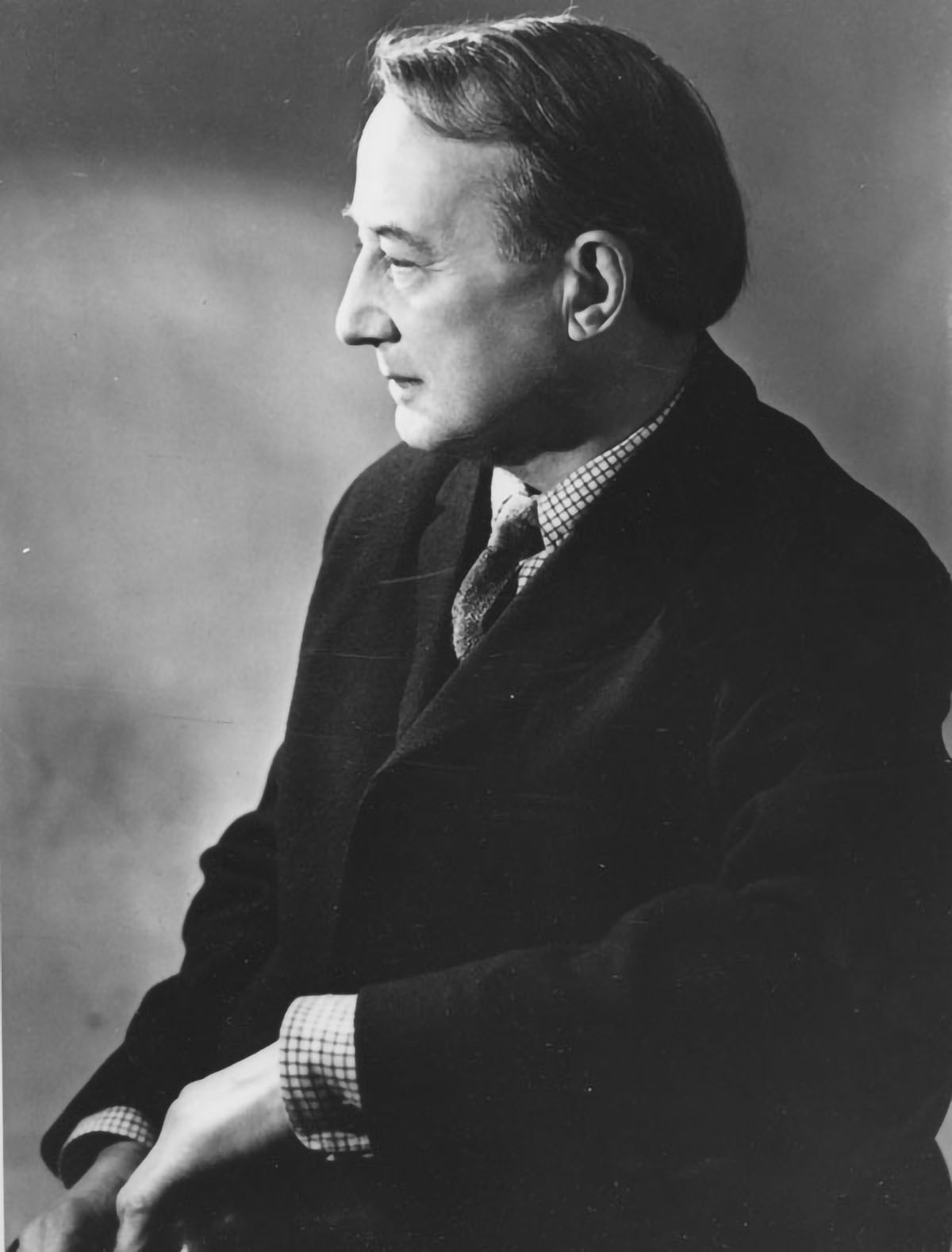
Co-editor Forenc Hörcher goes on to present three key conservative thinkers and schools of thought in post-WWII England: Michael Oakeshott and the London School of Economics (LSE), Maurice Cowling and the Peterhouse Right, and Roger Scruton’s circle of intellectual writers at the Salisbury Review. These figures and institutions contributed to the rise of intellectual conservatism as a serious body of knowledge in the postwar era. “There can be no doubt that the father figure in all this is Oakeshott. His extraordinary appointment as head of the government department of the LSE can be viewed as the symbolic moment of the birth of post-WW2 British intellectual conservatism.”
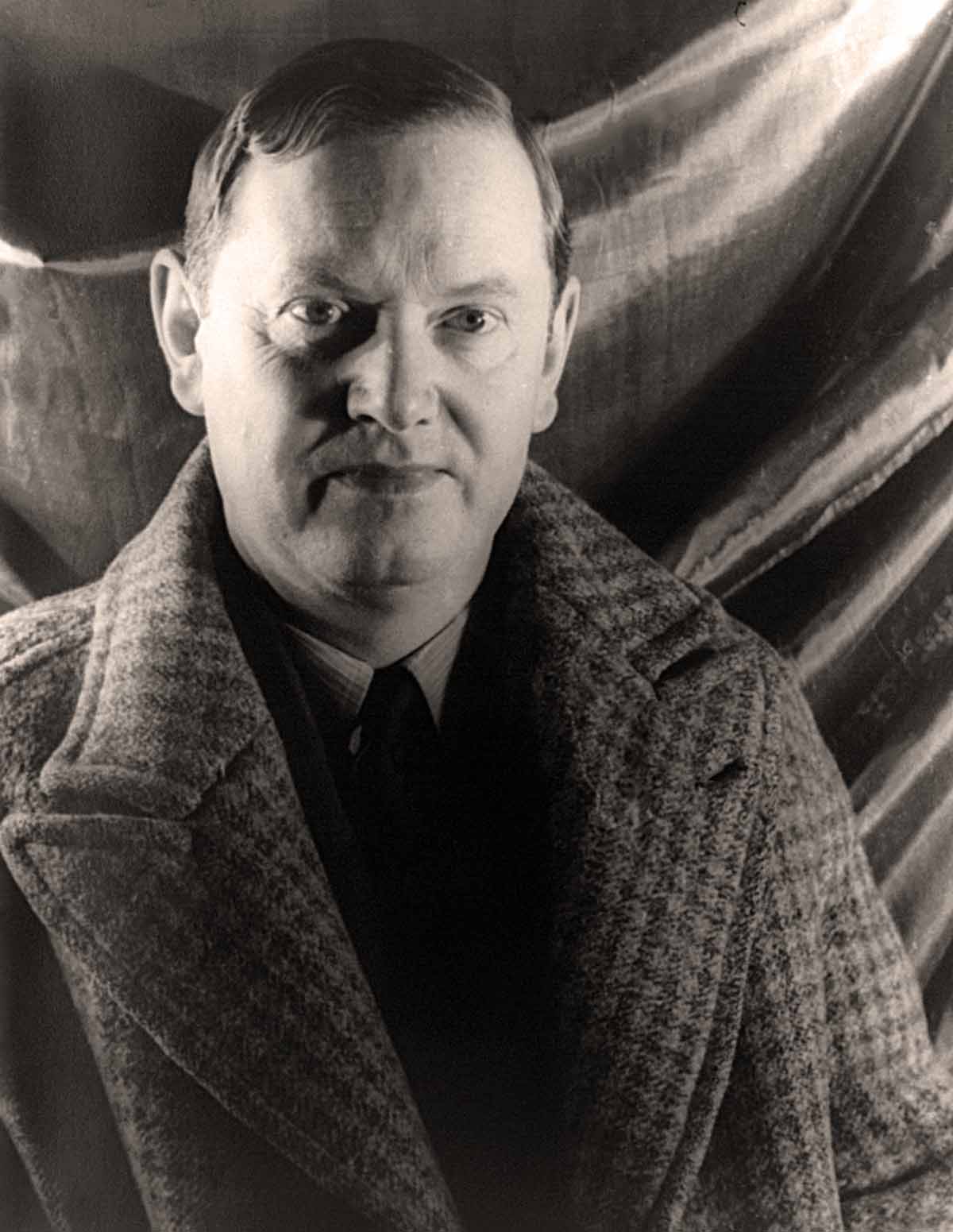
P. Bracy Bersnak then considers the novels and short stories of Evelyn Waugh. Bersnak writes that “literature has a unique power to arouse a sense of loss of social goods by appealing to the imagination and emotions. Perhaps no writer in the English language did this better than Waugh. His novels show how an inheritance can be lost, even squandered, and the consequences of this loss.” In addition, Waugh shows “a consistent view of human nature, community, and history that is profound and philosophically conservative.” And Waugh’s conservatism is most often expressed satirically: “Waugh shows that the ‘conservatism’ of observing inherited social conventions is inadequate to preserve those conventions if it is not based on an understanding of the principles on which they are based.” Bersnak’s analysis conveys Waugh’s humor and snark, even in summary. Below is one representative sample analyzing Waugh’s short story “Love Among the Ruins”:
Miles Plastic … is a lifelong ward of the state and “the Modern Man.” Even though the State “made him” according to its designs, he sets fire to the Air Force training station, killing half his fellow servicemen. Miles is charged with committing an “anti-social act,” not arson or manslaughter. The judge reminds the jury that “it was a first principle of New Law that no man could be held responsible for the consequences of his own acts.” Instead, the bureaucrats say: “In the New Britain which we are building, there are no criminals. There are only victims of inadequate social services.”
Needless to say, Waugh’s satire has aged well. Bersnak concludes that “Western society today is rich with potential for satire. Would that we had another Waugh to instruct us and ply us with healing laughter amid contemporary barbarism.” Intellectual conservatism is not just the movement of Burke and later political theorists. It also owns Waugh, T.S. Eliot, C.S. Lewis, and the conservative disposition expressed in literature.
Intellectual Conservatism also explores practical applications of conservative principles. Unlike the United States, the United Kingdom has had a Conservative Party for decades. While the Conservative Party as of this writing is out of power, the ascent of the Labour Party in U.K. politics has prompted much soul-searching. What went wrong? How can the Conservative Party recover? In considering these questions, the authors examine the relationship between conservatism as a philosophical disposition and as a political reality.
To begin, Philip Norton argues that conservatives are politically successful when four realities exist: Conservatives must be perceived as “a party of governance”; as having trustworthy hands to manage “the nation’s finances”; as unified “even after periods of upheaval”; and as demonstrating “a sense of public service.” When such perceptions dip, Conservatives fail to attract electors. Norton contends that the present Conservative Party has failed in these four domains. He also lists a fifth reality outside the Conservative Party’s control: “Its opponents have split at times opportune for the party.” Regaining political power requires recovering the confidence of the British people that Conservatives seek to serve the British people, are trustworthy to govern financially, and have a clear vision that will unite people for electoral victory in a parliamentary system.
The
Zeena Mistry adds a different note to the discussion of free speech. As a British Indian, Mistry found that the majority of British Indians she surveyed agreed with British ideals of free speech. Mistry concludes that British conservatism should find an ally among British Indians. Mistry’s essay also raises questions applicable to wider conservatism. The 4th National Conservatism conference, held in Washington, D.C., in July 2024, attempted to bring conservative Iranians and Indians into its coalition and raised questions about just how multicultural a nationalistic conservatism can be.
Matt Beech offers a compelling case that free speech cannot be separated from the Christian heritage of Western civilization.
Mistry raises the same questions, given the running thread of conservatism’s tie to national traditions throughout Intellectual Conservatism. To what extent do immigrants from a different culture need to assimilate to the culture of their new homeland if they claim to be conservative? Can British Indians, 68.8% of which identify as Hindu and over 8% as Sikh, according to Mistry, access a philosophical conservatism rooted in Christianity? It should be noted that Intellectual Conservatism grounds conservatism in the cultural customs of Christianity that developed organically across centuries in England, so to what extent can those from a different culture and religion lay claim to a conservative British identity? The tensions are clear in Mistry’s closing line: “I propose that thinkers of conservatism should not be afraid to work with Britain’s ethnic minority communities, who tend to be more conservative, to preserve the nation and freedoms that we all hold dearly.” While Mistry upholds the external results of conservatism, she does not accept the roots of British conservatism.
In a chapter entitled “Conservatism, Religion, and Monarchy,” Sebastian Morello makes a fascinating case for the necessity of religious establishment to ground political conservatism. He asks, “Why is there a widely acknowledged connection between conservatism and religion, or between conservative commitments and religious convictions?” To answer the question, he explores the thought of Burke and Joseph Maistre as canonical conservative authors at the root of modern conservatism. “For Burke, there is a moral law with which the cosmos itself is pregnant, and this law of creation reflects the very nature and order of the godhead.” All positive law must cohere with the natural law; natural law is both revealed and defined by the Christian faith.
Maistre, however, takes a different view: “Maistre says that there are two options available: Europe has before it the choice of Christianity or slavery: ‘the wills of men must be either purified, or enchained; there is no medium.’” Rather than physical enslavement, Maistre considers internal enslavement to desire the greater danger. Religion teaches men self-restraint, and thus freedom from enslavement to desire. Morello considers the modern condition as one enslaved to hedonistic desire, suggesting that Maistre’s argument was correct. He concludes from his survey that “conservatism is in essence a defense of human personhood, and as such it invariably—to the degree to which it is explicit in such a defense of personhood—roots itself in religious communities.” In a British context, Morello argues for Christianity as the religious establishment, but so long as the religion has a clear vision of human personhood, he suggests that other religions could ground a nationalist conservatism.
Through
In short, intellectual conservatism is an ongoing conversation spanning various places and times. And like the best conversations, it continues and does not have a fixed set of prescriptions. Intellectual Conservatism is an admirable contribution to this conversation and will be a valued resource to academics seeking to define, reiterate, and articulate their tradition.