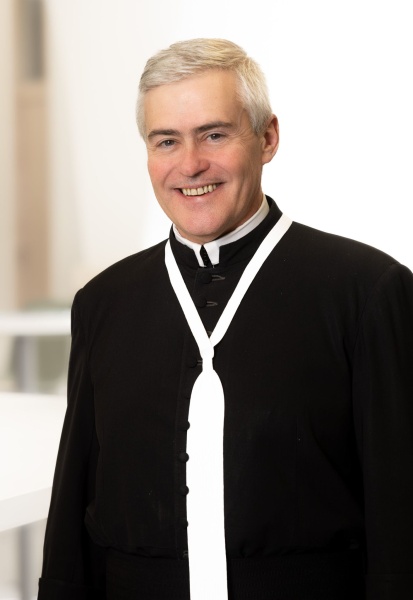


The billionaire co-founder of PayPal, Peter Thiel, considers René Girard “heroic and subversive.” Vice President J.D. Vance, who learned of Girard through Thiel, attributes in part his decision to enter full communion with the Catholic Church in 2019 to Girard. Why is interest in an obscure French-American scholar who died a decade ago rapidly growing, and what can we learn from him?
How one French-American intellectual has inspired a renewed interest in what it means to battle negative desires, and how the Resurrection is our only hope.
If the Roman playwright Plautus is correct when he states that a name is a prophecy (nomen est omen), then Girard’s name overflows with meaning: René (renatus, reborn), Noël (the birthday of the Lord, from natalis dies Domini), and Théophile (Theophilus, [Θεόφιλε], meaning loved by God/lover of God). Girard was born in Avignon on Christmas in 1923 to an anti-clerical Dreyfusard, the Jesuit-educated archiviste-paléographe Joseph Frédéric Marie Girard (1881–1962), and a Catholic mother, Marie-Thérèse Fabre de Loye (1893–1967), who was the first woman in the region to earn a baccalauréat (secondary school degree), a distinction that only 2.5% of the French held in 1931.
Arriving in Paris in 1943 to attend his father’s alma mater, the renowned École Nationale des Chartes, the southerner from the periphery hated the metropole. Girard’s decision to write his dissertation at Indiana University in 1947 gave him the opportunity to become a transatlantic thinker. Writes Cynthia L. Haven in her biography Evolution of Desire: “This is why Girard is, like Tocqueville, a great French thinker—and a great French moralist—who could yet nowhere else exist but in the United States.” Girard wed the American Martha McCullough in 1952, and in the ensuing years their children, Martin, Daniel, and Mary, joined the family.
Failing to obtain a position at Indiana, Girard left for Duke University and then Bryn Mawr. In 1958 he was wrestling with the implications of the discoveries he would later publish in his first major work, Deceit, Desire, and the Novel (1961). Girard was increasingly preoccupied with the similarities between religious experience and the writings of certain novelists who were brave enough to admit that our desires are not our own but rather come from a model. This Girard would call mimetic desire. Finally, he underwent an intellectual conversion. “Everything was there at the beginning, all together. That’s why I don’t have any doubts. There’s no ‘Girardian system.’ I’m teasing out a single, extremely dense insight” (Haven’s When These Things Begin).

In the Lent of the 1959, Girard underwent a spiritual conversion that returned him to the Catholic faith he had ceased to practice as an adolescent. A lesion on his forehead raised the specter of cancer. The first test was inconclusive. In the intervening weeks before he received the happy news that it was not cancerous, Girard experienced a kind of death and resurrection. Summarizing, Haven writes, “The consent of the will occurred in what he [Girard] called the ‘first conversion’ experience. The second conversion gave him urgency, depth, and the endurance to take the next steps in the journey.”
That journey would take him to Johns Hopkins in Baltimore, then to SUNY-Buffalo, back to Johns Hopkins, and then finally, in 1981, he became the Andrew B. Hammond Professor of French Language, Literature, and Civilization at Stanford University, where he taught until his retirement in 1995.
In 2005, the members of the prestigious Académie française elected René Girard as one of the forty immortels,acknowledging his intellectual achievements. Girard’s friend and colleague from Stanford, Michel Serres, named him “the new Darwin of the human sciences.” Such recognition, however, eluded Girard in America. For many, his works were too Christian and therefore safely ignored.
On November 4, 2015, Girard died peacefully in his home in Stanford, California, at the age of 91. At the abbey of Saint-Germain-des-Prés in Paris, Serres offered a eulogy: “From that day on [Easter], the new earth, virgin, and mother, generates a new era where time, newly oriented, turns its back on death. Death no longer lies before our time, as our term, but flees, defeated, behind us.” The Resurrection of Christ changes everything. Girard’s life and writings offer a glimpse of the new world brought into being on Easter morning, which forges ahead nearly two millennia later.

Girard spent more than 40 years teasing out his “single, extremely dense insight.” Chronologically, Girard made three discoveries: mimetic desire, the scapegoat mechanism, and Christ. However, epistemologically, the order is reversed. The revelation of the mimetic desire and especially of the scapegoat mechanism depends on the appearance of Jesus of Nazareth. Let me explain.
Through his study of novels in Deceit, Desire, and the Novel, Girard argued that human desires are mimetic, or imitative of another’s desire. While needs (appétit) are grounded in biology, wants (désir) are influenced strongly by other people who model desires; hence, we imitate and adopt their desires (mimetic). Indeed, because wants and needs blend, the role of the model affects both wants and needs. In either case, however, what is desirable in the other is not ultimately any particular thing—whether it be a person, a relationship, an object, an experience, or a feeling—but being itself. “All desire is a desire for being,” insisted Girard.
Beyond the object—whatever or whoever that might be—is desire’s true aim: the model’s being. This metaphysical hunger causes the acquisitive nature of human desire. Poor in both being and desires, the subject seeks to appropriate the being of the other, the model, through imitating what the other desires, through adopting his words, deeds, and relationships, ultimately becoming the other. This is the basis for advertising and marketing, associating a good or service with an attractive model. Strange as it seems, though we are radically dependent on God, creation, and others, our modern worldview lies to us, insisting that we are independent as individuals and that we alone determine our desires.

This delusion Girard calls the “Romantic lie.” The French title of Deceit, Desire, and the Novel (Mensonge romantique et vérité Romanesque) plays on the word “novel” (roman) and the 19th-century philosophy of Romanticism, which celebrated creativity, genius, and originality, especially in the arts. Girard prized those novelists who had the honesty to acknowledge the Romantic lie in the face of this novelistic truth. In Girard’s view, this would entail a death and resurrection experience, of the ego dying through the truth that it is held in bondage to mimesis, and rising with a new sense of humility because it no longer fears the truth that one is not original but rather just like everyone else.
Mimetic desires influence us profoundly. We rationalize them, telling ourselves that this is really who I am or what I want. Then, believing this, we act upon these desires and demand that others affirm their legitimacy. As long as we are unaware of the mimetic nature of our desires, we will likely fail to engage them critically, thereby falling into a circle of frustration.
Girard also noticed that mimetic desire unavoidably gives rise to rivalries because the desires of different individuals often converge on the same object, like kids fighting over videogames or adults competing for position and prestige. Distance in a social rather than a spatial sense is the key variable in whether such mimetic desire will lead to peaceful imitation or violent conflict. Sufficient distance between individuals prevents the escalation to the extreme because it places the contending subjects far enough apart to make conflict unlikely. Girard calls this “external mediation.” Its opposite, “internal mediation,” refers to too little distance, which makes rivalry likely. Luke Burgis explains this distinction amusingly by naming two domains: Celebristan consists of those people who are a great distance from us (celebrities, fictional characters, historical figures, leaders), whereas Freshmanistan is populated by those who are close to us (colleagues, friends, acquaintances, family members).

Whenever a mediator—that is, the subject’s model—senses the subject’s interest in the object, this causes “double mediation.” Put simply, both now mediate desire to each other. The mediator or model’s desire is enflamed because the subject now becomes a model for him. Driving, for example, easily becomes a mimetic rivalry of double mediation. When one detects that someone is trying to pass, suddenly there is a competition in which there are winners and losers. So you speed up. What does the other driver do? Who will win? Why are we competing?
Driving can be an intensely mimetic activity because human beings can have multiple models, multiple rivalries. Moreover, double mediation does not exist in a vacuum but rather in a social context where multiple conflicts rage. In most groups, factions and parties coalesce, subsuming interpersonal conflicts. Groups that were once at odds form alliances against their common enemies, leaving previous disagreement behind—at least for the moment. Girard calls the communal character of mimetic rivalry a plague or social contagion.
When Girard speaks of premodern plagues as a mimetic crisis, as in Oedipus’s Thebes, he is not denying its biological character but rather emphasizing its equally social character. The recent pandemic made this clear. In the name of health and security, opposite conclusions were drawn. Each group accused the other of sacrificing someone: either the elderly, the immune-compromised, and the poor, or the young, the healthy, and the self-employed. It moreover called into question the boundaries between nature and culture, biology and politics, science and ideology. This blurring signifies a mimetic crisis when all differentiation between people collapses under the weight of the mimetic contagion. This lack of difference, which for Girard means that all become identical, announces the threat of imminent violence.
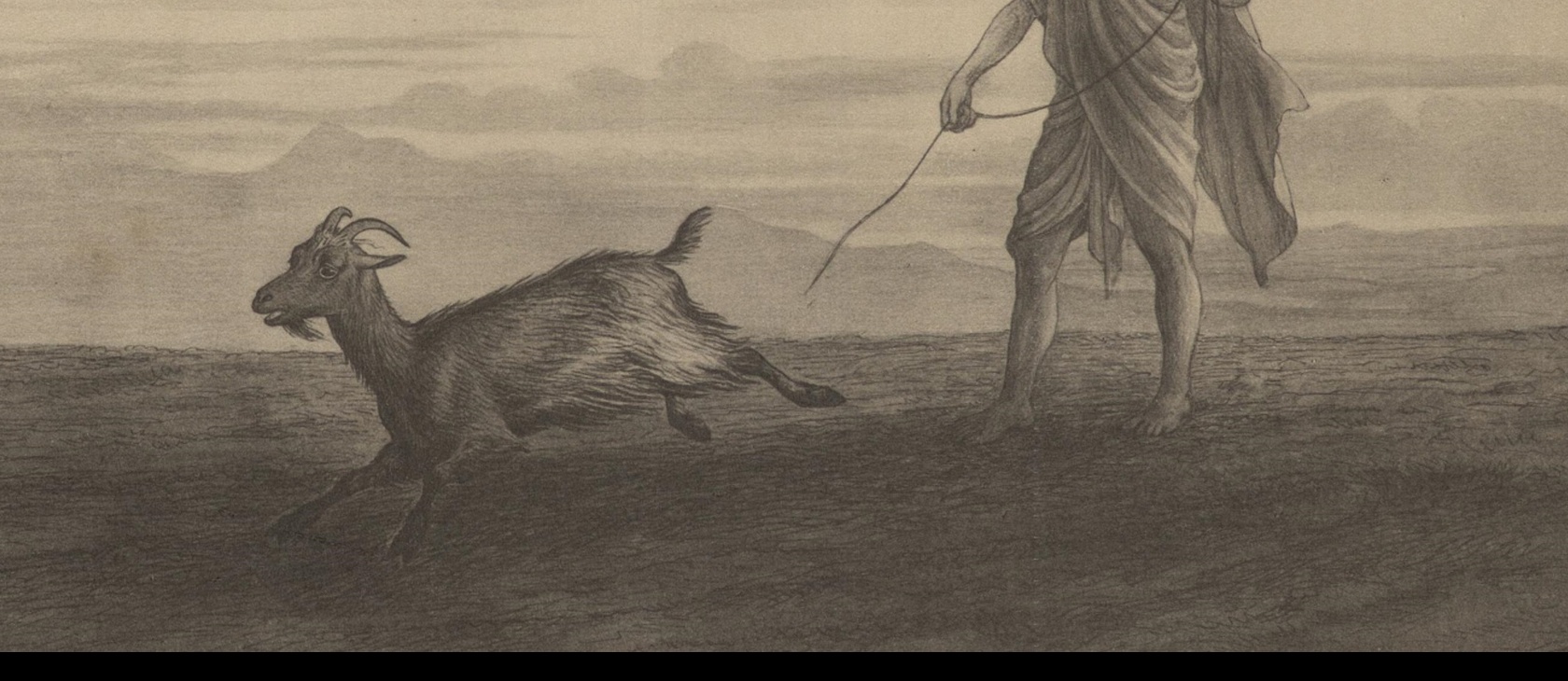
The cycle of attraction and repulsion continues until a final resolution. For interpersonal conflict, this means the murder or expulsion of the model-obstacle (such as defriending someone on Facebook). On a societal level, as these interpersonal rivalries multiply, however, they threaten to destroy the whole community unless a scapegoat presents itself. The process of shifting from a war of all against all to a war of all against one happens mysteriously. When the group converges on the culprit—often bearing stereotypical qualities—the community naively blames the scapegoat for its crisis.
Scapegoating is so obvious today that it is nearly impossible for us to imagine a world in which no one recognizes what is happening. Yet, despite this knowledge, we continue to seek scapegoats and sometimes find ourselves in the position of the one who is scapegoated. It happens in families, workplaces, teams, and classrooms, as well as communities, nations—even globally. There is someone who is always ruining everything, who is annoying, who is the cause of what’s wrong with the world, or so it seems. Girard does not claim that the scapegoat is innocent in the sense that he or she has never done anything wrong. The point is that the scapegoat is no guiltier of causing the disturbance in the group than anyone else. The scapegoat just gets the blame, but everyone is part of the conflict. None is without sin.
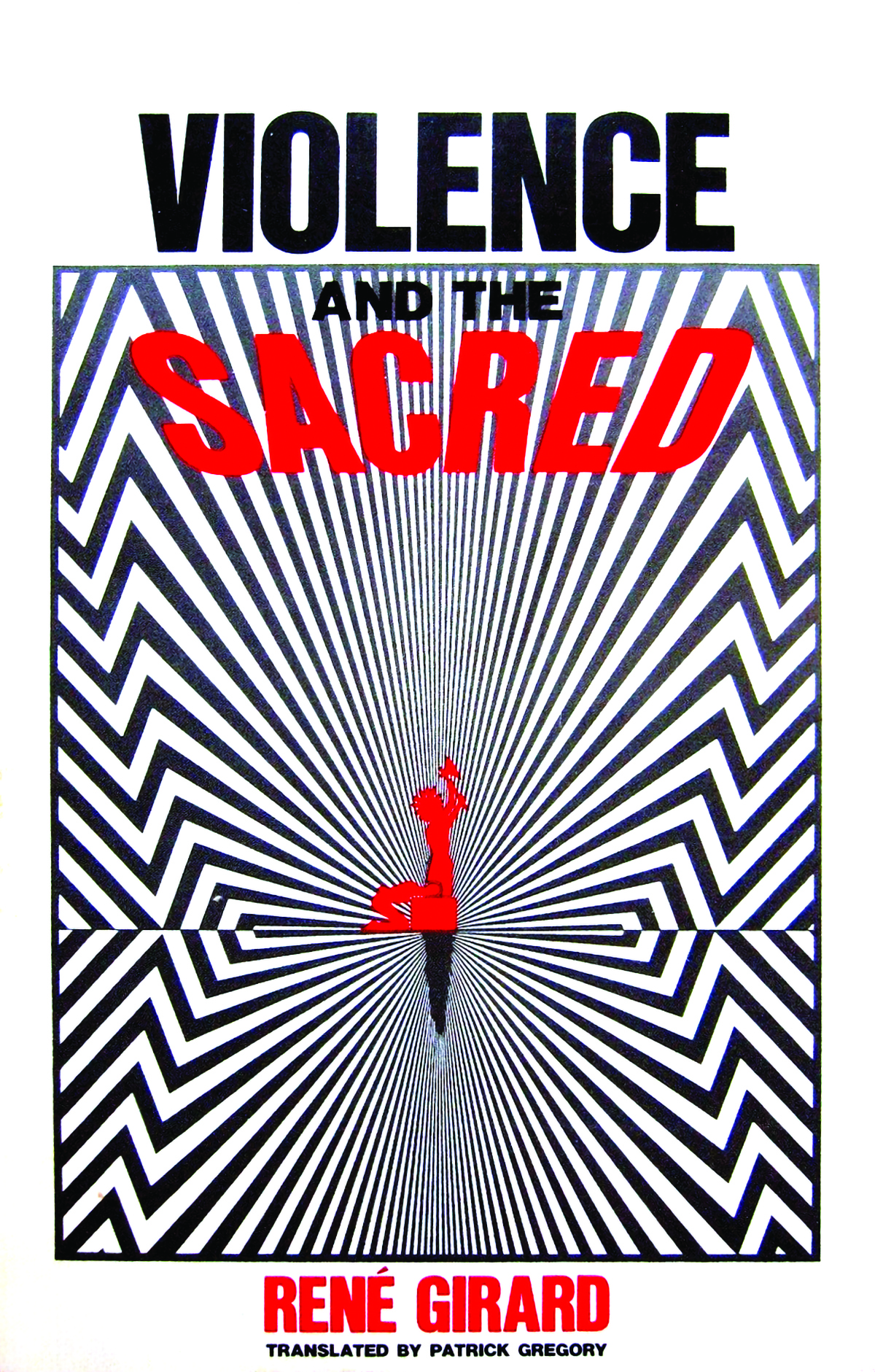
Girard uses the term “scapegoating” as we do today, but he also employs a specific term, the “scapegoat mechanism,” to describe the circumstances when and where it generated culture in the past, something it is no longer able to do. Girard first articulates the scapegoat mechanism in his breakthrough work, Violence and the Sacred (1972). Through the expulsion of the scapegoat, the community experiences reconciliation and peace. This sudden transformation is so uncanny and strange that the victim comes to be seen as supernatural. A double transference occurs: The victim is first demonized and then sacralized. Thus, violence makes the sacred. Persons or institutions that restrain violence, such as government, Girard calls the Katéchon (cf. 2 Thess. 2:6–7). Ritual sacrifice, myth, and prohibitions safeguard the new culture by restraining mimetic rivalry. Ritual sacrifice reenacts the event, myth retells it, and prohibitions hinder mimetic rivalry.
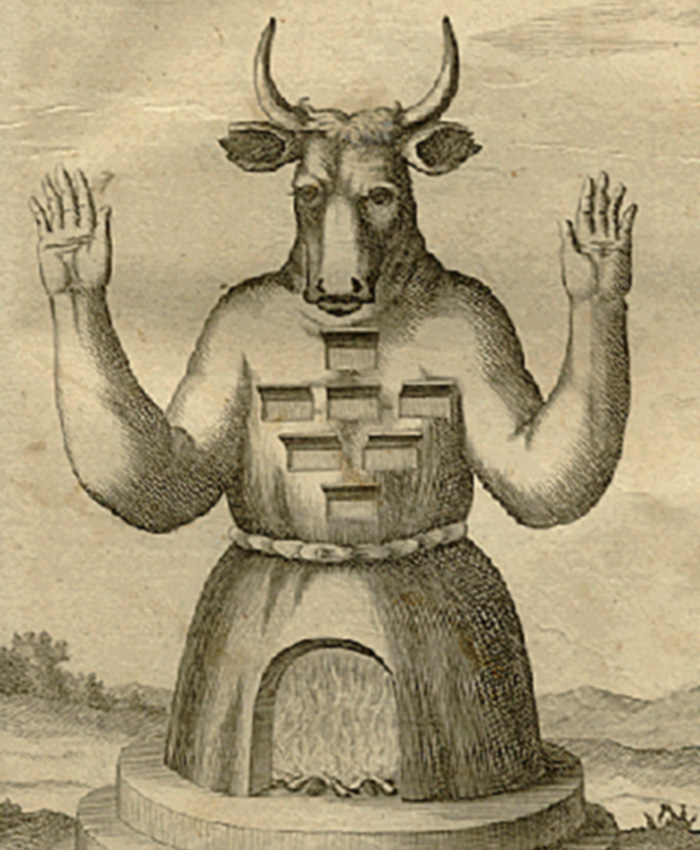
Girard believes that ritual is the first teacher of humanity because repetitio est mater studiorum (repetition is the mother of all study). Ritual repetition, therefore, is decisive for understanding cultural evolution. The millennial performance of ritual sacrifice educated the first human beings, thereby giving rise to all the major institutions that form human culture (cf. I See Satan Fall Like Lightning). Long before there were any secular institutions, whose origins depend on the desacralization or secularization brought about by the gospel, religion (or the sacred) was the mother of all culture. Ritual sacrifice created the social harmony and cooperation that stabilized desire-driven humanity.
Prohibitions arise to secure peace by forbidding those behaviors that incite mimetic rivalry. The new cultural order therefore sanctifies rules of conduct. In this lay the origins of law, the judiciary, and its enforcement. Inasmuch as mimetic desire focuses on the neighbor and his possessions, prohibitions interrupt this desire by making the neighbor and his possessions distant and unapproachable, at least in a moral sense.
Girard argues that the scapegoat mechanism only works if the group believes in its own innocence and the guilt of the victim. He calls this méconnaissance, the state of misrecognizing what has actually taken place. If there is a significant doubt about the guilt of the victim, then the mimetic crisis continues. For this reason, a crisis may consume many victims before the scapegoat mechanism produces its beneficial effects.
Christianity confronts humanity with a crucial choice in light of this disclosure: Either imitate Christ or risk annihilation at our own hands.
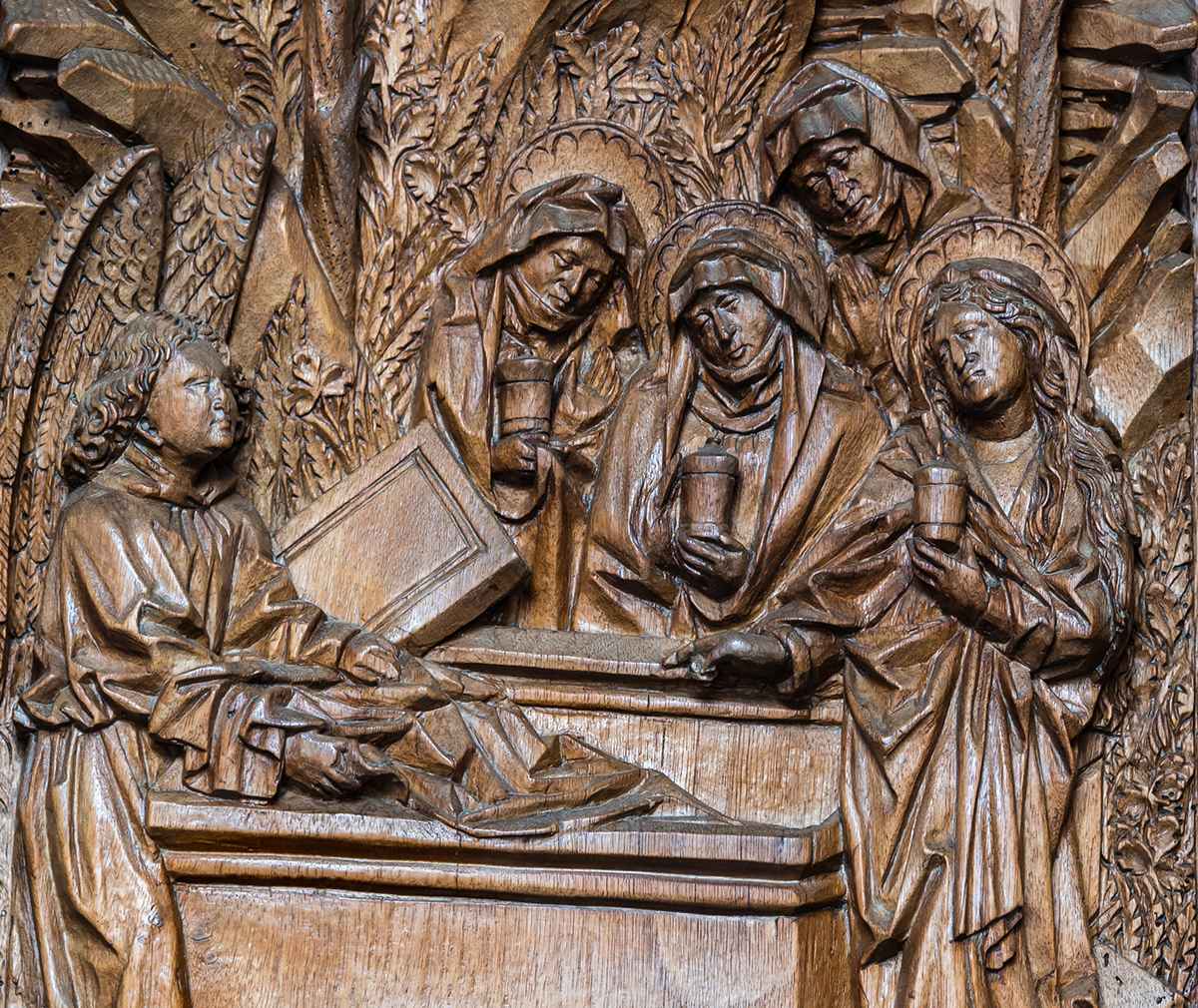
Moreover, in Things Hidden Since the Foundation of the World, Girard argues that the violent origins of culture remained hidden until the Paschal Mystery revealed the scapegoat mechanism specifically and our penchant for scapegoating more generally. Girard reasons that the structural similarity between the Passion of Jesus and myths is necessary for the revelation of both the scapegoat mechanism and the innocence of the victim. The Passion narratives describe a scapegoating event like any other. Yet what makes this one different is that it does not end with the demonization and death of the victim, but rather with his Resurrection and vindication.
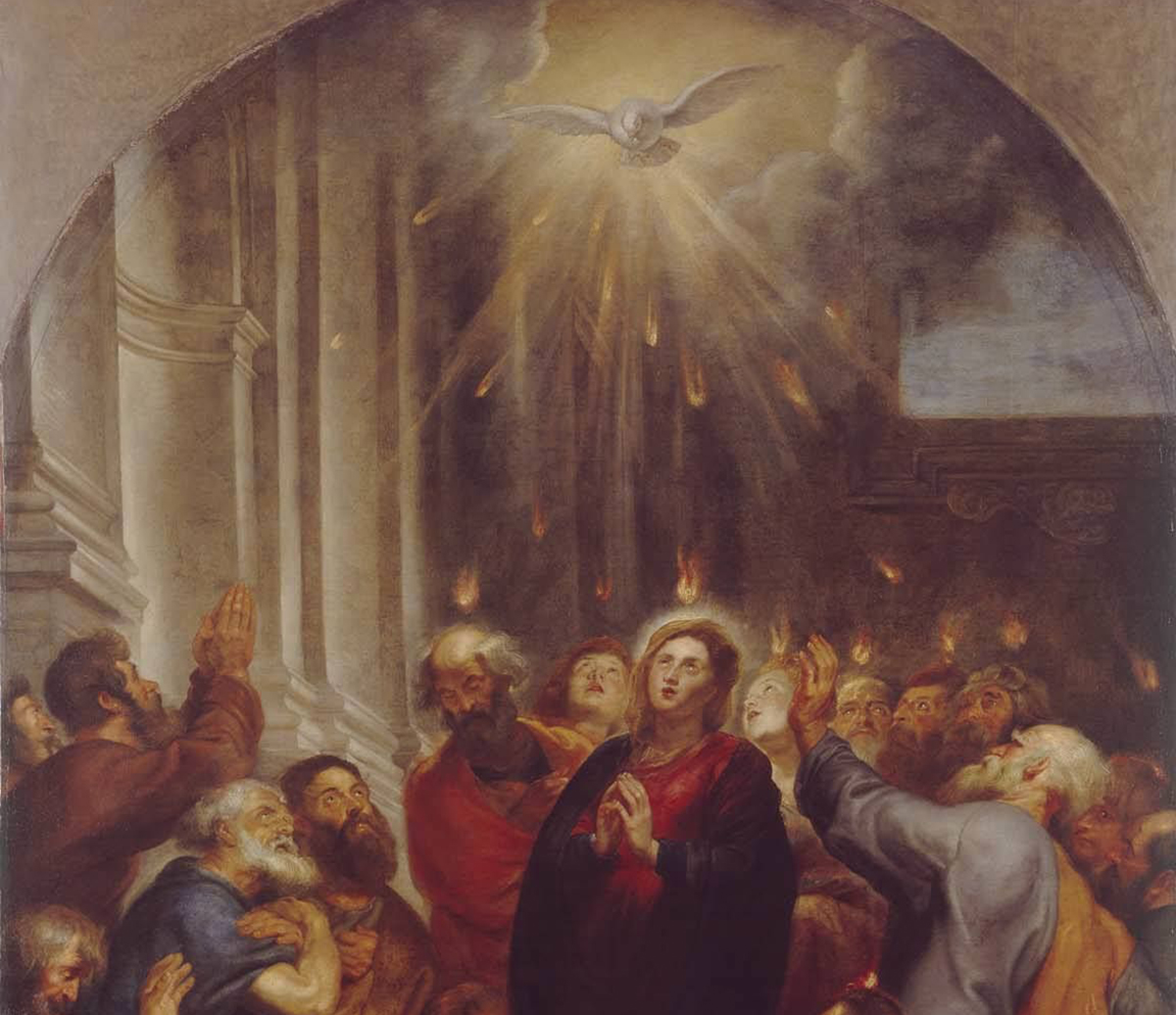
Jesus offers his life on the cross in union with his Father to introduce a new power in the world that is stronger than mimesis and scapegoating. That new power is the Spirit of Truth, the Holy Spirit, the Advocate, the Paraclete, who overcomes the misrecognition of the victim as guilty, making the scapegoat mechanism hidden, effective, and capable of creating a new culture. When we scapegoat, we blame others for our problems, yet there is always a nagging doubt. The Resurrection makes profound this skepticism about our own goodness and the guilt of the other.
To his frightened and confused disciples, Christ revealed the truth about the God who does not destroy his murderers or betrayers but rather offers forgiveness, as well as the truth about humanity’s deep relationship to violence. Through the Resurrection, the one whom the crowd and their leaders judged as a blasphemer (Mt. 26:65) and accursed by God (see Deut. 21:23), and whom the procurator, Pontius Pilate, representing the Katéchon of his day, Rome, condemned to death by crucifixion (Mt. 27:26), was declared innocent. Thus, the revolution that follows. (Tom Holland’s book Dominion is very good on this point.)
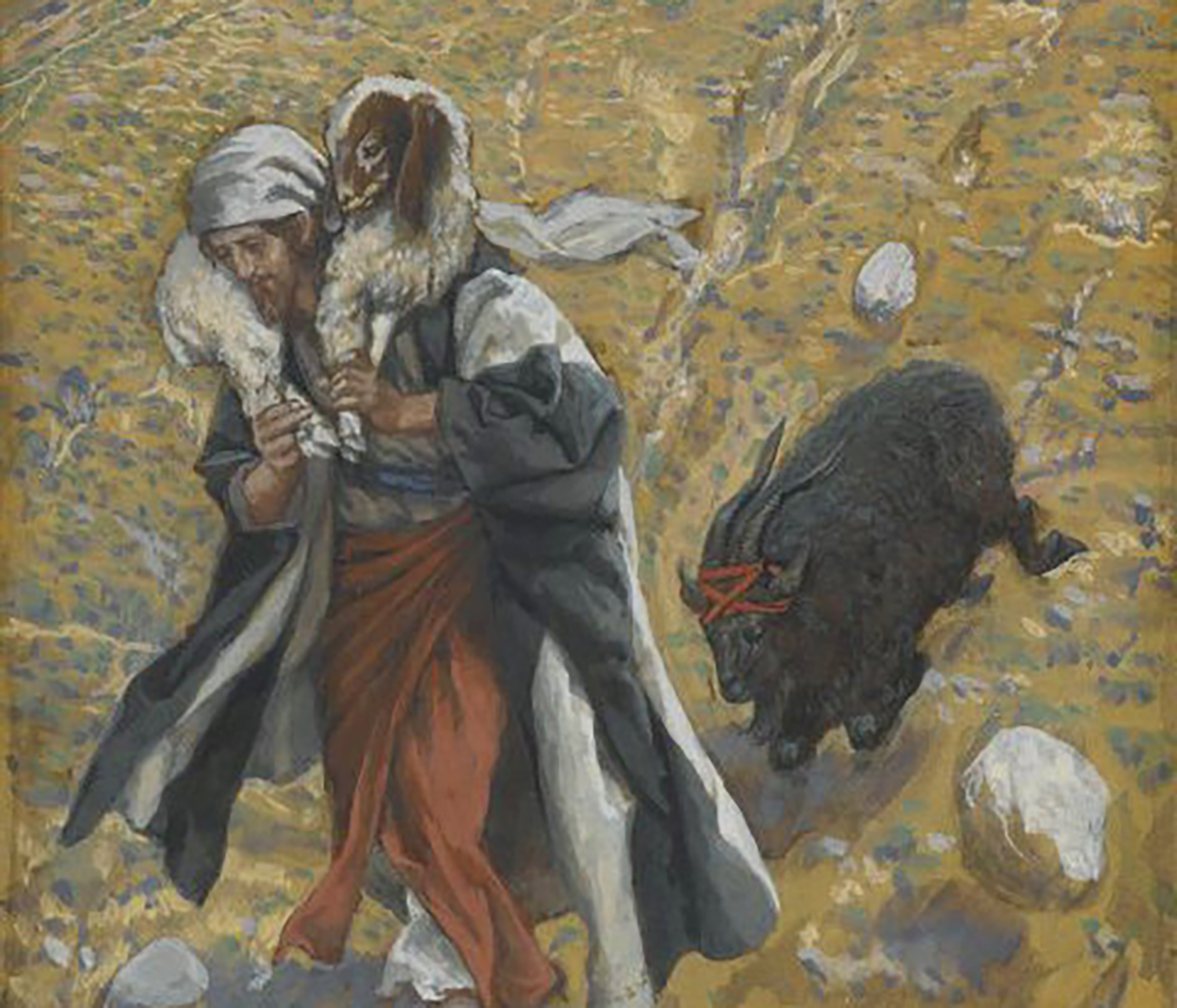
The effect of having revealed the truth at the heart of human culture and its violent origins gives rise to the circumstances in which we find ourselves. “When our intellectuals, after the Second World War, and later with the collapse of the Soviet bloc in Eastern Europe, thought we were through with absolutes, they were simply wrong. Because the victimary principle of the defense of victims has become holy: it is the absolute” (Evolution and Conversion). Girard’s remarks from nearly 20 years ago are even truer today as categorizations of victims and victimizers have grown exponentially. With financial, moral, and political capital on offer, the complexities of human existence have been brutally simplified, opening the way for rash, cowardly, and cruel campaigns of intimidation and cancelation. The fury of social media and the internet have emboldened those who successfully claim victim status to become the new victimizers.
For Girard, the Resurrection of Jesus sets off a revolution, the throes of which we witness to this day and will continue to witness until the end of history under the guidance of the Holy Spirit. He predicts that this evangelical truth will inevitably delegitimize every institution that relies on scapegoating to preserve order and peace. This trend reveals Jesus’s urgent desire “to cast fire on the earth and how I wish it were already kindled!” (Lk. 12:49) to be the Holy Spirit himself, the Paraclete. When the Church obeys the Spirit, then it follows Christ’s own declaration that he came to bring division, not peace (Lk. 12:51), for the peace of this world is the product of scapegoating. The gospel divides and unleashes the possibility of violence because it undermines the moral credibility of the Katéchon while simultaneously recommending Christ as the only model to imitate. “Peace I leave with you; my peace I give to you. I do not give to you as the world gives,” Jesus teaches at the Last Supper (John 14:27).
“History has a meaning and it is terrifying,” writes Girard in Battling to the End. We are living through the two-millennia process of the evangelical subversion of the sacred at the foundation of every human culture. Christianity effects apocalypse (revelation) in two senses: (1) it reveals the truth about humanity’s violent origins, and consequently (2) it confronts humanity with a crucial choice in light of this disclosure: either imitate Christ or risk annihilation at our own hands. This unavoidable predicament comes from a great inversion: As humanity grows in knowledge of mimesis, it loses control of its violence. Yet, Girard wonders if winning this internal and spiritual battle is more important than achieving a worldly victory: “We are thus more at war than ever, at a time when war itself no longer exists. We have to fight a violence that can no longer be controlled or mastered. Yet what if triumph were not the most important thing? What if the battle were worth more than the victory?” What does he mean?
Since scapegoating and the Katéchon have become less effective in this new Resurrection-effected economy, what is needed is the heroic attitude to battle to the end, which “alone can link violence and reconciliation, or more precisely, make tangible both the possibility of the end of the world and reconciliation among all members of the human race.” The condition for the latter entails the possibility of the former. From this ambivalence, we cannot escape, but in this situation there is a real chance of reconciliation.
Girard detects in all modern myths of progress an unwillingness to face their violence. Ideologies are not violent per se; people are. Ideologies are the updated version of myths, which “provide the grand narrative which covers up the victimary tendency. They are the mythical happy endings to our stories of persecution. If you look carefully, you will see that the conclusion of myths is always positive and optimistic.” In contrast to ideologies, “the Gospel does not provide a happy ending to our history. It simply shows us two options (which is exactly what ideologies never provide, freedom of choice): either we imitate Christ, giving up all our mimetic violence, or we run the risk of self-destruction.” The unhappy ending of the Gospel subverts the myth of progress, thereby freeing us from its inevitability and giving a genuine choice. Through the revelation of what is really going on behind the sacred, Christian demythologization has rendered sterile the scapegoat mechanism, scapegoating (as commonly understood), and the instruments of the Katéchon because violence no longer has the capacity to create anything: “It is finished. It is impotent. Thus, this is real anarchy.”
Mimesis does not determine the outcome of individual choices. Human beings do.
In the light of Jesus’s prophecies (Matt. 24, Mark 13:19–20), humanity must pass through the current ordeal, deprived of the guide markers of the sacred (which Girard always distinguishes from “the holy,” as in the Sacraments) because once-reliable explanations for human existence are exhausted, hearts have grown cold, and the violent contagion spreads globally. For this reason, we can understand Girard’s political atheism. Politics easily succumbs to mimetic rivalry, polarization, and violence because human beings equally excel at scapegoating.
Though Girard firmly maintains that mimesis is the implacable law of human behavior that inevitably spreads a contagion around a society, the same cannot be said for each person:
In communities, there are so many people that it would be statistically impossible for mimetic violence not to be present, but the individual isn’t bound hand-and-foot to mimetic desire. Jesus was not. To talk about freedom means to talk about man’s ability to resist the mimetic mechanism.
Mimesis does not determine the outcome of individual choices; human beings do. After the Resurrection and its demythologization of the cultural order (the sacred), people do have the free choice to succumb or to resist negative mimesis. Girard’s heroic and subversive vision dares to believe in each person’s capacity to make good choices due to the knowledge that Christ reveals and due to the power that the Spirit gives. In his article “How an Obscure Scholar Is Shaping the Most Powerful Country on Earth,” Professor George Dunn summarizes well what Girard, the self-described “political atheist,” offers:
To be a political atheist is to refuse this worship [to the party, the movement, or the leader that has become an idol]. And that may be Dr. Girard’s final gift to our moment of frenzied polarization—not a theory that take sides, but a challenge to gain enough distance from the fray to see how mimetic it all is.
BIBLIOGRAPHY
About Girard:
“Peter Thiel Explains How an Esoteric Philosophy Book Shaped His Worldview,” by Richard Feloni, Business Insider, November 10, 2014.
“How I Joined the Resistance,” by J.D. Vance, The Lamp, April 1, 2020.
Cynthia Haven, Evolution of Desire (Michigan State University Press, 2018).
Luke Burgis, Wanting (St. Martin’s Press, 2021).
“How an Obscure Scholar Is Shaping the Most Powerful Country on Earth,” by George Dunn, The Globe and Mail, July 3, 2025.
By Girard:
Battling to the End (Michigan State University Press, 2010).
Deceit, Desire, and the Novel (The Johns Hopkins University Press, 1965).
Evolution and Conversion: Dialogues on the Origins of Culture (T&T Clark/Continuum, 2007).
I See Satan Fall Like Lightning (Orbis Books, 2001).
The Scapegoat (The Johns Hopkins University Press, 1986).
Violence and the Sacred (The Johns Hopkins University Press, 1977).