


In his classic essay “Sir Erskine May’s Democracy in Europe,” Lord Acton expounded on what he called the precursors to liberalism, saying they could be found in the “ponderous Latin” of Spanish Jesuit thinkers like Luis de Molina and Francisco Suárez. These precursors, while not liberals themselves, paved the way for liberty, and their ideas would inform later political theorists like John Locke and Jean-Jacques Rousseau. Future generations would continue to adopt and adapt these precursors’ ideas to develop such principles as freedom of religious conscience and the separation of powers.
Goślicki’s intellectual contributions and political career prove him to be an important precursor to the classical liberal tradition.
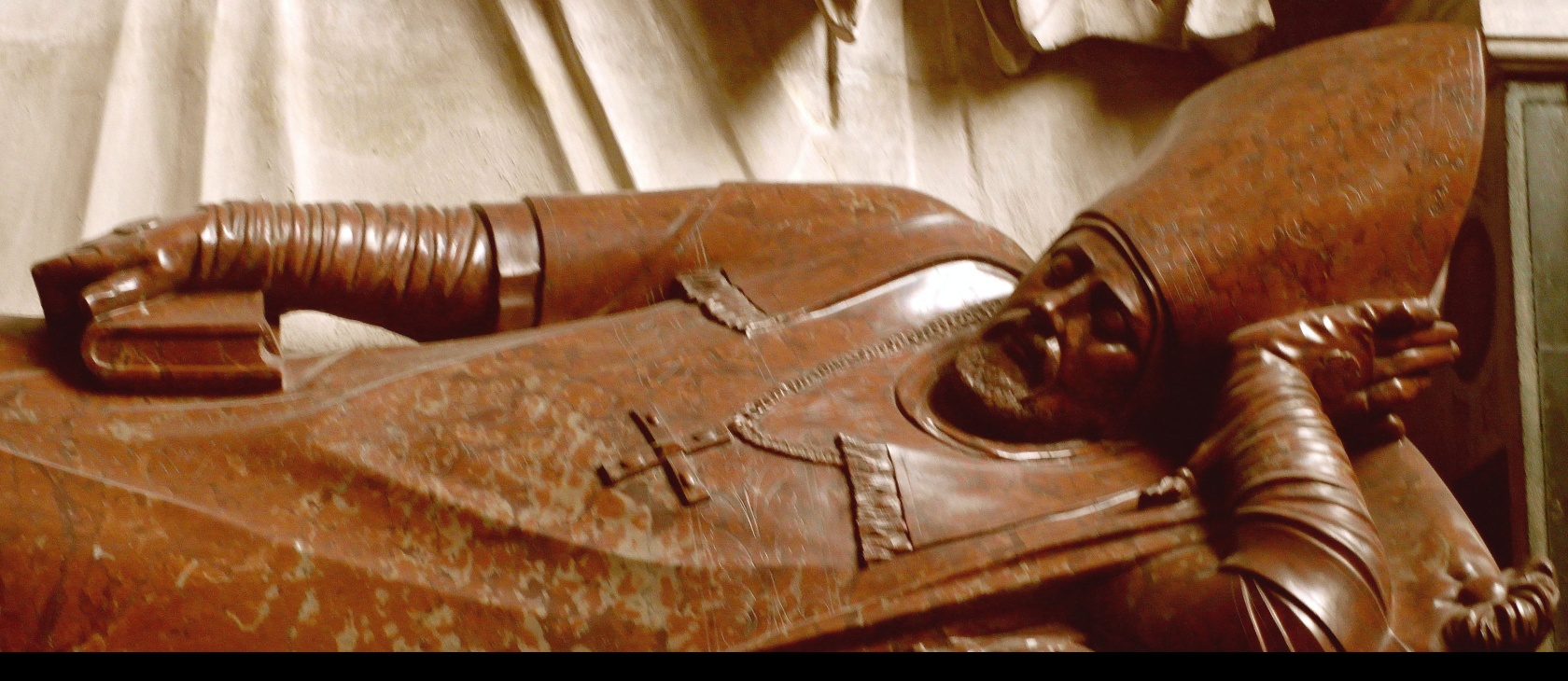
While he did not make Acton’s list, one such precursor to classical liberalism was Wawrzyniec Grzymała Goślicki (c. 1530–1607), a 16th-century Polish statesman, philosopher, and bishop who wrote a notable text titled The Accomplished Senator, published in 1568. Unfortunately, despite his influence, there is very little scholarship on the man. Yet Goślicki is noteworthy for his policies of religious tolerance during the biggest religious unsettlement of Europe’s history. Also noteworthy is the influence he had on subsequent generations. His readers included people like William Shakespeare andthe Italian Jesuit theologian Robert Bellarmine, who contributed to the literature on natural law and civil authority with texts like “On Laymen or Secular People.” Goślicki may even have had an impact on the American founding, as Thomas Jefferson also had a copy of his book in his library. He was also relied on heavily for the Polish constitution of 1791. Nevertheless, Goślicki remains a largely forgotten figure.
Goślicki was born around 1530, to a noble family. He received a classical education in Greek, Latin, history, and philosophy, immersing himself in writers like Plato and Aristotle, whom he would draw from heavily in his written work. He also undertook studies in law at the Universities of Padua and Bologna, after which he was recruited into government service and served as secretary to King Sigismund II Augustus (1520–1572) of Poland. He later served as minister for King Stefan Báthory and helped with the creation of the Warsaw Confederation in 1573, which granted religious freedom to the nobility in the commonwealth of Poland-Lithuania. It was during his service under Sigismund II that he wrote the remarkable text The Accomplished Senator.
Several signal events provided the context for this work. First was the Protestant Reformation, when Roman Catholics, Lutherans, and the Reformed were divided not only along ecclesiastical and confessional lines but political ones also. In this period of European history, if you were a peasant living in a particular jurisdiction, and your king or prince converted to Lutheranism, it meant you did, too. In Reformed regions, for instance, the “Erastian” theory of church and state was common, which taught that the civil authority had the right and responsibility to carry out the discipline of the church. While Poland remained officially Catholic, with Sigismund II as its emperor, what is often forgotten is that it had a significant Lutheran population at the time, as well as a substantial Eastern Orthodox presence as well.
Goślicki’s political philosophy was rooted in a robust Christian anthropology, and his theology of the human person in the Imago Dei.
Yet Poland stood out as a jurisdiction that did not exercise a heavy hand against religious dissenters from the Catholic faith and adopted significant policies of religious tolerance that other nations would follow much later. Sigismund II, for instance, passed legislation that permitted the use of the Augsburg Confession, the confessional standards of the Lutheran churches. The king is rightly credited with enforcing these policies, but it was Goślicki who provided the intellectual justification for them in his book.
To begin, Goślicki’s The Accomplished Senator is really a book about governing well. He discusses the importance of character for statesmen and the need to cultivate the cardinal virtues, and likewise orient the society toward virtuous living. His political philosophy was rooted in a robust Christian anthropology, and his theology of the human person in the Imago Dei, arguing that every human being was created with inherent dignity, which entailed mankind’s capacity to reason. Drawing on Plato’s likening of the city to the soul, Goślicki argued that God had created man as a perfect image “of the Body Politick” and that the political body had three principal parts: the head, the heart, and the belly. Thus, citizens could cultivate virtue by way of good government, and preferably through the leadership of a good senator. Goślicki also believed that cultivating these virtues was essential in what he called the “Art of Government,” which he considered to be the most excellent “branch of learning.”
Goślicki thought of good governance as an application of the ancients, that there was wisdom to be drawn from the Greek and Roman projects of democracy and republican government. He was also not afraid to ask “What is the good life?” and drew heavily upon the Aristotelian idea of eudaimonia (human flourishing or the highest good) in providing an answer. Eudaimonia served as the end for which senators were to govern; Goślicki then drew on writers like Cicero for how statesmen were to achieve this end.
Branching out from this classical starting point, Goślicki offered some helpful arguments for the importance of a senate within a monarchy. For him, a senate was necessary because it provided a mediator between the king and the people. The king, according to Goślicki, was too far removed from his subjects and lacked the more intimate knowledge necessary to govern and meet the needs of the populace properly. A senator, however, was close enough to the people such that he could learn their ways of life and communicate this in the language or custom of the king. One immediately thinks of the American Founders and their desire for a Congress that had one chamber that was close to the people and a higher chamber to restrain their whims, or even of the parliamentary system in England before that. It is also worth mentioning that Goślicki’s book was translated and published in an English edition as early as 1733.
Goślicki’s intellectual contributions and political career prove him to be an important precursor to the classical liberal tradition. His emphases on the separation of powers, of liberty of conscience, all with the human person at the center of his project, culminated in his signing of the Warsaw Confederation in 1573, which embedded into law freedom of religious conscience and political equality and served as documentary confirmation of his lifelong concern for what could be called “ordered liberty.” He can very well be considered a Scholastic theologian in a strain similar to that of Robert Bellarmine, who adapted these ideas to his own, later political context as part of the broader project of liberty to come. Overall, students of the history of liberty should read the works of Goślicki as a theologian and statesman engaged in the great conversation that continues to this day.