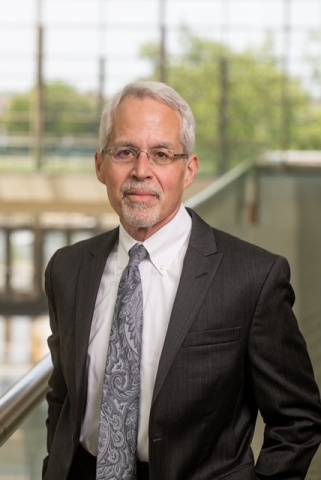


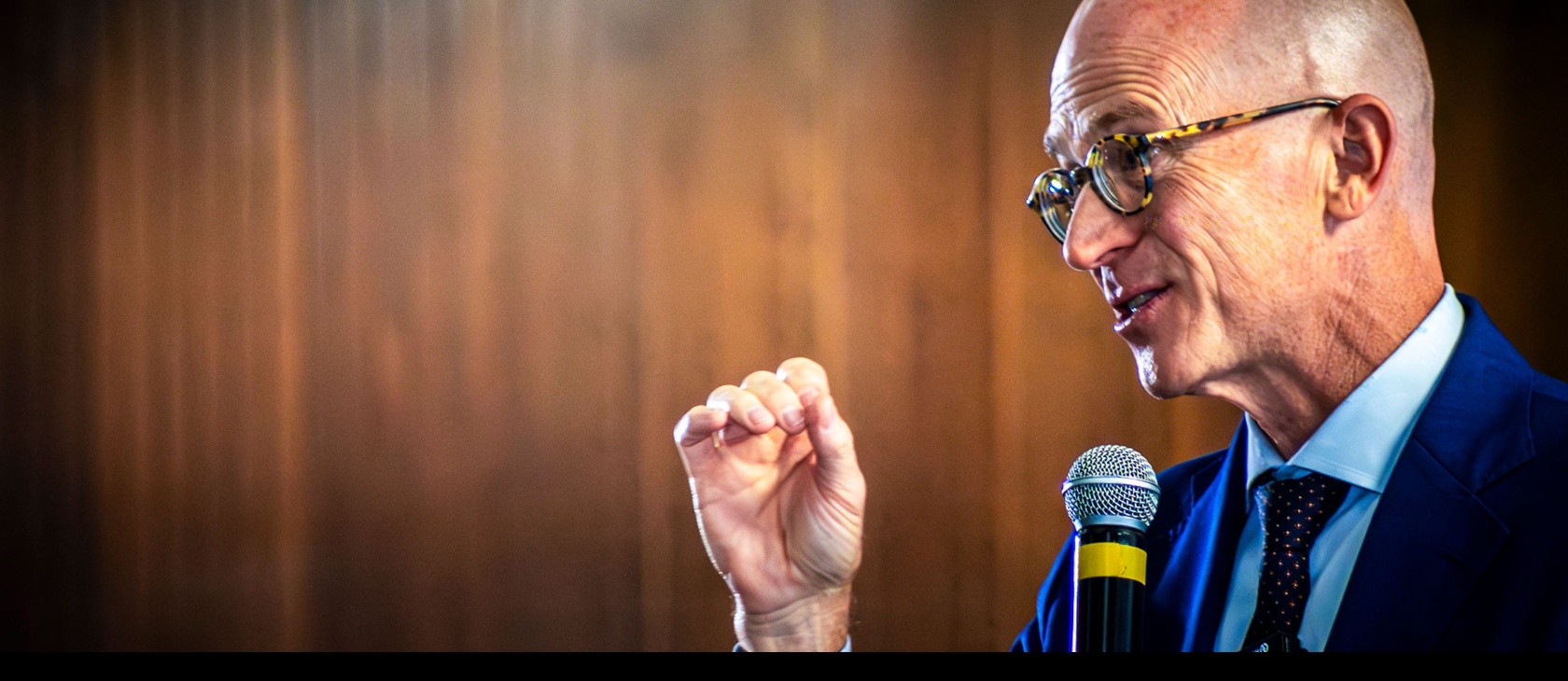
Michael Matheson Miller is the chief of strategic initiatives, senior research fellow, and director of the Center for Social Flourishing at the Acton Institute.
As director of the Center for Social Flourishing for the Acton Institute, your brief is to investigate the causes and possible solutions to the problem of global poverty. That’s quite a challenge, and I would think a burden. What inspired you to take this on?
Michael Matheson Miller: Before answering, I think it’s important to state that poverty is complex, it has multiple causes, and there is no ultimate solution to the problem of poverty. But that does not mean there is nothing we can or should do. The inspiration to address this problem is threefold.
First, concern for the poor is a central theme of Christianity. St. James writes that pure religion is to care for the widow and the orphan and to keep oneself unstained from the world. Pope Leo XIV recently wrote an exhortation reminding us that care for the poor is not merely an option among other things: We are called to have a heart for the poor and to practice charity. In the Catholic tradition, almsgiving is one of the “eminently good works,” along with fasting and prayer. This also relates directly to Acton’s work and our mission to promote a free and virtuous society, which must include access to justice and improving the lives of the poor.
Second, I was influenced by St. John Paul II, especially his book Love and Responsibility and his work on the Theology of the Body, which highlights the truth that each human person is not an object to be used, manipulated, or socially engineered. Despite good intentions in many of the ways we’ve tried to help, we have tended to treat the poor as objects of charity and our pity instead of the protagonist of their own story of development.
Third, many years ago during my graduate studies in international development, my parents were living in West Africa, and so the question of global poverty and access to justice became a real interest of mine. Yet the dominant models in development economics were influenced by a foreign aid model and technocratic planning. At that time, the only person I found writing in a different mode was Peter Bauer. William Easterly and other critics of the aid model had not yet been published. Part of my hope with PovertyCure and Poverty, Inc. was to create a network and especially a resource for students and others to be able to find alternative models rooted in enterprise solutions to poverty, something I did not have when I was a student.
Your documentary Poverty, Inc. won raves from figures associated with the World Bank, the Whole Planet Foundation, and Harvard Law, and even from filmmaker Michael Moore. Why do you think it struck a chord with such a diverse group worldwide? What do you think made them think differently about a subject they had almost certainly wrestled with before?
We were delighted with the response to the film and grateful that so many people found it helpful. I think perhaps three things especially helped diverse groups of people appreciate the film. First, many of our discussions about poverty and development policy are conducted by experts or celebrities on behalf of poor people. In Poverty, Inc., people were able to see and hear people from the developing world tell their own stories. This I think opened people up to new perspectives.
Second, in making the film we were very careful to avoid as much as possible right-wing or left-wing boilerplate language. We tried to avoid “red meat” approaches and to respect the good intentions of the people we were critiquing. No doubt, Poverty, Inc. has a point of view and made strong critiques, but we tried to do it in a way that reframed the issues. Not everyone liked it, of course, but this approach I think allowed people with different points of view to wrestle with these questions in a new way.
Third, we tried to reframe the debate away from “caring” and “having a heart for the poor” to questions about justice and whether our good intentions were helping or causing harm. We focused on portraying poor people as subjects, not objects—as protagonists with energy and agency—and this, too, showed poverty in a different light.
The PovertyCure series of films confronts misconceptions surrounding the subject of poverty, such as overpopulation, agricultural subsidies, and the “value” of foreign aid and charity. Why do you think it is so difficult to get people to abandon failed initiatives and to rethink their strategies? Is it just inertia? Ideology? The money pipeline?
There are several reasons for this. There is no doubt that the poverty industry is big business, and there are incentives to continue with the foreign aid model. Beyond that, for many people who want to help, many of the dominant ideas sound correct at first. We think that if we just send food or transfer money through foreign aid, we can build bridges and roads and provide healthcare, and everyone will be better off. People have compassion, and these ideas dominate popular culture. On the other hand, it sounds harsh and lacking compassion to say we should not give foreign aid. One of the goals of Poverty, Inc. and PovertyCure was to reframe the discussion to help people see aid and charity differently: to see that these ideas and programs don’t actually deliver on their promises, and can often do harm. Also, to see that the real problem for people in poor countries is not simply a lack of material goods or even infrastructure, but exclusion from the institutions of justice that would enable them to create prosperity in their own families and communities. In the United States, we take for granted things like clear title to land, access to courts, and ease of starting a business. These are missing in many poor countries, and the foreign aid development model actually creates incentives for recipient governments not to build these institutions.
Regarding the myth of overpopulation, there are several reasons it persists. First, it’s just an error of intuition. We visit the developing world and we see lots of children around asking for money and we think “If there were fewer children, there would be more money to go around, and these children wouldn’t be so poor.” This is the zero-sum game that sees the economy as a pie and doesn’t recognize the productive potential of people. Exclusion from the institutions of justice is the main problem, not too many people. Also, population control, too, is big business. Billions of dollars have been spent on reducing populations despite lack of evidence that population causes poverty.
Plus, this idea of overpopulation is so popular in the dominant culture that it makes sense that people are surprised to hear it’s not true. Whenever I make the counterargument, people are very skeptical at first, because they have been inundated with ideologies that see people as a burden on the economy or a scourge on the environment. The adherence to population-control policies goes far beyond economic fallacies but is rooted in a deep cultural and theological struggle over what it means to be a human person. How we think about the person shapes so much of how we see politics and economics. And this is why we start every Acton conference with a talk on the “Christian Vision of the Person.” It is this vision of the person as the protagonist of development with creative capacity that underlies all our work with PovertyCure, Poverty, Inc., and our new Center for Social Flourishing.
You’re putting the finishing touches on a follow-up to Poverty, Inc., a documentary focused on poverty in this country specifically. What sparked the domestic focus? Did you feel that the problem of U.S. poverty has gotten worse since 2016, when the film’s predecessor debuted?
As we screened Poverty, Inc. around the U.S., many people felt that, despite the differences between poverty in the U.S. and poverty in Sub-Saharan Africa, there was a similar problem with the expert-led technocratic approach to poverty alleviation. We were continually asked if we were going to do a film on poverty in America. Over the last several years, we have been traveling around the United States and meeting people addressing many different forms of poverty.
Is poverty getting worse? Depending upon how you analyze the numbers, the general poverty rate in the U.S. has either stayed the same or slightly decreased over the past few decades (some analysts say that if you count transfer programs, then poverty has declined quite a bit), yet we still have persistent intergenerational poverty and the lowest-income workers struggling with high inflation and becoming increasingly fragile. Among the poorest, we continue to see social breakdown, what Seth Kaplan has called “Fragile Neighborhoods,” and increases in drug overdoses and homelessness. There are real challenges in America, but in our work we have also come across amazing people who are helping the homeless, rebuilding neighborhoods, and helping to create social cohesion and economic opportunity. In sum, I would say that, while the primary problem of the poorest of the poor in the developing world is exclusion from the institutions of justice, the problems for the poorest of the poor in the U.S. include broken relationships, mental illness, drug abuse, and a lack of social capital. It’s also important to note that poverty is not just material. There is social and spiritual poverty in the U.S. that is not limited to the materially poor, and that, too, has to be addressed when thinking about this country.
The problems for the poorest of the poor in the U.S. include broken relationships, mental illness, drug abuse, and a lack of social capital.
What kind of feedback have you gotten from all these initiatives that gives you hope that global poverty either is on the decline or soon will be?
It’s quite clear from generally accepted data that there has been a decline in global poverty in the decades since the collapse of the Soviet Union. This has been especially noticeable in the economic growth seen in India and other parts of Asia. Yet many African countries have not reaped the benefits of globalization. China, too, is a special case. There is no doubt that millions of Chinese escaped from extreme poverty, yet millions more are excluded from justice and suffer oppression from the communist state.
Regarding the dominant model of economic development, I think there are a number of voices trying to reframe the debate: people like Magatte Wade, William Easterly, and the late George Ayittey who share the Poverty, Inc. vision of enterprise solutions to poverty. We have also seen some serious challenges to the U.S. Agency for International Development (USAID) and the foreign aid model from the Trump administration, but that has mostly focused on corruption and not on a fundamental critique of the model. Unfortunately, the foreign aid, technocratic approach is still dominant, and so we still have a lot of work to do, but there are rising voices across the world promoting enterprise solutions and access to justice for the poor. We are currently in the middle of a 10-year anniversary screening tour of Poverty, Inc. and have been delighted that more and more people are questioning the aid model.
Fun Questions: (a) What book(s) have you read at least three times, and why? (b) If you could blow up one public building, à la Howard Roark in The Fountainhead, without endangering life or risking imprisonment, which one would it be? (c) What’s your favorite B&W film, and why?
(a) Nonfiction: C.S. Lewis, The Abolition of Man. The Abolition of Man is I think one of the most important books of the 20th century. It’s a critique of technocracy, of relativism, and of empiricist rationality that echoes Edmund Burke and is seen in Benedict XVI’s eloquent defense of reason. The first chapter, “Men Without Chests,” cannot be read too often. I also read and re-read the works of Joseph Ratzinger: his essays in the collection Values in a Time of Upheavaland the first volume of Jesus of Nazareth. His insights into the challenges of the modern world, his political and social philosophy, and his analysis of the Gospels have taught me so much over the years that a lot of what I do in my lecturing is to try and distill Lewis and Benedict XVI.
Fiction: I’ve read Father Elijah by Michael O’Brien seven times. His insights into the modern struggle with unbelief, despair, and maintaining faith in the face of suffering are profound. I think it can be read alongside Henri de Lubac’s The Drama of Atheist Humanism.
(b) I’ve never read Ayn Rand, so I don’t know who Howard Roark is (though I have just started Atlas Shrugged for a program I am doing). But, wow, there are so many incredibly ugly, high-modernist buildings throughout the world that razing them would be a boon to mankind, and especially the poor who were shuttled into them by large-scale urban planning.
(c) Casablanca and Sergeant York. Casablanca is just a great story, and Sergeant York is an inspiring example of conversion and bravery. I’m sure I’m missing something, but those two are great.