
Miles de venezolanos se reúnen para protestar contra el gobierno de Nicolás Maduro
Dado que el coronavirus es el más importante en los pensamientos de la mayoría hoy – como es comprensible – no sorprende que otros eventos importantes se nos escapen. Consideren, por ejemplo
Cómo el populismo izquierdista destruye la libertad en Bolivia
Como hemos visto en países como Venezuela, Ecuador y Nicaragua, los populistas latinoamericanos de la izquierda están contentos de trabajar dentro de los sistemas democráticos – al menos
Argentina está cayendo en el caos económico
-
No es noticia decir que Argentina tiene graves problemas económicos. Con pocas excepciones, eso ha sido el caso desde hace décadas. Pero eventos recientes subrayan cuánto la situación es culpa de los políticos argentinos populistas y, para decirlo francamente, los que siguen votando por ellos.
Esta dinámica fue resumida bien por Fergus Hodgson en el Epoch Times. Hodgson comienza con una descripción de los graves desafíos económicos que el país afronta:
Argentina entra en el año 2020 con una deuda de 332 billones de dólares. Este total incluye préstamos del Fondo Monetario Internacional (FMI) y 148 billones debidos a obligacionistas privados. Las agencias de calificación bajaron la calificación de la deuda argentina a causa de la decisión del nuevo gobierno de retrasar el pago de 9,1 billones de dólares de cuentas de la tesorería. Esto ya constituye un impago técnico – un “distressed-debt exchange” – según los criterios de Fitch Ratings. 64 billones más se deberán en 2021.
Pagar la deuda será difícil para cualquier nueva administración, dada la situación política horrible afectada por el amiguismo, la criminalidad, el proteccionismo y la inestabilidad monetaria. En América latina, sólo Cuba y Venezuela son más anticapitalistas que Argentina...

-
Farewell Letter from Rome
-
This will be my last letter from Rome, as I am resigning as director of Istituto Acton, effective tomorrow, October 1. I started writing these monthly pieces in January 2010 to give you some idea of what it’s like to live and work in the Eternal City, with occasional missives from different parts of the world that I visited. I hope you have found them entertaining, maybe even enlightening. After twenty wonderful years here, it is simply time for a change.
Long-time readers may have sensed some of my frustration in dealing with Roman ways, but I leave with nothing but gratitude for all the blessings I’ve received. How else should someone born to Hindu immigrants in Chicago and educated in a small Catholic parochial school in Flint, Michigan feel about spending two decades in this world-historical city of all cities? I am in awe when I think about it from beginning to end. I cannot leave without trying to boil it down to these top 10 favorite memories.
10. Experiencing Roman commerce. In most developed countries, especially the United States, the customer is always right. Getting a refund if you are not satisfied is relatively easy because merchants want...

-
Letter from Rome: Amazonian myths, civilizational despair
-
We should be skeptical of conspiracy theories, mainly because they assume too much skill and intelligence from conspirators. Experience tells us ignorance and incompetence are much more common among those holding power and influence. Then again, some “coincidences” are equally hard to believe.
The ongoing hysteria about fires in the Amazon comes just ahead of October’s Synod of Bishops from the Amazon region is one such instance. Environmentalists and their celebrity friends wasted little time in spreading myths about the fires and the Amazon itself. Eventually, even the New York Times and CNN had to report on the many falsehoods that were spread. Yet the “news” was already made: a right-wing populist president of Brazil, multinational corporations and unsophisticated farmers – together with climate change, of course - are destroying the “lungs of the earth” (yet another piece of fake news).
Such a narrative conveniently prepares the way for the Synod, the working document of which is entitled “Amazonia: New Paths for the Church and for an Integral Ecology”. The “new paths” are rumored to include the possibility of allowing “proven” laymen (viri probati) to serve as priests in underserved areas of the Amazon, effectively decentralizing the...

-
Letter from China: Civic virtue without freedom?
-
I spent most of July traveling to various parts of the People’s Republic of China. Although I made brief trips to Hong Kong in 2000 and Beijing in 2016, I have never experienced anything remotely similar to this more extended stay. Having a Chinese-speaking guide and the opportunity to speak to “friendly” locals (none of whom can be named out of concerns for their safety) provided more perspective than a tourist would normally have.
It would be foolish for an outsider to try to make sense of a country so vast and ancient that is undergoing such rapid, even violent change. This, however, has not prevented Westerners from attempting to do so, many of whom come away praising the Chinese model of development as superior to their own. See, for example, New York Times columnist Thomas Friedman fantasizing about being “China for a day” or the Vatican’s Bishop Marcelo Sanchez Sorondo praising China as the world’s best model of Catholic social doctrine.
Such observers are especially impressed with China’s authoritarian ways, which dispense with democratic formalities such as elections, public deliberation and human rights, at the service of what they perceive to be the common good. Unlike American...

-
Letter from Rome: American vs. European Nationalism
-
Last month’s Sohrab Ahmari-David French debate was the more recent skirmish about the meaning of American conservatism. Acton’s Joe Carter has helpfully compiled a reading list without appearing to favor one side over the other. Such equanimity is admirable because each side has something to teach us about the still-exceptional character of the United States and its conservative movement.
That these debates take place on the American right with some regularity is a sign of its vitality, not its decline. No such debates occur publically in Europe; there are instead private gatherings of conservatives who usually despair over their powerlessness in politics and culture. And even at these, it is the Americans, those living in Europe or making the trip just to take part, who often define the terms of the debate.
Americans dominate these European debates (see, for example, Steve Bannon) because the Europeans can see that there is something at stake in American politics. It still matters who wins elections and sets the direction of American domestic and foreign policy. I have been trying to convince Vatican officials of this since my time at the Holy See Mission to the United Nations. A Republican in the White House...

-
Letter from Kraków: JPII, we miss you!
-
Greetings from Kraków, where I’ve just attended an Acton co-sponsored event on “Europe between post-Enlightenment nihilism and the Islamic question” at the Pontifical University John Paul II.
Dealing with this ponderous subject were some very accomplished scholars: Prof. Francesco Botturi of the Catholic University of Milan, Prof. Stanisław Grygiel of the John Paul II Institute in Rome, and Msgr. Piotr Mazurkiewicz of Cardinal Stefan Wyszyński University in Warsaw. Cardinal Willem Eijk of Utrecht, Archbishop Marek Jędraszewski of Kraków, and Archbishop-emeritus Luigi Negri of Ferrara-Comacchio made up the impressive ecclesiastical contingent.
It would be difficult to summarize the discussions other than to say, not surprisingly, that all very much appreciated and loved Pope St. John Paul II. Like last year in the neighboring diocese of Tarnów, I was blessed with the opportunity to speak about my personal and professional experiences with the late pontiff. Then as now, it is clear that his intellectual contribution to the Church is receding from our attention, even in his native land.
Perhaps this is the fate of all but the fewest intellectuals, a humbling reminder to those of us who live and work in the world of ideas. The question of the...

-
Letter from Rome: Can populists actually govern?
-
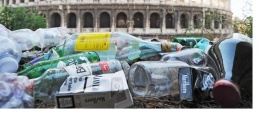
Regular readers of this letter are already familiar with Rome’s degraded living conditions as chronicled by the Roma fa schifo website. The British press, which seems to take perverse joy in detailing Italian misery, recently ran another piece doing so, this time in the left-wing Guardian. Ideology is no barrier when it comes to recounting the troubles of the Five Star Movement mayor Virginia Raggi.
Much has been made of the unusual mix of right and left populists in Italy’s national coalition government, united primarily in its opposition to establishment parties such as the Partito Democratico and Forza Italia. The populists tapped into the general discontent Italians have towards the political class regardless of ideology, something entirely sensible since there is nothing partisan about fixing potholes and collecting the garbage.
In a sensible world, the same could also be said about fighting crime, growing the economy and controlling the borders. We are reminded on a daily basis, however, the political world is anything but reasonable. Trying to balance competing interests and realize the common good of society appears to be a fool’s errand. A rational person is tempted to prefer authoritarianism or anarchy to the messiness of multi-party liberal...
-
Letter from Rome: Who’s afraid of Islamic immigration?
-
There is no more sensitive issue for European politicians than that of Islamic immigration. The fact of mass immigration from Muslim-majority countries in the Middle East, Africa and South Asia is plain to see, but all but the most nationalist speak in general terms about “migration” and “integration.” Those who raise the religious dimension usually refer to European “values” rather than Christianity. The dictates of one of those values, multiculturalism, make it impossible to judge Islamic culture as such.
Is this state of affairs beginning to change? I’ve just returned from a conference in Budapest, officially sponsored by the Mathias Corvinus Collegium but clearly supported by the Hungarian government headed by Viktor Orbán. It was an unusual event because every one of the 60-some speakers was, to varying degrees and for different reasons, skeptical about mass immigration. One panel even dared to ask “Is Sharia law irreconcilable with democracy?” (The answer was yes, but Daniel Pipes and Ayaan Hirsi Ali went to great lengths to separate political Islamists from religious Muslims.) Some of us took a field trip to the 170-kilometer-long fence and asylum-processing center at the Hungarian-Serbian border. It was as politically incorrect as an academic conference...

-
Letter from Rome: “Zero tolerance” and English-speaking justice
-
The recently concluded Vatican summit on clerical sex abuse was a perplexing affair. One-hundred-ninety bishops representing their national episcopal conferences gathered to discuss a matter of urgent importance to the universal church. Journalists from around the world flocked to Rome, giving it the feel of a conclave about to elect a new pope. Yet there was little in the way of practical results, with the Vatican itself downplaying expectations leading up to the meeting and leaving victim-advocacy groups disappointed and angry.
The scope of the meeting was limited to the “Protection of Minors in the Church.” Sex with minors is a crime in addition to a sin and involves civil law enforcement and courts, while consensual sex between adults is a sin but not usually a crime. Greater “transparency” and “accountability” on the part of the church and especially bishops were the most common words used to describe the way forward.
There were two rival interpretations of the causes of clerical sexual abuse and its cover-up by bishops. The first is that homosexual activity has accounted for the vast majority of abuse cases; networks of homosexual clergy have spread and hidden the abuse for decades. The second attributed “clericalism” or...

-
Letter from Rome: Capitalism never satisfies
-
We are living in a buyer’s market for criticisms of capitalism.
American conservatives are debating the merits and demerits of Tucker Carlson’s January 2 monologue on Fox News. Carlson attacked recently elected Senator Mitt Romney and “Republicans [who] have considered it their duty to make the world safe for banking, while simultaneously prosecuting ever more foreign wars.” Carlson claims modern Democrats “generally support these goals enthusiastically.” Recovery will come only when “Republican leaders acknowledge that market capitalism is not a religion.”
At the Vatican, the new editor of L’Osservatore Romano interviewed the 89-year-old American Baptist theologian Harvey Cox about the perils of “the god Market.” Previously known for his 1965 book The Secular City and its God-is-dead theology, Cox is more interested in tearing down the supposed idol of capitalism than building up faith in Christ. He compares the market to a cancer that must either grow or die and happens to like Pope Francis’s economic message.
Carlson and Cox are strange allies in today’s campaign against capitalism. Carlson’s primary concern is for the family and the nation and Cox’s humanity at large, yet both see capitalism replacing Christianity as the religion of the West. (Neither seems to realize that...

-
Page 1 of 12