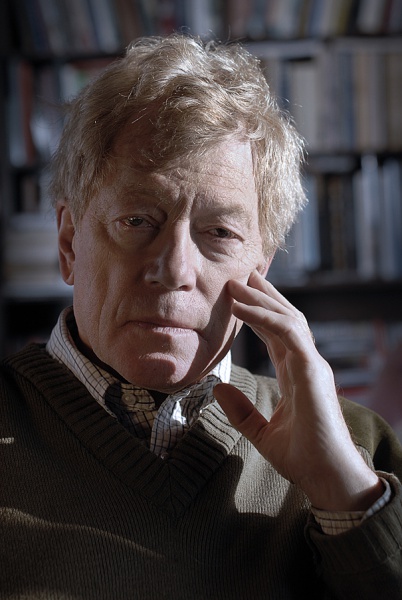
Sir Roger Scruton is a writer and philosopher who has published more than 40 books in philosophy, aesthetics and politics. He is widely translated. He is a fellow of the British Academy and a Fellow of the Royal Society of Literature. He teaches in both England and America and is a senior fellow at the Ethics and Public Policy Center in Washington D.C. His home on the web is Roger-Scruton.com.

Recent Articles by Sir Roger Scruton

  • Scruton on populism: Politics needs a first-person plural

    Populists recruit their following by direct appeal, are largely indifferent to their opponents, and have no intention, if elected, of allowing a voice to those who did not vote for them. If  “populism” threatens the political stability of democracies, it is because it is part of a wider failure to appreciate the virtue and the necessity of representation. For representative government to work, representatives must be free to ignore those who elected them, to consider each matter on its merits, and to address the interests of those who did not vote for them just as much as the interests of those who did. The point was made two centuries ago by Edmund Burke that representation, unlike delegation, is an office, defined by its responsibilities. To refer every matter to the constituents and to act on majority opinion case by case is precisely to avoid those responsibilities, to retreat behind the consensus, and to cease to be genuinely accountable for what one does. 

  • How identity politics destroys freedom

    Sir Roger Scruton delivered the following address at the Acton Institute’s "Crisis of Liberty in the West" conference in London on December 1, 2016. The text has been mildly edited. A video of the full conference is available online here. – Ed.

    It is characteristic of our times to regard freedom as an attribute of individuals, to campaign for my freedom to choose my way of life, my rights to proceed in this or that way through life without interference, and to concede the social dimension of freedom only by default: by recognizing that whatever freedoms I claim I must also grant – in other words to admit that freedom can be limited only for the sake of freedom, and that all our claims to it are equal.

    Traditionally it was not so. Freedom was regarded primarily as an attribute of the body politic as a whole. We Britons prided ourselves on living in a “free country,” and regarded our freedom as a quality of the institutions under which we lived, and the space in which those institutions operated. This freedom was something we encountered, like a refreshing breeze, when we returned from abroad and crossed the border, sensing...