
Abraham Kuyper (1837-1920) is a significant figure in the history of the Netherlands and modern Protestant theology. A prolific intellectual, he founded a political party and a university, and served as the prime minister of the Netherlands (1901-1905).

Recent Articles by Abraham Kuyper

  • The National Church and the Church as Organism

    The system of the national church is diametrically opposed to the doctrine of the church as organism. For the proponents of the latter confess that we must not want to limit the influence of Christ to elect persons, as if nothing else of Christ were noticeable on earth except the work of the Holy Spirit in regenerate persons. Such nominalism is rejected by both sides, and the proponents of the church as organism as well as the men of the national church concede that the Christian religion also impacts the organism of our human life. 

    But only those who speak of the church as organism, as distinct from the institution of the church, maintain that the blessing of God in that broader sphere can work as intended only if the institutional church organizes itself according to the requirements given in the Word, and if baptism, as a sacrament of the Lord, is administered only to the believers and their seed, and such under a constant purification by means of church discipline. They therefore distinguish between the church as institution and as organism, and they do this in order that justice may be done to both the sacredness of the...

  • Christ’s Kingship and social life

    When we discuss Christ’s kingship, we cannot pass directly from the family to the state. Between them lies what is usually called social life, and it has become very important especially in our days to give as clear as possible an account of what Jesus’ kingship means for society.

    It cannot be denied that in the previous century, as well as in the present one, social issues have increasingly attracted the attention of many. In this context, the word “social” should not be misconstrued as referring exclusively to the relationship between labor and capital. Instead we must insist that this relationship is just one of the many strands in the rich cord that holds social life together, and that the concept “social” includes everything, whatever it is called or looks like, that goes beyond the borders of the family, is not bound within the stays of the state, and still forms an integral part of the life of the world. Family, society, and state are indeed three independent factors in human life, to which is added the church as a fourth and extra factor. The first three are of creation, and to them the church was added as a fourth...

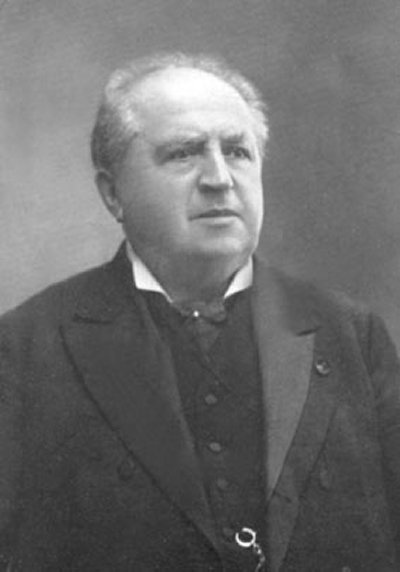
  • Common Grace, Invention, and Discovery

    Common grace issues from God, and from God come all the means that we humans must apply to oppose sin and its consequences in curse and misery. But it is God himself who leads us to find the means and instructs us how to use them. And it is precisely the latter that is forgotten. The human inventor of the electric light and electric motor is extolled, but God, who led Edison to discover it, is passed over. This severs the connection between what we might call our higher and our lower life. This is exactly why Scripture again and again emphasizes that the beginning of all learning—the starting point for all of our knowing and our abilities—lies in the acknowledgment of God as the source of common grace, or, as it is put succinctly, in “the fear of the Lord” [Prov 9:10].

    For this reason the proverb says, “They that seek the Lord understand all things.” This, of course, does not mean that a godly man does not have to apply himself to studying; quite the opposite is true: the one who has God as the starting point has the best prospects of succeeding in study. Praying well is...

  • The looming crisis of European imperialism

    Part I: The politics of Islam in Algeria

    Islam in Algeria requires a short explanation. The Muslims in Algiers, insofar as they are Berbers, are of weak faith. To the extent that they abide by Islamic tradition, they are primarily Malikites, although Hanafism is steadily gaining ground. But they hardly bother with the faith’s formal demands, quietly put forward their own traditions under the name of adaa, and participate little in the worship of the mosque. Although they felt deeply aggrieved by the confiscation of haboes -- goods which belonged to the mosques, the imams and muftis wield little authority here. Yet they are pure Muslims, even tending toward frenzied outbursts from their fanatical hearts, which suggests that their faith has a much more mystical than ritual character. Only the group of M’zabim that live at the four oases in the south exhibits a more Wahhabist tendency; otherwise, Muslims in Algeria trend almost exclusively toward the marabouts and the religious orders with their zaouias. These marabouts form separate families and so prefer that their men marry a marabout daughter, especially if she belongs to the shorfa (that is, to the line of sharifs), since as a...

  • At the manger

    I didn’t get a full appreciation of Bethlehem until Christmas day when, after a light meal, I mounted the balcony and beheld the entire Serai district before me. Imagine a rectangular area, thirty meters wide and four hundred meters long, bordered by fairly high white stucco houses. They all have roofs divided from each other by walls of uneven heights—a picturesque scene. The whole population of Bethlehem stood on this long row of roofs, closely packed in neat, bold-colored, and celebratory clothing, waving and shouting and singing to await the arrival of the procession. On our calendar, of course, it was the Christmas feast of the Catholics; that of the Greeks follows fourteen days later. But the inhabitants of Bethlehem celebrate Christmas twice a year, so at today’s Roman Christmas festivities many Greeks were found heartily celebrating as well. Turkish forces were present along both sides of the square ostensibly to keep things calm, but they were watching the festivities more than anything else since there was not even a hint of trouble. The people were up on the roofs, not in the street. After a moment the Patriarch appeared, followed by his retinue led by the French consul. They...