
I landed at the Manchester airport via a redeye flight at 7:50 am and took the train to the heart of the city, emerging from the station needing to get my bearings. I’d never been to England before, not to mention Manchester. I quickly found a public map and noted that the university wasn’t far, and my hotel, the Luther King House, seemed to be just a short walk beyond. Unbeknownst to me, the map was not to scale. Jetlagged and sweating, overdressed for the bright July morning, I began my three-mile march.
A gloomy litany of wrongs with the world today can miss much that has gone right. Must we always choose sides?
On the way, I started to get the feeling that something here had gone terribly … right. The air was fresh and clear. Families picnicked in lush parks. Where was the pollution? Was it too early in the morning for crime? At one point later that day, a hooligan teenager, hearing my accent, called me a “Yankee” (along with an enthusiastic, expletive-laden greeting), and I sensed a lingering kinship to a metropolis much closer to home: Detroit. There was a time not so long ago when these cities shared more in common. Both have famous music scenes. Both have football (of different sorts, but still). Both are known for industry. But while Motown had just gone bankrupt the year prior, Manchester—at least by appearances to this Yankee observer—seemed to be thriving.
I begin with this personal anecdote to set a contrast. Paul Kingsnorth picks up polar opposite vibes from the modern world in his book Against the Machine: On the Unmaking of Humanity, and he thinks you do, too:
The future is STEM and chatbots and cashless parking meters and economic growth and asteroid mining forever and ever. There is no arguing with it. You can feel the great craters that it makes in the world, you can feel what is being tarmacked and neatened and rationalized into oblivion, and the depth of what is leaving, but you cannot explain or justify it in the terms which are now the terms we live by. You just know that something is wrong.
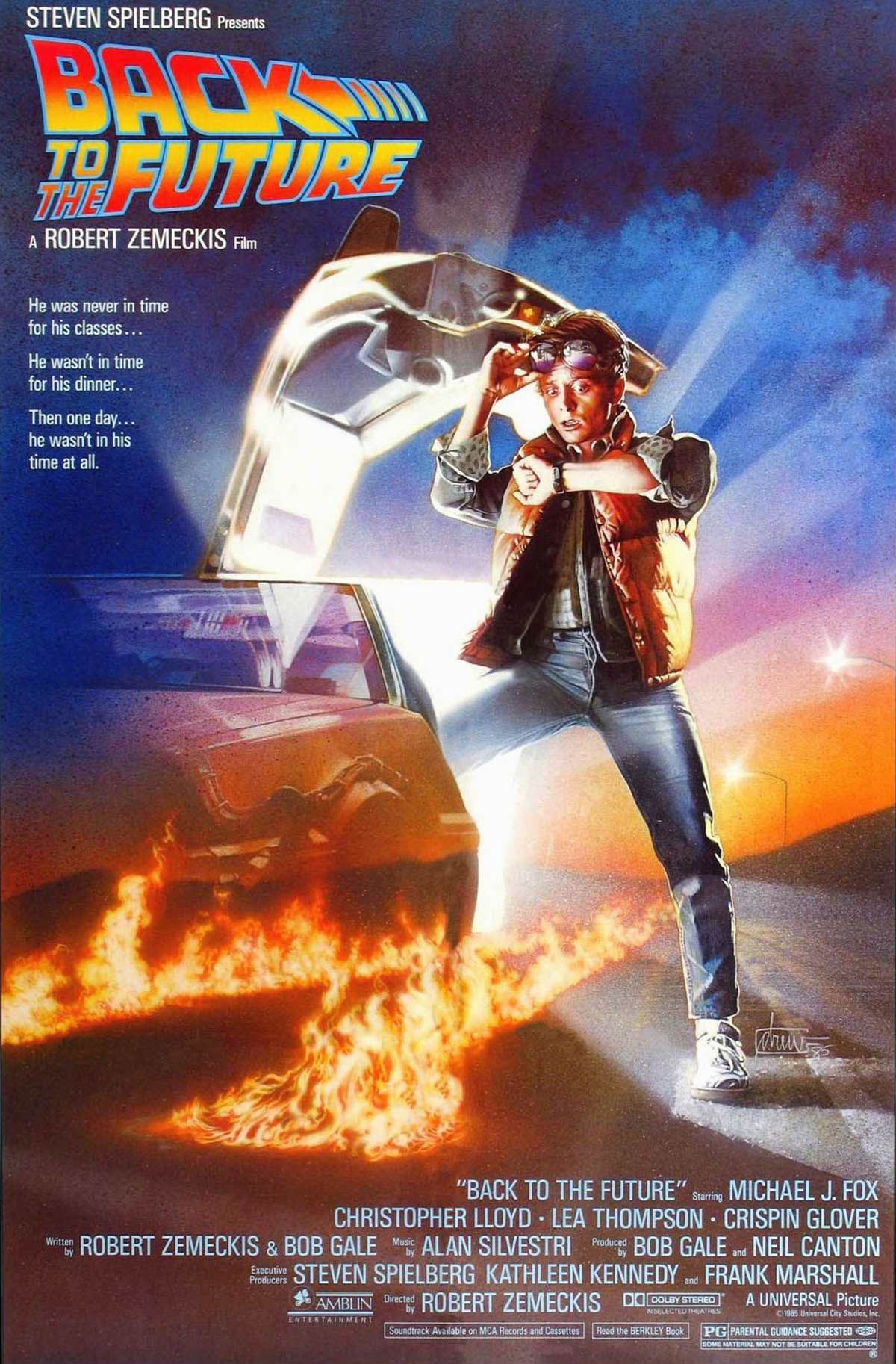
Like Kingsnorth, I have an appreciation for fantasy novels like The Lord of the Rings and The Chronicles of Narnia. But growing up on Star Wars, Back to the Future, and other science fiction of the 1980s and ’90s, “cashless parking meters and economic growth and asteroid mining forever and ever” mostly sound like good fun to me.

By contrast, Kingsnorth’s book largely consists of a long, gloomy litany of all the things, real and imagined, that are wrong with the world today. He has an explanation for it all: what he calls “the Machine,” gestured at by poets, novelists, and filmmakers beginning in the 20th century. “This triumph of the mechanical over the natural, the planned over the organic, the centralised over the local, the system over the individual and the community: this [is] the tale of our time,” he writes. Kingsnorth indicates some of the abuse he’s suffered as a result of protesting the Machine: “Everybody tells you that you feel this because you are infected with something called ‘nostalgia,’ or that you picked up a dose of ‘Luddism’ or ‘Romanticism’ at a party or in a doctor’s waiting room. Basically, there is something wrong with you.”
Kingsnorth concludes his introduction by clearly stating the goal of the book, a virtue too few books these days possess: “If this book can be of some help in navigating the strange perils of the world that is rising—in pinning down this Machine in words, and offering up some alternatives to it—then it will have done its job.” Now, I’ve never met Kingsnorth, so I can’t say whether there is “something wrong” with him. I do think, however, that there’s something wrong with his social map. Like the map in Manchester Central that needlessly led me on an arduous trek, Kingsnorth puts his finger on something real, but the details are out of proportion and misleading. His feeling that something has gone wrong with the world is not entirely misplaced, but it is not the whole. My impression that something has also gone right is correct, too, and without a way to hold these two together, we run the risk of trying to invalidate each other’s experiences with arguments. Must we choose sides? Are we either against the Machine or for it? No.
Throughout
All this, however, misses Kingsnorth’s point. His account of these things is not always factually accurate, but he is not ultimately concerned with the facts. Indeed, he is concerned precisely with overvaluing the measurable and “objective,” with “left-brained” thinking that excludes the value of intuition and imagination. On this score, he reminds me a bit of the Orthodox Christian philosopher S.L. Frank. Writing in 1949, Frank argued that “reality in its living concreteness is wider and deeper than ‘the world of objective fact.’” Our relationships with others and, most importantly, our inner, spiritual life are not something other than reality. They are the “You Are Here” mark on any accurate map of the universe.
Kingsnorth grasps for what Frank found, but too often it slips through his fingers. For Kingsnorth, healthy cultures come from what he calls the “four Ps”:
- Past. Where a culture comes from, its history and ancestry.
- People. Who a culture is. A sense of being “a people.”
- Place. Where a culture is. Nature in its local and particular manifestation.
- Prayer. Where a culture is going. Its religious tradition, which relates it to God or the gods.
These elements at least partly resonate with Frank, though we’ll see divergences later. To these, Kingsnorth tells us, the Machine opposes the anti-culture of the “four Ss”:
- Science. Where we come from. Science can offer us a non-mythic version of this story and assert a claim as to the true (i.e., measurable) nature of reality.
- The Self. Who we are. The highest good is to serve the self and ensure its longevity.
- Sex. What we do. Both the highest means of sacral pleasure and, through public expressions of “sexuality,” an affirmation of individual identity.
- The Screen. Where we are going. The screen is both our main source of distraction from reality and the interface by which we are directed into the coming post-human reality of the Machine.
For Kingsnorth, the four Ss constitute the ideology—or worse, inverted “theology”—of the Machine. Wherever we see these things, we see the Machine. And for the sake of the four Ps, we must resist.
Economic development and environmental care actually correlate in the long run.
Kingsnorth offers a few different ways to do that. He says we need to tell better stories because culture and nations are just stories we tell ourselves. But all stories are about something, and Kingsnorth’s is all about the Machine. He also advocates “reactionary radicalism,” banding and disbanding with like-minded activists like jellyfish, living on the edges of the Machine, using its tools to fight it (such as, I presume, the personal website Kingsnorth has maintained since 2003 or the Substack he has cultivated since 2021). He even recommends asceticism, but it is only a tantalizing afterthought, and one on which he inadvertently casts doubt. Kingsnorth fears the Machine has penetrated even into the heart of Orthodox Christian monasticism, recounting his horror at seeing cars and smartphones on Mount Athos!
From a purely intellectual viewpoint, there are innumerable problems with this framing. The four Ss are hardly the opposite of the Four Ps. Even rearranging the order, I can’t figure out which corresponds to which. These elements themselves are only negative due to Kingsnorth’s descriptions. Sexualization is harmful, but without sex, we wouldn’t have any people, one of the four Ps! Atomistic individualism is harmful, but without the self, the inner core of personal identity, what is left to feel that there is something wrong with the world? Science is malevolent for Kingsnorth—except for environmental science, since it supports the story he’s telling. Smartphones do indeed come with temptations and distractions, but they can also be an aid to prayer. I have an Orthodox Christian psalter app with which I’ve been trying to pray one kathisma a day. If I forget an icon when I travel, I have the Christ of Sinai and the Virgin of Vladimir in my pocket all the time. Even readers who feel that something is deeply wrong with the world should also feel that something is deeply wrong with Against the Machine. “The Machine,” by my count, has 56 index entries in Kingsnorth’s book. “Christ” has only one. Those who stare at shadows are right to claim that all they see is darkness. But there is a “light” that “shines in the darkness” (John 1:5), and the darkness shall not overcome it. Jesus Christ is that Light. His teachings can illumine the darkness of our mechanistic, modern age. His story provides, as it has for two millennia now, the only subject about which a new cultural story can be told.

Once, seeking to trap him, the Pharisees asked Jesus whether it was lawful to pay taxes to Caesar. The Roman Empire was the ancient world’s Machine if ever there was one. The Pharisees game-theoretically calculated that their question presented Jesus with a lose-lose scenario: Either he says yes and the people would consider him a traitor and abandon him, or he says no and they can tell the Romans that he’s a revolutionary and have him arrested. But Jesus tells them to bring him a coin. “Whose image and inscription is this?” he asks. “Caesar’s,” they say. “Render therefore to Caesar the things that are Caesar’s,” says Jesus, “and to God the things that are God’s” (Matt. 22:20–21). Likewise, render unto the Machine the things that are the Machine’s.
The
S.L. Frank spoke of the inner, spiritual unity of life at the root of all social trust, using terms like sobornost, Godmanhood, and the kingdom of God, grounding this reality in the Incarnation. As Frank put it, “This organism is Godmanhood, the merging of human souls in God. This organism is what we mean by the church, in the most profound and general sense of this word. We thus arrive at the affirmation that every society is necessarily grounded in the church as the nucleus and life-giving principle of society” (emphasis in the original).

Alongside this, Frank spoke of “mechanically external” unity or obshchestvennost’—things like law, commerce, and technology; “the Machine,” we might say, but for Frank it had a more neutral meaning than it does for Kingsnorth. Frank does not hold back criticism for those who absolutize the Machine and exclude the realm of the spirit, but he does not altogether reject it either.
Theologically, we might think of the Machine as corresponding to “the world.” Christ warns, “Woe to the world because of offenses! For offenses must come, but woe to that man by whom the offense comes!” (Matt. 18:7). The world is often opposed to the Church. Nevertheless, “the world was made through Him,” and though “the world did not know Him” (John 1:10), “God so loved the world that He gave His only begotten Son” (John 3:16). Christ taught that “the bread that I shall give is My flesh, which I shall give for the life of the world” (John 6:51). His kingdom is like leaven in the dough of the world, seeds in its soil. His followers are salt and light in an otherwise corruptible and dark existence. Rather than oppose these two forms of unity, the Machine needs sobornost to have a soul. As Frank put it, “The fundamental … relationship between the church and the world” corresponds “to the relationship between grace and law.” And Christ taught, “Do not think that I came to destroy the Law or the Prophets. I did not come to destroy but to fulfill” (Matt. 5:17). Kingsnorth’s nearly Christless critique of the Machine would rather have us destroy the Law than fulfill it.
Coming
Those who stare at shadows are right to claim that all they see is darkness.
Frank continues a little later in the same work:
Tolstoyans are right when they say that by violence one cannot create good and destroy evil, that no externally mechanical activity of the state or of law can realize the most important thing: the inner acquisition in oneself of good, the free inner education of human beings, the growth of love in human life. But they are not right when, for this reason, they consider this whole sphere of life and activity to be unnecessary and ruinous.
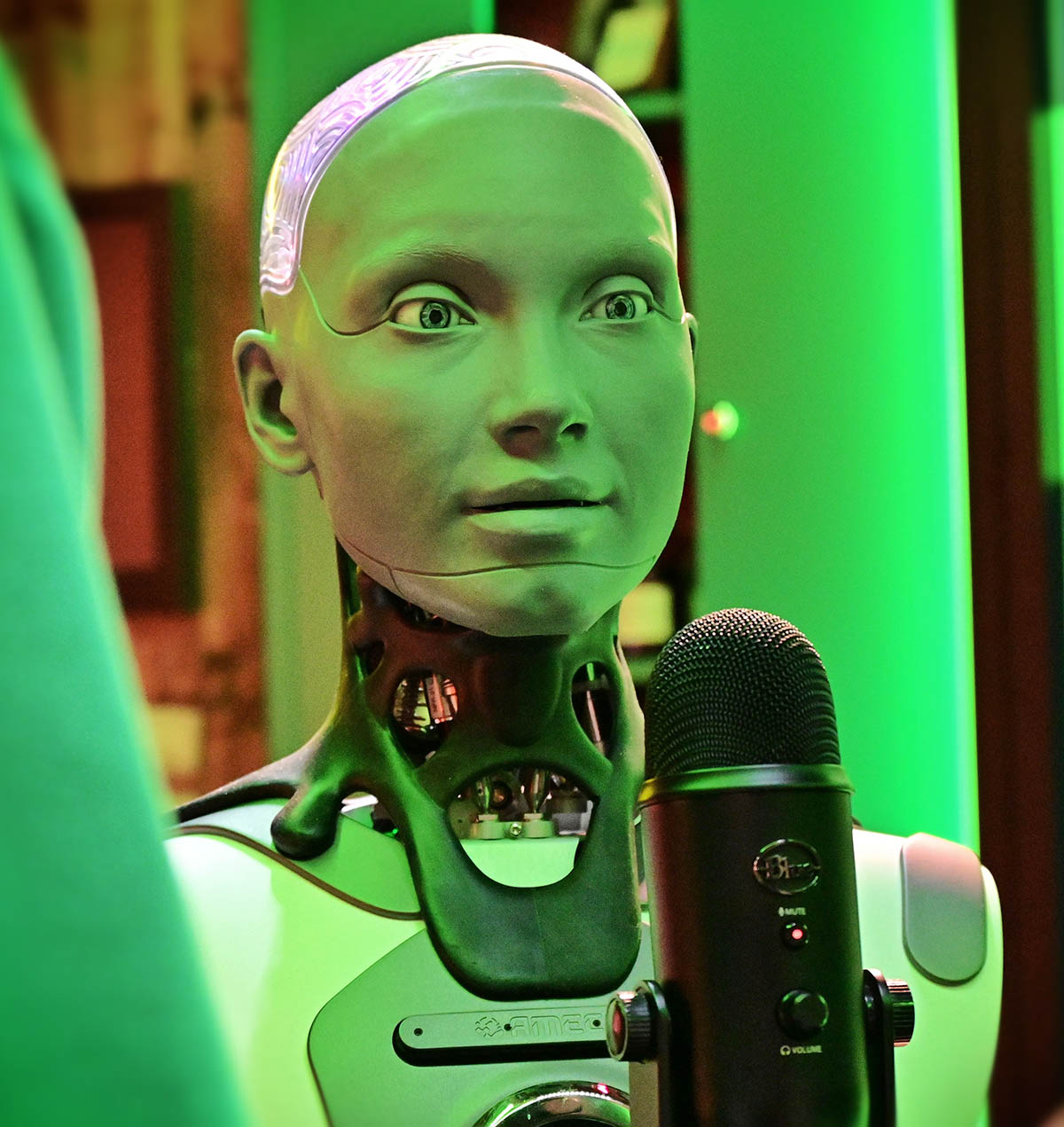
Along these lines, Kingsnorth worries about transhumanists—those who want to use technology to become superhuman. What he misses is that transhumanists fundamentally err when they think they can transcend humanity through technology, as if technology were something other than a human creation and an extension of our nature upon the world. Kingsnorth errs by accepting the same premise in favor of the opposite conclusion: that because technology (or “the Machine”) is presumed not to be human, one must reject it in order to preserve our humanity. Rather, neither technological romanticism nor radical rejection of it will ever give us what we want or need: the fountainhead of all true culture the world has ever known.
“Man,” wrote Frank, “is a being rooted in superhuman soil; this is the only valid definition of man’s being. He is this kind of being whether he likes it or not.” Without Christ, we are groundless. God’s kingdom is the true “place” we all need. Frank was born in Moscow. Exiled by the Bolsheviks in 1922, he knew the sorrow of seeing his homeland, his earthly “place,” destroyed by hostile forces, by the Machine asserting itself against spiritual life. Nevertheless, reflecting on his homeland in a series of lectures to young Russian Christians in 1923, Frank wrote:
We are drowning because the ground on which we tried to stand was actually quicksand, and sucked us in; but we are seeking solid ground beneath our feet…. Instead of sustaining our spirit, these “ideals” take it prisoner and demand from us self-sacrifice, the diminution and preservation of our life, in their name…. No, we need authentic ground: a spiritual reality which would be something other than our own “I” and which thus could support the latter…. We have to cling close to someone; we have to take hold of someone’s powerful and beneficent hand, and hold it for always.
Reading Against the Machine, one cannot escape the conclusion that Kingsnorth, too, has become wearied by a map not drawn to scale, by an ideal that has taken him prisoner and demands self-sacrifice.
Thankfully, the Lord’s “beneficent hand” reaches out to us wherever we are, whether an urban high-rise or the rural countryside of western Ireland:
Where can I go from Your Spirit?
Or where can I flee from Your presence?
If I ascend into heaven, You are there;
If I make my bed in hell, behold, You are there.
If I take the wings of the morning,
And dwell in the uttermost parts of the sea,
Even there Your hand shall lead me,
And Your right hand shall hold me. (Ps. 139:7–10)
I’m grateful to know that Kingsnorth has, in fact, taken hold of the Lord’s hand, having entered the Orthodox Church in 2021. He is therefore my brother in Christ, and I wish him consolation in his lifelong struggle. If I may slightly modify another Gospel passage, in the last analysis, we must all hear Christ saying to us, “In the Machine you will have tribulation; but be of good cheer, I have overcome the Machine” (cf. John 16:33). The only possible answer to all the darkness that troubles Kingsnorth is to look to the Light and “be of good cheer.”