


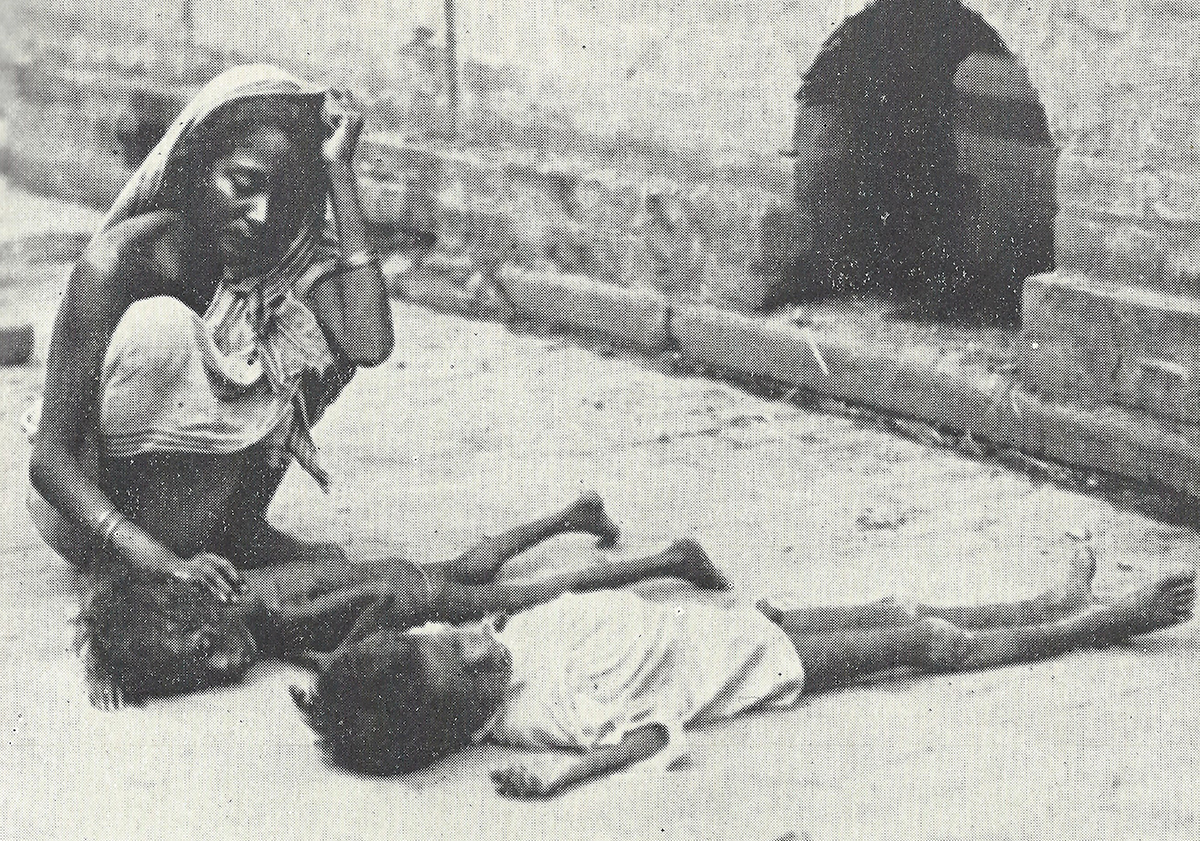
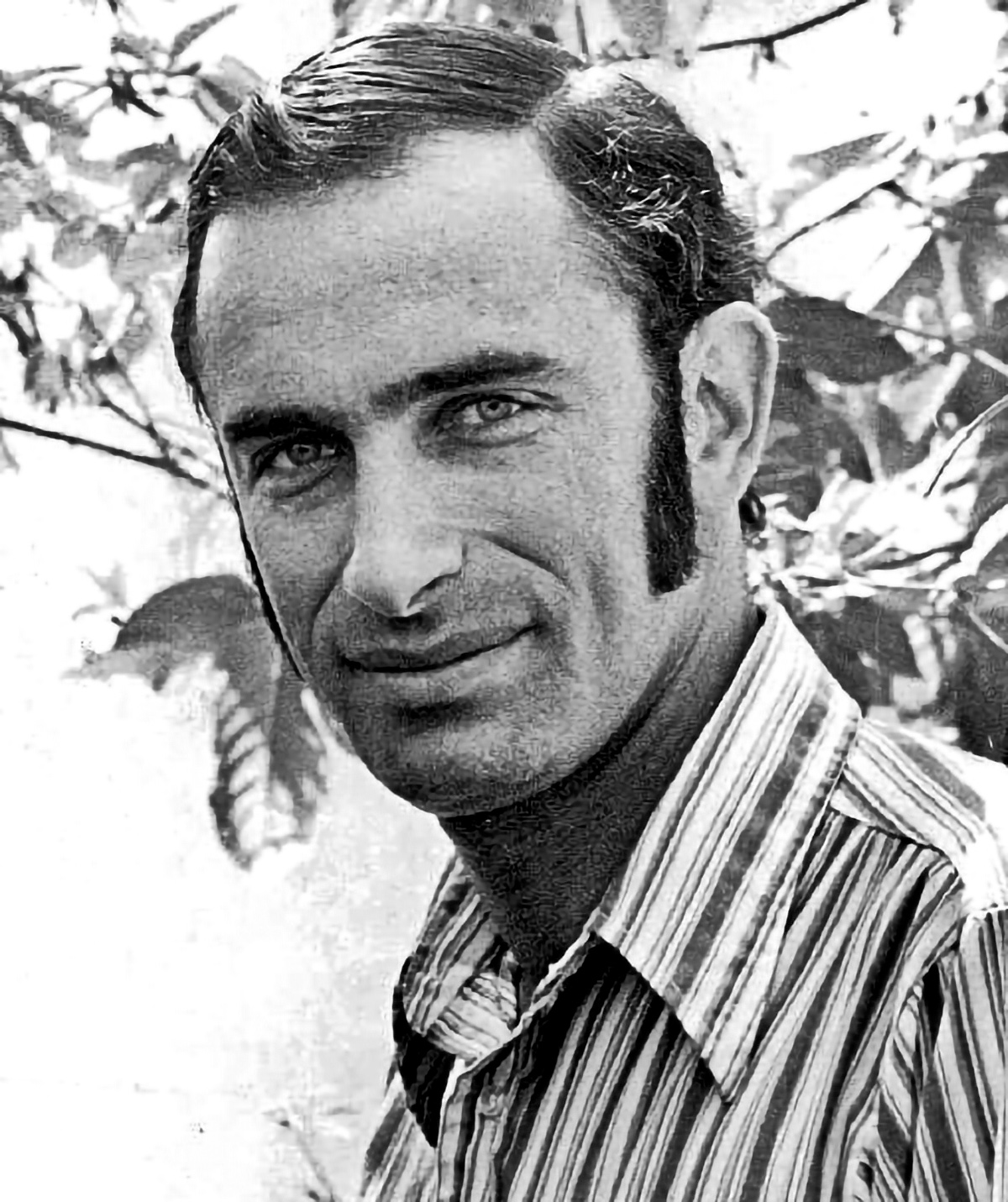
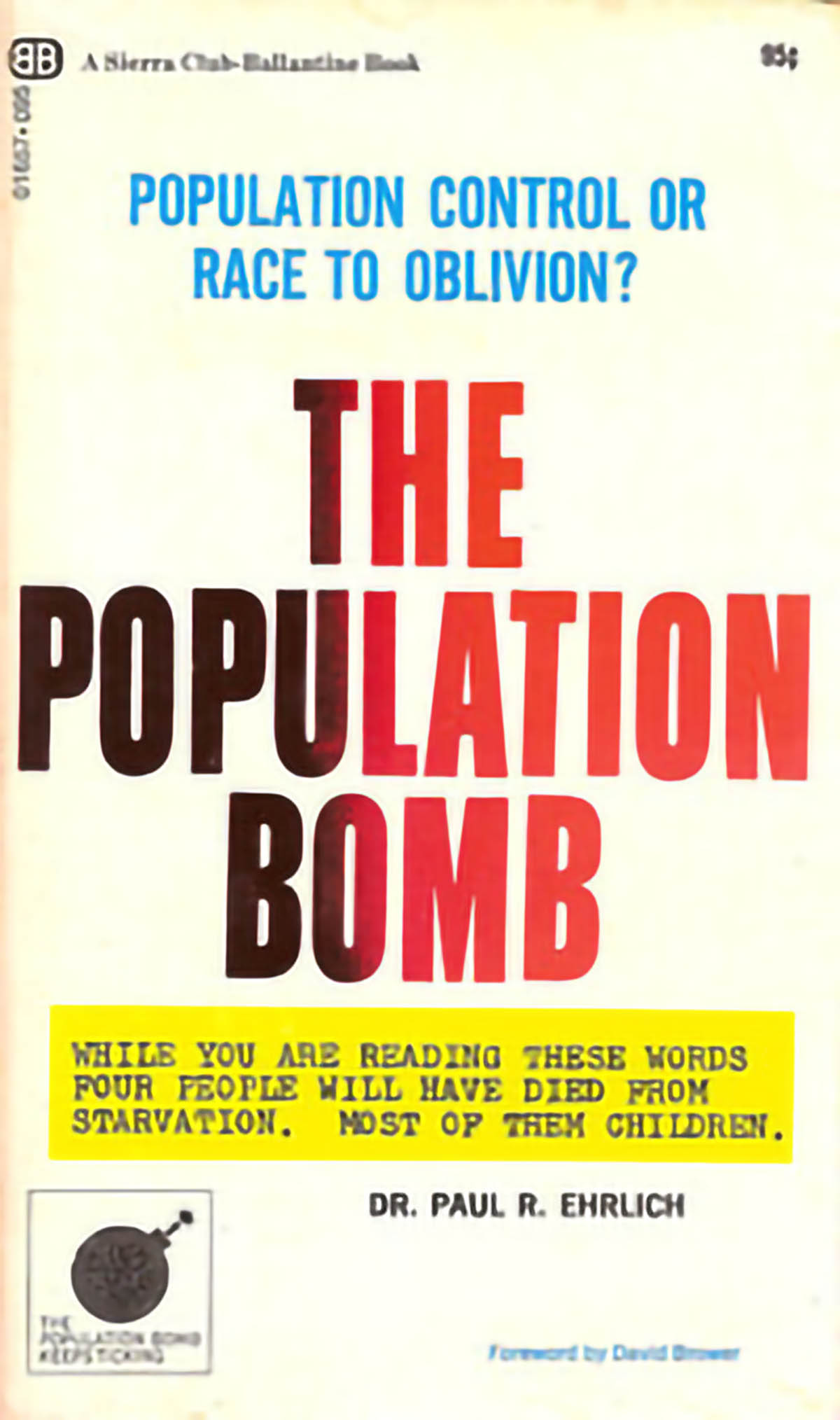
From 1966 to 1967, tens of thousands of people in the Indian state of Bihar died from drought-induced starvation. This was orders of magnitude less than the estimated two million policy-induced famine deaths suffered decades earlier by its neighboring state of Bengal (modern-day West Bengal and Bangladesh). Yet the suffering in Bihar garnered arguably more attention than the Bengal famine of 1943 due to the work of photojournalists like Thomas Hoepker, who was awarded third place in the World Press Photo Contest for his evocative images of the famine. His unnerving photos of emaciated bodies, originally published for Stern magazine, haunted the imaginations of many Westerners. Then, just a year later, that discomfort turned into alarm when Paul Ehrlich published his bestselling book The Population Bomb, where he characterized his 1960s visit to Delhi in this way:
The streets seemed alive with people. People eating, people washing, people sleeping. People visiting, arguing, and screaming. People thrusting their hands through the taxi window, begging. People defecating and urinating. People clinging to buses. People herding animals. People, people, people, people. As we moved slowly through the mob, hand horn squawking, the dust, noise, heat, and cooking fires gave the scene a hellish aspect. Would we ever get to our hotel?
The implication was clear: The planet had more people than the earth could sustain. Mass famine was seemingly inevitable. Yet as disturbing as the widespread malnutrition of 1960s India (and later 1980s Ethiopia) was, it obscured a more fundamental reality: In spite of a booming global population, average annual deaths from famine was steadily declining and on the verge of plunging. According to scholar Alex de Waal, in each decade since 1980, that annual average has been merely 5% of historic levels. Ehrlich’s wildly inaccurate predictions never stopped him from advocating and promoting population control, however, using the power of the state to intervene when people refused to freely limit their own fertility. And many countries did, with horrifying human rights abuses and disastrous results. Despite clear evidence that humanity was experiencing growing abundance amid population growth, Ehrlich remained intransigent, warning until his final days that overpopulation would be our and the planet’s undoing.
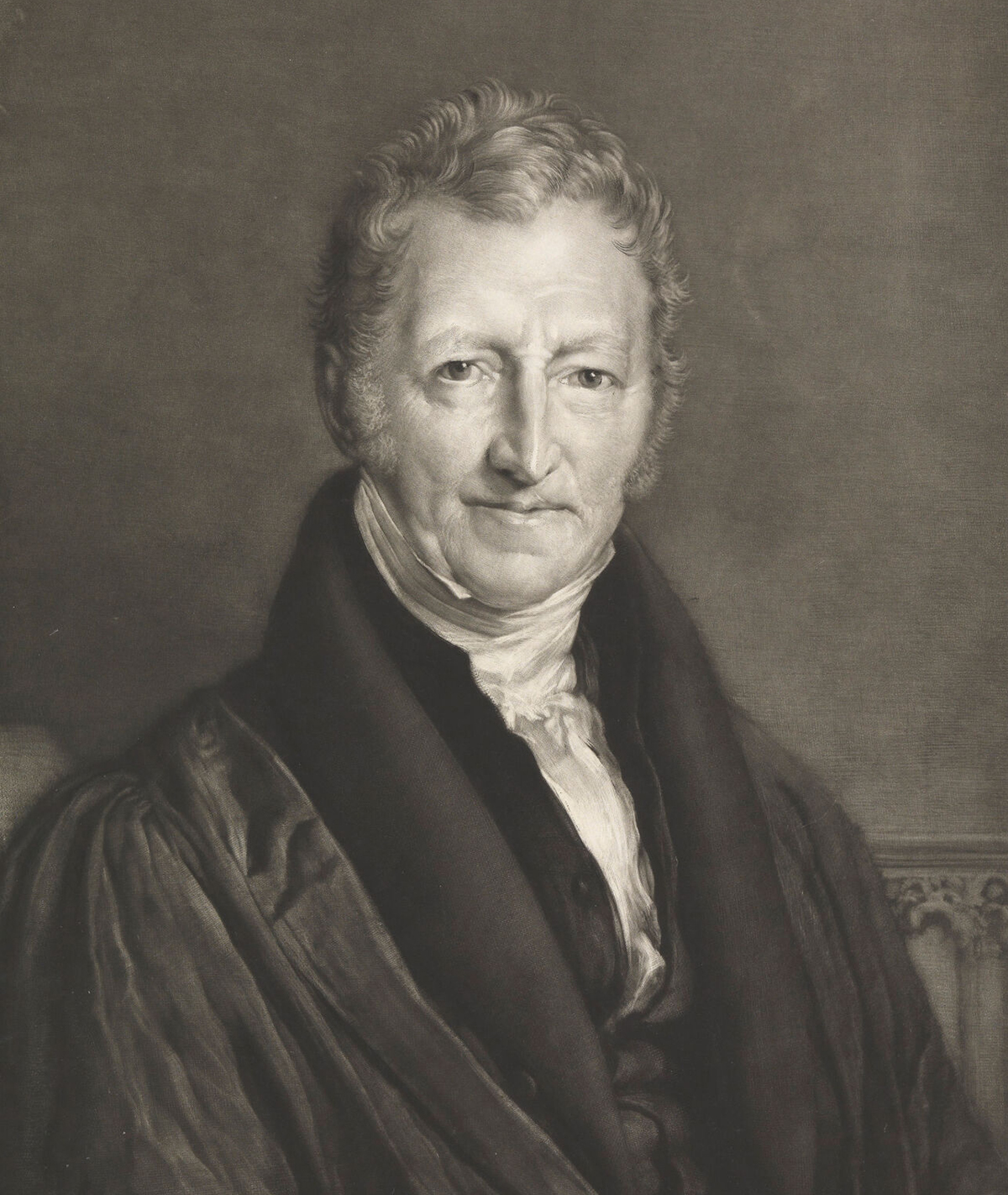
Perhaps I shouldn’t be so hard on Ehrlich, who passed away in March at the age of 93. He certainly wasn’t the first to be disturbed by the tension between the earth’s material scarcity and human thriving. Back in late 18th-century England, the squalid and impoverished conditions of many of his parishioners led the pastor and political economist Thomas Robert Malthus to write his famous An Essay on the Principle of Population, where he asserted that “the power of population is indefinitely greater than the power in the earth to produce subsistence for man.” And on its face, his assertion was not implausible. After all, for thousands of years humanity’s existence was characterized by high birth rates and high death rates and life expectancy was likely below 50. But all that was about to change. Global population began its historic boom in the early 19th century, and by the time Ehrlich published his bestseller the global population stood at 3.5 billion—more than triple the number of people in Malthus’s day. Even more astonishing was that the global population grew by 72 million people in a single year—that’s how many births exceeded deaths in 1968. Today the planet is home to roughly 8.3 billion people, and life expectancy has never been higher. Why did Ehrlich get it so wrong?
We must first understand what it means to be human if we are to avoid the recurrence of Malthusianism in all its forms and all its errors.
Paul
The Industrial Revolution launched an escape from material poverty that improved virtually every aspect of human life and drove a health transition that reduced the spread of infectious diseases and dramatically improved nutrition. Debilitating and even life-threatening diseases like polio, smallpox, and pneumonia ceased to be the widespread menaces they once were, and in a single century the global irrigated land area increased nearly sevenfold, to 274.2 million hectares. Today the global daily caloric intake is estimated to be nearly 3,000 calories per person, 50% higher than that of the best European diets a mere 250 years ago. By the mid-20th century, global life expectancy was nearly two decades longer than it had been in 1900. The health transition enabled the demographic transition, where life expectancy rose hand in hand with declining fertility. Humanity’s ability to acquire new knowledge and scientific understanding improved our collective ability to live and thrive.
But it wasn’t just new ideas that enabled the health and demographic transitions. The Industrial Revolution emerged in those parts of the world where basic human rights and private property were largely respected, and where democratic institutions opened the doors to a vibrant civil society. Those institutions enabled modern free enterprise to emerge, providing the best conditions for humanity to adapt to a world of scarcity. This points us to Ehrlich’s second error: He, like most Malthusians, underestimated the practical importance of human reason and market incentives. Unlike animals, human beings use their reason to adapt their behavior, and within the framework of a free economy, human reason responds to the incentives shaped by the price system. When a price rises, consumers temper their demand and look for alternatives, while producers are motivated to increase production or find new sources of supply. Built into the system of free enterprise, rooted in private property and the rule of law, are incentives to best adapt to the condition of scarcity.
Ehrlich’s third error pertains to human uniqueness. Humanity also overcomes the Malthusian curse through the division of labor where people can specialize at what they do best and in the process become more productive. High population density amplifies the division of labor, which in turn amplifies the exchange of ideas and innovation. This was one of Adam Smith’s great insights in An Inquiry into the Nature and Causes of the Wealth of Nations, where he illustrates the division of labor by explaining that a handful of workers specializing in one aspect of pin-making can produce thousands of times more pins than those same workers attempting to make pins individually from start to finish. When placed in a legal and economic framework conducive to leveraging their gifts and talents, human beings are able to maximize their creative potential, use their reason to adapt to market signals, and enhance their productivity through the division of labor. To paraphrase Julian Simon, economically speaking human beings are the ultimate resource.
The
But is there an inevitable war between people and planet? No. Although human activity can and obviously has caused environmental harms, the same principles that enable humanity to avoid famine also apply to other problems, including environmental challenges, and there is evidence humanity is succeeding on this front, too. Consider these brief examples. Hans Rosling, the late physician and professor of international health, pointed out several environmental harms that were declining, such as smoke particles emitted per person and the number of tons of ozone-depleting substances in the air. Environmental data scientist Hannah Ritchie notes that many endangered species are now being restored. Economic development is growing faster than carbon emissions and, more surprisingly, can even occur without those emissions increasing at all. Since the turn of the century, global carbon emissions per capita have increased roughly 16%, while real global GDP per capita has increased by two-thirds. Meanwhile, in the United States our energy consumption since the turn of the century has slightly fallen even as our population increased 19% and our real gross domestic product increased by over 60%. While some of these gains have occurred in the midst of outsourcing energy-intensive activities, technological advances have enabled the U.S. to dematerialize many economic outputs.
In sum, a growing population is not inherently at odds with a clean environment; rather, the growth and flourishing of humanity and other species can and should go together. Indeed, human well-being and environmental well-being are deeply interconnected. In their book The Biophilia Hypothesis, editors Stephen R. Kellert and Edward O. Wilson assemble the contributions of diverse scholars on humanity’s connection to nature, describing biophilia as an idea that “powerfully asserts that much of the human search for a coherent and fulfilling existence is intimately dependent upon our relationship to nature.” Our often-frenetic lifestyles, coupled with rapid urbanization, can leave us disconnected from nature, and consumerism can drive us to accumulate ever more material goods, thinking they will make us happy. But this relentless consumerism will never satisfy. Nature can help us, and evidence is accumulating that the health benefits of spending time in nature include improvements in cortisol levels, blood pressure, and emotional well-being. Human beings create environmental problems, for sure. But at the same time history demonstrates that our ability to solve those problems is even greater! Since human beings are net problem solvers, what does that tell us about the challenge of population decline?

Sub-replacement
Not only are some countries much older than others, but the population of the entire planet is aging. In 1970 the global median age was estimated to be 20 years old. Today it is 31 years old and varies widely by region. In 2019 the world experienced something unprecedented: Humanity had more people over the age of 65 than children under the age of five. That ratio is growing rapidly, and by 2030 the population aged 65 and over is estimated to exceed those under the age of five by 50%. Our present global age structure is one that our species has never before experienced, with foreseeable consequences for economic vitality and the solvency of social insurance programs. More importantly, population decline entails foregoing some of the economic benefits arising from innovation, entrepreneurial creativity, and the division of labor that more people bring to our world. And unlike suppressing population growth, boosting it is far more difficult. Here’s why.


Economists employ the language of supply and demand to frame fertility choices. Access to modern contraceptives upended the so-called supply side and made it much easier to suppress fertility. On the demand side, society’s preferences for children has waned: The ideal number of children in the United States held steady for much of the 20th century, then dropped precipitously in the early 1970s. Declining fertility reflects both changing choices and circumstances. There are people who want children (or more children), but the desire for children is not sufficient to have them. Coupling is declining (often not by choice), and evidence suggests the prevalence and incidence of infertility may be rising. Countries are seeing substantial increases in the percentage of women who end up childless—again, often not by choice.
In a 2025 study, economists Michael Geruso and Dean Spears found that among advanced economies, the increase in childless women explains 38% of overall fertility decline. The phenomenon of rising childlessness is global. In the United States, the percentage of women aged 40–44 who were childless stood at around 10% back in 1976. In 2022 that number had increased to 17.7%. In Asia “permanent childlessness” (assumed at age 50) is approaching 3 out of 10 women in Singapore, Japan, and Hong Kong, with South Korea and Taiwan not far behind. The story is similar in Europe, with nearly a quarter of German women experiencing childlessness, and similar rates are appearing in Spain, Greece, and Italy. Some of this reflects shifts in the preference for children but also is a consequence of circumstances outside anyone’s control. Demographer Lyman Stone reports that actual fertility continues to fall even though desired fertility has effectively stabilized—which is to say, many people find themselves, for one reason or another, obstructed from achieving their desired number of children. It takes more than mere desire to have children. Circumstances matter. This is why boosting fertility is more difficult than suppressing it.
If
As soon as we were born, we needed others in order to live; left to ourselves, we would not have survived. Someone else saved us by caring for us in body and spirit. All of us are alive today thanks to a relationship, a free and freeing relationship of human kindness and mutual care.

The waning presence of children across so many developed countries elicits an examination of fundamental, existential questions such as: What do I make of my own life? Do I accept my own life as a gift received from my parents? If I marry, do I have any transcendent or social obligation to transmit that same gift to others? This draws us to the very essence of human relationships. None of us is self-created. We enter this world in need of others, and most of us return to a needy state when we grow old. These deeper questions about purpose and meaning were eclipsed by the false alarmism of the global population control movement of the 20th century.
Human life is always and everywhere a gift. We all need others throughout our lives, and we need parents, male and female, to bring us into existence. We also need our environment: plants and animals, oceans and forests, to supply our basic needs. A disposition of care is ordered toward nurturing the well-being of others and our environment as a whole. Which leaves it in our hands as individuals to rethink the default assumptions we might have absorbed about the sources of economic prosperity, the relationship between people and the planet, and the language of our bodies. In short, human beings are indeed the ultimate resource, but we are not merely this. As Pope Benedict XVI once remarked, “Each of us is the result of a thought of God. Each of us is willed, each of us is loved, each of us is necessary.” It is this understanding of humanity that must prevail if we are to avoid the recurrence of Malthusianism and all its errors.
(Editor’s note: This article is adapted from the author’s forthcoming book, One More: The Case for A[nother] Child[Word on Fire], cowritten with Kimberly A. Barrows, M.D., and appears here in condensed and revised form with the publisher’s permission.)