



“Compassionate conservatism” is not a phrase you hear often these days, but at its height it represented a new brand of Republican governance. Compassionate conservatism originated with a coherent understanding of the cause and impact of civil society’s reversal across the 20th century, the result of an increasingly mechanistic approach to solving social problems. Previously, America had been celebrated by Alexis de Tocqueville and others as a bastion of voluntary association, relying for social cohesion and problem-solving on the marketplace, but first and foremost on family, church, civic groups, charities, and mutual aid societies. In Liberty Lost: The Rise and Demise of Voluntary Association in America Since Its Founding, Robert E. Wright lays out the almost comical number of clubs and organizations that Americans started for the purpose of solving problems, debating ideas, and entertaining themselves. These served to create strong social bonds and networks, regardless of the particular goals of this or that organization. However, the rise of progressivism at the turn of the 20th century created an elite class of expert planners whose regulatory schemes, administrative agencies, and massive reorganizing of social, cultural, and economic life crowded out these organic social institutions.
Bush-era attempts to rebuild civil society focusing on the private sector failed largely because they mimicked government mechanisms. Now something new that avoids this trap is being implemented across the country.
So on the cusp of the 21st century, the “compassionate conservatives” proposed a two-part prescription to reverse the tide. In application, only the first part of that prescription was implemented, and the resurgence foundered on the shoals of the New Deal, government-focused consensus. Yet the prescription is still viable if we learn from the mistakes of its implementation, even as another movement—“effective charity”—has hoisted the banner and is setting sail to change the course of the 21st century by rebuilding a robust civil society.
Viewed as a social movement, we can understand compassionate conservatism as having a basic worldview, which leads to a diagnosis, prognosis, and motivation, and which culminates in a set of distinct tactics. Although not the originator of the term, Marvin Olasky was the primary articulator of compassionate conservatism. Based on his recounting in the foundational work The Tragedy of American Compassion (1994), here’s how the movement broke down.
Worldview: Individuals, families, and voluntary associations have the capacity to be charitable and build the relationships that humans need for flourishing. They can implement approaches that are “challenging, personal, and spiritual,” which will always be superior to approaches that are based on “entitlement, bureaucracy, and secularism.”
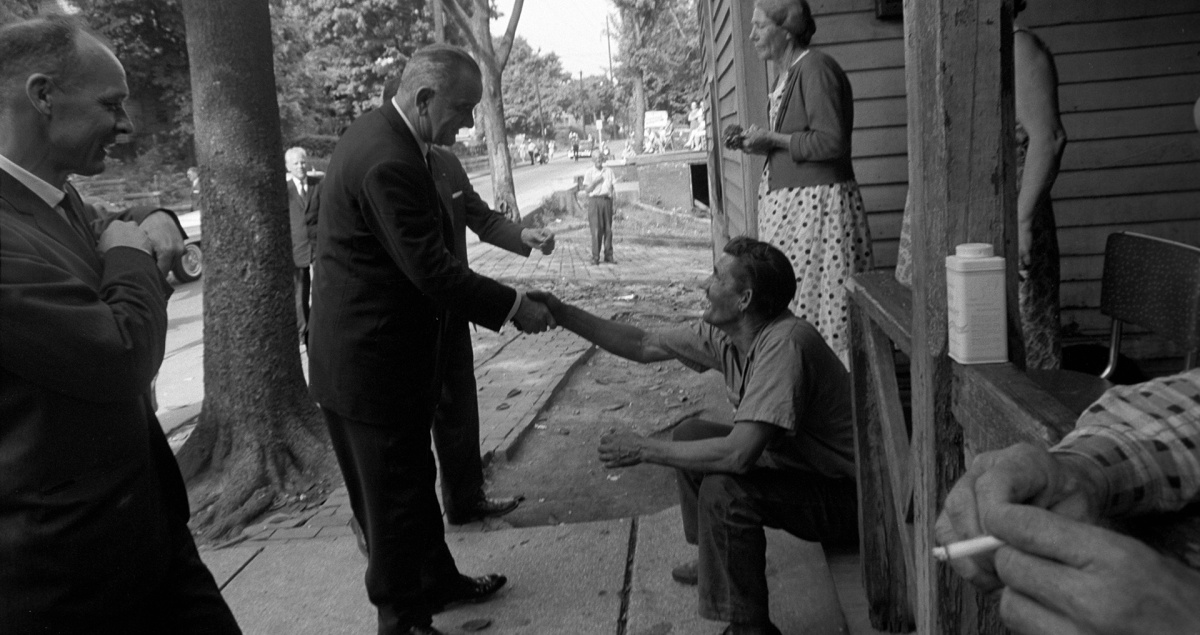
Diagnosis: At the end of the 19th century, a new theology dubbed “the Social Gospel” strove to establish God’s kingdom on earth now through Christian influence on structural powers such as the government. Theological backlash to this new “gospel” caused the churches to step back from direct service to the poor, whereas its steadfast proponents became embedded in state-driven solutions to poverty, starting with the New Deal and continuing through the War on Poverty in the 1960s. By the 1990s, this had manifested in entrenched bureaucratic systems that guaranteed indefinite support to certain protected classes (such as single mothers). In addition to the religious retrenchment, mutual aid societies and various nonreligious civil society associations had also dried up. According to Wright, this was owing to the government’s outsized role in providing services.
Unfortunately, this centrally planned alternative to civil society had done about as poor a job in alleviating poverty as the Soviet state had done at getting rid of market inefficiencies. The New Deal consensus had paved over a robust civil society ecosystem and put in a parking lot.
Prognosis: Going forward, the solution to such stagnation was twofold (1) the welfare state needed to be pared back to reduce perverse incentives and funding crowd-out, and (2) civil society needed to reclaim its rightful role. The “parking lot” needed to be ripped up and civil society re-seeded.
Motivation: With an emerging small-government consensus (e.g., Bill Clinton’s promise to “end welfare as we know it”), it seemed that the ’90s were the time to roll back the welfare state and the 2000s were the years to replace it with civil society–driven alternatives.

Tactics: To implement the two-part solution, welfare reform was required, and “something else” was required to reinvigorate civil society. For Olasky, the “something else” was a strategy of “charitable choice” tax credits, which would encourage more money to flow toward civil society without restricting the challenging, personal, and spiritual character of private aid. This alternative avoids the pitfalls of direct government financing, including its tendency to limit creative approaches (particularly when they are religious in nature) and to mire efforts in bureaucratic tasks that require professionalization and standardization.
Whether this would work was always speculative, as it is possible for the government to create problems it cannot solve. It had presided over the squelching of privately directed poverty-fighting efforts, but merely shifting into reverse wouldn’t necessarily reinvigorate such efforts, at least not in a short enough timeframe to be politically viable for a compassionate electorate insistent that “something must be done now.”
The
In the decade that followed welfare reform, caseloads declined about 60%, and there were 30% employment gains among low-income single mothers, as well as boosts to earnings of 136% and overall income increases of 25%. Criticism was focused on the observation that the safety net shrank faster than poverty did, though notably such analysis would never consider any offsetting expansion of private aid, as it would rarely be categorized as income in official government measures of the data.
In the decade that followed welfare reform, the caseload declined about 60%, and there were 30% employment gains.
Though this reform substantially addressed the major welfare program of its time, cash welfare, it did not address programs that subsequently grew and largely replaced the problems of the original cash welfare system—namely, Medicaid, Supplemental Nutrition Assistance Program (SNAP), and disability. To this day, the number of recipients of cash welfare (i.e., Temporary Assistance for Needy Families) remains small at 2 million compared to the number of recipients of SNAP at 42 million.
With the first round of peeling back the “parking lot” pavement completed, the standard bearer for the second phase was President George W. Bush, an early adopter of the language of compassionate conservatism. Now it was time to replace a fraction of the welfare state with something new.
In a column for the Discovery Institute titled “A Missed Opportunity,” Olasky recalls a campaign speech by Bush in Indianapolis. Olasky consulted on the language Bush would use to define his slogan “compassionate conservatism” and made sure it emphasized “bottom-up” solutions, free from “the failed compassion of towering, distant bureaucracies.” His weapon was tax credits, since that would allow “individuals [to] choose who conducts this war on poverty—and their support won’t be filtered through layers of government officials.”
But alas, it was not to be. At first, the plan seemed to be working. According to Olasky: “In 2001 Bush, in the White House, fulfilled one campaign pledge by prioritizing a huge tax cut. Charles Grassley (R-Iowa), who chaired the Senate Finance Committee, made sure that charity tax credits were in the tax cut bill the Senate passed. Finance experts estimate that the tax credits would lead to 12 million new givers, increase giving levels by 11% percent, and stimulate an additional $15 billion in charitable giving.” But as Grassley’s bill evolved, the White House told him to get rid of the tax credit. The 3.5% of the tax cut that made up the tax credit for charitable giving needed to go to a reduction in the estate tax instead.

While Bush may have agreed with much of Olasky’s framing, he interpreted the tactics differently. According to the Bush administration:
The truest kind of compassion doesn’t only come from more government spending, but from helping citizens build lives of their own. The aim of this philosophy is not to spend less money, or to spend more money, but to spend only on what works.… Government should promote the work of charities, community groups and faith-based institutions. Government should view Americans who work in faith-based charities as partners, not as rivals. When it comes to providing resources the government should not discriminate against these groups that often inspire life-changing faith in a way that government never should.
While holding voluntary associations in high regard, Bush also saw the government as a valid nexus of compassion that could channel tax dollars to those organizations. He believed the organizing and funding agent of the community could be the government. This approach was, quite simply, not at all what Olasky had in mind with the phrase “compassionate conservatism,” and yet it is certainly what people think of today when they hear that phrase.
To be fair, Bush wasn’t starting with the blank slate of a Tocquevillian civil society and a frontier spirit, but rather with the infamous “Bowling Alone” loneliness crisis resulting from decades of government crowd-out and other social upheavals. And, as a politician, Bush had to engage in the art of what was politically possible. Regardless of what he may have intended, Bush’s compassionate conservatism at home was primarily implemented through two avenues: education reform and increasing access to government funds for faith-based organizations (FBOs).
The idea of education reform as a key part of provision for the poor is fundamentally sensible, though enough time has elapsed to assess both benefits and limitations of the No Child Left Behind Act. In the general consensus, Bush’s understandable desire to hold schools to high standards had the unintended effect of creating the ‘teaching to the test’ phenomenon lamented on both the right and the left. It also failed in its goal, even on its own terms, to significantly improve student outcomes. It’s a good lesson in the principles we are discussing here: while sweeping legislative policies can feel hopeful because we want something that will work quickly and everywhere at once, they often miss root causes and create new problems without solving the one they were meant to address.
If your neighborhood food pantry mimics a government program in its operation, it matters very little whether it is government funded or not.
The key tactical divergence, however, from Olasky’s prescription was that Bush did not implement the tax credits that would have caused people to direct more of their money to faith-based entities. Rather, he sought to open the coffers of government directly to those organizations, which naturally resulted in their becoming beholden to the associated rules and regulations. In many cases, they were forced to adopt the same principles of government implementers—namely entitlement, bureaucracy, and secularism (or at a minimum, segmentation of faith from nonfaith elements).
In the end, this strategy resulted in no appreciable expansion of civil society. A study of the three years following the emphasis on funding faith-based grassroots organizations showed that there was no increase in dollars to FBOs in absolute terms, though there was a consolidation toward larger entities. In Olasky’s view, this tactical pivot was perhaps the preeminent failure that prevented the second phase of compassionate conservatism from meaningfully providing an alternative to the welfare state.
Since the Bush era, the basic lines of effort have continued to evolve. The success of the ’96 welfare reform has opened a way for the recent expansion of work requirements for Medicaid and SNAP. While there’s still much crowding out to be pulled back, this political moment does afford increased opportunities for civil society to step up. And a looming fiscal abyss and elder-care crisis suggests that funding for the welfare state is not likely to grow over the next couple of decades.
Thus, we find ourselves in a position similar to the 1990s: The paring back of big government entitlement programs is on track, but it remains to be seen whether civil society will step up and secure the mantle that the government is releasing.
In an analog to the school reform efforts of the Bush administration, the current school choice movement seems to offer a better path forward for economic and social mobility. In higher education, the backlash to credentialism, a generational questioning of the return-on-investment of college, and demographic shifts also create increased competition for community colleges and technical and trade schools to deliver more value at a lower cost.
Even with these tailwinds from academia, civil society has much work to do to restore the communal safety net of a previous era. It is also worth noting that the tightest ties of civil society in America’s past were often concentrated in ethnic enclaves; the modern version will have to build community across ethnic and cultural lines.
Fortunately,
First, one of the elements overlooked in the early 2000s variant of compassionate conservatism was that, although civil society had the potential to be far better than government programs, in practice it often wasn’t. If your neighborhood food pantry mimics a government program in its operation, it matters very little whether it is government funded or not.
In answer to that problem, the constellation of organizations forming the effective charity movement sharpen a civil society approach. These books, associations, and think tanks provide resources to help private and local organizations do a better job of leaning into the strengths inherent to their design. In the intervening years, works emerged to address this realization: When Helping Hurts by Brian Fikkert and Steve Corbett, Toxic Charity by Bob Lupton, Lessons from the Least of These by Bob Woodson, and the many works of John Perkins. (Both Bob Woodson and John Perkins passed away this past summer. Their memories are a blessing.) There seems to be both a keen grasp of our need for more organic approaches to social problems and a revolution in the tactics of our voluntary organizations.
In an analog to the school reform efforts of the Bush administration, the current school choice movement offers a better path for economic and social mobility.
In addition to an increasing efficacy, there has also been an explosion of human service nonprofits, with the number of organizations quadrupling, from 30,000 in 1992 to over 120,000 in 2025. While Americans give away a lower percentage of their disposable income than in previous decades, and giving is less broad-based, rising prosperity means that the number of inflation-adjusted dollars for charitable services has steadily increased (roughly doubling since 1990, against a population growth of 40%). There has been a concurrent decline in strength of faith communities, however, but on the whole there is much civil society capacity. It might also be underestimated how much a civil society expansion of this kind could, in fact, reinvigorate communities of faith. To paraphrase John Paul II, “Love grows through a shared project.”
Second, there is a growing awareness that while legislative reform is needed beyond simply reducing government programs, the most productive legislative reform will involve state agencies intentionally referring clients to civil society entities. The state-sponsored “Hope Florida” case-management program is clear in its recognition that
government is not always the best solution to the problem. Instead, government is utilized as a meaningful connection point and then gets out of the way. Our partnerships with the private sector, faith-based communities, and nonprofits bridge the gap between Floridians in need and local community resources available to them.
Other states are launching similar experiments: Consider Thrive Iowa and the Tennessee-based Human Flourishing Initiative. These are exciting times. For example, the Iowa government partnered with the Church Ambassador Network to reduce the foster care rolls from 8,000 to 3,200 children. While some elements of the cooperative involved legislative changes, most of it was facilitating dialogue between social workers and churches, which increased the number of adoptive parents. While this area of policy is still very much in development, it seems much more promising to keep civil society firewalled from government funding and to use existing government resources to direct people in need to civil society.
At
The New Deal consensus was that there had to be something more concrete and absolute in addressing poverty: a government entitlement, which ensured no one fell through the cracks. Compassionate conservatism identified this consensus as a failed one. And while its tactics were thwarted in its time, in the end new shoots have sprung from its sturdy roots. Organizations actively working to promote the new effective charity movement include the Acton Institute; the True Charity Network; the Woodson Center; Love, INC; and the Chalmers Center.
The effective charity movement is set to become what compassionate conservatism ought to have been. We’ll know there’s been a true sea change when donors look for long-term investment in hyper-local efforts that are highly relational. We’ll know that the revolution is underway when charity directed at chronic poverty is oriented toward exchange, work, ownership, and wealth-building. We’ll know the charity revolution has succeeded when the norm shifts from the professional nonprofit machine to empowering indigenous, grassroots leaders. That’s what we mean when we say it’s time to revitalize civil society. And we should settle for nothing less.