


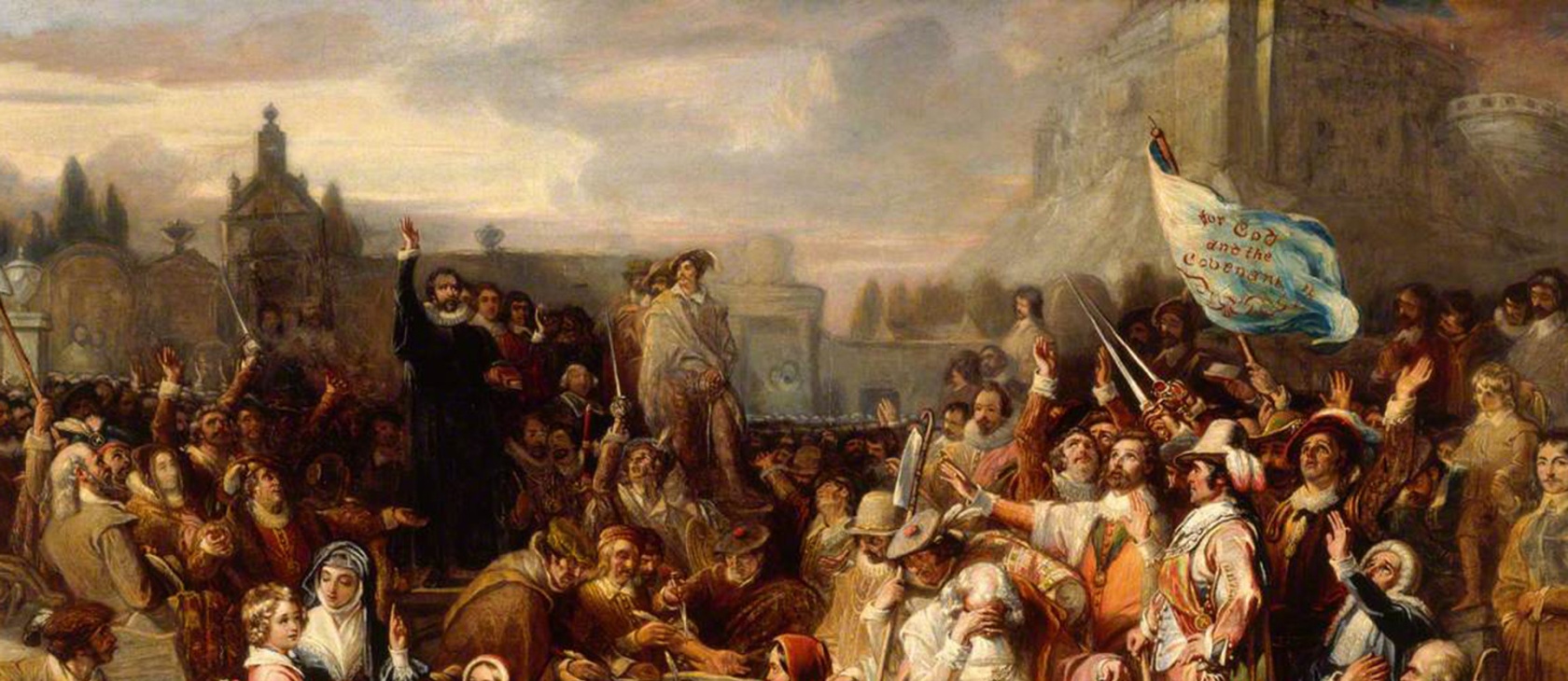
Darryl Hart’s most recent monograph, Protestants and Patriots: Presbyterians in the Age of Revolution, is perhaps his most ambitious study to date. Having spent his career studying the Reformed tradition—its worship, history, and major figures—Hart has now provided a survey of Presbyterians’ relationship to the civil government, rarely sanguine and sometimes revolutionary. The book’s ambition lies in the fact that Hart’s narrative covers Presbyterianism in England, Scotland, Ireland, the United States, and Canada from the mid-16th to the late 19th century. Hart traces intra-ecclesiastical disputes (such as the patronage controversy among Scottish Presbyterians that came to a head in 1843) as well as broader conflicts involving the civil magistrate (such as the Bishops’ Wars in the late 1630s) and Anglicans (as exemplified in Cartwright and Whitgift’s pamphlet war over the Elizabethan Religious Settlement). His basic thesis is that whatever political radicalism one does find among Presbyterians, it originated within the English and Scottish church-state nexus rather than as something inherent in Reformed theology, and that the liberal outcomes were an unintended correction to its theocratic origins.
His whirlwind account begins with Calvin, whom Hart identifies as advocating a form of Presbyterianism that Hart describes as a middle way between rule by bishops (think Episcopalianism) and rule by laity (think Congregationalism). In Scotland and England, Hart focuses on the Presbyterianism of John Knox and Thomas Cartwright, respectively. According to Hart, these two Presbyterians, although sharing the same aim of Calvin—namely, a purely Reformed church—had the added inconvenience of needing to deal with Episcopalians and a monarch, whether the Roman Catholic Mary Tudor or the Protestant Elizabeth. While the choice of highlighting Knox and Cartwright as representative of Scottish and English Presbyterians is understandable, Hart ignores various differences between the two traditions as they developed into the 17th century. For example, while the Scottish consistently complained about the Stuart monarch’s claim to be the “head” or “supreme governor of the Church,” many nonconformists in England were defensive of this royal prerogative, including Congregationalists and Independents (like John Owen and Philip Nye), not to mention Presbyterians (such as Richard Baxter, whom Hart puts into the Presbyterian camp despite Baxter’s openness to episcopal ecclesiology).
As some in the Reformed tradition argue today for a “Christian nationalism,” with church and state in some form of union, a new history of Presbyterianism insists that a purely voluntary church is the best, if unintended, outcome of a rather messy history.
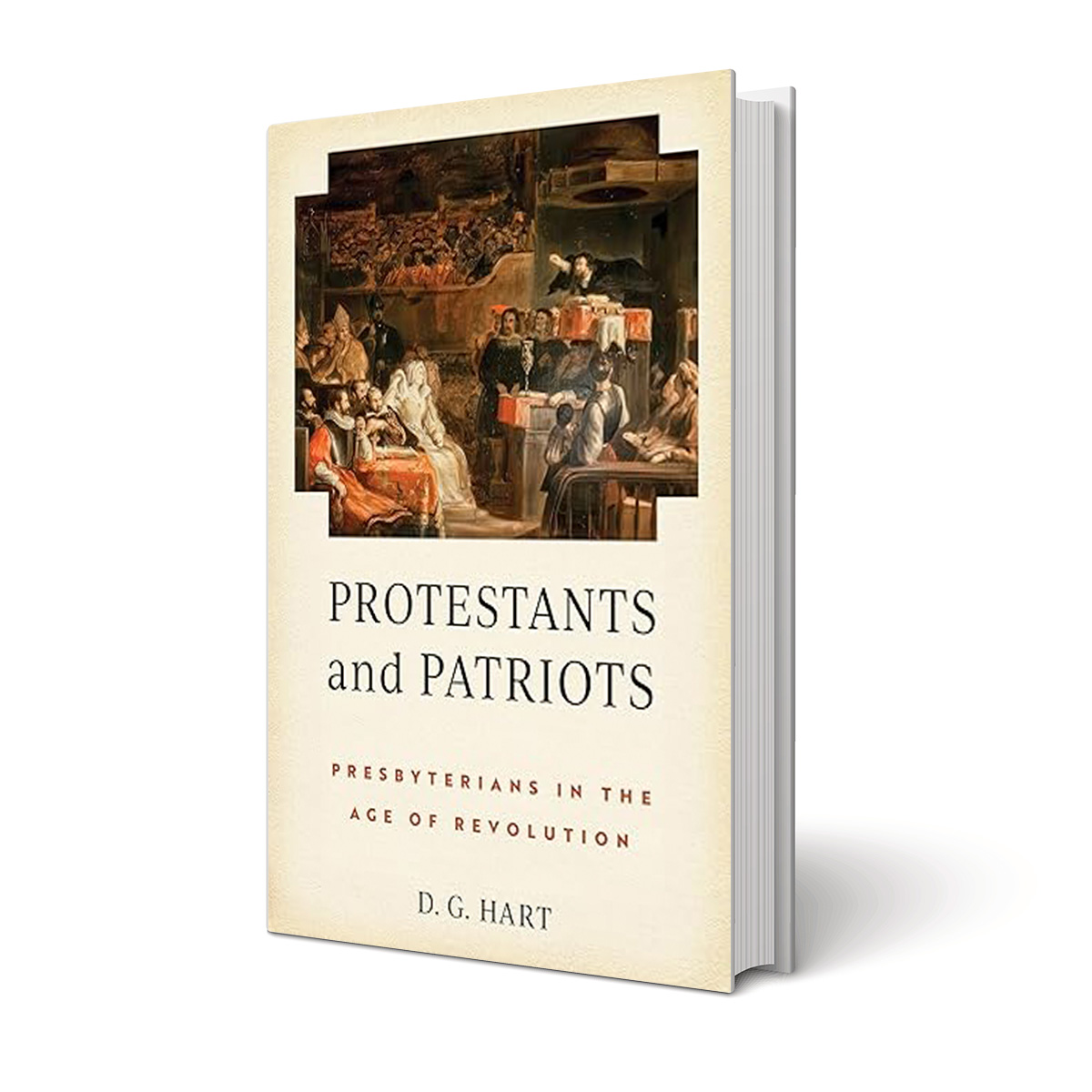
By D.G. Hart
(University of Notre Dame Press, 2026)
It is worth observing that the Catholic bishop Cuthbert Tunstall objected to King Henry VIII’s “Head of the Church” title, while English nonconformists in the following century were often begging the king to wrest power out of the hands of the Episcopalian establishment. Indeed, as Jacqueline Rose’s Godly Kingship in Restoration England proves, in 17th century England it was the conformists, according to the nonconformists, who were most often subverting the rights of the civil magistrate in reforming the church. Given Hart’s recurring insistence that royal supremacy was in tension with the church’s spiritual jurisdiction, it would have been interesting to see how he would have explained these English nonconformist arguments for royal supremacy.
As Presbyterianism moved into different parts of Britain and its colonies, it was faced with other challenges post–Glorious Revolution and William and Mary’s Act of Toleration (1689), which gave most nonconformists freedom to worship so long as they accepted specific oaths of allegiance to the Crown. As Hart demonstrates, most Presbyterians at this point—except for the Scottish, who had secured a Presbyterian establishment in Scotland—had to reconcile their establishmentarian impulses (i.e., that the civil magistrate must establish and protect true religion in his realm) with the practical realities of being a religious minority excluded from the establishment. What also becomes clear in Hart’s narrative is that Presbyterians began to argue for a pan-Protestant establishment. Unsurprisingly, the long 19th century saw a burgeoning of various parachurch ministries and ecumenical endeavors. The hinge of Hart’s book, however, is his treatment of the American Revolution and the Irish Rising of 1798. Hart argues that Presbyterian involvement in both was fundamentally different from the earlier theocratic agitation of the Covenanters. Instead, these were liberal rebellions, driven by frustration that ostensibly liberal governments were not living up to their own ideals rather than by any desire to erect an established Presbyterian church.
The conclusion of Hart’s story sees Presbyterians increasingly giving up any theocratic hope for an established church reformed according to Scripture, and instead opting for what Hart calls voluntarism—the idea that the church is a voluntary association, supported by the contributions and free association of its members rather than by state funding and legal establishment. Accordingly, Hart thinks that, while the Free Church of Scotland, which had broken off from the Church of Scotland during the Disruption of 1843, continued to affirm the establishment principle in theory, it functioned practically as a voluntary communion when it gave up all state-funded support and began to rely on the liberality of its church members. Hart also explains the context of the Irish Church Act of 1869, which eliminated the regium donum, a government stipend for churches. Unlike in Scotland, however, such voluntarism was forced upon the Irish rather than chosen. Of course, in America the course toward voluntarism took a third path. Because there never was an established church to begin with—although there were some soft establishments (i.e., generic Protestant ones) at the state level—the American Presbyterians instead vied for a voluntary one that could nevertheless produce national influence. Put another way, there was no move from theocracy to a liberal society because establishment in America was either a nonstarter or unwanted (for practical or ideological reasons).
Hart protests at the beginning of his book that his work is not “a Whiggish one of Presbyterians taking credit for planting the seeds of liberal democracy,” but it is hard not to get the impression that he believes that the doctrine of the church’s spiritual mission is the natural enemy of theocracy and, at the very least, establishmentarianism. Hart does make a point of distinguishing between Presbyterians Aggressive (part one of the book) and Presbyterians Modern (part two). The former are described as trying to fit the square peg of theocracy into the round hole of the fundamentally spiritual nature of the church, whereas the latter are presented as having learned the lessons of history—namely that Presbyterianism does not work with the Achilles’s heel of magisterial supremacy over the church. The modern Presbyterian church has, in Hart’s account, learned of the benefits of liberal politics.
This is not to say that the Whiggish, progressive historical framework wholly undermines the book’s basic claim. Hart candidly admits that many of the movements toward a more liberal understanding of church-state relations were as much a product of utility and practical necessity as it was ideologically motivated. If the state refuses to establish true religion, what more is there to do than move to a sort of voluntarism coupled with liberal political policies?
Hart’s newest book is, as mentioned, an ambitious attempt at charting terrain that most scholars have explored only in pieces. By pulling on the thread of Presbyterians’ relationship with the state during establishment, its dissolution, and afterward within the various British and American contexts, Hart presents a compelling story of why it is that Presbyterians jettisoned the establishment principle for ecclesial voluntarism. Whether that story is one of tragedy or triumph probably tells us more about the person doing the telling than the history being told.