


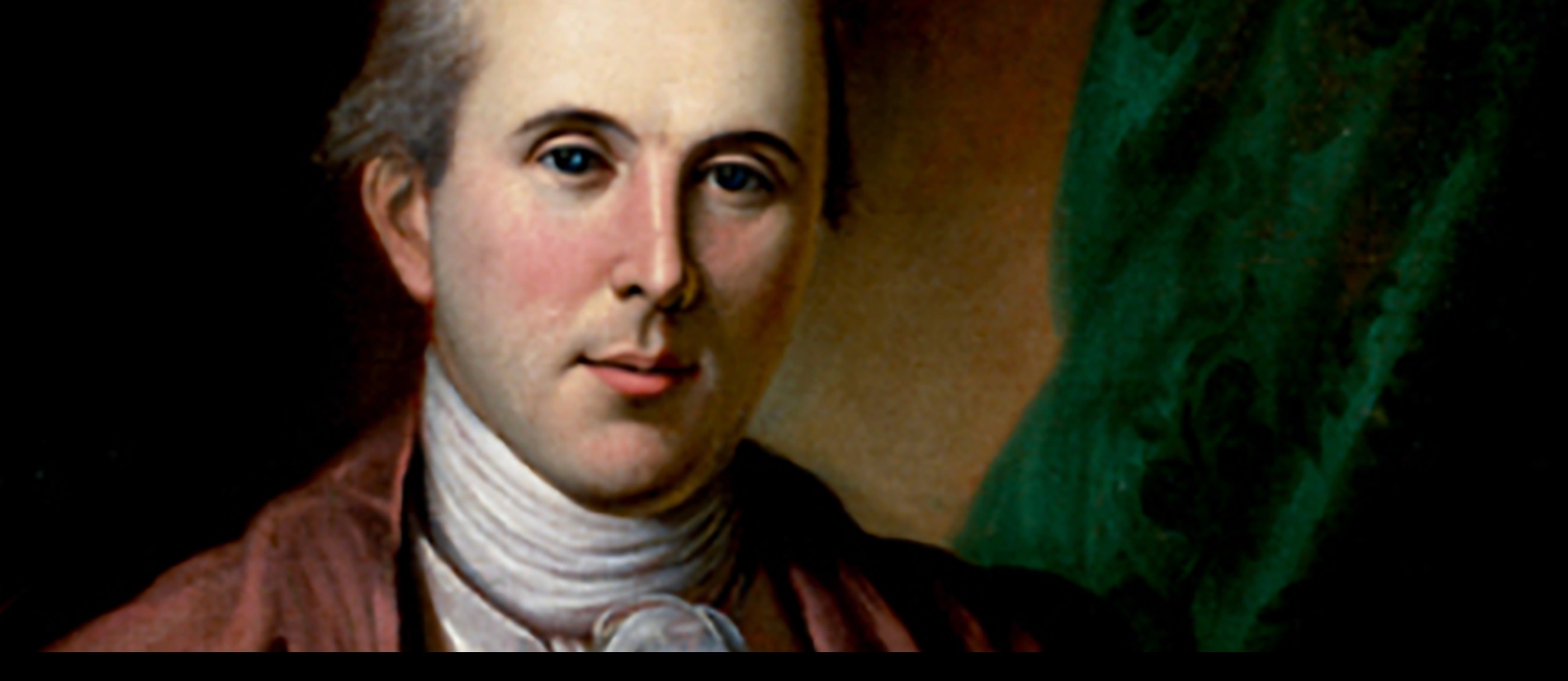
One of the most consequential conversations in American revolutionary history occurred in a Philadelphia bookstore, a meeting place for colonial leaders unhappy with the English Crown. In March 1775, Benjamin Rush, a young physician, walked into the shop. He was introduced to a down-on-his luck British ex-patriot hired by the shop’s owner, Robert Aitken, as an editor for his new Pennsylvania Magazine.
Rush had been working on a document arguing the case for American independence. But he wasn’t sure he should publish it because Philadelphia was the place of his livelihood, and the city was divided over the question of independence. “I shuddered at the prospect of the consequence of it not being well received,” he wrote later.
Impressed by this British national, Rush suggested he should take up the task instead. The man agreed. His name was Thomas Paine.
It is hard to think of another colonial leader who more fully embodied the principles of the Declaration and the Constitution.
Paine ultimately produced a pamphlet so persuasive that it is widely credited with turning the tide of public opinion in the colonies. “The cause of America,” he wrote, “is in a great measure the cause of all mankind.” Paine was the author, but Rush was his muse: The doctor heard every chapter, read out loud by Paine as he composed it. And Rush gave the 47-page pamphlet its famous title: Common Sense.
Rush soon overcame his reluctance to publicly embrace the American cause.
When Congress named Thomas Jefferson to draft a formal Declaration of Independence, the colonies were already drawing up their own individual declarations. Rush must have impressed the Pennsylvania delegates because they gave him the job of writing that state’s declaration.
On Sunday evening, June 23, 1776, Rush sat down at a table in his parlor and started writing.
We call upon the nations of Europe, and appeal to the great arbiter and governor of the empires of the world, to witness for us that this declaration did not originate in ambition or in an impatience of lawful authority; that we were driven to it in obedience to the first principles of nature, [and] by the oppressions and cruelties of the … king and parliament of Great Britain.
Rush’s document was enthusiastically adopted by the Pennsylvania statehouse. Jefferson’s version, formally severing the ties between Great Britain and the American colonies, was approved by the Second Continental Congress on July 4.
Selected as a delegate to the Congress, Rush added his name to Jefferson’s Declaration, effectively signing his own death warrant. At 30 years old, he was one of its youngest signatories. He immediately enlisted as a field surgeon in George Washington’s Continental Army and was on hand during the battles at Brandywine, Trenton, and Princeton.
A leader in the Pennsylvania Abolition Society, the nation’s first major anti-slavery organization, Rush financially assisted the black churches of Philadelphia.
Yet Benjamin Rush was much more than a dedicated physician and patriot. He was a fervent abolitionist, a pioneer in psychiatry, a leader in education, an advocate of criminal justice reform, and a man of deep religious conviction.
Indeed, in the legacy of Doctor Rush we find the alliance of reason and revelation: Enlightenment ideals about human freedom framed by historic Christianity. Like many colonial Americans, Rush absorbed the writings of John Locke alongside his King James Bible.
On the eve of the Constitutional Convention in 1787, Rush wrote a cautionary address to the American people. “The American war is over,” he wrote, meaning the war for independence. “But this is far from being the case with the American Revolution. On the contrary, nothing but the first act of the great drama is closed.”
The next great task—designing a constitution that would secure the rights and freedoms proclaimed in the Declaration—was at hand.
Although Rush was not a delegate to the convention, he was a member of the Pennsylvania state convention to ratify the Constitution once delivered. He gave impassioned speeches urging unconditional adoption. Arguably the most important state in the union, Pennsylvania helped lead the charge for ratification.
It is hard to think of another colonial leader who more fully embodied the principles of the Declaration and the Constitution. Consider Rush’s early opposition to slavery: If freedom and equality were the birthright of every human soul, he reasoned, then slavery must be the enemy of the American Revolution. “The plant of liberty is of so tender a nature,” he wrote, “that it cannot thrive for long in the neighborhood of slavery.”
His 1773 pamphlet, “Address to the Inhabitants of the British Colonies upon Slavekeeping,” delivered a devastating assault on the institution. “Future ages … will be at a loss which to condemn most, our folly or our guilt, in abetting this direct violation of the laws of nature and religion.” He berated white ministers who defended an institution “repugnant to the genius of Christianity.” Rush called for an end to the slave trade and the gradual abolition of slavery in the colonies.
A leader in the Pennsylvania Abolition Society, the nation’s first major anti-slavery organization, Rush financially assisted the black churches of Philadelphia. In one of the most extraordinary moments in the early years of the republic, Rush participated in a banquet celebrating the roof-raising of a black church in the city. “About 100 white persons, chiefly carpenters, dined at the table, who were waited upon by Africans,” he recorded in his journal. “Afterward about 50 black people sat down at the same table, who were waited upon by the white people. Never did I see people more happy.”
On the same day the Treaty of Paris was signed, officially ending the Revolutionary War, Rush joined the staff of the Pennsylvania Hospital. His approach to caregiving was visionary: He emphasized “the influence of imagination and will upon diseases,” instructing his medical students to demonstrate great patience and compassion for the sick. The Scripture teaches us, Rush said, to “make the measure of our love to our fellow creatures, the same as the love of the Author of our religion was to the human race.” He also revolutionized care for the mentally ill, making the Pennsylvania Hospital a pioneer in their humane treatment.
Thirty years after the Revolution, in 1805, Rush got into an exchange with his friend John Adams over the future of the American republic—a debate as deeply relevant today as it was 250 years ago. Adams wondered whether the character of the nation was republican enough. Were virtue and honor the principles guiding the government or had those principles been supplanted by ambition and greed and the disease of faction? “These are Serious and dangerous questions,” Adams wrote, “but serious men ought not to flinch from dangerous questions.”
Rush’s answer came in the form of an essay, “The Bible as a School Book,” a plea for civic education rooted in the Scriptures. The sacrificial love of Jesus, expressed in his death for all mankind, offered the strongest foundation for republican government. “For this divine book, above all others,” Rush argued, “favors that equality among mankind, that respect for just laws, and all those sober and frugal virtues which constitute the soul of republicanism.”
Many today would scoff at the suggestion, given our intensely pluralistic society. Yet the eradication from all levels of education of the moral bedrock of biblical religion has taken its toll: a generation of young people anxious, angry, and alienated from one another and from the American story. Add to that a political culture lacerated by partisanship and the lust for power.
If we hope to renew the vision of 1776, perhaps that Old Time Religion—like that of the Revolution’s indispensable doctor—is the place to begin.