


More than most disciplines in the humanities and social sciences, history has been victimized by ideological pressures that have undermined its presence in public life throughout the Anglosphere. Mythmaking that looks to the past in search of heroes and villains abounds, and in recent years this sort of pseudo-historical writing has done much to harm public debate, particularly in the United States. Whether it is the damage that progressive critical-historical scholarship has done to public belief in the American political order or the excessive nostalgia with which many conservatives look upon a bygone era, a reasonable understanding of the past in public life is often made impossible.
In God and Country: Upholding Faith, History, and National Identity, John D. Wilsey offers some remedies to these dangers. The book introduces readers to the discipline of history with a particular emphasis on how Christians ought to approach the study of the past and what they might learn from it. Wilsey’s concern for the fate of history as a discipline runs in two somewhat different directions. First, he’s convinced that without developing certain virtues, Americans will continue to disrespect and misunderstand their past. As he puts it, the “virtue-less historian is like a boorish, loud, selfie-stick-toting tourist tramping through the past, oblivious to the dignity of the dead and the gravity of their time.” Second, he’s equally concerned that his fellow believers underestimate history’s importance as a foundation for belief, as “a great many Christians think history contributes little to our fulfilling the Great Commission, or more generally to our lives in the here and now.”
A morally informed historian, amateur or professional, will avoid both cynicism and nostalgia and seek both to understand and to identify with our forebears, judging as we would wish to be judged.
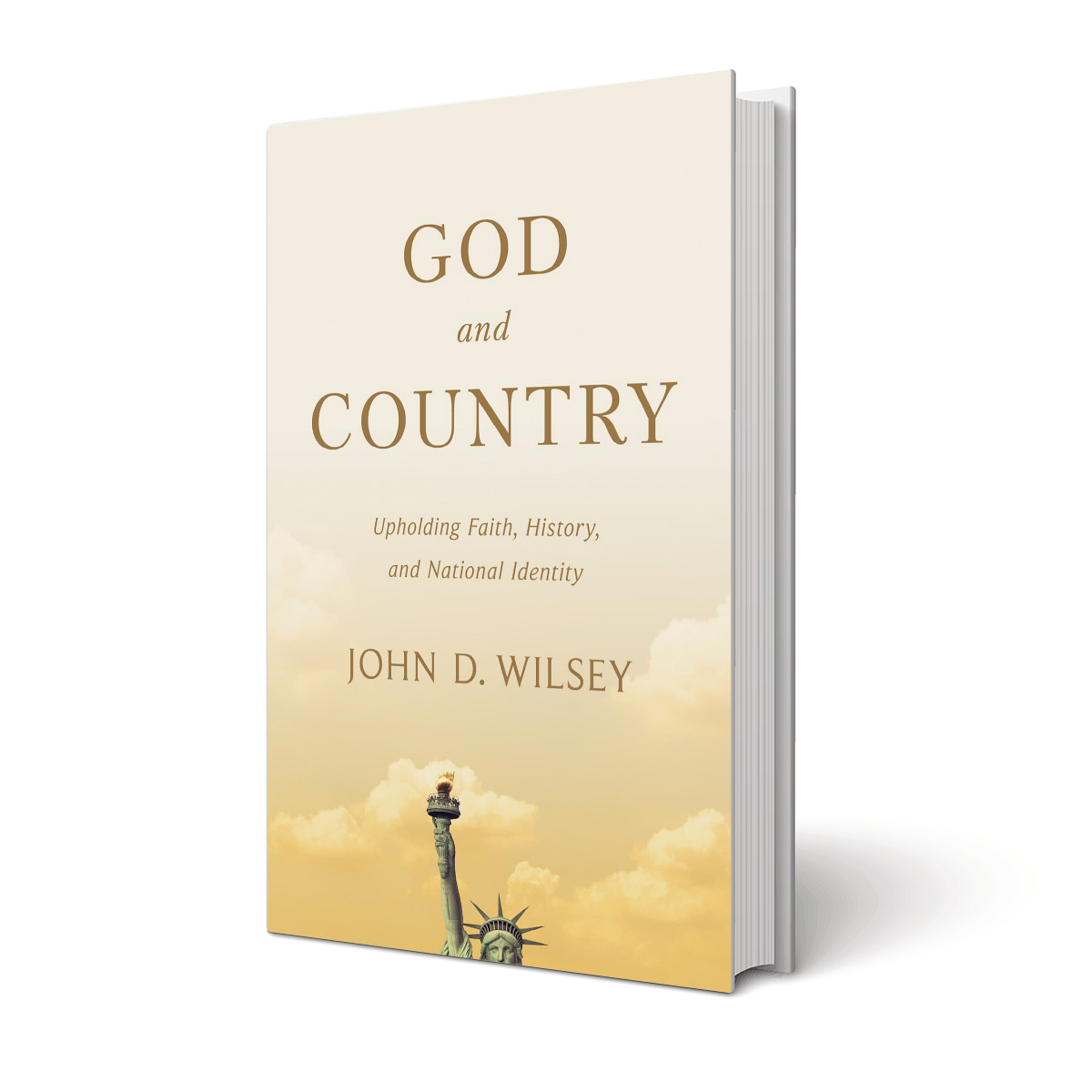
By John D. Wilsey
(B&H Academic, 2026)
In a brief text that seems equally aimed at seminarians, history students, and curious autodidacts, Wilsey offers a tour of the practice of historical thinking and is especially good at highlighting what it takes to mine wisdom from the past. Alongside this he offers an account of the moral and theological understanding those who study the past ought to bring to bear on the subject. As fallen people, we owe our equally sinful ancestors an attitude of charity, and Wilsey ably demonstrates why this is the case.
Christianity, he asserts, is a historical religion, as the Bible is not just a message of hope but also “the record of the redemption of humankind, accomplished by God through Jesus Christ in space and time.” Believers ought to study the past because through it “we can see the credibility of God on display through His kept promises.” For this reason, Christians should develop their historical understanding and do so in a manner that cultivates certain capacities and virtues.
Were it simply a reminder of the ethics and skills that ought to inform the historian’s art, this would still be a worthwhile book. But what sets Wilsey apart is his emphasis on history as a deeply personal and not abstract field of study. He recounts stories from his family’s history throughout, an approach that emphasizes how our most immediate links to the past are often familial and quite tangible. In one chapter, Wilsey recalls time spent at his grandparents’ home, and especially his discovery of his grandfather’s footlockers from World War II: “The odds and ends contained in that attic, and all throughout the house, gave me a sense of my place in my family, my country, and my world as a boy and a young man.” His family’s history and their reckoning with the legacies of the American South recur throughout, breathing life into his arguments and reminding readers of what is at stake in doing history well: Even when we are not directly descended from the people we study, we do well to remember that all historical actors have been persons who lived in complex intertwining relationships and that we are all caught up not only in the consequences of those relationships but in the ever-expanding network of their relationships with one another throughout the generations.
Believers ought to study the past because through it "we can see the credibility of God on display through his kept promises."
This sense of the personality of history is well-grounded in theology. As a discipline, history is not just the way we make sense of the past; it is part of our need for the truth: “As image-bearers, we crave the truth. History for us fallen people is, first, the pursuit of truth in the past for the purposes of the present.” History matters in this regard because in forgetting our past we tend also to abandon something that matters far more: “Due to our sin nature, we are also prone to forget the past…. Moses closely linked forgetting the past with forgetting God.” Beyond this, Wilsey suggests that history itself offers a source of understanding and wisdom that modern thinkers often discount or neglect.
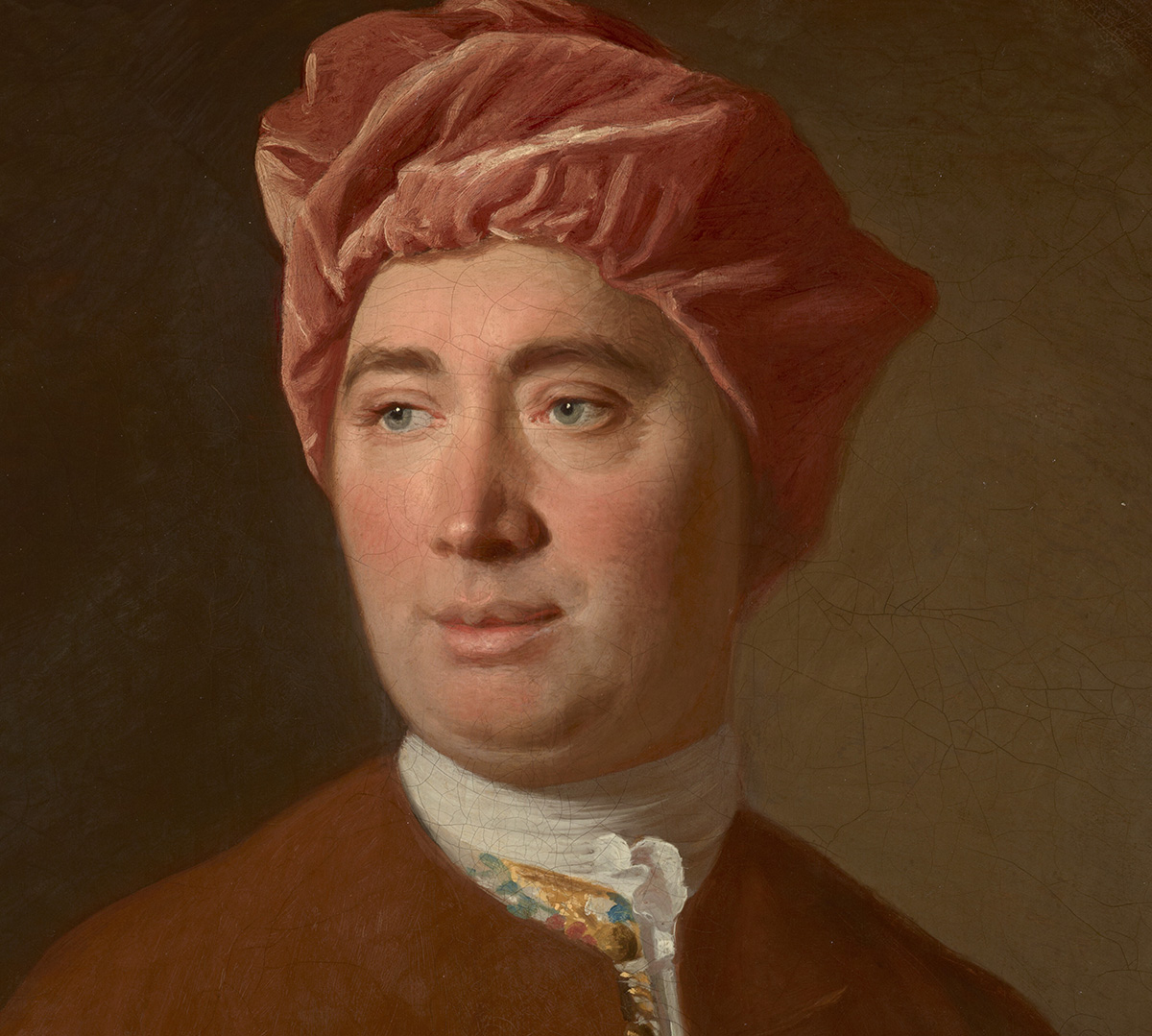
This claim puts him at odds with a range of thinkers from the Enlightenment onward. David Hume famously argued that we cannot trust any apparent causal connections as a basis for certain knowledge, and that what we refer to as causation in history is “nothing more than correlation between two relating events.” Perhaps even more radically, Gotthold Lessing was convinced that “history and faith are mutually exclusive kinds of truth” and that Christians should rest their faith simply on wonder. Wilsey argues that both are mistaken: “History is … futile if causation has no ontological explanation but is explainable only through the use of our mental habits or customs.” Moreover, Christianity’s claims themselves rest on the foundation that God acted in history to accomplish His people’s salvation. To deny history’s importance would be to deny the validity of the Gospel itself and render meaningless any attempt by believers in the world to bring “the kingdom on earth as it is in Heaven.”
Wilsey goes even further, linking a theological understanding of history to a moral view that emphasizes the interrelationship of the generations:
Christianity denies that the dead no longer matter and the unborn do not yet matter. With Edmund Burke, we affirm that society is a contract between the dead, the living, and the yet to be born. In Hebrews 11, we find that there is a great cloud of witnesses in the past, that though they are dead, they still speak to us.

God and Country’s practical guidance for the budding historian emphasizes a wise, balanced approach that appreciates change over time, the importance of context, the nature of causality, the force of contingency, and the inescapability of complexity. Wilsey’s most valuable contribution here comes through demonstrating how embracing each of these elements rightly depends on the would-be historian’s cultivating certain virtues.
Christians should not be surprised that for Wilsey love is the central virtue, anchoring all the others. He views our predecessors as our extended neighbors to whom love is owed, and in studying them we ought to exhibit other virtues that depend crucially on a rightly ordered love.
Honesty and truthfulness depend on this love. How else can we trust historical inquiry if it is not conducted in a spirit of truth-seeking? He reminds us that all “humans deserve the dignity of having the truth told about them, no matter how much their lives represented evil or good.” Christians can live in the confidence that in reporting the truth, no matter how much it unnerves us, we can be confident in God’s providence and purposes, which place even the gravest evils in the right perspective.
Flowing directly from this is a sense of profound humility toward the past. This ought to chasten many different impulses: “Love excludes arrogance toward others in the present and those in the past.” We desperately need that check, as we already tend toward what C.S. Lewis called chronological snobbery. Historical humility cautions against excessive judgment of the past: “We do not suspend our judgment concerning providence from any lack of faith, but rather from humility that holds us back from the sin of presumption,” and an appreciation of contingency “is thus motivated not only by good historical thinking but by fear of God.” But it also demands we check ourselves against an excessive belief in our ability to recognize God’s hand in history: “There is a great irony in the providence of God: we have the deepest assurance of its reality, but it remains a profound mystery to us,” and because of this we need to look to understand causality, contingency, and complexity in human terms.
"Humans deserve the dignity of having the truth told about them, no matter how much their lives represented evil or good."
These attitudes allow us to cultivate other virtues toward our forebears. We can be patient, allowing “the dead to be themselves.” We can demonstrate a sense of fairness in assessing their conduct. We can offer them kindness by refraining “from condemning them, and we acknowledge that our place in relation to them is as their student rather than their judge.” And we can understand them in a way that demonstrates contentment with our own lot by avoiding nostalgia.
The theological virtues that flow from love guard us against cruelty or hopelessness in our pursuit of understanding the past. But Wilsey argues that the classical virtues of wisdom, justice, courage, and temperance also play a role. It takes more than mere intellect to assess evidence: The historian must also have a profound sense of morality to grapple with sinful people’s inevitable failures, genuine bravery to confront the past, and a sense of moderation to balance all these efforts.
Absent these virtues, our view of the past will tend toward caricature, and end in a simplistic search for heroes and villains. He aptly calls this the Star Wars vision of history:
When we are seeking understanding, we come to the task not as moral judges or moral relativists, but as moral realists. Looking to the past with a moral realist approach gives us the ability to see ethical problems clearly, without considering ourselves immune to engaging in evil actions of our own.
Moral realism informed by all the virtues helps us avoid crafting history undermined by either nostalgia or cynicism. This is important because both these extremes do violence to the past to advance political and social goals. Cynicism like that displayed in the 1619 Project would have us believe we are “overrun by morally backward, ignorant criminals who wielded power over the weak and the marginalized.” Nostalgia is just as dangerous to our souls, as it would lead us to believe “we have fallen from the moral purity of the early times and that our duty is to recover what has been lost.” Both pose a danger to a proper and measured love of our people and history.
This is a vital point for Wilsey, because so much contemporary historical debate undermines patriotism, which he sees as a rightly ordered love of country, one that flows from an appreciation of its whole history. “Both love of God and love of country involve actual and active love of real people,” past, present, and future. Without this love and the host of virtues it fosters, there can be no healthy affection for one’s homeland, and little hope of avoiding ideological enthusiasm of the kind that afflicts our world.
God and Country principally speaks to Americans, and Wilsey is attentive to the dangers of national exceptionalism. We are tempted to indulge in what he calls a “closed exceptionalism,” one that sees America as the special instrument of God’s providence, uniquely empowered to act in ways that advance His agenda. Against this excess, he suggests a more modest view so that “Americans gratefully recognize that ours is a great country because of its unique contributions to human freedom, one of the most profound aspirations of creatures made in God’s image.”
We are all born into a time and place that is bequeathed to us by generations of forebears. In some cases, that legacy presents people with considerable challenges. Whatever our inheritance, God and Country offers us reasons to connect our story with the long shadow of our shared past and extend love to our neighbors of yesteryear.
