

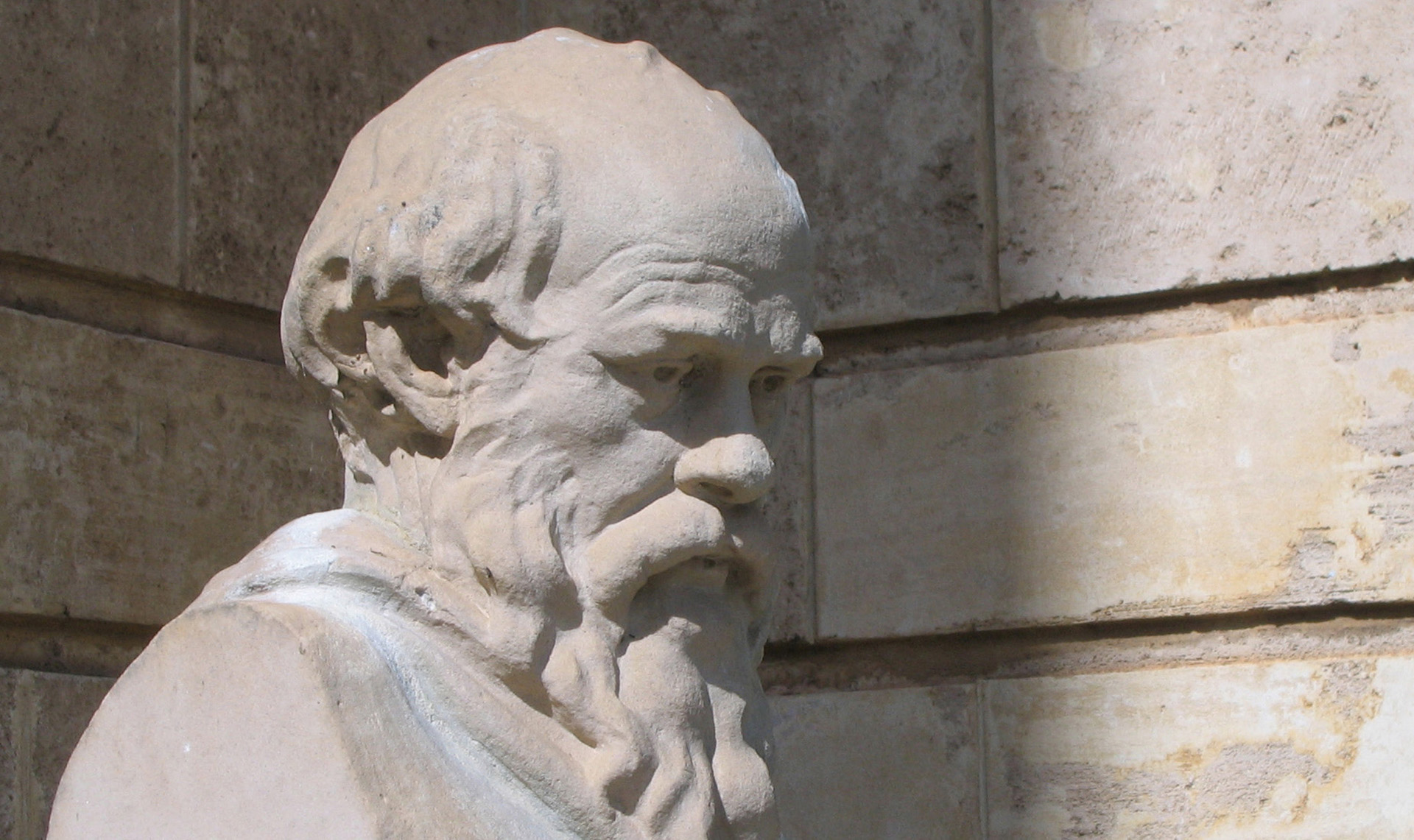
Philosophers and commentators have recognized for millennia that rhetors (political speakers) and poets occupy a similar corner of society and, by extension, that rogue rhetoric and rogue poetry pose similar threats to an established political order. The Socrates of the Republic banned the poets, the makers of myth, from his ideal state, illustrating in dramatic fashion the close and fraught relationship between political order and poetry.
Reading, reciting, and even writing poetry can help shape us into better, more responsible citizens. But how do we distinguish between rightly and wrongly ordered speech, between high rhetoric and sheer manipulation?
Many people today, particularly conservatives, have followed in Socrates’s footsteps in trying to keep these two spheres—art and politics—separate. There is a worry that putting the two in conversation with each other will pollute art and compromise politics. The reality, which conservatives have ignored for decades to their own peril, is the opposite. Thinking of poetic and political speech as entirely separate or antithetical forms of expressions impoverishes both fields.
The argument I want to make is this: Because of the close rhetorical similarities between poetic and political speech, widespread cultivation in the poetic arts is necessary for political stability and flourishing. As we grow in our ability to read, memorize, perform, criticize, and write poetry, we are developing intellectual, imaginative, and spiritual discernment and skills that also make us better citizens and statesmen. Conversely, neglecting the art of poetry or indulging in careless or manipulative poetry makes us more susceptible to abusive and manipulative political speech.
At this point, many readers are probably saying, “But political poetry is so often just propaganda! How is that at all conducive to stability and flourishing?” If that’s your impulse, you’re right; there is a fine line between rightly ordered speech and wrongly ordered. But I want to explore what lies on both sides of that line and encourage readers to cultivate their own poetic sensibility and more confidently evaluate “good” or “bad” political speech and poetry.
There is no art form that has had to justify the value its own existence quite like poetry has. No one seems to be quite sure what it is or why anyone bothers to write it, yet it lives on (and proliferates!). Poetry, like faith, tends to blossom in the worst of circumstances; consider, for example, the explosion of excellent poetry in Soviet-bloc nations like Poland and Czechoslovakia.
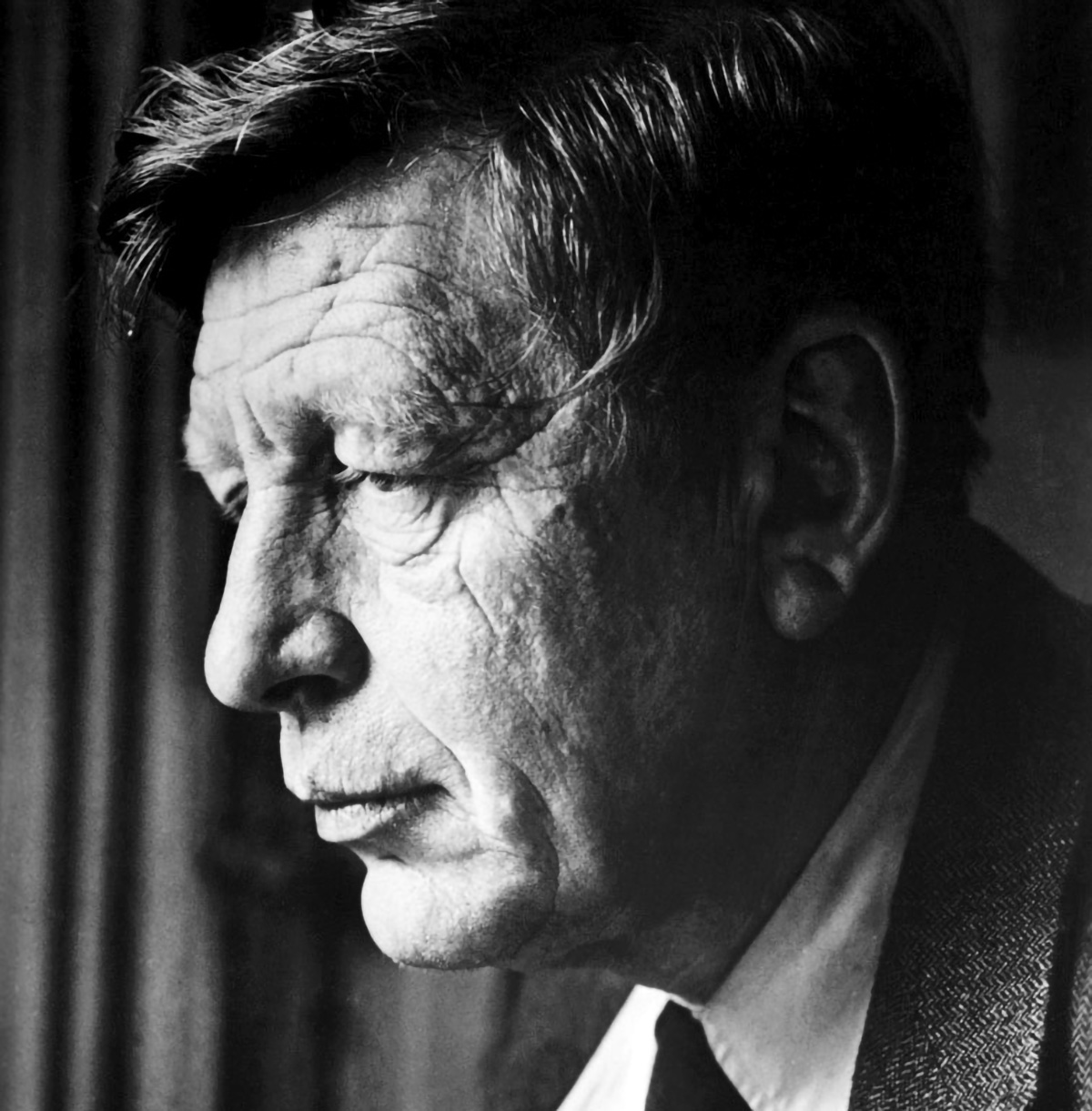
There is a quote attributed to W.H. Auden that I cannot find in his work but I like anyway. Allegedly Auden described poetry as “turning noise into music.” I like this because it gets to the core of what I believe poetry ought to do: Through the clear and imaginative use of language, it should transform, into an accessible and comprehensible form, something that previously was incoherent, inaccessible, or senseless.
Widespread cultivation in the poetic arts is a necessary aspect of political stability and flourishing.
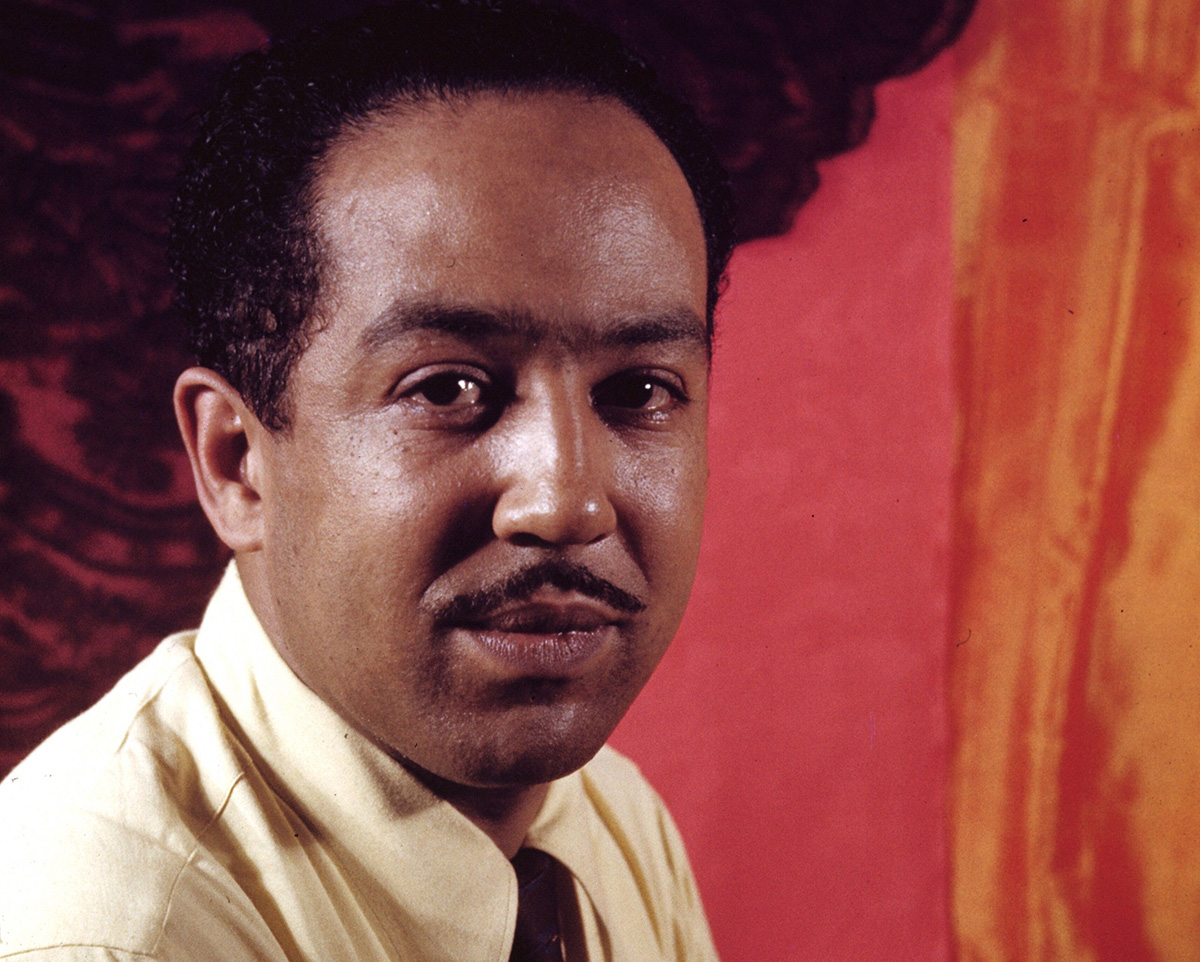
There is this idea that artists, particularly poets, are people who exist outside society, people with very little connection to what we call “real life.” Poets are perceived as dreamy and distracted, obsessed with wildflowers and breakups. Nothing could be further from the historical reality. The best poets throughout history have been deeply and actively involved in their communities, societies, and nations—often at their own peril. Tu Fu, the father of Chinese poetry, was an administrator in the Tang Dynasty for his entire career. Virgil wrote at the behest of Caesar Augustus. Dante was famously up to his eyeballs in political intrigue, to the point that even today cities battle over the right to be called his hometown. Shakespeare’s verse is shot through with sly political innuendos that give us a glimpse of the dangerous dance of art in Elizabethan England. William Wordsworth underwent an extreme political and creative crisis during the French Revolution, when his beloved England entered a conflict with the French revolutionaries he admired and supported. William Butler Yeats’s poetry is inseparable from his Irish-independence politics. Langston Hughes and Gwendolyn Brooks both wrote poetry steeped in the Civil Rights–era call for racial justice and equality. For all these artists, political conviction and poetic practice were mutually clarifying.
In 1945, Langston Hughes spoke directly to this difficult reality: “Art in its essence is a path to truth. Propaganda is a path toward more to eat. That the two may be inextricably mixed is not to be denied. That they may often be one and the same is certainly truth.”
Hughes’s admission here is that poetry, in its pursuit of truth, may push us in certain partisan directions. What the honest poet—and the honest politician—needs to recognize is that when this occurs, it is more or less a fluke; just as a stopped clock is right twice a day, a particular political party is right now and again, usually entirely by accident. It is not the poet’s fault when a political party manages to land on something true, and this strange occurrence does not automatically mean that the poet can no longer speak about that truth simply because it is temporarily associated with a party.
However, even in the throes of a political passion, a poet cannot neglect reality—lived experience in all its fullness. In fact, a poet has what amounts to a moral responsibility to reality, the whole scope and range of it; in his work, he must constantly be open to the disrupting force of reality and its paradoxes.
With this in mind, it is probably clear now what the cardinal sin is for a poet: ignoring inconvenient parts of reality for the sake of a “message.” Poetry that is intended, designed, or composed specifically to serve a particular political or partisan goal, or to further a particular political or partisan message, has ceded its claim to art and become solely propaganda.
This might make it seem impossible for a reader to discern when a poem is solely propaganda and when it happens simply to align with a political aim. Fortunately, language is not easily deceived. When we learn to read carefully and well, we will inevitably find little slips, tiny cheats and skips in even the most skillful propaganda, revealing that the poet has betrayed his calling.
The truth is revealed in the particulars: how a poet deals with truths that are connected to political realities, claims, and movements. To frame this, I want to offer a principle, one that can be used to evaluate any poem by any poet that touches on any political issue. The principle is this:
A poet has the right to speak about any part of reality. When a poet twists, compromises, or denigrates language, even to the slightest degree, in order to accommodate or serve a particular narrative about reality, he has trespassed against his art and must make amends, for a poet is beholden only and utterly to what is real.
There is a lot here in this principle. I want to explore each element and then offer an example of a poem that violates this principle. To begin, by “real” I do not mean merely what is literal or observable. Unicorns are, in a significant imaginative sense, real: They are a clear, luminous, and illustrative allegory for Christ that has a fixed place in literature and tradition. Similarly, quantum theory is “real” even if it should one day be disproved or displaced like Euclidean models of the universe have been. It is nevertheless a real theory that was suggested as a possible explanation for some observable and mathematical quirks of electrons. Flat-earth theories are real. They exist, and a poet with a wonderful imagination could do something marvelous with them.
Now, clearly, not every poem (and not every poet) has to write even implicitly about every single element of reality—that is, the entirety of human experience: the physical, the intellectual, the social, the spiritual, and the political. But every poet has nevertheless a responsibility to reality.
Imagine this: A poet writes a poem about, say, his children playing beneath the pomegranate bush in his backyard, and it is lovely, technically impressive with stunning language and a great conclusion in which the tree becomes an image for the Tree of Life as described in Genesis. He’s very happy with it. Then he realizes (see that word—realizes) that in his zeal for his poem, he’s utterly forgotten that the Tree of Life is forbidden now, cut off from us by an angel with a flaming sword. Now he has a choice to make: Is he going to rewrite his poem to accommodate this reality, even with just a word or two? Or is he going to stick with what he’s written, and elevate the reality of what he’s written over and above the language of reality? A poet could be damned, at least as far as writing poetry goes, by making the wrong decision.
Socrates’s ideal regime in the Republic is, as he says, a city in speech, a city composed entirely of words. The truth Plato recognizes, as do the poet and the politician, is that language, far from being merely an indication or description of reality, is part of reality itself. Words are real, and they have the power to change and shape the other forms of reality they interact with.
This was common knowledge for millennia. Among the Medes and the Persians, the word of the king was law; when a king spoke, he literally changed the texture of the kingdom. Shakespeare’s kings in the Histories are acutely aware of the weight of their words, and of the terrible consequences of a word misspoken. The bedrock of Western thought, the Bible, begins with a spoken Word that is the instrument of creation.
Even Socrates’s condemnation of the poets in the Republic alludes to this truth. Poets, he says, have distanced themselves from reality and become manipulators of the shadows. Poetry “feeds and waters the passions instead of drying them up; she lets them rule, although they ought to be controlled, if mankind are ever to increase in happiness and virtue.” In a later dialogue called The Sophists, Plato applies a similar condemnation to rhetoricians who use language to convince people of what is false, whether in politics, law, or ethics. The word “sophist” was sometimes used to mean “poets” in Plato’s time, so what we see here is a parallel condemnation of poetic speakers and political speakers who lead people away from virtue and a true perception of reality.
Plato is far from the only person to recognize the potential harm that imaginative and forceful language can cause to a political state. Well over 2,500 years after the Republic, George Orwell said in his 1946 essay “Politics and the English Language”:
One ought to recognize that the present political chaos is connected with the decay of language. ... Political language—and with variations this is true of all political parties, from Conservatives to Anarchists—is designed to make lies sound truthful and murder respectable, and to give an appearance of solidity to pure wind.
The word "sophist" was sometimes used to mean "poets" in Plato's time.
What Orwell doesn’t say, however, is that due to the peculiar power of language, if enough speech gives an appearance of solidity to “pure wind,” that wind becomes a real and solid political force, with real-world consequences. One need look no further than the endlessly escalating rhetorical violence in American politics today, rhetoric that is rapidly altering society to match itself.
Here is the truth that Plato tacitly, and ironically, admits at the end of his Republic: There is no banning of poetry and its power over the passions.
In 1991, Dana Gioia argued in his seminal essay “Can Poetry Matter?” that poetry is not merely pretty; rather, it is bulwark against sophistry, and ignoring it has grim consequences for a society. Gioia writes:
Poetry is the art of using words charged with their utmost meaning. A society whose intellectual leaders lost the skill to shape, appreciate, and understand the power of language will become the slaves of those who retain it—be they politicians, preachers, copywriters, or newscasters.
Gioia’s argument here is that this poetic force that Socrates so fears, this “charge” of utmost meaning, will inevitably continue to be part of a political body’s existence. It cannot be eliminated. It can be repressed, humiliated, subdued, manipulated, but it will not go away—not as long as there are humans and language to use it. Repressing poetry does not destroy it; it simply stunts it, turning it inward until it is misshapen and crooked, but still alive and still powerful. These are the poets who violate the principle I established above, the poets and politicians and others who twist, compromise, or denigrate language in order to accommodate or serve a particular narrative about reality. By ignoring poetry and not cultivating poetic awareness in our own lives, homes, and communities, we hand it and its power over to whoever chooses to use it to shape our imaginations and our world—whether for good or for evil.
The great Irish poet Seamus Heaney, whose life was marked by political turmoil and personal political activism, believed that poetry could provide a kind of map through what he called the metaxu, a Greek term for the “in-between-ness” of human existence. What Heaney meant is that life feels as though we are constantly caught between incompatible realities: the reality of grace and the reality of truth, for example, or the reality of mercy and the reality of justice. Perhaps it is something as mundane as the reality of your mother’s right to your time and attention and the reality of your wife’s right to your time and attention. How do you balance this? How do you navigate this in-between-ness, which can feel like being torn open?
In the essays published as The Redress of Poetry, Heaney spoke about his experience of conflicting loyalties: As an Irishman, he was committed to the political cause of his homeland in the 20th century, but as a leader of English letters, he moved freely through the upper echelons of English intellectual life. He describes a particular moment during the Troubles when he was in Oxford receiving a poetry prize while his near neighbors in Ireland mourned the death of a son in the fighting. “It was a classic moment of conflicting recognitions, self-divisions, inner quarrel, a moment of dumbness and inadequacy ... it felt like a betrayal,” he says. “Poetry,” he suggests, can be “an adequate response to conditions in the world” or even “a principle of integration within such a context of division and contradiction.”
Poetry that engages with political situations can, in the right hands, be profound and clarifying. But, returning to our principle, poetry cannot shirk its duty to respond “to conditions in the world”; it cannot ignore its fraught situation “in-between” and lazily choose one loyalty over another that is equally real.
Now I want to offer a political poem that shirks its duty to reality. I chose an example from the work of one of the greatest poets of the 20th century, where the failures are far subtler than in, say, the pages of a current issue of Poetry Magazine.
The poem is W.H. Auden’s famous, or infamous, “Spain.” Auden wrote this during the Spanish Civil War. He was enthusiastically in support of the left-wing Republican government and spent seven weeks in the war-torn nation before writing the poem. Just a few years later, however, Auden disavowed the poem completely and refused to allow it to be included in future collections of his work. The entire poem is worth reading; portions of it are deeply moving. Why, then, did Auden repudiate the poem so fiercely?
Let’s focus on two stanzas, where the poem “turns” from the future to the present. For the sake of this exercise, it would be best if you read this stanza at least twice. The first time, pay attention to the literal meaning of the words and try to grasp on the lowest, most straightforward level what Auden is saying. Then, the second time, read through the stanza line by line and think about it in terms of claims: What is the poet trying to persuade you of?
To-morrow for the young the poets exploding like bombs,
The walks by the lake, the weeks of perfect communion;
To-morrow the bicycle races
Through the suburbs on summer evenings. But to-day the struggle.
To-day the deliberate increase in the chances of death,
The conscious acceptance of guilt in the necessary murder;
To-day the expending of powers
On the flat ephemeral pamphlet and the boring meeting.
These stanzas are imaginatively vibrant and interesting, full of images and good sounds. There is a glaring problem with them, however, one not technical or poetic, but moral. Reread these lines: “But today the struggle. / To-day the deliberate increase in the chances of death, / The conscious acceptance of guilt in the necessary murder.” I am willing to bet that when you read these lines, you experienced a vague confusion or dissatisfaction, a sense of being jarred out of the poem. Perhaps, if this is the first poem you’ve read in a very long time, you did not quite notice that confusion because you were focused on the words. But even for new readers of poetry, I suspect you experienced some kind of friction, a little “buzz” somewhere in your imagination. What you are feeling in that moment is recognition of poetic failure.
Poetry that engages with political situations can be profound and clarifying.
Opening, as they do, with the phrase “today the struggle,” the lines that follow take on a sense of urgency, even of command; what the speaker is commanding is “the conscious acceptance of guilt in the necessary murder.” There is a way to write that line and make it ironic; to use the voice and the tone of other lines to indicate that even though this is morally horrible, it is what some leaders say; that isn’t how it’s written in “Spain,” however. There is no indication here or elsewhere that the “today” portions of the poem are intended to be ironic or self-critical or anything but exemplary and touching: “To-day the makeshift consolations: the shared cigarette, / The cards in the candlelit barn, and the scraping concert”—these are moving, motivating images. Auden, swept up in a politically motivated fervor, used poetry to bolster morally suspect political talking points—namely, the Republicans’ attempt to justify the murder of countless Spanish citizens, including thousands of clergy and religious.
These lines from “Spain” are pretty weak stuff compared with the polemical railing we find in most major poetry journals today, but just a few years after “Spain” was published, Auden came to view the poem as a profound betrayal of his calling. He denounced it as “trash” and, as noted, refused to include it in poetry collections.
This look at “Spain” will hopefully help you see what I mean when I say that a poet must not twist, manipulate, or denigrate language to serve a political cause. Auden’s failure here is not that he chose to write about a contemporary political conflict; it is that he allowed a political party’s talking points to impose between him and reality—the reality that any attempt to defend a cold-blooded murder as “necessary” is an indefensible descent into tyranny.
Let me return to my original claim: that a deep engagement with poetry—reading, memorizing, reciting, critiquing, and even writing it—can help shape us into better, more responsible citizens. It does this in two ways.
First, by engaging with poetry and studying, alongside Matthew Arnold, “the best that has been thought and said,” we become accustomed to the metaxu, to the experience of conflicting loyalties. We begin to develop the imaginative strength to embrace these conflicting loyalties more fully, and to place ourselves in situations that stretch us more than we might have thought possible.
Secondly, when we have immersed ourselves in great poetry, poetry that does not manipulate language, it becomes much easier to recognize when someone—a politician, a preacher, a journalist, a poet, anyone—does so. Identifying language used in fidelity to reality, even difficult and conflicting realities, makes it all the more noticeable when someone uses language falsely or tells only part of the story. This is an essential skill for a citizen, especially today, as our political rhetoric in America has become almost entirely divided, so that people from one part of the political spectrum might never hear the arguments of another part. It is almost as if we inhabit utterly different worlds right now; studying poetry deeply and immersing ourselves in it gives us the best tools to recognize when an argument or claim (whether poetic or not) is partial, misleading, or subservient to a political cause.
Incidentally, Plato, via Socrates, agrees with me (or I with him!). His assertion that the poets have no place in such a city is not intended to be a blanket prohibition of poetry. Interestingly, the Republic concludes with Socrates’s poetic retelling of a myth—precisely the kind of language he claimed has no place in the ideal city. Instead, the proscription of poets illustrates the fundamental role that language and imagination play in political order and disorder.
Plato’s choice to have Socrates close with a poetic myth is his ironic admission that even in the ideal city, poetry cannot be kept out of politics. It will always make its way in. As a result, every person has a responsibility to become skilled at recognizing rightly ordered poetic speech from wrongly ordered poetic speech. If we cannot do that, we stand no chance when it comes to discerning between rightly and wrongly ordered political speech.