



In 2006, Christianity Today published “The Top 50 Books that Have Shaped Evangelicals.” Listed at the number 24 spot is Paul Tournier’s The Meaning of Persons—ahead of Charles Colson’s Born Again, John Piper’s Desiring God, Mark Noll’s The Scandal of the Evangelical Mind, James Dobson’s Dare to Discipline, and even Frank Peretti’s This Present Darkness. Of all these influential writers, only Tournier no longer remains a household name among evangelicals.
If one malady can be called a particularly modern disease, it is fragmentation—the breaking into pieces what was meant to be whole. One man sought to put the pieces back together again in the field of medicine and mental health. For that he relied on both a personal touch and the sovereignty of God.
Like these other authors, Tournier was a Christian and an evangelical (at least as the term was broadly defined in the mid-20th century). But unlike them, he wasn’t American; he was Swiss. And unlike many of evangelicalism’s most celebrated authors, he wasn’t a “professional evangelical”; he was a medical doctor. Yet, in some ways, Paul Tournier’s influence—both inside and far outside evangelicalism—was deeper and wider than that of the others. His major contribution has, in fact, become axiomatic, one we can hardly imagine today having not always existed. Tournier’s contribution to his field was what we now call integrative medicine, an approach to health that recognizes the interconnectedness of mind, body, and spirit.
If indeed we no longer imagine a world that lacks an understanding of holistic health, we have Tournier to thank. While questions around the relationship between mind and body go back to ancient philosophers, modern Western medicine has until relatively recently tended to focus primarily on the body. But Tournier, who was born in Geneva, Switzerland, in 1898, lived and worked during a time when the compartmentalization and systemization that had, since the Enlightenment, characterized most spheres was easing toward greater synthesis and integration. The materialism and mechanization that characterized the later modern age was becoming exhausted. Indeed, it would soon culminate in two devastating world wars. In the wake of the depersonalizing and dehumanizing aspects of industrialization, a yearning grew for meaning, wholeness, and overarching purpose—personally, professionally, socially, and spiritually. Thus, an impetus toward unity and integration found expression in numerous ways and areas of life.
In the arts, playwright Luigi Pirandello with Six Characters in Search of an Author (whom Tournier cites in his work) exposed the fractured modern self in search of a unified identity. Poet T.S. Eliot expressed the fragmentation and soullessness of the modern age in The Waste Land, “The Hollow Men,” and other poems. In public life, efforts in the American courts and in the broader culture strove to integrate the races and to advance civil rights. In the field of psychology, Carl Jung sought to integrate the conscious and unconscious minds around a sense of self that was whole and meaningful. In the church, ecumenical institutions such as the World Council of Churches were established to foster greater unity among Christian communities. In evangelicalism, Francis Schaeffer modeled the integration of biblical truth into all of culture and life. The Lausanne Covenant brought together Christian leaders from around the world to express common cause in global evangelism efforts.
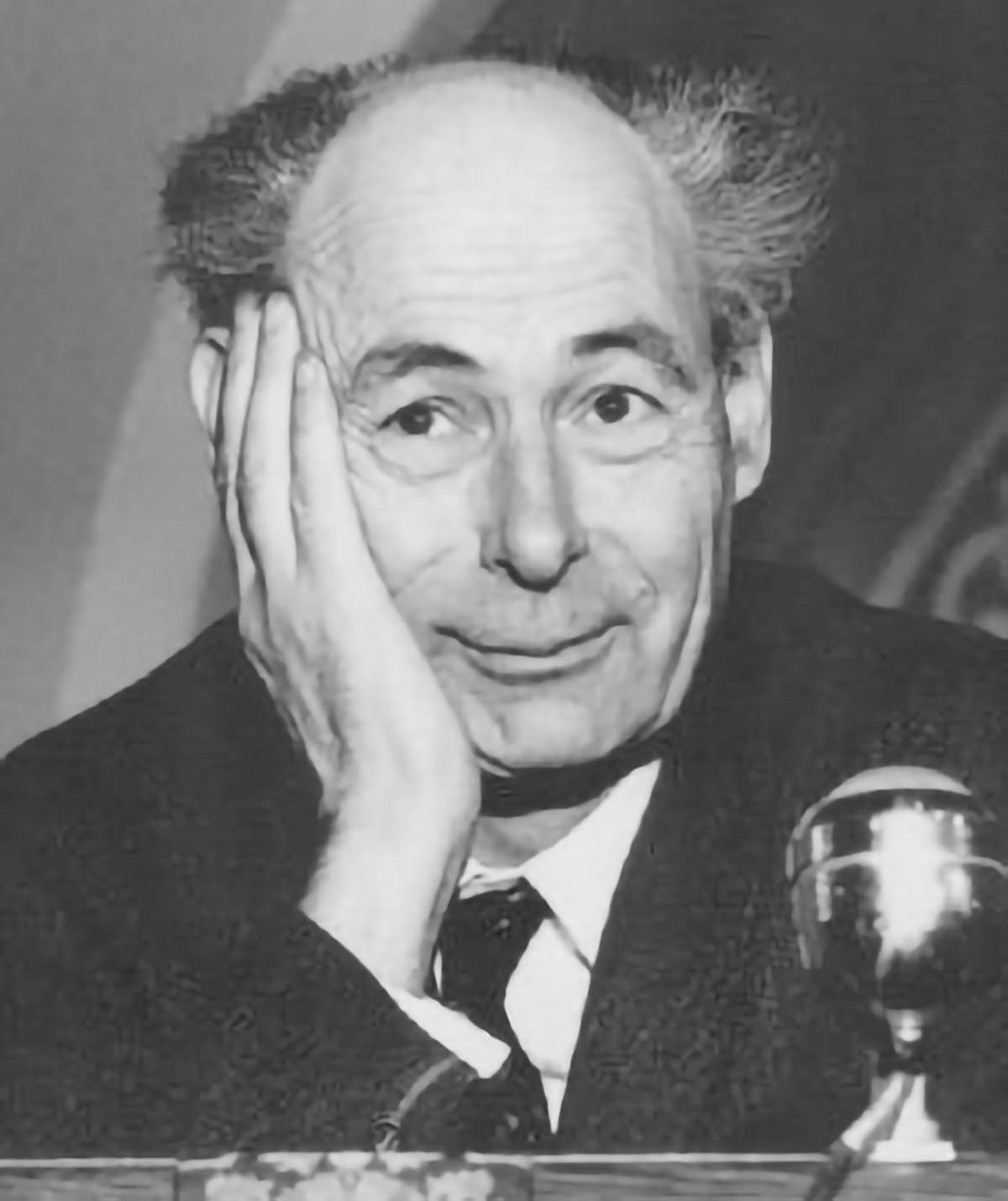
It was in this broader context, as well as in the field of psychology more narrowly, that Paul Tournier founded “person-centered medicine,” an understanding of health that emphasized the integration of the psychological and the physical. And it is owing in large part to Tournier’s work—work that drew deeply from his Christian faith—that what today is called integrative or holistic medicine is so well-known and widely accepted.
It shouldn’t be surprising to learn that Tournier’s own life experiences led him to this transformative understanding of medicine that emphasizes the whole person. Tournier’s father served as pastor of St. Peter’s Cathedral in Geneva but died in Tournier’s infancy. His mother died a few years later, leaving the young, orphaned Tournier in an emotionally fragile state that affected his life for many years. In The Christian Psychology of Paul Tournier, Gary R. Collins describes how isolated and withdrawn Tournier was as a boy, even after he committed his life to Christ during an evangelistic sermon around age 11. When Tournier was 16, one of his teachers, noticing the boy’s loneliness, took him under his wing, helped him discover his intellectual giftedness, and built up his confidence significantly. From 1917 to 1923, Tournier studied medicine at the University of Geneva. Even as a student, he demonstrated a humanitarian bent, serving with the International Red Cross in Vienna and eastern Europe to repatriate Russian and Austrian prisoners of war and undertaking efforts to raise funds for famine-struck Russian children.
In 1924, Tournier married a fellow Sunday school teacher who shared his Christian commitment. After spending a period out of church, the couple returned following the birth of their first child. There, Tournier became an outspoken advocate for orthodoxy in the face of encroaching liberalism, only to grow disillusioned by the institutional church. However, a few years after beginning his private practice as a physician in 1928, he was introduced to a vibrant religious movement called the Oxford Group through a patient of his who had undergone a radical personal transformation. Because of Tournier’s encounter with the Oxford Group, Collins writes, the entire trajectory of Tournier’s life changed.
It is owing in large part to Tournier's work that what today is called holistic medicine is so widely accepted.
The Oxford Group (later re-named the Moral Re-Armament Movement, then Initiatives of Change), a Christian fellowship founded in 1921 by an American Lutheran pastor (and that would later become a model for Alcoholics Anonymous), emphasized personal and spiritual transformation through the Christian practices of reflection, meditation, and confession to one another. This dialogical approach that integrated the emotional and the rational aspects of a person was for Tournier a radically different approach to life. Up to now—in his family life, in his church life, and in his medical practice—Tournier had approached everything intellectually, as Hans-Rudolf Pfeifer and John Cox recount in Medicine of the Person. Later, reflecting on those early years of establishing a career and a family, Tournier recognized that he had used this intellectualism to shield himself from the pain and vulnerability of emotions. Opening himself emotionally also opened him up to God in a way he had never experienced before. As he became more involved with the group, participating in meetings across Europe, the physician was, as Collins writes, undergoing “the process of becoming a psychotherapist.” Notably, the Oxford Group and its methods earned the praise of psychiatrist and fellow Swiss Carl Jung, who was also a significant influence on Tournier.
These experiences taught Tournier not only a new way of living out his faith and his family life but a new way of working as a physician, too. “In the early years,” Collins writes, Tournier “had concerned himself only with treating disease, making no attempt to know his patients on a personal level.” He changed his medical practice by taking more time to listen and talk to his patients, considering not only the physical dimension of their being but also the psychological and spiritual dimensions. He soon discovered that talking and listening to his patients helped their physical health to improve. Tournier discovered a new calling on his life, and he believed it came from God. He dedicated his life, as Collins puts it, to “developing a Christian view of medicine.”
In 1940, Tournier published his first book, Médecine de la Personne, later translated into English as The Healing of Persons. The book was so well-received and its influence so great that in 1947 Tournier founded an international organization of the same name, one that continues to bring together medical professionals and philosophers from an array of specializations. Today Médecine de la Personne advocates a view of the patient “as a physical, mental and emotional unity in his family and other social surroundings.” The organization is defined by a characteristic “attitude towards the patient,” regardless of the specific discipline or role of the practitioner, a characteristic that carries out the integrative nature of Tournier’s lifelong vision.

It is Le Personnage et la Personne, however, published in 1955 and translated into English in 1957 as The Meaning of Persons, that would eventually find its place in that list of the most influential books in evangelicalism. The Meaning of Persons clearly demonstrates the influence of the Oxford Group on Tournier’s thinking and practice, along with his turn to counseling as a central component of his practice as a physician. In The Meaning of Persons, Tournier argues that the methods of modern psychology, particularly forms of talk therapy such as dialogue and free association, reflect essential Christian practices such as prayer, confession, meditation, and fellowship. These practices help us to discover truths about ourselves that go beyond historical fact or objective knowledge. These more personal truths lead to an understanding of ourselves and others. For Tournier, understanding is a form of truth that “has healing and human value.” Crucial to personal understanding, Tournier posits, is recognizing and overcoming the behaviors and ways of thinking that become by force of habit merely automatic, rather than conscious and intentional and therefore authentic to the person. Personal resolve and determination alone are not sufficient to overcome complex psychological habits, Tournier explains. True understanding, which is not merely intellectual but also “subjective and intuitive,” is also necessary.
In The Meaning of Persons, Tournier explores the relationship between expression and understanding that culminates in a specifically Christian application. The Christian life, he writes, is a path that opposes the merely self-willed approach of secularity. Christianity offers the “path of the trusting personal encounter.” The exchange that takes place in a personal encounter (as in therapy or, ultimately, with God) allows the expression necessary to bring forth more total understanding. Tournier explains: “We become fully conscious only of what we are able to express to someone else.”
Nearly a century later, in the throes of what some refer to pejoratively as a “therapeutic culture,” it is important to contextualize Tournier’s work and to distinguish between therapy and a therapeutic worldview. If, as some argue, therapeutic language and the over-psychologizing of every aspect of experience and identity have come to characterize our current culture, the overcorrection is evidence that a correction was needed in the first place. In recognizing the limits of physicalism alone, Tournier countered one aspect of the materialism of the late 19th and early 20th century. To encounter Tournier’s ideas today is to find a refreshing and increasingly rare balance—not only a balanced view of mind and body but also balanced views of the claims and applications of both the Christian faith and modern medicine, and of appreciation for both the specialist and generalist alike.
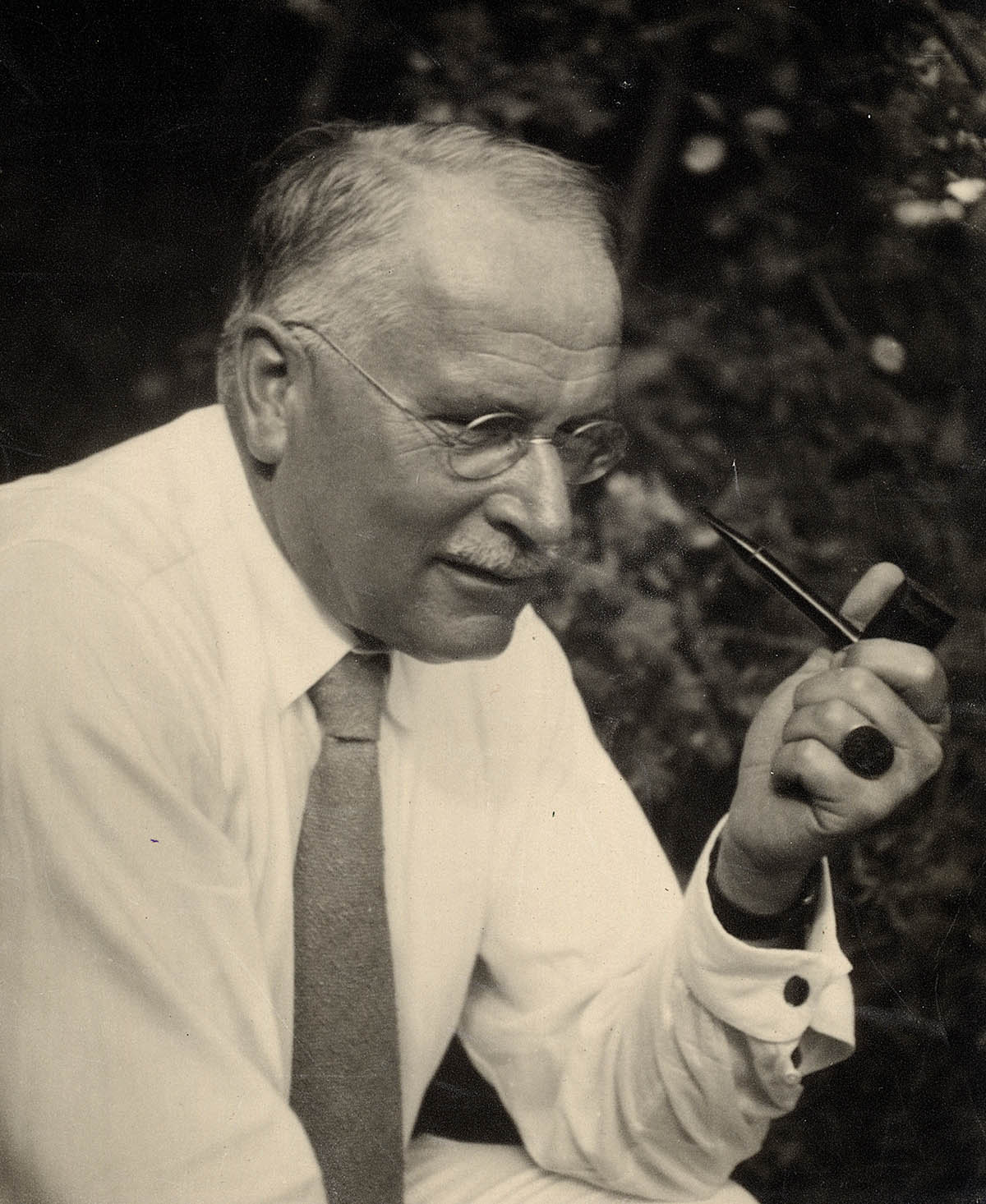
Indeed, Tournier was not only a general practitioner in the field of medicine; he was also a counselor who had no academic training in psychiatry. Yet he did not pretend to be other than what he was trained to be. He did not claim expertise he did not possess, nor did he disdain the specialists he worked with, admired, and drew from. He believed in and advocated for the efficacy of science and medicine but also states in The Healing of Persons that his aim was “to help our nation to discover a new physical, psychical, and spiritual health through submitting itself afresh to the sovereignty of God.” He was, after all, of the Reformed Christian tradition.
Guilt and Grace, originally published in Switzerland in 1958 and appearing in English in 1962, made a significant contribution to both the developing field of Christian counseling and to theology. Despite not being a theologian (nor claiming to be one), Tournier stakes out in this work an essential and important distinction—one of continuing relevance—between false guilt and true guilt. False guilt derives from social disapproval, Tournier explains, while true guilt arises from recognition of disobedience to God. True guilt is resolved by the gospel. “Our privilege as Christians,” Tournier says, “is to know that we are forgiven, and that forgiveness reaches us through Jesus Christ.” In a later work, Escape from Loneliness, Tournier expands on these two kinds of guilt:
Many people confuse the conviction of sin with such feelings as inferiority, scrupulousness, lack of self-confidence, and so on. Yet, whoever observes people closely can see that these feelings and the conviction of sin are not only different from each other, but are in certain regards mutually exclusive. A diffuse and vague guilt kills the personality, whereas the conviction of sin gives life to it. The former depends on men, on public opinion, while the latter depends on God. The former is related to our social formalism and its marks of esteem, which have nothing to do with the true value of a person. Hence a guilt feeling leads to self-contempt. Conviction of sin, however, is linked to the respect of oneself as a creature of God.

Guilt and Grace is addressed primarily to the Christian counselor (or reader), but Tournier drew important connections between psychological confession and religious confession that the secularist can appreciate. Characteristically, Tournier integrated Christian faith into the discipline of psychology, showing how each reinforces the other:
Everything is mingled in life, and the Bible continually depicts life in its unity and its complexity. It does not set the religious life apart like a specialty reserved for theologians, it constantly links the most concrete events of physical life—meals, tiredness, illness—to the highest spiritual experiences.
Guilt and Grace demonstrates this very unity: Its endnotes are replete with references to academics, theorists, theologians, and critics, and includes an index full of biblical references. Every page of Guilt and Grace is characterized by compassion, depth, and, well, grace. And every point cites Scripture in support. It is no wonder that Pastor Ray Ortlund listed Tournier’s Guilt and Grace among the books that “most profoundly shaped” his “view of gospel ministry” in a 2016 interview at The Gospel Coalition.
Over a career that spanned nearly five decades, Tournier wrote about 20 books, and these were translated into multiple languages. He spoke at venues and events around the world throughout those years. His books garnered praise from Christian leaders and secular publications alike. Guilt and Grace received positive reviews from Cambridge Review and Times Literary Supplement. Learn to Grow Old was republished in 1983 by Westminster/John Knox Press, which described Tournier as someone who “effectively blended the insights of modern psychotherapy with the Christian gospel.” A 2010 article on Tournier in the International Journal of Integrative Care records that Viktor Frankl, the renowned psychiatrist, Holocaust survivor, and author of Man’s Search for Meaning, considered Tournier to be “the pioneer of person-centered psychotherapy.” In honor of his 75th birthday in 1973, Christianity Today published “Paul Tournier at Seventy-Five.”
Christianity offers the 'path of the trusting personal encounter.'
This article noted some of the recurring criticisms of Tournier’s work and his theology: among them, absence of psychiatric training, lack of doctrinal precision, undisciplined prose, and overreliance on anecdotal evidence. It then went on to offer insights into his popularity and influence:
Psychological research has shown that counseling effectiveness depends more on what the counselor is than on what he does, and people who know Paul Tournier realize that he is an unusual man. His life radiates:
● a deep concern for other people;
● a willingness to listen patiently to others, without jumping to premature conclusions;
● an intense desire to yield himself completely to God and to seek divine leading in everything he does;
● a respect for the Scriptures and a continual effort to understand how the Word of God can have a practical relevance for one’s daily and professional life;
● a concern for society’s ills accompanied by a conviction that the elimination of social injustice requires a transformation of individual men;
● a healthful respect for science, but a respect tempered by the realization that science alone cannot understand and change the universe or mankind;
● a bold willingness to give witness to what he believes and to urge others to submit to Christ;
● an awesome awareness of the power of sin, the existence of the devil, and the divine influence of the Holy Spirit in men’s lives; and
● an honesty about his own spiritual struggles.
Tournier died in 1986 at age 88. His may no longer be a household name, but in an age in which celebrities are known for anything but their ideas, it is refreshing to be acquainted with someone whose legacy has surpassed name recognition. Medical professionals from a variety of specializations and faith traditions attribute to Tournier’s influence the growth of Christian counseling, a continuing emphasis on the whole person in other religious traditions, greater understanding of the connection between spirituality and mental health, and holistic approaches to care for the aging.
False guilt derives from social disapproval, while true guilt arises from recognition of disobedience to God.
In one of his later books, published in English in 1972 as Learn to Grow Old, Tournier concludes by writing about the resurrection of Christ, which, he says, offers “as many difficulties for our intellects as it solves for our hearts.” He continues: “But in spite of everything it is still by corporeal reality that the mind will be convinced.” Moreover, in Christ’s resurrected body, there “could be no clearer expression of the great truth that the person is identified through the body.”
As Tournier had devoted his life to saying, and says once more, it is in the connection between mind and body, between spirit and truth, where we find the meaning of our own lives and the meaning of the gospel. And the body, as Tournier eventually discovered for himself and showed the world, is not confined to the physical or the intellectual, but is spiritual and emotional, too. In their interconnectedness, one finds and becomes a whole person.
