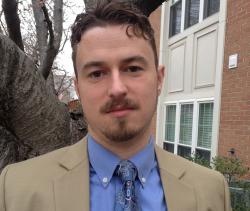


It was admittedly a surprising circumstance for a debate on natural rights. On September 4 of last year, Senator Tim Kaine (D-VA) was speaking during a Senate Foreign Relations Committee Hearing interview of Riley M. Barnes, nominee for assistant secretary of state for Democracy, Human Rights, and Labor for the U.S. Department of State. Responding to Barnes’s opening comments that “our rights come from God our Creator, not from our laws, not from our government,” Senator Kaine declared that he found Barnes’s statement “very, very troubling.”
Whence our rights as human beings? Are we beholden to government or to God? What did the Founding Fathers think? One of St. Thomas’s most celebrated interpreters has answers.
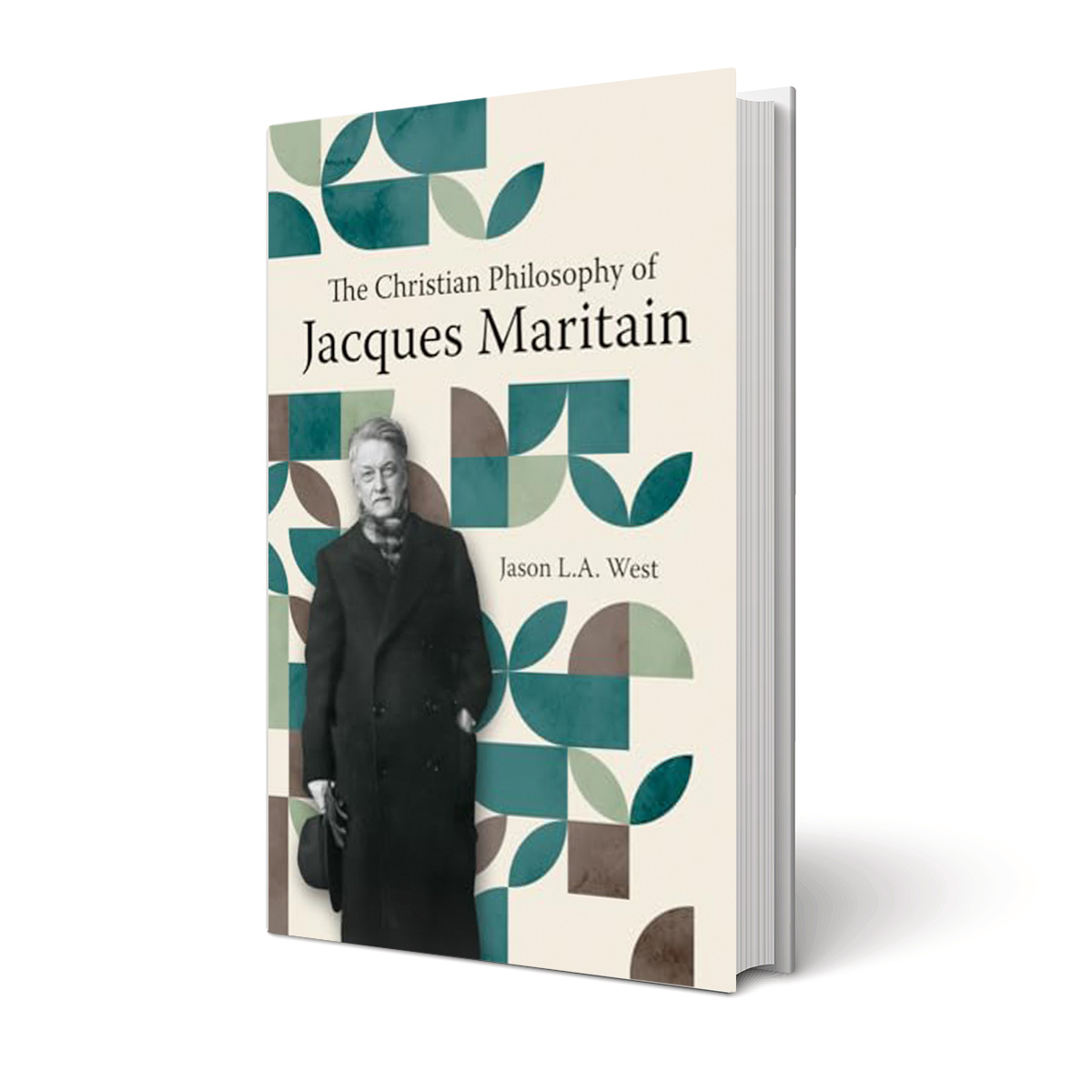
By Jason L.A. West
(Catholic University of America Press, 2025)
Kaine then offered an articulation of his own opinion on the origin of rights:
The notion that rights don’t come from laws and don’t come from the government but come from the Creator—that’s what the Iranian government believes. It’s a theocratic regime that bases its rule on Sharia law. … And they do it because they believe that they understand what natural rights are from their Creator. So the statement that our rights do not come from our laws or our governments is extremely troubling.
As Senator Ted Cruz (R-TX) subsequently noted in the same hearing, the notion that our rights come from God is found, among other places, in the second paragraph of the Declaration of Independence: “We hold these truths to be self-evident, that all men are created equal, that they are endowed by their Creator with certain unalienable Rights.” Thus, by repudiating this idea, Kaine had effectively placed himself in opposition to the founding document of the very nation he serves.
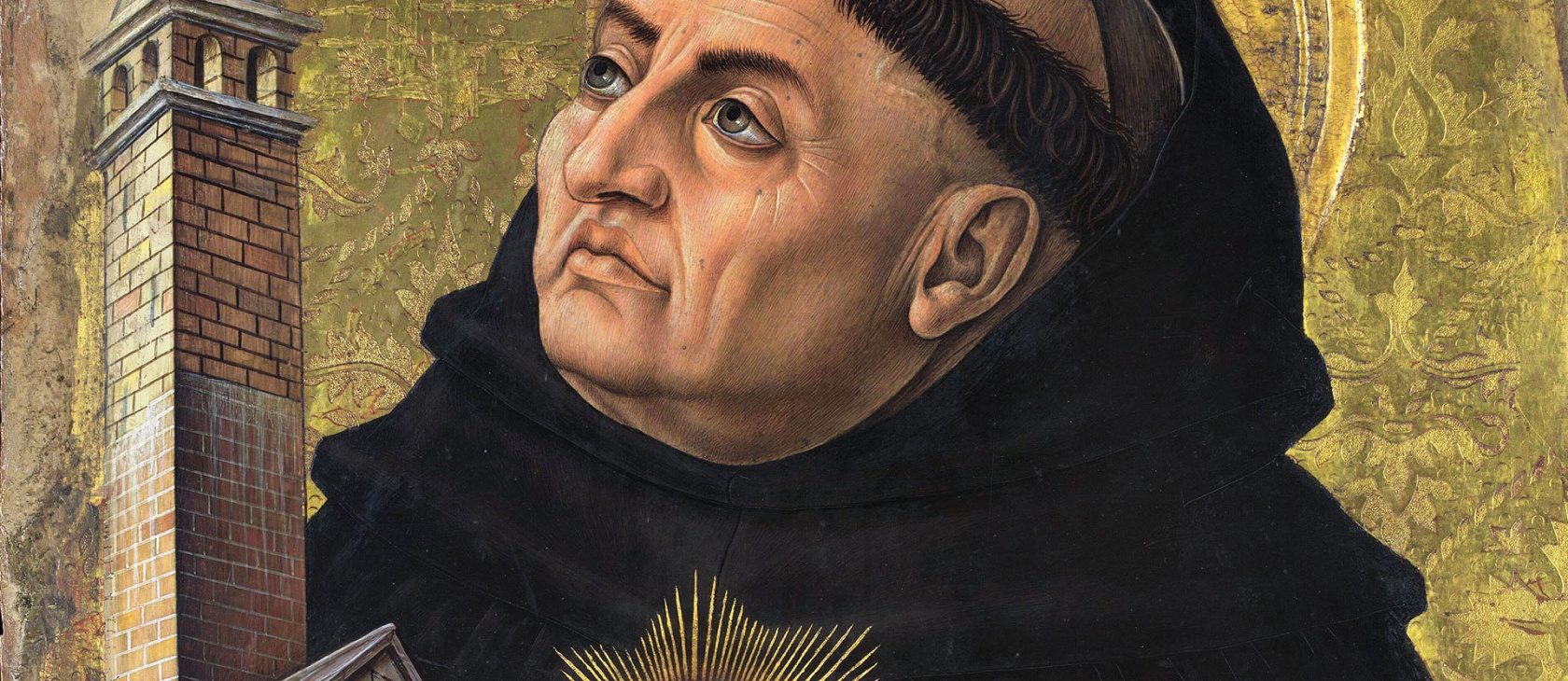
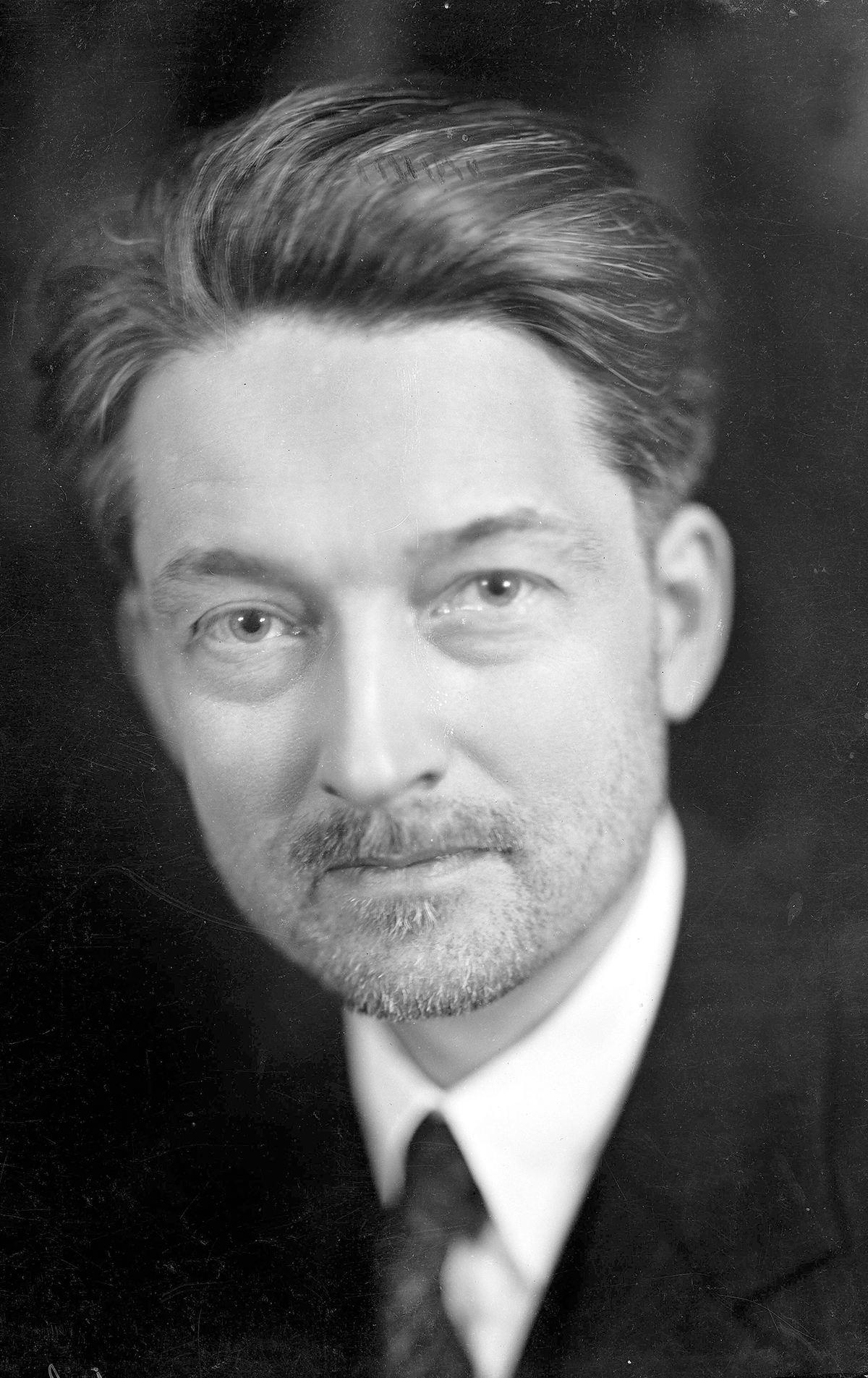
Of course, the great Virginia statesman Thomas Jefferson is far from the only thinker to argue that rights derive not from laws or governments but from God; half a millennia earlier, Thomas Aquinas in his Summa Theologiae discussed natural right as originating from the divine. That influence—mediated through such English legal theorists as Sir Edward Coke and William Blackstone—would be felt indirectly on that American founding generation. But it would also find a champion in the political theory of French Catholic philosopher Jacques Maritain, a Thomistic defender of natural right who for a few decades of the 20th century was, at least according to Catholic intellectuals, “the leading representative of the Catholic Church in the mind of the general public.” So writes philosophy professor Jason L.A. West in The Christian Philosophy of Jacques Maritain.
West’s project is somewhat ambitious. As he explains in the introduction, it is the only book in English to present Maritain’s thought on the full range of topics his writings discussed: epistemology, the philosophy of nature and science, metaphysics, natural theology, revealed theology, moral philosophy, political philosophy, the philosophy of education, aesthetics, and the philosophy of history. Though Maritain’s life work was, in West’s words, “the creative retrieval of Aquinas for the world of today,” this book intends to present the French thinker primarily as a 20th-century philosopher rather than only as an interpreter of Aquinas.

This review in turn focuses attention on Maritain’s political philosophy, though I would very much commend the other chapters to interested readers, particularly the chapter on the philosophy of history, in which West presents Maritain in dialogue with such philosophers of history as Hegel, Marx, and Comte. This section also features an excellent, if brief, discussion of the recently deceased Peruvian Dominican theologian Gustavo Gutiérrez and his criticism of Maritain in A Theology of Liberation, published two years before Maritain’s death in 1973.
Curiously
There is a certain prescience to Maritain’s warnings regarding what’s at stake if we fail to identify the proper foundations of government. “A time will come when people will give up in practical existence those values about which they no longer have any intellectual conviction,” he writes in The Use of Philosophy. “Hence we realize how necessary the function of a sound moral philosophy is in human society. It has to give, or to give back, to society intellectual faith in the value of its ideals.” It is that absence of intellectual conviction, one might argue, that explains why about half of young Americans believe that speech that offends minority groups should not be allowed, as a 2025 report by The Future of Free Speech discovered.
The value of natural right becomes especially salient in Maritain’s attempt to resolve the tension between the person and the common good epitomized by the Thomistic principles that each individual person is related to the entire community as part to the whole, and that man is not ordained to the body politic according to all that he is and has. For Maritain, the key is to recognize that the self exists as both a material and spiritual reality. Every individual is a member of a society, and that membership means the body politic has a claim over him such that he may be coerced, for example through taxes or conscription. Yet the individual is also a person oriented toward a higher order, namely God, and cannot be merely subordinated and instrumentalized to serve the interest of the political community, because he has ends that transcend that community. Thus is Maritain able to appeal to certain universal human rights upon which the political community cannot impose.
The individual is a person oriented toward a higher order, namely God, and cannot be merely subordinated and instrumentalized to serve the interest of the political community.
In his book The Rights of Man and the Natural Law, Maritain elaborates on this thesis: “The human person possesses rights because of the very fact that it is a person, a whole, master of itself and of its acts, and which consequently is not merely a means to an end, but an end, an end which must be treated as such.” Moreover, since the natural teleology of the human person entails obligations under the natural law, that person must have the rights commensurate with fulfilling these obligations. He explains:
The notion of right and the notion of moral obligation are correlative. They are both founded on the freedom proper to spiritual agents. If man is morally bound to the things which are necessary to the fulfillment of his destiny, obviously, then, he has a right to fulfill his destiny; and if he has a right to fulfil his destiny he has the right to things necessary for this purpose.
This distinction between the individual and the person enables Maritain to argue that there are aspects of his or her life grounded in the ontological order—most preeminently that the person is ordered to God as an end that transcends the political order—that are not the province of the state. In Man and the State, Maritain argues that human rights are “only valid and rationally tenable if each existing individual has a nature or essence which is the locus of intelligible necessities and necessary truths.” And that nature or essence that demands man’s freedom to live and work derives from his possessing “a spiritual soul and a free will.” He continues: “Every human right possessed by man is possessed only by virtue of the right possessed by God, which is pure Justice, to see the order of His wisdom in beings respected, obeyed and loved by every intelligence.” This is not a theological claim but a philosophical one, intended to repudiate modern theories stemming from a Rousseauian rejection of nature in favor of an inviolable human will.
What,
Of course, it is inevitable that individual citizens will disagree over the origin of their rights. Thus Maritain argues that while philosophical consensus would be ideal, all that is needed is a consensus of practical principles and a respect for fundamental human rights. He writes:
It [the body politic] has no right, as a merely temporal or secular body, enclosed in the sphere where the modern State enjoys its autonomous authority, to impose on the citizens or to demand from them a rule of faith or a conformism of reason, a philosophical or religious creed which would present itself as the only possible justification for the practical charter through which the people’s common secular faith expresses itself.
Democracy only requires acceptance of practical conclusions that are shared by all, while leaving open for debate the various philosophical or religious justifications for those conclusions.
The political concept of the consent of the governed naturally flows from Maritain’s defense of natural right. This is because, as he argues in Christianity and Democracy, once people are born with the right to conduct their lives by themselves, as beings responsible for their acts “before God and the law of the community,” they can only be expected to obey those who govern if “the latter have received from the people themselves the custody of the people’s common good.” Rightly then does West observe that Maritain adopts “traditional Aristotelian and Thomistic concepts, such as the common good and the natural law, and adapts them to support very modern notions of human rights and democracy.”
That Maritain’s political thought so nicely aligned with classical liberalism as exemplified in postwar Western Europe and the United States opened him up to attacks from fellow Catholics, such as the Quebec professor Charles De Koninck, who questioned Maritain’s attempt to incorporate a classically liberal and Lockean notion of pre-political universal human rights into a Catholic conception of the common good. Maritain, his critics argued, attempted to accommodate Thomist natural law theory to modern political presuppositions in ways that undermined Catholic teaching.
West argues that such attacks fail because they do not take into account the distinctive philosophical anthropology that Maritain presents. Moreover, “while these generally traditional Catholic critics fail to mention the point, this is at least indirectly a critique of the Catholic Church’s social teaching, which has largely taken up a strong defense of universal human rights as following from natural law in a manner similar to Maritain and is not merely a coincidence.” In other words, whatever one’s opinion of Maritain’s political philosophy—which West notes was by no means monolithically pro-liberal, given, for example, his critiques of the free market—the institutional Catholic Church has decidedly sided with Maritain. And Maritain, it would appear, has in many respects sided with the Founders.