


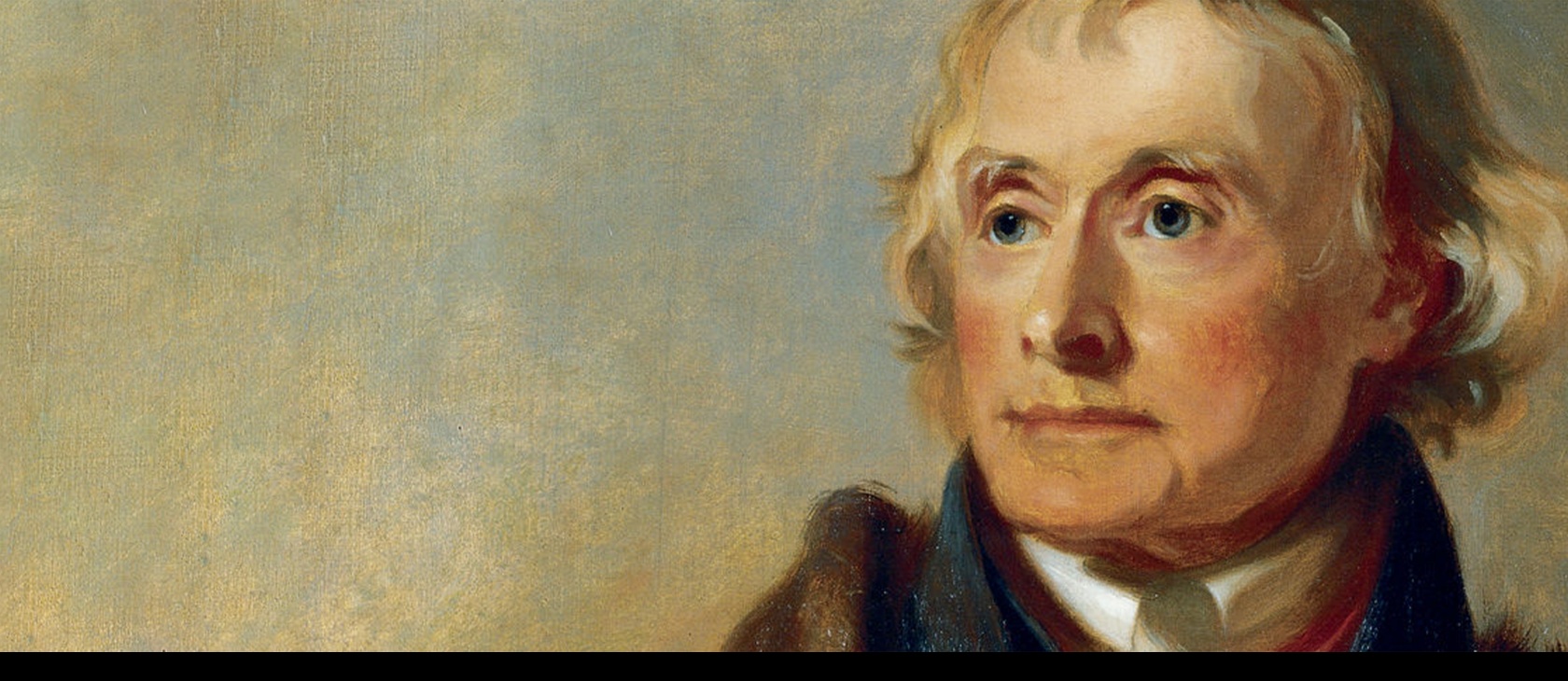
We often hear that Thomas Jefferson got his anthropology wrong, a fact best seen in his dismissal of original sin’s effects and his apparent trust in “the people.” But is this really a full and accurate portrayal of Jefferson’s understanding of the human person? What I suggest we do is consider what he got right. In particular, a close examination of Jefferson’s thought reveals that what is now known as the principle of subsidiarity was deeply embedded in his anthropology of man. For Jefferson, man was a free but social and moral creature, and this had important implications for how he viewed the role of the State in human affairs.
Our third president did not believe a moral people needed Leviathan to regulate its affairs. And there’s the rub.
Jefferson believed that every human person “was endowed with a sense of right and wrong” and that this moral sense was “as much a part of man as his leg or arm.” This interior moral sense could not be measured by scientific means because it was instinctual. Nor was it to be confused with reason. Still, it was obvious to Jefferson that “nature hath implanted in our breasts a love of others.” This moral sense could be strengthened or weakened. While its strengthening took centuries, its weakening could occur rapidly.
In most places, the morality and virtue needed for self-government was lacking. This left Jefferson worried over the continued aptitude among Americans for republican government. As he warned in 1781 in Notes on the State of Virginia, “Human nature is the same on every side of the Atlantic.” Those writing constitutions in the 1770s for the newly independent States, he counseled, should therefore learn from ancient and European history about the corruptibility of virtuous people with good intentions. “Nor should our assembly be deluded by the integrity of their own purposes, and conclude that these unlimited powers will never be abused, because they themselves are not disposed to abuse them.” As James Madison warned a few years later in Federalist No. 10, “Enlightened statesmen will not always be at the helm.” Thus, Americans “should look forward to a time, and that not a distant one, when corruption in this, as in the country from which we derive our origin, will have seized the heads of government, and be spread by them through the body of the people; when they will purchase the voices of the people, and make them pay the price.”
Notice that, for Jefferson, the rulers usually corrupt the people, not the other way around. There is a similarity here to Lord Acton’s famous dictum that “power tends to corrupt, and absolute power corrupts absolutely.” Jefferson believed that the human person was born neither good nor stained by Original Sin. Man’s moral sense could, however, be steered toward the good through long practice and education. Jefferson believed that environment—education, upbringing, culture—was the prime determinant in human behavior.
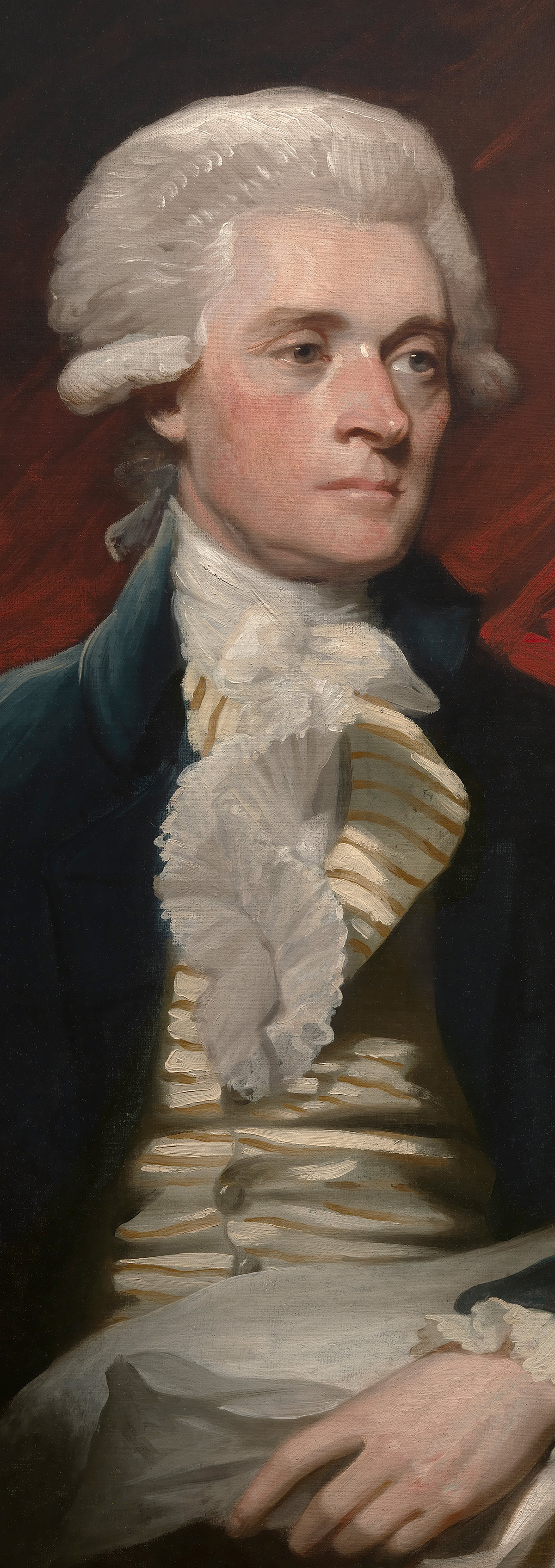
Jefferson trusted most Americans to use their “moral sense” in their decision-making. He was confident that there were matters of right and wrong that all people could know regardless of their education. “State a moral case to a ploughman and a professor,” wrote Jefferson, and “the former will decide it as well, and often better than the latter, because he has not been led astray by artificial rules.” While all ought to submit their moral choices “to the guidance of reason,” most men would make the right choice due to their innate moral sense. William F. Buckley Jr. expressed a similar sentiment when he said that he “would rather be governed by the first 2,000 people in the telephone directory than by the Harvard University faculty.”
Jefferson recognized that the human person also possesses a social nature. He put it clearly: “Man was destined for society.” Jefferson may have thought Aristotle outdated, but he nevertheless agreed that man is a political creature with an end to which he is ordered by his nature. Man could only flourish and achieve this end in society. For Jefferson, society meant both natural society, such as the family, and political society. Unlike John Locke, Jefferson did not think that a preexistent natural society had begotten its own replacement in political society. Rather, like Thomas Paine and heavily influenced by Scottish Enlightenment philosopher Lord Kames, Jefferson thought both had always been present and intertwined. Each was necessary for human flourishing.
Where Jefferson parted ways with Paine is that the Virginian saw government not as a necessary evil but as an irreplaceable institution ordered to the good of human happiness. Government could only achieve its proper end, however, if it was kept limited. In 1801, in his first inaugural address as president, Jefferson recommended “a wise and frugal government, which shall restrain men from injuring one another, shall leave them otherwise free to regulate their own pursuits of industry and improvement.” Along with not taking “from the mouth of labor the bread it has earned,” staying within the bounds of this small sphere of action was “the sum of good government.” In our contemporary parlance, this would simply be “low taxes and small government.”
Government can remain limited only when citizens are virtuous: prudent, temperate, just, and courageous.
Having thus laid out just what the limits on “limited government” ought to be, Jefferson went on to declare limited government “necessary to close the circle of our felicities.” In other words, the social nature and corruptibility of the human person require government. Limited government is not only not a necessary evil for Jefferson; it is a crucial guarantor of justice and enabler of human happiness.
What we now call the principle of subsidiarity was deeply embedded in Jefferson’s anthropology of man as a free but social and moral creature. Subsidiarity is most identified as one of the four core principles of Catholic Social Teaching. It holds that entities (governments, authorities, etc.) of a higher order should not do for those of a lower order what they can do for themselves. Jefferson expressed this principle as rooted in God’s will that man be free:
I do believe that if the Almighty has not decreed that Man shall never be free, (and it is blasphemy to believe it) that the secret will be found to be in the making himself the depository of the powers respecting himself, so far as he is competent to them, and delegating only what is beyond his competence by a synthetical process, to higher & higher orders of functionaries, so as to trust fewer and fewer powers, in proportion as the trustees become more and more oligarchical.
Over 115 years later, Pope Pius XI in Quadragesimo Anno provided the definitive development of this principle, writing, “It is an injustice and at the same time a grave evil and disturbance of right order to assign to a greater and higher association what lesser and subordinate organizations can do.”
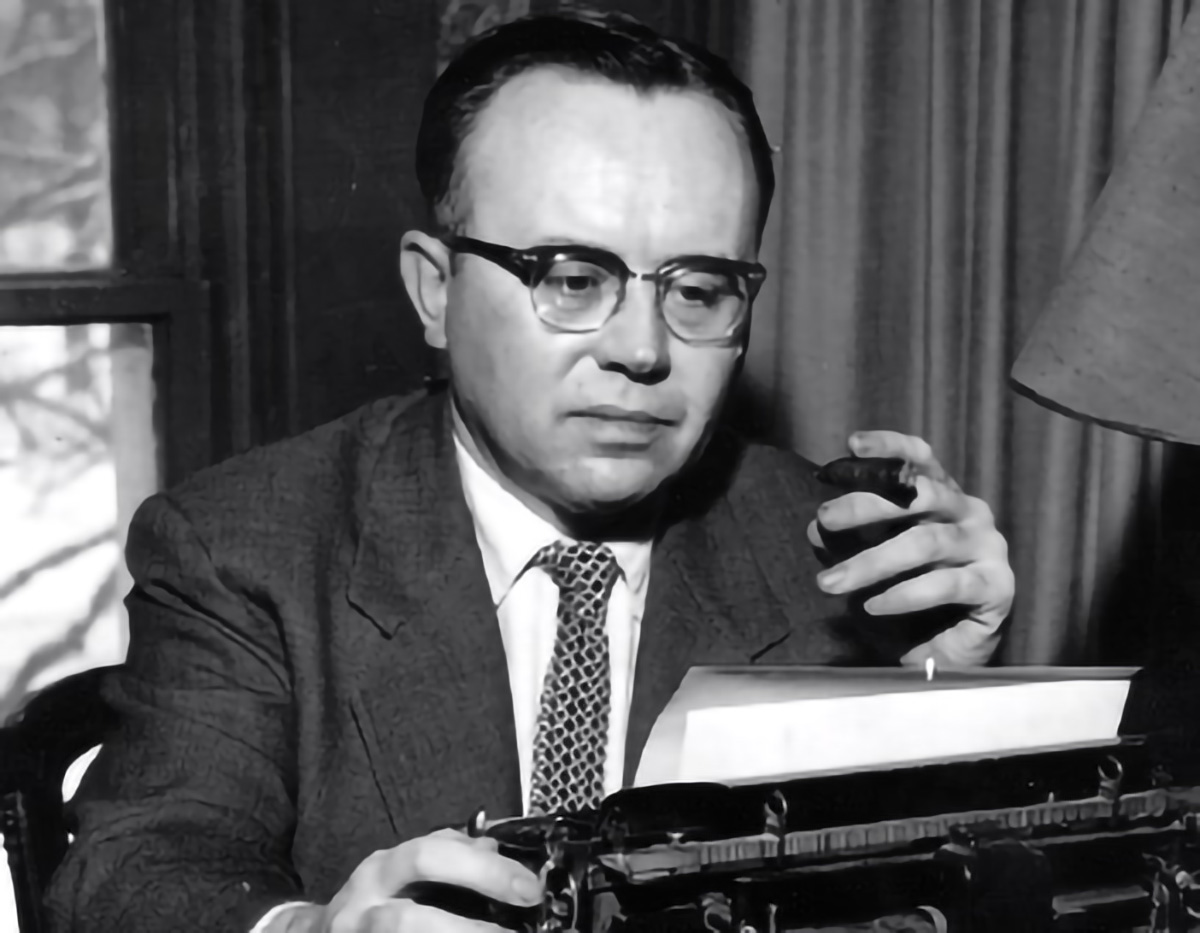
Over the course of the 20th century, Catholic teaching elaborated upon the principle of subsidiarity. Gaudium Et Spes, one of the constitutions produced by the Second Vatican Council in 1965, warns that “citizens both as individuals and in association should be on guard against granting government too much authority and inappropriately seeking from it excessive conveniences and advantages, with a consequent weakening of the sense of responsibility on the part of individuals, families, and social groups.”
More relevant to understanding Jefferson is Pope John Paul II’s connection of the subsidiary role of government to mankind’s social nature: “The social nature of man is not completely fulfilled in the State, but is realized in various intermediary groups, beginning with the family and including economic, social, political and cultural groups which stem from human nature itself and have their own autonomy, always with a view to the common good.”
For Catholics as well as for Jefferson, then, subsidiarity’s stress on the importance of civil society and limited government is not just about efficiency and the necessity of local knowledge. Rather, it springs from man’s social nature and the rights and duties that come with human freedom. Our liberty transcends the State because, in Jefferson’s words, “freedom is the gift of nature.” Subsidiary government presupposes a people who not only can but also want to do things for themselves. Individual persons have not only the right but the duty to act and deliberate with the common good in mind and to behave ethically in their commercial exchanges with one another.
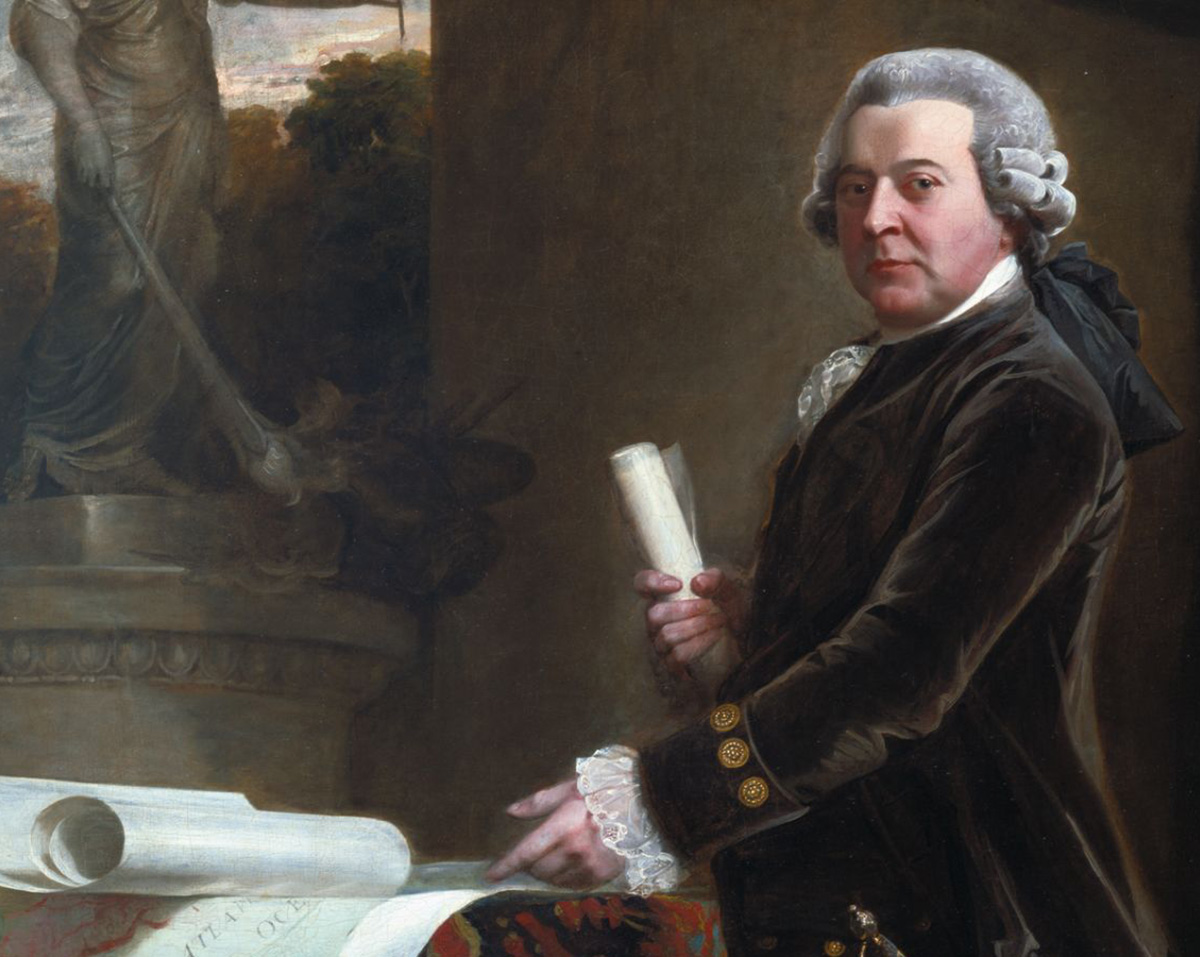
Government can remain limited only when citizens are virtuous: prudent, temperate, just, and courageous. Vice-ridden people with interior moral disorder invite government from above because they are unable to govern themselves. Virtuous men and women, on the other hand, can act wisely and govern others because they themselves are interiorly ordered in accord with their nature. Jefferson knew this, and he would not have dissented from Russell Kirk’s argument that “if you want to have order in the commonwealth, you first have to have order in the soul.” When it comes to good republican government, virtue is the necessary condition.
Kirk might have agreed with this sentiment, but he promoted John Adams rather than Jefferson as the “real conservative” among the American Founders. To be fair, Kirk’s purpose was to discount the “financier” and “party-manager,” Alexander Hamilton, at a time when Kirk thought Americans had been fooled into identifying Hamiltonianism with conservatism.
In Adams, however, Kirk sees a “coalescing of liberal ideas with prescriptive wisdom to which Burke’s disciples gave the name conservatism.” Adams argued “that freedom can be achieved and retained only by sober men who take humanity as it is, not as humanity should be.” This “broader vision” allowed him to fight successfully to keep “the American government one of laws, not of men.”
For Kirk, Jefferson was too sophistic, too mechanical, and too given to radical ideas. Kirk does not dwell on Jefferson’s views regarding small government, however. He labels Jefferson the “chief representative” of a “levelling agrarian republicanism.”
Our liberty transcends the state because, in Jefferson's words, 'Freedom is the gift of nature.'
The English philosopher Roger Scruton, on the other hand, argues that Jefferson is the model American conservative precisely because of his devotion to agrarian localism and, along with it, limited government. Jefferson, says Scruton, “believed that the states of the Union should retain the powers necessary for local government and that the Federal powers of the Union should be the minimum required for its maintenance as a sovereign entity.”
In other words, the key importance of Jefferson for Scruton was that he joined his limited-government views to an anthropology of man as a social creature. Liberty could exist only in society. It is Jefferson’s recognition of the value of community, social life, and customs for which conservatives ought to admire Jefferson, for these are the foundation of the cultures of the several states. In the balancing act of limited government, we should not think only of states vs. the U.S. government. Rather, Jefferson’s views on limited government started from the ground up, with homesteads, villages, and private estates.
Jefferson believed the human person was created free with rights and duties. Because freedom transcends the State, the State therefore must be limited and kept in a subsidiary role. He also recognized that human nature and history counsel us to promote limited government as the chief safeguard of our liberty and to protect us against inefficiency, tyranny, and corruption. Jefferson’s experience in politics taught him that the temptations that come with power usually corrupt those who govern. Preserving liberty has proved as difficult as Jefferson thought it would be, given the centripetal force exerted by all government but especially by distant, centralized government. As he told a correspondent in 1787, “The natural progress of things is for liberty to yield, and government to gain ground.” Constant vigilance by the virtuous was required.
