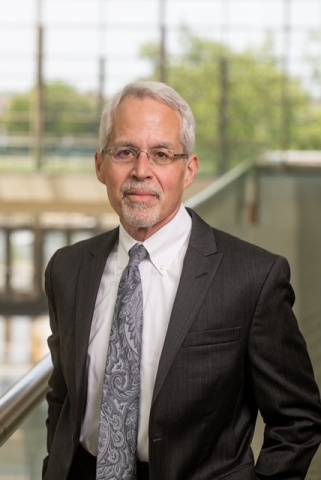


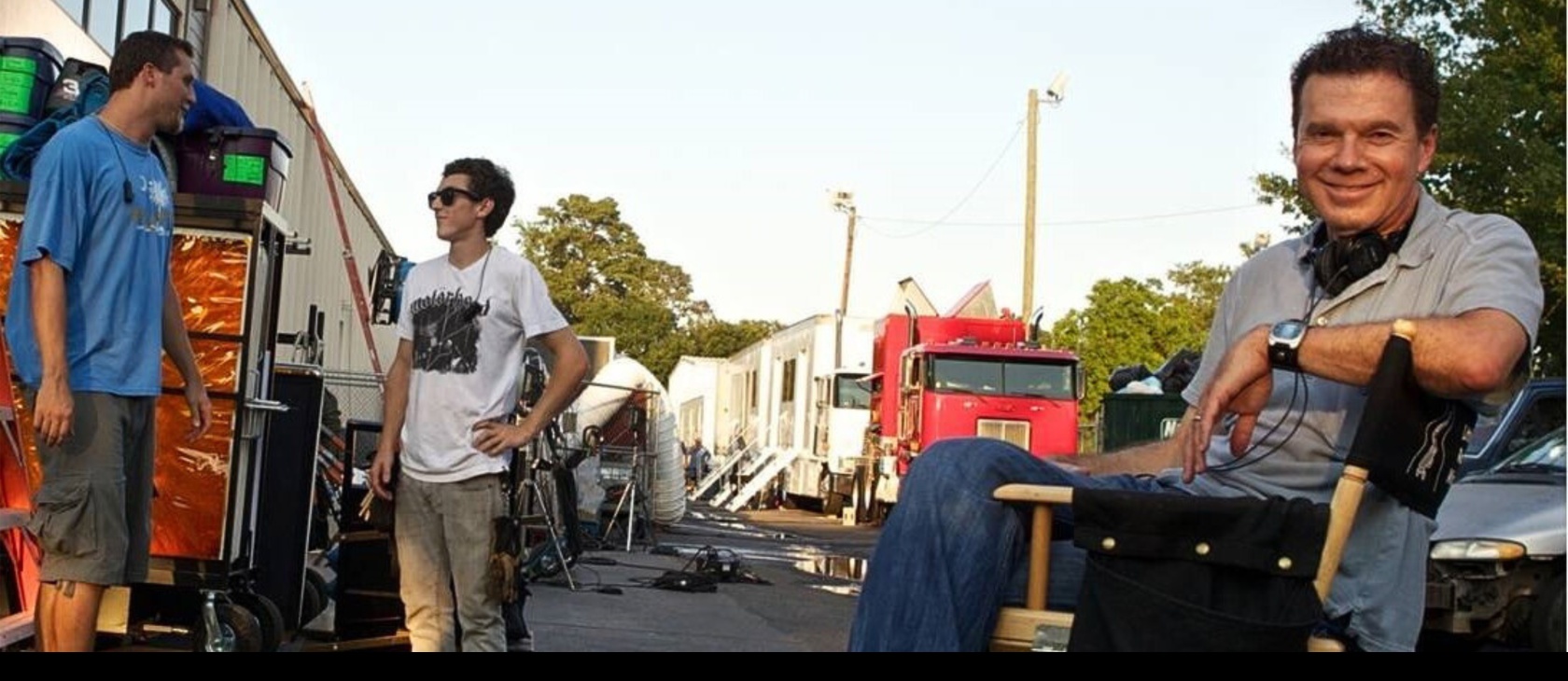
Dr. Michael Guillén is a world-class scientist and communicator. He holds a three-fold Ph.D. from Cornell University in physics, astronomy, and mathematics. For years, he was an award-winning physics instructor at Harvard University and ABC News’s Emmy-winning science editor. He appeared regularly on Good Morning America, World News Tonight, Nightline, and 20/20. He has written many bestselling books, including Believing Is Seeing and Five Equations That Changed the World. He is also the author of “More Than Meets the IQ” on Substack and the host of the popular podcast Science + God with Dr. G.
You have a most fascinating background: You’re a Cornell-trained physicist, astronomer, and mathematician, as well as an Emmy Award–winning science journalist for such outlets as ABC News and CBS News. You’ve also written and hosted a variety of PBS specials on business and science. And you’re a seriously committed Christian dedicated to dispelling myths about the supposed incompatibility of science and religion. Were you always religious? Or did you have some kind of “Road to Damascus” moment?
I was reared by parents who were Spanish-speaking Pentecostals. True or not, I have the impression we were in church nearly every day. But I didn’t understand Spanish, so the services meant nothing to me. Honestly, the one thing about church I remember and cared most about was this: We kids were allowed to play musical instruments during worship, and I came to love playing the drums.
As for being religious, everyone is religious, because everyone has a worldview at the center of which is something or someone around which everything in a person’s life revolves. It’s the person’s god. From a very young age—the second grade, I clearly recall—my god was science and my motto was, “Seeing is believing.”
In grad school, however, I was shocked to discover that my beloved science couldn’t really answer (not to my intellectual satisfaction, anyway) life’s deepest questions. That intellectual crisis launched me into what I call a Hermann Hesse–like spiritual journey that led me to explore the world’s major religions. After many years, my discoveries transformed my atheist worldview into a Christian one.
I was stunned to discover that the Christian and scientific worldviews are not only simpatico but synergistic: They actually enrich each other in many exciting, unexpected ways.
Some of the apparent differences between the Christian and scientific worldviews concern: (a) the age of the earth, (b) the occurrence of a global flood, and (c) the influence of macroevolution. Are the two worldviews irreconcilable in such matters? If so, what advice do you have for young, college-bound Christians who wish to major in the hard sciences?
During my decades-long spiritual journey, I was stunned to discover that the Christian and scientific worldviews are not only simpatico but synergistic: They actually enrich each other in many exciting, unexpected ways. It’s why, after exploring all the world’s major religions, I ultimately became—and to this day remain—a Christian who loves God but who also still loves science, my former god.
As for the apparent disparities between science and Christianity, they’re just that: apparent, not real. Take the age of the earth. According to modern physics, time is not an absolute truth; it depends on an observer’s point of view. So, it’s ignorant to argue about whether the earth is 6,000 years old or 4.5 billion years old because both can be true at the same time. I explain this in my podcast, Science + God with Dr. G: “Stop Asking How Old the Universe Is!”
Considering the strong, positive relationship between Christianity and science, my advice to young Christians is simple: Enter college with complete confidence that science isn’t the enemy. The only enemies about whom you need to be very wary are scientismists, people for whom science is a religion—the very thing the scientific method was never intended to be. I discuss this important matter in my book Believing Is Seeing.
A lot of your work seems to focus on great minds and great contributions, signal moments in human intellectual history that changed things forever. As you look out at the culture more broadly, especially at the Academy and the sciences, do you see another monumental breakthrough on the horizon? Are we on the verge of some great discovery that will change our lives for good? For evil?
Yes, I’ve always been fascinated by the biographies of men and women who radically redirected the course of human history. Early on I noticed that, almost without exception, these brilliant people were mavericks. Be they Jesus or Barbara McClintock, these iconoclasts challenged the status quo by offering us a credible new way of seeing everything.
It’s why to this day I maintain a healthy skepticism about the so-called scientific consensus and refute the silly slogan “Follow the science”—favorite phrases of unremarkable people who wish to censor nonconforming points of view. A spirited, thoughtful debate among competing interpretations of the best available data represents the very heart and soul of the scientific method.
As I look ahead, I see radical changes happening in these areas: (a) personal privacy, (b) world instability, (c) genetic engineering, (d) transhumanism, (e) space colonization, and (f) artificial intelligence. I discuss specifics in my book The End of Life as We Know It, but the headline is this: While every development has the potential of being used for good and evil purposes, it’s clear to me that all these areas—that science itself—are playing a huge role in driving us inexorably toward the future described in the Bible.
As a Christian, I believe it’s my sacred duty to take very good care of God’s creation, which includes the climate.
You’ve been critical of climate-change alarmism and models, which I’m sure has won you no friends in mainstream science channels. Can you explain what it is you’re seeing that deviates from what we hear repeatedly in the news and from politicos?
I’ve observed that folks who are hysterical about Earth’s climate have a propensity for being hysterical, period. Whether their hysteria is genuine or manufactured to further personal and/or political agendas, I consider their irrational behavior to be far more dangerous than whatever’s currently going on with the climate.
As a Christian, I believe it’s my sacred duty to take very good care of God’s creation, which includes the climate. And as a scientist, I take the subject very seriously and have a keen understanding of the climate’s devilish complexity—something I find climate alarmists sorely lack. For one thing, there is no such thing as “climate science” or “climate scientists.” There are only meteorologists, atmospheric physicists, chemists, biologists, geologists, paleontologists, astrophysicists, mathematicians, computer modelers, and so on. Each of these specialists can claim to understand just one tiny aspect of Earth’s multifaceted climate.
As a journalist, I’ve been covering the environmental beat since the 1980s, when the mania du jour was all about “climate cooling.” Gradually, the hype morphed into a full-blown panic about “global warming.” Now, the fever is all about “climate change,” which quite conveniently covers all the bases, no matter what the climate is doing.
The unrelenting hysterics are counterproductive because they detract from a serious discussion about Earth’s climate and make hyperbolic claims that time and again are discredited. In 1992 I was the reporter in a Nightline program featuring Al Gore, who made wild, gloom-and-doom predictions that never came true. He’s still doing the same thing.
You’ve produced a film already, Little Red Wagon, about an 8-year-old who decides to walk from his home in Florida to the White House to raise awareness about those left homeless in the wake of Hurricane Charley. Now you’ve announced on your Substack that you’re going to produce an adaptation of your bestselling book Believing Is Seeing. How have you—a scientist who’s also a Christian—been received by the entertainment industry? And how important is it to bring your ideas and stories to the big screen and to involve familiar actors and entertainers?
I’ve never been prone to seeing myself in terms of broad categories. Instead, I’ve always seen myself simply as someone who values effort, merit, and excellence. I’ve always worked hard to succeed and seen myself as my fiercest competitor.
As for how I’ve fared in academia and Hollywood: When I was at Harvard, I was inclining toward Christianity, although I still had questions about it. During that time, it saddens me to admit, I kept my growing Christianity under wraps; I went along with academia’s well-documented atheism to get along.
The same was true during my early years in Hollywood. But producing Little Red Wagon proved to be a turning point for me. For example:
- I hired five set chaplains (three Protestant ministers, a Catholic priest, and an Orthodox rabbi) to be present during filming.
- One day I openly prayed when a sudden deluge ruined a crucial outdoor scene of ours—and much to my non-Christian director’s surprise, it produced a minor miracle.
- Despite objections from my writer, co-producer, and director, I insisted on a character uttering a short, desperate prayer when she and her young son were homeless.
- By the time we wrapped production, the entire cast and crew welcomed my open Christianity and thanked me for being so caring and authentic.
I’m now in the midst of producing the Believing Is Seeing movie, aimed at audiences of every age, creed, and culture—but especially young people. As the father of a Gen Z son and someone who speaks on college campuses all over the world, I’m very aware of the crises today’s young people are facing.
In a world that believes truth is entirely relative, young people are desperately struggling to figure out who and what they can believe. In a world raging with hatred and violence, young people are desperately struggling to find peace and kindness.
Our movie will offer them all of that: Truth with love. Without any preaching from me, they will see with their own eyes—as I did during my life-changing scientific and spiritual journey—that the discoveries of modern science point conclusively to the existence of a creator.
Watching imagery on the big screen they’ve never seen before—imagery created using the very latest technology—they’ll see that the universe is tailor-made for life. And more than that, tailor-made specifically for us Homo sapiens sapiens.
In a world raging with hatred and violence, young people are desperately struggling to find peace and kindness.
Fun questions: (a) What book(s) have you read at least three times, and why? (b) What’s your favorite B&W film, and why?
Ha! Well, I’ve read the Bible more than once and am now reading just the words of Jesus, which amount to about 20% of the New Testament. To my everlasting joy and edification, with every new reading—coupled with my scientific understanding of the cosmos within and beyond us—I’m finding exciting new meaning in the Word of God.
The next question is easy. My all-time favorite B&W film is James Whale’s 1931 classic, Frankenstein. My favorite scene of all time is when, after bringing the monster to life, Dr. Frankenstein (played brilliantly by the British actor Colin Clive) is reprimanded by his old medical school mentor, Professor Waldman.
A still from that scene, framed and hanging in my office, goes like this:
WALDMAN: This creature of yours should be kept under guard! Mark my words, he will prove dangerous!
FRANKENSTEIN: Dangerous? Poor old Waldman. Have you never wanted to do anything that was dangerous? Where should we be if nobody tried to find out what lies beyond? Have you never wanted to look beyond the clouds and the stars? Or to know what causes the trees to bud, and what changes darkness into light? But if you talk like that, people call you crazy. Well, if I could discover just one of these things—what eternity is, for example—I wouldn’t care if they did think I was crazy.
As a scientist and Christian, I’ve learned many breathtaking secrets about the universe and beyond. Even after all these years, it still thrills me to make such discoveries.
I do realize that, even with all my learning, I know but a mere fraction of what’s out there. But every morning when I wake up here at my ranch in North Texas, I thank God for granting me another day of life; another day of experiencing the awe and wonder of His stunning creation—and the indescribable privilege of seeing it through the eyes of both a scientist and a Christian.