


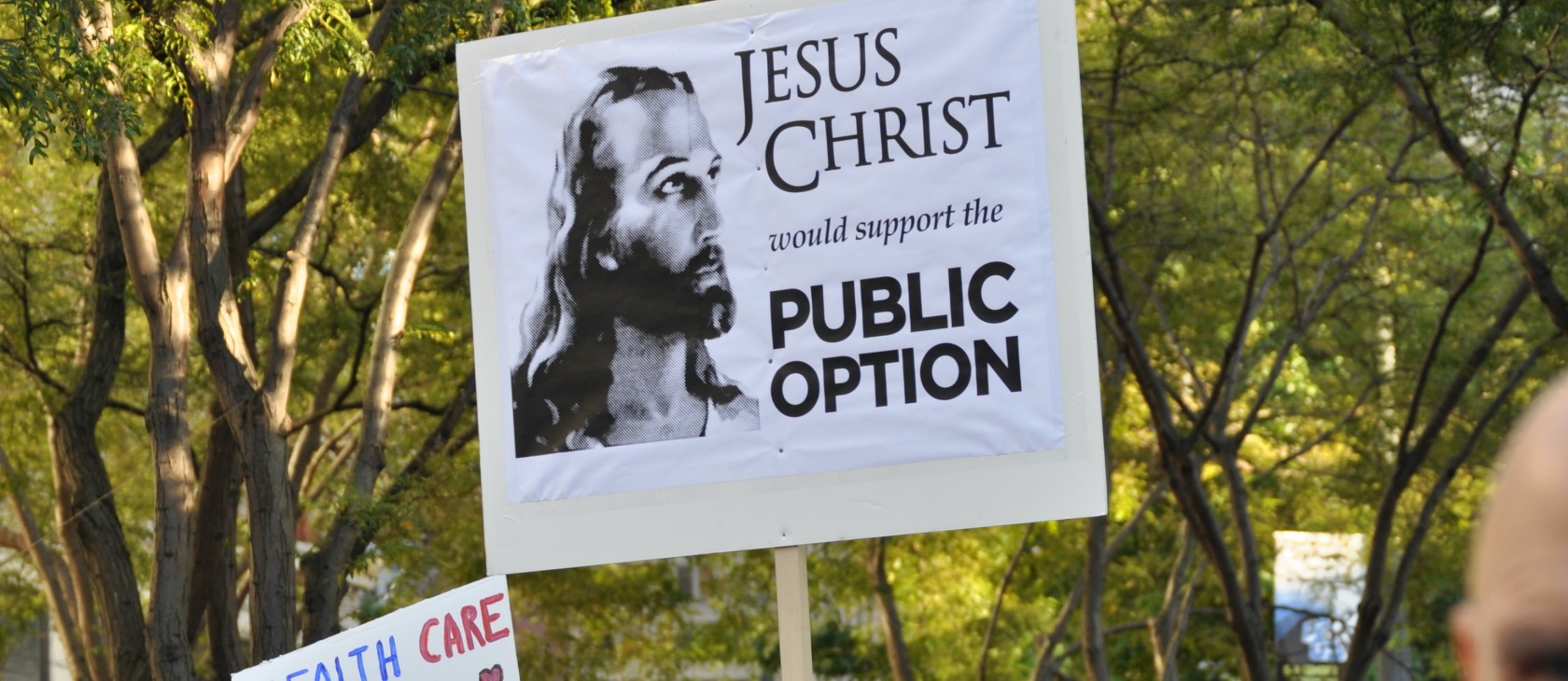
Democratic presidential nominee Joe Biden has made it abundantly clear that he opposes the “Medicare for All” model of health reform favored by Sen. Bernie Sanders, I-Vt., and the progressive wing of the Democratic Party. Instead, Biden proposes creating a public insurance option that would compete against private insurers on the Obamacare exchanges.
On its face, this plan might seem sensible. Unlike Medicare for All, a public option would not abolish private insurance. It would just give people one more choice of health insurance coverage.
But Biden’s public option would upend our health sector in ways that impose real costs on patients and providers alike. In the end, it would yield the same kind of single-payer system that the former vice president has explicitly rejected.
The Biden campaign has outlined in some detail what its government-run health plan would entail.
The public option would be administered by Medicare. It would include at least one plan with no deductible. It would charge no co-pays for primary care. Low-income Americans who are not eligible for Medicaid would be enrolled automatically. And all Americans – even those eligible for coverage through their employers – would be free to sign up.
This model is tailor-made to negate the most common objections to Medicare for All.
For example, most voters are not eager to see private insurance disappear. According to recent polling from the Kaiser Family Foundation, 56% of the country is in favor of Medicare for All. But support drops to 37% when Americans learn that it would outlaw private insurance.
Biden is well aware of this public opinion data. It is why part of his pitch was that he will not take away Americans’ existing coverage. That pitch has proved popular. Two-thirds of the country – including 44% of Republicans – say they favor a public option.
But their support is misguided. “If you like your plan, you can keep it” was not true under Obamacare. And it would not be true under Biden’s plan, either.
Eventually, the public option would swallow up the entire market. Biden's plan to give Americans another health insurance choice would end up leaving them with only one choice.
The reason is simple. A public option would not have to cover its costs, much less turn a profit. The federal Treasury could plug any holes on its balance sheet. That would give the public option a significant advantage over private insurers, who do not have the luxury of running losses in perpetuity.
Further, the public option would reimburse doctors and hospitals at rates similar to those of Medicare. Those rates are artificially low, because the government has the power to essentially dictate what it will pay. Indeed, hospitals receive just 87 cents from the federal government for every dollar they spend providing care to Medicare’s beneficiaries.
Private insurers do not have that kind of "negotiating" leverage. So, healthcare providers charge them more – both because they can, and because they need to make up for government underpayments somehow. In 2018, private insurers paid hospitals 247% more for the same services than Medicare did, according to a recent analysis from the RAND Corporation.
These two cost advantages would give the public option a leg up on the private competition. The public plan could attract customers with low premiums that private insurers could not hope to match. Privately insured consumers would understandably drop their coverage and switch to the cheaper public option.
Biden’s plan also strikes a severe blow against the 165 million Americans who have employer-sponsored health insurance by allowing those who have access to coverage through work to decline it – and hop onto the public option. Right now, people eligible for affordable coverage through their employers cannot get taxpayer-subsidized coverage through the exchanges.
Biden’s offer may prove tantalizing to people who see a significant chunk of their paycheck get deducted to cover their share of the premium. The public option may seem like a better deal.
Employers, meanwhile, may decide that they would prefer not to continue spending huge sums on health insurance. They could end up nudging their employees into the exchanges, with a recommendation that they check out the public option.
That is the scenario sketched out in a recent study by KNG Health Consulting. Researchers estimate that one-quarter of those currently insured by their employer would move over to a public option plan by 2032.
Some would make the transition voluntarily. In most cases, employers would simply stop offering coverage.
A booming public option is bad news for doctors and hospitals. They can ill afford to see their high-paying, privately insured customers become low-paying, publicly insured ones. A separate KNG Health Consulting study estimates that hospitals’ payments could fall by $774 billion over 10 years under a public option.
A 2016 paper from the Congressional Budget Office projected that between 40 and 60% of the nation’s hospitals were on track to become money-losing operations by 2025. A public option would likely push them further into the red.
To compensate, they might try to raise rates on their remaining privately insured customers. But private insurers would pass those rate hikes on to consumers in the form of higher premiums. Those consumers would respond by cancelling their private coverage and switching to the public option. And the cycle would repeat.
Eventually, the public option would swallow up the entire market. Biden’s plan to give Americans another health insurance choice would end up leaving them with only one choice.
This may be a roundabout way for the government to eliminate private insurance and take over the health insurance sector. But the final outcome is no different than Sen. Sanders’ explicit vision of Medicare for All.