Barton Gingerich is an assistant priest at St. Jude’s Anglican Church in Richmond, VA. He holds a B.A. in History from Patrick Henry College and an M.Div. with a concentration in Historical Theology from Reformed Episcopal Seminary.
Recent Articles by Barton Gingerich
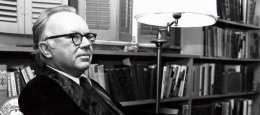
Russell Kirk: Where does virtue come from?
How can human society form and raise up virtuous people?
In the Summer/Fall 1982 issue of Modern Age, Russell Kirk explored this perennial question in an essay titled, “Virtue: Can It Be Taught?”
Kirk defined virtues as “the qualities of full humanity: strength, courage, capacity, worth, manliness, moral excellence,” particularly qualities of “moral goodness: the practice of moral duties and the conformity of life to the moral law; uprightness; rectitude.” Despite modern attempts to supplant vigorous, active “virtue” with passive “integrity,” people “possessed of an energetic virtue” are still needed, particularly in more turbulent times.
Can such a thing be taught? Can virtuous citizens be formed by tutoring and other rational forms of education?
Moral vs. Intellectual Virtue
Kirk cited this as the pivotal argument between Socrates and Aristophanes. The former believed that “virtue and wisdom at bottom are one.” “Development of private rationality” could impart virtue to the next generation. The latter, along with Kirk, was quite skeptical of this. “For we all have known human beings of much intelligence and cleverness whose light is as darkness.”
“Greatness of soul and good character are not formed by hired tutors, Aristophanes maintained: virtue is ‘natural,’ not an...