

Steve Stapleton has worked in the investment and financial consulting industry since 1986, serving individuals, business owners and nonprofit institutions with objective and unbiased investment consulting and wealth advisory services. Steve holds the Certified Investment Management Analyst® (CIMA) designation from Wharton School of Business, University of Pennsylvania; a MBA from Bellarmine University in Louisville; and a BS in Economics, with honors from the University of Kentucky.

His volunteer activities include service on the Catholic Community Foundation Board of Trustees (past president) and Investment Committee; The Children’s Museum of Indianapolis Planned Giving Committee; Catholic Charities Indianapolis Agency Council; and the Ball State University Foundation Professional Advisers Council. He volunteers with Trusted Mentors which provides one on one mentoring to adults re-entering society from incarceration and homelessness. In his spare time he reads, thinks, prays, and writes about economics, liberty, culture, and faith.
Recent Articles by Steve Stapleton

  • Can economics bring back humility and civil discourse?

    Mark Twain is celebrated for the way his storytelling makes us laugh, mostly at ourselves. His work as author and humorist frequently spoke to the folly and truth of human nature. One quotation attributed to him went, “It ain’t what we don’t know that gets us in trouble; it’s what we know for sure that just ain’t so.” We smile because we recognize this truth from our own experience. But more serious reflection may give us pause and make the most prideful among us a bit humbler. And more than a bit of humility will be required on all sides of the political divide if we are to communicate with each other in the coming year. We must rediscover the important role of reason and civil discourse to human progress through open dialogue. Rediscovering civil discourse is essential to keep this melting pot of a country from boiling over.

    Today, reason seems upended and our discourse has regressed to where even the fundamental importance of free speech – our first freedom – is being openly challenged. We have made a blood-sport of spewing vitriol and ridicule at those with whom we disagree. This retreat from reason has led too many...

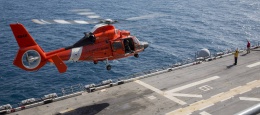
  • Hurricanes, heroism, and ripples in a pond

    This year’s active and destructive Atlantic hurricane season has raised the anxiety level of those who live in and around the Gulf Coast, the Caribbean, and coasts on both sides of the Atlantic. The destruction wrought by every new storm – from Harvey to Ophelia – is sobering enough, but we all shudder at the thought of another Hurricane Katrina. Katrina, which hit America’s Gulf Coast 12 years ago, was the perfect storm, combining the worst of Mother Nature with the worst of human nature. The desperate images of that storm still haunt our memory – from scores of people stranded on a bridge surrounded by rising flood waters, to the Superdome crammed full of people in dilapidated and dangerous conditions for days on end.

    What was a natural disaster for Louisiana, Mississippi, and Alabama proved a catastrophe for the city of New Orleans, due in large part to the ineptitude of government planning. Charges were widespread that the government was slow to recognize the magnitude of Katrina’s impact and slow to provide relief to those most impacted. When it did act, waste and fraud were rampant. The U.S. Government Accountability Office (GAO) audit report estimated that improper and fraudulent...

  • Hurricanes prove human solidarity: The law written on the human heart

    As Puerto Rico lies devastated by Hurricane Maria, viewers in the U.S. are unusually empathetic. This hurricane season gave birth to two major storms that made landfall in the continental United States. Hurricane Harvey devastated parts of Texas, and a few days later Irma did likewise to Florida. The loss of life and devastation caused by these storms was sobering. And there are more storms threatening out in the Atlantic. These were the first major hurricanes to hit the U.S. since the record setting year of 2005 which produced Katrina, Emily, Rita, and Wilma.

    Predictably, some began citing the storms of 2017 as conclusive evidence of anthropogenic climate change. We are reminded constantly that 97 percent of environmental scientists agree that climate change is real. But 97 percent of scientists do not believe that climate change originating from human activity requires drastic government intervention. Simplistic conclusions about cause and effect for enormously complex systems such as the atmosphere often turn out to be in error as new research brings new understanding. 

    Sentimentalists cite Americans’ support for hurricane victims as proof of innate human goodness and that “we’re at our best when we all pull together.” The latter phrase is sometimes used as justification to advance...