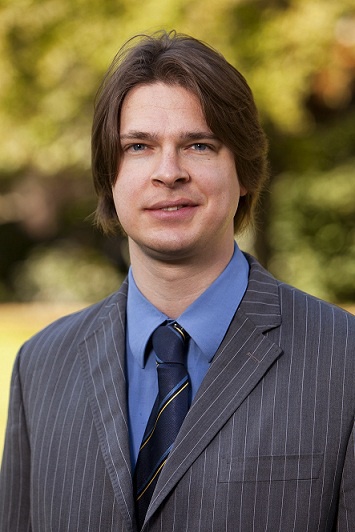
Kristian Niemietz, Ph.D., joined the Institute of Economic Affairs (IEA) in 2008 as Poverty Research Fellow, becoming its Senior Research Fellow in 2013 and Head of Health and Welfare in 2015. Kristian is also a Fellow of the Age Endeavour Fellowship. He studied Economics at the Humboldt Universität zu Berlin and the Universidad de Salamanca, graduating in 2007 as Diplom-Volkswirt (MSc in Economics). During his studies, he interned at the Central Bank of Bolivia (2004), the National Statistics Office of Paraguay (2005), and at the IEA (2006). In 2013, he completed a Ph.D. in Political Economy at King’s College London. Kristian previously worked as a Research Fellow at the Berlin-based Institute for Free Enterprise (IUF), and at King's College London, where he taught economics throughout his postgraduate studies. He is a regular contributor to various journals in the UK, Germany, and Switzerland.
Recent Articles by Kristian Niemietz

  • Book review: 'The Socialist Manifesto' by Bhaskar Sunkara

    If you are a socialist, and you are toying with the idea of writing a book – now is the time to do so. The “Millennial Socialism” craze has led to a proliferation of publications which, in one way or another, make the case that socialism has never been properly tried, and that we should give it another go. And yet, the market still shows no signs of saturation. There seems to be an infinite demand for this message right now.

    'The Socialist Manifesto' by Bhaskar SunkaraOne of the more recent additions to this genre is the book The Socialist Manifesto: The Case for Radical Politics in an Era of Extreme Inequality by Bhaskar Sunkara, the founder and editor of Jacobin magazine. The title is a misnomer, because The Socialist Manifesto is not much of a manifesto. It is mostly a history of socialist movements around the world. The “manifesto,” such as it is, is in the opening chapter, where Sunkara briefly describes a fictitious near-future socialist America, and in the final chapter, where he describes a political strategy for socialists to grow their movement and win influence.

    Although I disagree with almost every word of it, in a way, I enjoyed reading it, not...

  • The opportunity cost of reading 'Das Kapital'

    Daffyd Thomas, one of the most memorable characters in the ‘Little Britain’ series, is ‘the only gay in the village’. Or so he likes to think. Daffyd loves the role of the outsider, who bravely defies society’s stifling conventions. So he convinces himself that everybody is shocked and horrified about the fact that he is gay. But he has to work hard to sustain this delusion, because everyone he meets is either indifferent, supportive or gay themselves.

    If Daffyd were a real person, he would probably write for the Guardian. Guardian journalists have this irritating habit of espousing fashionable views while adopting a bet-my-radicalism-shocks-you tone.

    A recent example is this Guardian article, by Ellie Mae O’Hagan, on Marx and McDonnell:

    Ladies and gentlemen, it’s time to clutch your privately owned pearls, for the shadow chancellor, John McDonnell, has had the audacity to acknowledge – live on TV, no less – that there is a lot to learn from Karl Marx. Judging by the horrified reaction McDonnell’s comments unleashed, you’d think he had ridden into BBC studios on a Soviet tank […] If these histrionics are anything to go by, the respectable position must be that Marx’s ideas are...