
Devin Ryan is an author at the Acton Institute. For inquiries about this author, please contact us.

Recent Articles by Devin Ryan

  • Why it’s high time to bury Lenin

    In an article published today at The American Spectator, Acton Senior Editor Rev. Ben Johnson comments on the solemn centenary of the Russian communist revolutionary Vladimir Lenin’s ascendancy to power. Rev. Johnson notes the Russian Orthodox Church’s distaste for the symbolism of the late dictator's body being prominently displayed in the Kremlin:

    These century-old events continue to dominate the news in modern-day Russia, where leaders grapple with how to deal with one tangible legacy of the Marxist past: After his death in 1924 at the age of 53, Lenin’s corpse became the centerpiece of a gargantuan, pyramid-shaped mausoleum in Red Square, where he still lies in artificially preserved repose. Today, many would like his body, and his legacy, buried.


    Christian leaders in the United States kicked off the latest row in a March 10 encyclical signed by the bishops of the Russian Orthodox Church Outside of Russia (ROCOR) about the solemn centenary. “We must not under any circumstances justify the actions of those responsible for the deadly revolution,” they wrote. “A symbol of reconciliation of the Russian nation with the Lord would be to rid Red Square of the remains of the main persecutor and executioner of the...

  • Samuel Gregg on the silence of the church in a declining Europe

    In a recent article for The Catholic World Report, Acton’s research director, Samuel Gregg criticizes the European Union for its aggressive secularism and separating itself from its Christian roots; Gregg also addresses the weakness of the Catholic Church in addressing social issues. Gregg is not wholly optimistic about the future of Europe but, nonetheless, calls for European leaders to return to their Christian foundations as the only viable solution in managing their decline. In criticizing the EU, Gregg says:

    Today, however, the EU is light-years away from the optimism which marked the Rome Treaty. Poll after poll shows profound dissatisfaction with the EU in many member-states. The European Commission’s headquarters, Brussels, is now shorthand for “unaccountable bureaucrats presided over by out-of-touch career politicians who live in a self-referential bubble.” Britain’s June 2016 decision to exit the EU was simply the most direct expression of how negatively many ordinary Europeans regard the European integration project.


    It’s also true that the EU has long since wandered far from any generically Christian outlook. Symptoms of this range from the EU’s upside-down understanding of the principle of subsidiarity, to many EU agencies’ promotion of gender theory: something contrary to everything that reason and...

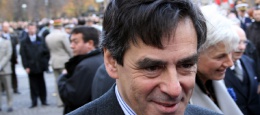
  • François Fillon brings faith back to the public debate in secular France

    The influence of Christianity in the French political sphere has been gaining ground in recent months and may be of benefit to believers and non-believers alike, according to the Acton Institute’s Samuel Gregg. The heavy-handed secular arm is losing favor with the general public and its antagonistic stance towards Christianity is weakening. In a recent article, Gregg explains:

    Given French politics’ hitherto decidedly secular character, there was always going to be a backlash from across the political spectrum against Fillon’s stance. What has been truly noteworthy, however, is the sheer feebleness of this reaction.


    For decades, the operating assumption throughout France has been that a politician’s faith is a private matter. Discussion of such issues by those involved in public life has traditionally been frowned upon.

    Gregg goes on to state that the belief that faith is an obstacle to performing the public duties of a secular office is waning. Gregg cites as evidence of this a Catholic bishop’s response to Le Pen’s comments on Fillon’s affirmation of his Catholic faith:

    When Fillon stated that, as a Christian, he would never let his proposed economic reforms hurt groups such as pensioners, the distinctly secular nationalist Le Pen immediately focused...