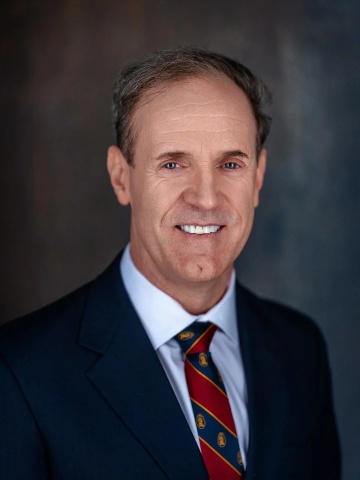


“Revolution” – it’s a word that conjures up images of winter palaces being stormed and the leveling of Bastilles. But if a true revolutionary is someone who regularly turns conventional thinking upside-down, then one of the world’s most prominent status quo challengers may well be a quietly spoken Catholic theologian who turned 85 on April 16.
While regularly derided by his critics as “decrepit” and “out-of-touch,” Pope Benedict XVI continues to do what he’s done since his election as pope seven years ago, which is to shake up not just the Catholic Church but also the world it’s called upon to evangelize. His means of doing so doesn’t involve “occupying” anything. Instead, it is Pope Benedict’s calm, consistent, and, above all, coherent engagement with the world of ideas that marks him out as very different from most other contemporary world leaders – religious or otherwise.
Pope Benedict has long understood a truth that escapes many contemporary political activists: that the world’s most significant changes don’t normally begin in the arena of politics. Invariably, they start with people who labor, for better or worse, in the realm of ideas. The scribblings of Jean-Jacques Rousseau helped make possible the French Revolution, Robespierre, and the Terror. Likewise, it’s hard to imagine Lenin and the Bolshevik seizure of power in Russia without the indispensable backdrop of Karl Marx. Outside of academic legal circles, the name of the Oxford don H.L.A. Hart is virtually unknown. Yet few individuals more decisively enabled the West’s twentieth-century embrace of the permissive society.
Pope Benedict’s most status quo-disrupting forays occur when he identifies the intellectual paradoxes underlying some of the dysfunctional forces operating in our time. To those who kill in the name of religion, he points out that they scorn God’s very nature as Logos, the eternal reason which our own natural reason allows us to know. To those who mock faith in the name of reason, Pope Benedict observes that in doing so, they reduce reason to the merely measurable, thereby closing the human mind to the fullness of truth accessible through the very same reason they claim to exult.
A similar method is at work in Pope Benedict’s approach to internal Church issues. Take, for instance, Pope Benedict’s recent polite but pointed critique of a group of 300 Austrian priests who issued a call for disobedience concerning the now drearily familiar shopping-list of subjects that irk dissenting Catholics. Simply by posing questions, the pope demonstrated the obvious. Do they, he asked, seek authentic renewal? Or do we “merely sense a desperate push to do something to change the Church in accordance with one’s own preferences and ideas?”
Beyond the specifics of the Austrian case, Pope Benedict was making a point that all Catholics, not simply dissenters, sometimes forget. The Church is not in fact “ours.” Rather, it is Christ’s Church. It is not, therefore, just another human institution to be changed according to human whim. That, in turn, reminds us that Christianity is not actually about me, myself, and I. Rather, it is centered on Christ and our need to grow closer to Him. Certainly the Church always needs reform – but reform in the direction of holiness, not mere accommodation to secularism’s bar-lowering expectations.
So, has all this attention by Pope Benedict to the world of ideas come at a cost? Even among his admirers, one occasionally hears the criticism that Pope Benedict focuses too much on writing and not enough on governing.
But perhaps Pope Benedict writes and writes, because he knows that for the pope to write is to participate in the arena of universal public conversation, thereby putting the truths of the Catholic faith precisely where they should be. For this, he’s widely admired, not just by Catholics, but also countless Orthodox and evangelical Christians, and even the occasional “smiling secularist.”
The pope isn’t, however, doing this because he’s trying to please certain audiences. Like all true revolutionaries, Pope Benedict is remarkably single-minded. Throughout his pontificate, he’s relentlessly endeavored to do what many of the immediate post-Vatican II generation of bishops, priests, religious, and theologians manifestly failed to do – which is to place us before the person of Jesus the Nazarene and the minds and lives of the doctors and saints of His Church, in order to help us recall the Christian’s true vocation in this world.
As the never-named whiskey priest in Graham Greene’s 1940 novel, The Power and the Glory, realizes the night before his execution, the goal of Christian life isn’t ultimately earthly justice, human rights, or this or that cause. Instead, the seedy alcoholic who’s broken all his vows discovers that Christianity is about something else: “He knew now that at the end there was only one thing that counted – to be a saint.”
Sanctity isn’t a word you hear very much from dissenters. After all, if you spend much of your time trying to read out of Scripture all those things that make Jesus the Christ, or seeking to collapse Christian ethics into consequentialist incoherence, you’re unlikely to be encouraging people to pursue lives of heroic virtue. Yet even among faithful Catholics, there’s often the sense that sanctity is for other people: that our everyday failures to follow Christ mean that holiness is somehow beyond us.
That, however, is most decidedly not Pope Benedict’s view. For him, sanctity is what it’s all about, no matter how many times we fall on the way. Moreover, it’s only sanctity, Pope Benedict believes, which produces that breath of fearless and indestructible goodness that truly changes the world. Never did Pope Benedict make this point so directly than when he spoke these words during an all-night prayer-vigil for thousands of young people at World Youth Day in Cologne, 2005:
“The saints are ... the true reformers. ... Only from the saints, only from God does true revolution come. ... It is not ideologies that save the world, but only a return to the living God, our Creator, the guarantor of our freedom, the guarantor of what is really good and true. True revolution consists in simply turning to God who is the measure of what is right and who at the same time is everlasting love. And what could ever save us apart from love?”
Yes, God is Love. The Logos is Caritas – there is no more revolutionary message than that.
This article was originally published in Crisis Magazine.