

For people of faith, compassion for the poor is a non-negotiable. Compassion alone, however, doesn’t help the poor. In fact, many poverty programs exacerbate the very problem they were intended to solve. So how do we ensure that we not only mean well, but also do good?
We have to learn to think economically . Don’t worry. At its base, economics isn’t supply/demand charts and complicated math. Rather, the “art of economics,” as Henry Hazlitt puts it, “consists in looking not merely at the immediate but at the longer effects of any act or policy; it consists in tracing the consequences of that policy not merely for one group but for all groups.”
Samuel Gregg, director of the Acton Center for Academic Research, writes about the need to hold the leaders of developing nations accountable for the funds that they borrow and for the responsible stewardship of their nations' resources.
There is no greater scourge that affects the proper functioning of any economic system than corruption. Tragically, corruption is pervasive in developing nations. It is found often on the part of public officials who delay the issuance or processing of public documents unless a monetary inducement is offered. This monograph offers a theological and economic examination that puts into question many of the uncritically accepted assumptions held about corruption.
The art of creating, managing, loaning, and investing money has always been fraught with moral hazards. Unfortunately, the widespread habit of viewing banking in a less-than positive light has contributed to misunderstanding of a human activity that not only contributes to human prosperity, but also creates a sphere of endeaver in which people can genuinely pursue virtue.
Ignoring unintended consequences (and inevitable trade-offs) of actions is one of the most common ways in which a well meaning program can actually do harm. Some other common fallacies are:
Each of these mistakes is easy enough to see through in the abstract, but also easy to forget in practice. Remember them, however, and you’ll be immunized against a lot of economic misinformation, even if you never take a course on economics. More importantly, you’ll be much more likely to advocate policies that not only have good purposes, but also good results.
Christians are called upon to form unique bonds of solidarity with the poor, the destitute, and the lonely, and to help those who cannot help themselves. Christians do not interpret in narrow or materialistic terms the Lord’s commandment to love the poor. Moral and spiritual poverty are, in many senses, more crippling than a dearth of material goods. Nonetheless, throughout the centuries, Christians have sought to give effect to the Lord’s exhortations to help the materially poor by engaging in a variety of charitable activities. Pagans in the Roman world (where life was notoriously cheapened) were astounded not only by the reverence for life displayed by Jews and Christians but also the care offered by Jewish and Christian communities to the materially underprivileged. We know, of course, that the effects of sin will not be fully reversed prior to the Lord’s final coming. Nevertheless, Christ calls upon his people to minister to those who suffer any form of undue deprivation now.
Yet, if we are to understand poverty properly, it is surely true that, among other things, a grasp of economics must first be acquired. Not all poverty proceeds directly from economic deprivation, but we will fail to comprehend completely the causes of poverty and its persistence without such an understanding. The Christian who wishes to comment and act responsibly – rather than in an emotivist manner – when dealing with such issues surely requires some knowledge of essential economic theory.
Samuel Gregg, Economic Thinking for the Theologically Minded , (2001, University of America Press).
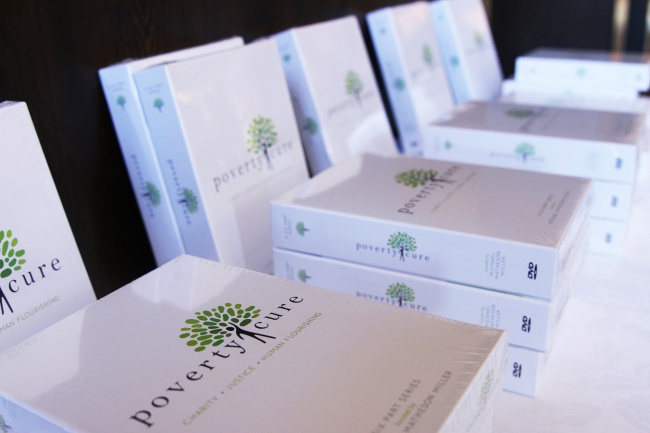
Want to learn about organizations that apply principles of effective compassion? Visit the PovertyCure global network. Get the PovertyCure DVD Series to better understand what causes poverty in the developing world.
Purchase a subscription to the Journal of Markets & Morality to get access to the most recent issues.
Learn more at MarketsAndMorality.com | Subscribe
Read our free quarterly publication that has interviews with important religious figures and articles bettering the free and virtuous society. Visit R&L today.
Phone: (616) 454-3080
Fax: (616) 454-9454
Contact Us Online
Request a Speaker
Subscibe to Print/Email
Refer a Friend
What is RSS?
Acton PowerBlog
Latest Site Updates
Acton Events
Radio Free Acton Podcast
Acton Commentary
© 2013 Acton Institute | Privacy Policy